How to turn your photo into a masterpiece portrait
Choose the painting first, then the photo. Four approved before-and-after examples show what changes, what stays yours and what to check.
Most photo-to-painting tools work like a filter: your picture stays where it was and a texture is laid over it. A masterwork portrait works the other way round. You start with a real historical painting — its pose, costume, setting and light — and your face takes the sitter's place inside it.
That changes how you should choose. The painting decides almost everything about the finished picture, so it deserves more of your attention than the photo does. The four examples below show what that means in practice.
These are approved Fable catalogue examples, made for demonstration from sample sitter photos. They are not customer orders or testimonials, and your own preview will differ.
Start with the painting, not the photo
Before you upload anything, look closely at the composition you are stepping into. Is the figure seated, reclining or standing? Is it a close half-length or a full-length figure in a landscape? Is the costume something the person would enjoy seeing themselves in?
Those choices stay with the painting. What changes is the person: face, hair and expression come from your photo. A good match between the two is what makes the result feel like a portrait rather than a costume.
Example 1: Tissot's Seaside (July: Specimen of a Portrait), 1878
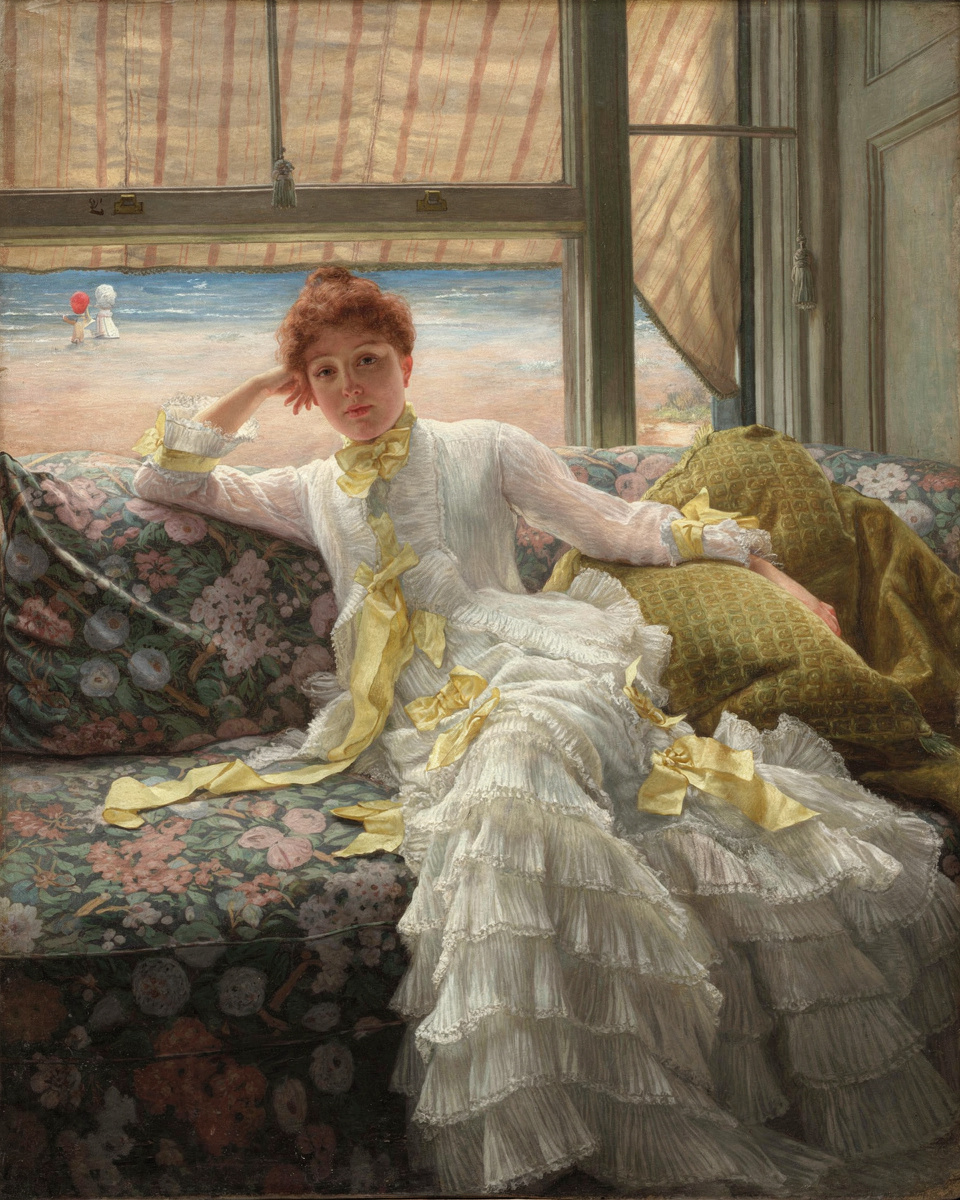
James Tissot's 1878 composition is relaxed for a portrait: the sitter leans back on a patterned sofa with her head resting on one hand, while the sea and a striped awning fill the window behind her. The white dress, with its layered flounces and yellow ribbons, is the star of the picture.
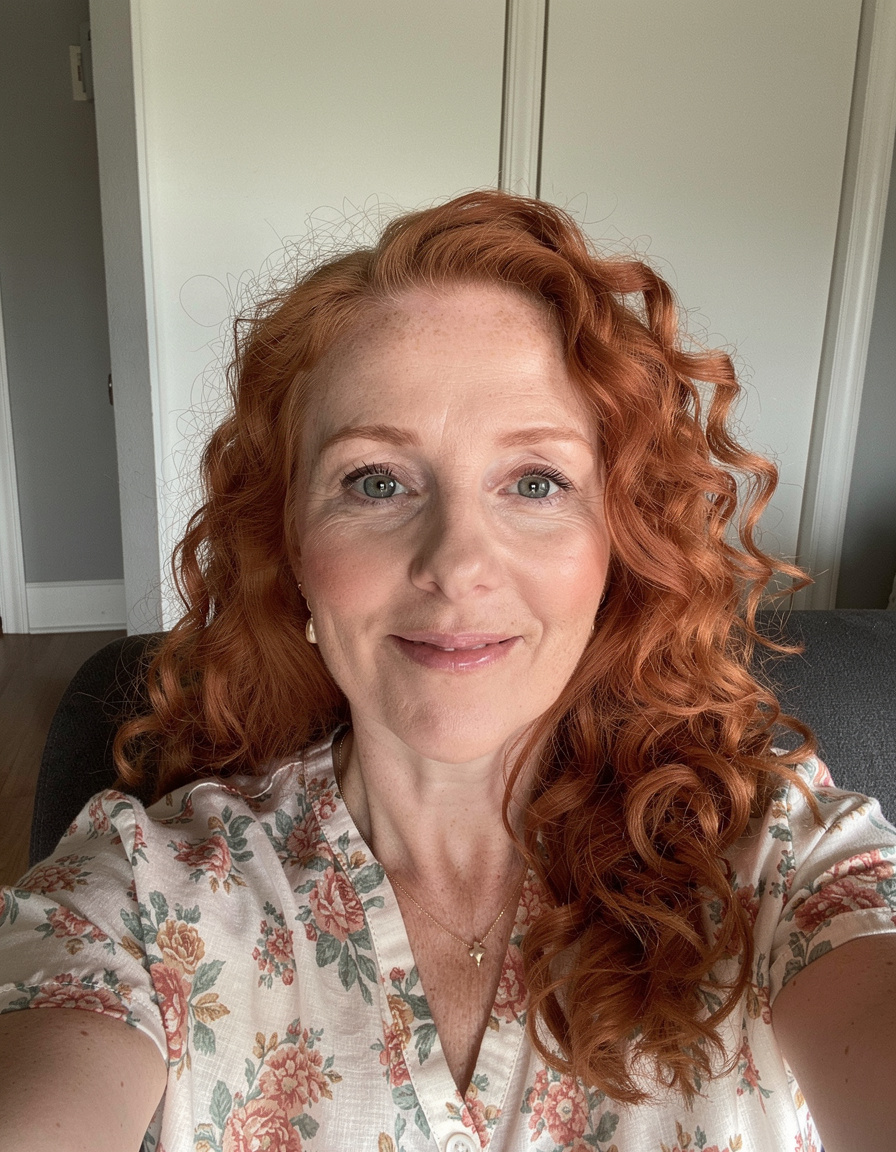
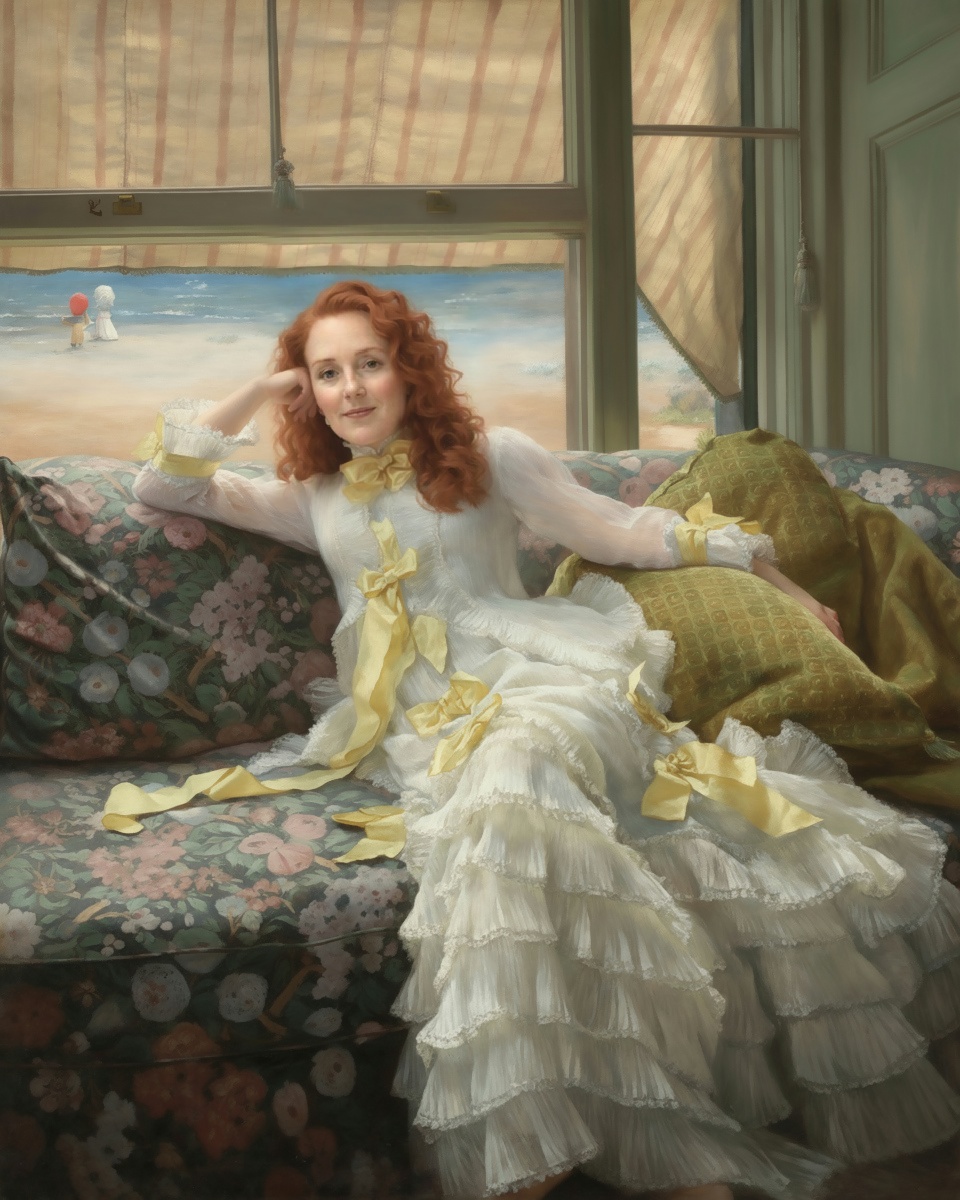
Compare the pair. The dress, sofa, window and pose come from Tissot. The red curls, face shape and expression come from the photo. A clear, front-facing photo was enough for the example; the painting supplied the turn of the head and the reclining pose.
Step into Seaside · See the original as a print
Example 2: Lawrence's Portrait of Catherine Grey, Lady Manners, 1794

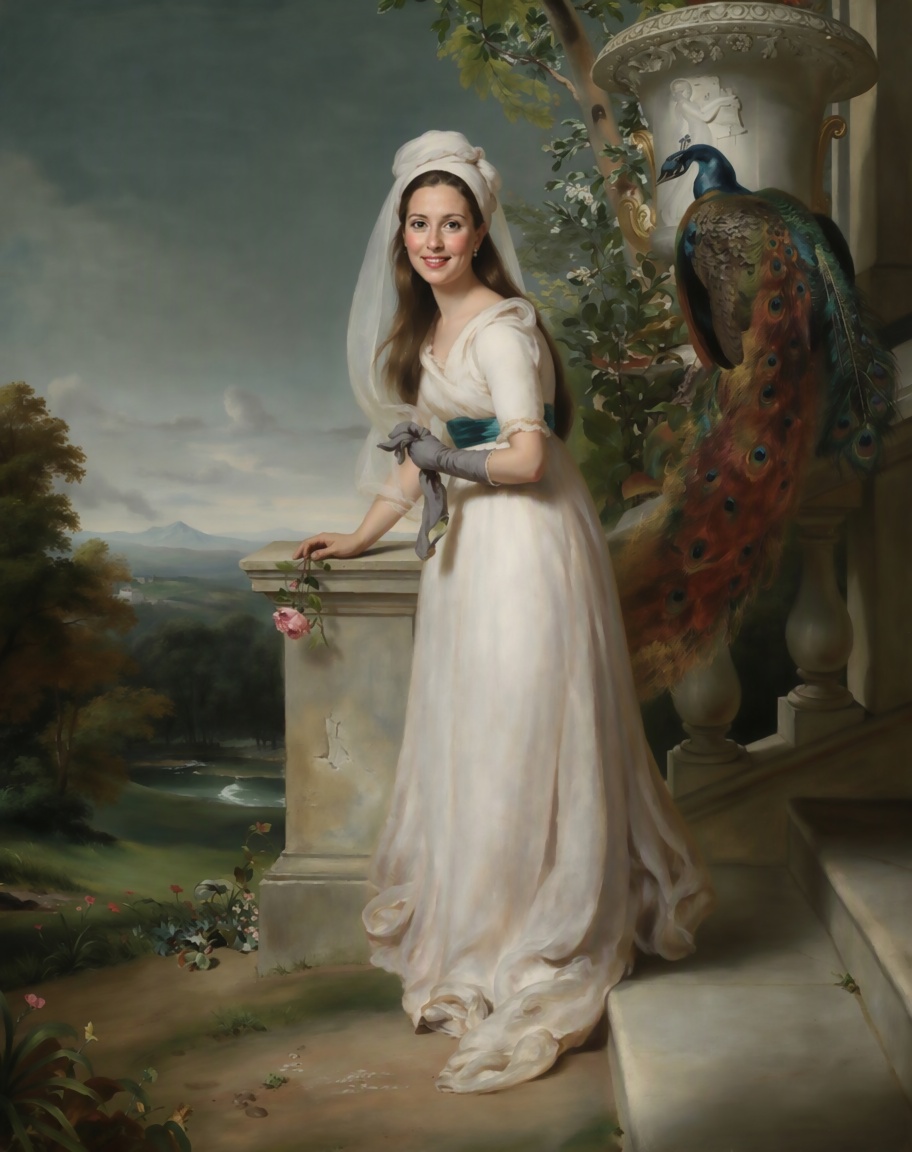
Thomas Lawrence's portrait is a standing composition: a white gown, a soft veil, grey gloves, a rose on the balustrade and a peacock on a stone urn. In the example, the sitter's brown hair and smile carry through while the gown and veil stay Lawrence's. A full-length figure like this reads well from across a room, which matters if the print will hang in a hallway or above a console.
Example 3: Wright of Derby's Portrait of Colonel Charles Heathcote, 1772
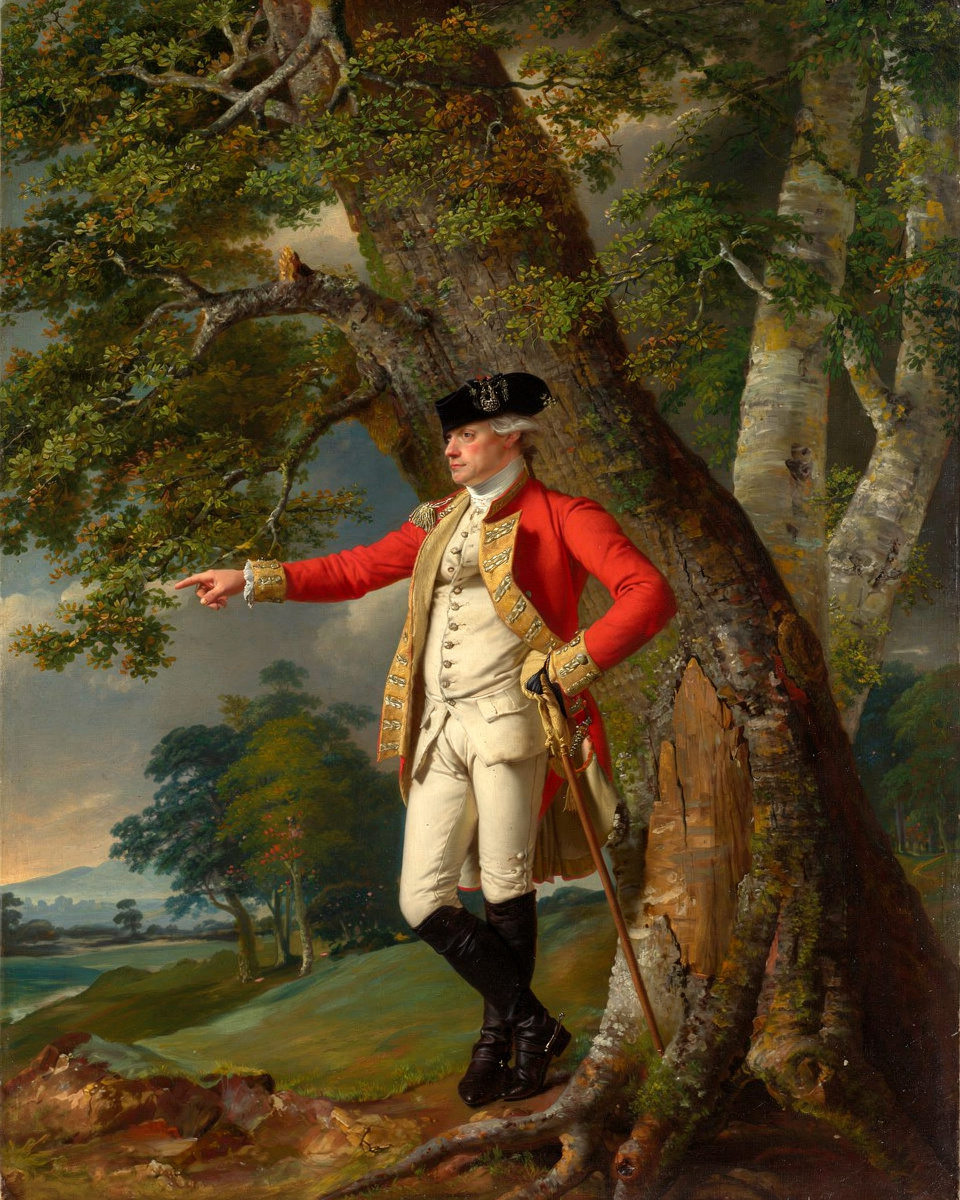
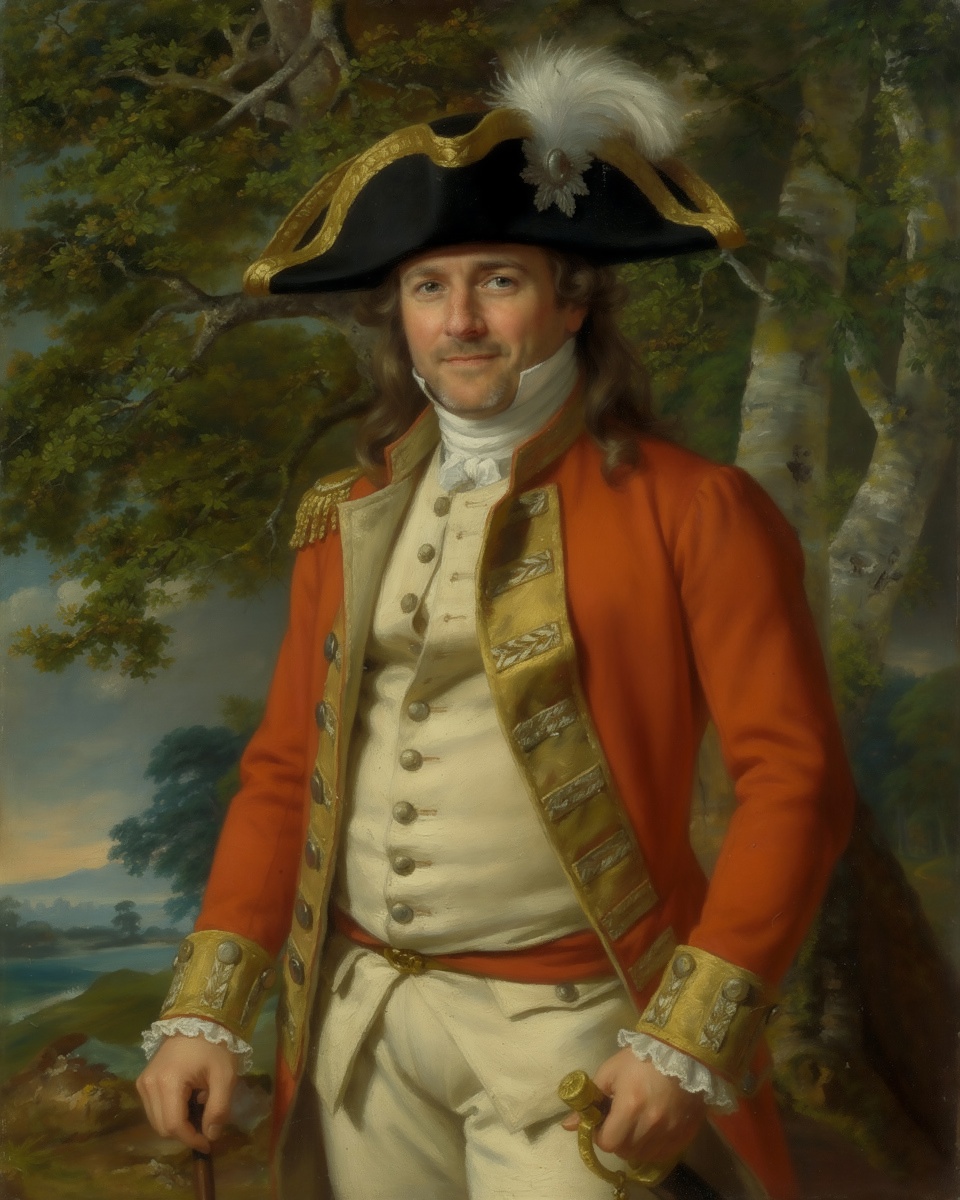
This pair is worth studying for a different reason. Wright of Derby's original is full-length: the officer stands beside a tree, pointing. The approved example frames him much closer, from the waist up, and gives him a larger plumed hat. The red coat, gold trim and woodland setting remain.
So a masterwork portrait is not always a copy of the original frame. When the composition matters to you — a full-length figure for a tall wall, say — check the framing in your preview as carefully as the face.
Example 4: Duveneck's The Venetian Girl
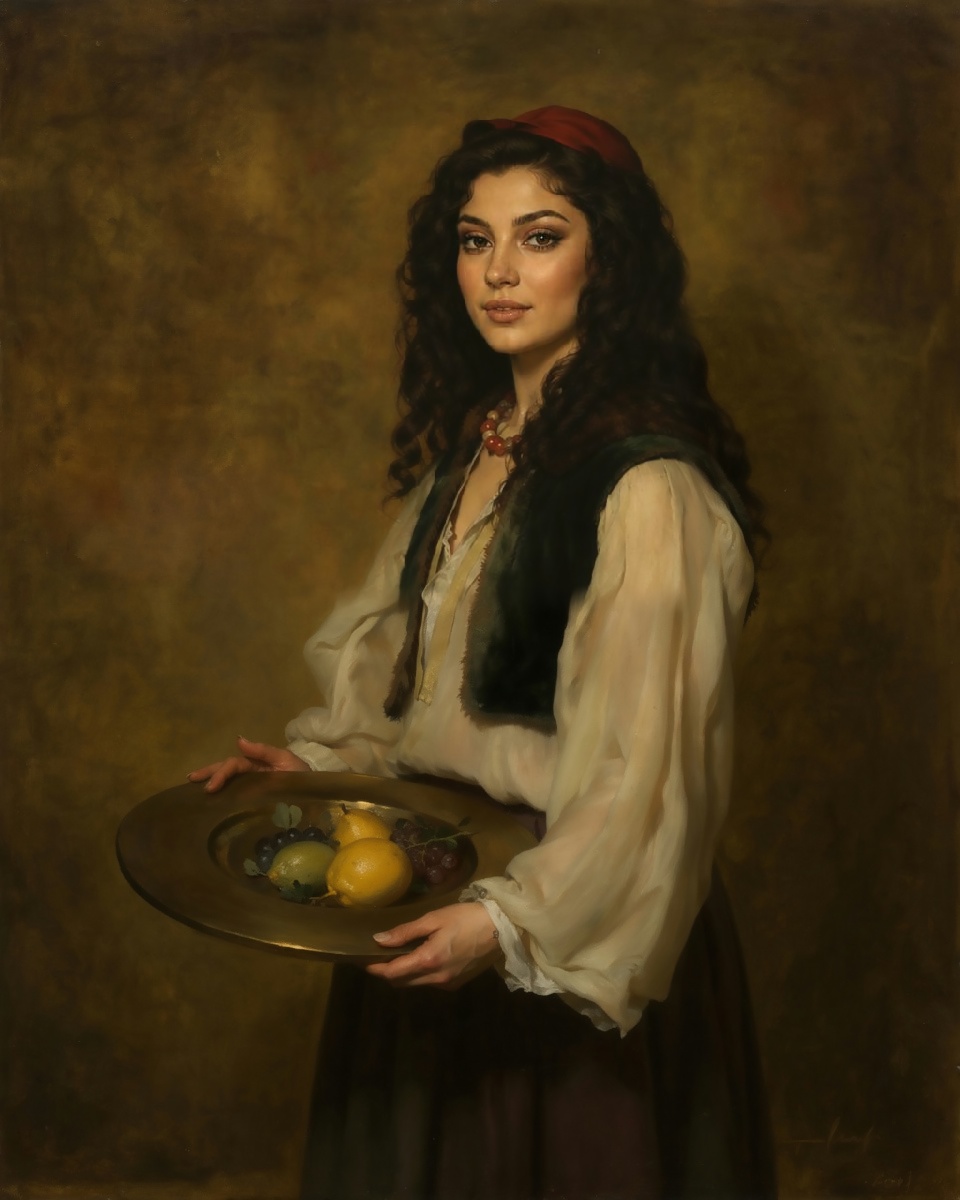
Frank Duveneck's half-length figure holds a brass platter of fruit against a dark, warm ground. The example's sitter had long dark curls in her photo, and the result keeps them under the red cap. Close compositions like this one put the face at the centre of attention, so they suit someone who wants a portrait that is mostly about the person.
Choose a photo that gives the painting a face to work with
You don't need to copy the painting's pose. The examples above all started from ordinary, front-facing photos. What helps:
- A clear face. Eyes visible, no sunglasses, the face filling a good part of the frame.
- Soft, even light. Window light is ideal; hard flash and deep shadows hide the features that make a likeness.
- A recent picture. If the portrait is a gift, use a photo that looks like the person now — or deliberately choose an older one.
There is more detail in our photo guide.
What to check in your preview
Fable produces digitally rendered portrait artwork and shows you a preview before purchase. Use it. Look at the eyes, the shape of the nose and mouth, the hairline and the skin tone first; then the framing and costume as separate, artistic choices. Our likeness checklist walks through it step by step.
If the painting turns out to be wrong for the person, try another one rather than forcing it. A reclining Tissot and an upright Lawrence say very different things about the same face.
From preview to wall
Every masterwork above is also available on its own as a fine-art print, so you can hang the original beside the portrait it inspired. See current prices, print options and our print size guide when you're ready, or browse the full Masterworks collection for more paintings to step into.