Venice paintings: the city and its painters
Venice paintings through two canal views, an allegory of the city and seven works by Venetian painters, from Veronese’s workshop to the Tiepolos.
Venice paintings often begin with a canal, a bridge and a luminous stretch of water. Those views are an essential part of the city’s painted identity, but they are not the whole of Venetian art. The same artistic setting also produced religious stories, imagined histories, allegories and close studies of a face.
This selection starts with two actual views of Venice and an allegory that personifies the city. Seven works by Venetian painters follow, explicitly identified as other subjects rather than additional cityscapes. The Rococo paintings guide helps place several of the eighteenth-century works, while seascape paintings provides a companion for looking at water. Keeping place and school distinct lets the canal views lead into a wider visual culture without pretending that every arch or distant garden depicts a recognisable Venetian address.
1. Marieschi: Santa Maria della Salute across the water
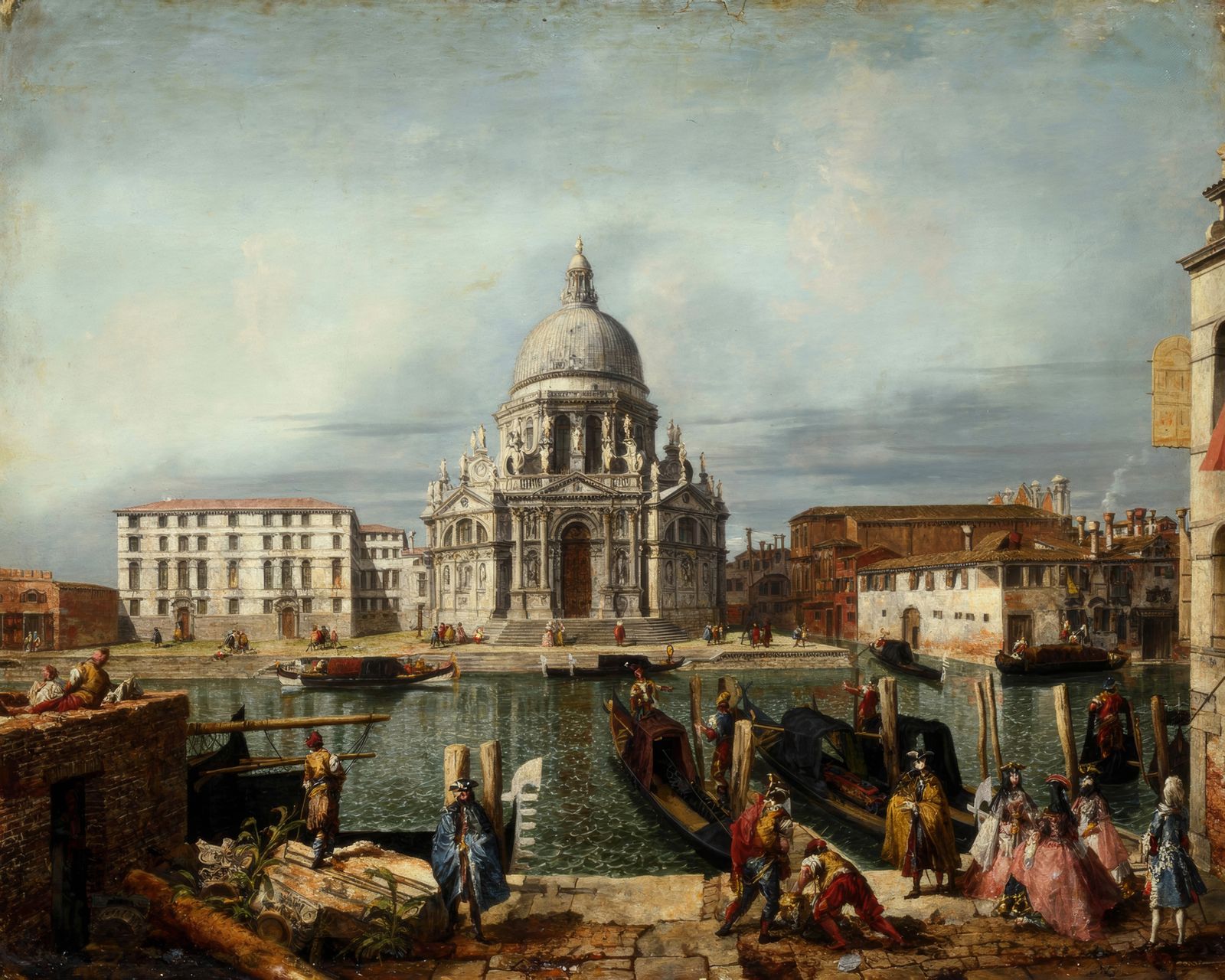
The Church of Santa Maria della Salute, Venice — Michele Marieschi, 1740–41. Art Institute of Chicago. Restored by Surrealium at Vaxholm Fortress, Sweden.
The domed church rises beyond a busy quay, with boats and people occupying the nearer edge of the view. Its mass gives the picture a clear landmark, while the smaller activities prevent the city from becoming an empty architectural diagram. Compare the dome’s rounded silhouette with the low horizontal waterline; that contrast holds the composition together before you begin to examine the separate figures and vessels.
2. Canaletto: the Grand Canal towards the Rialto
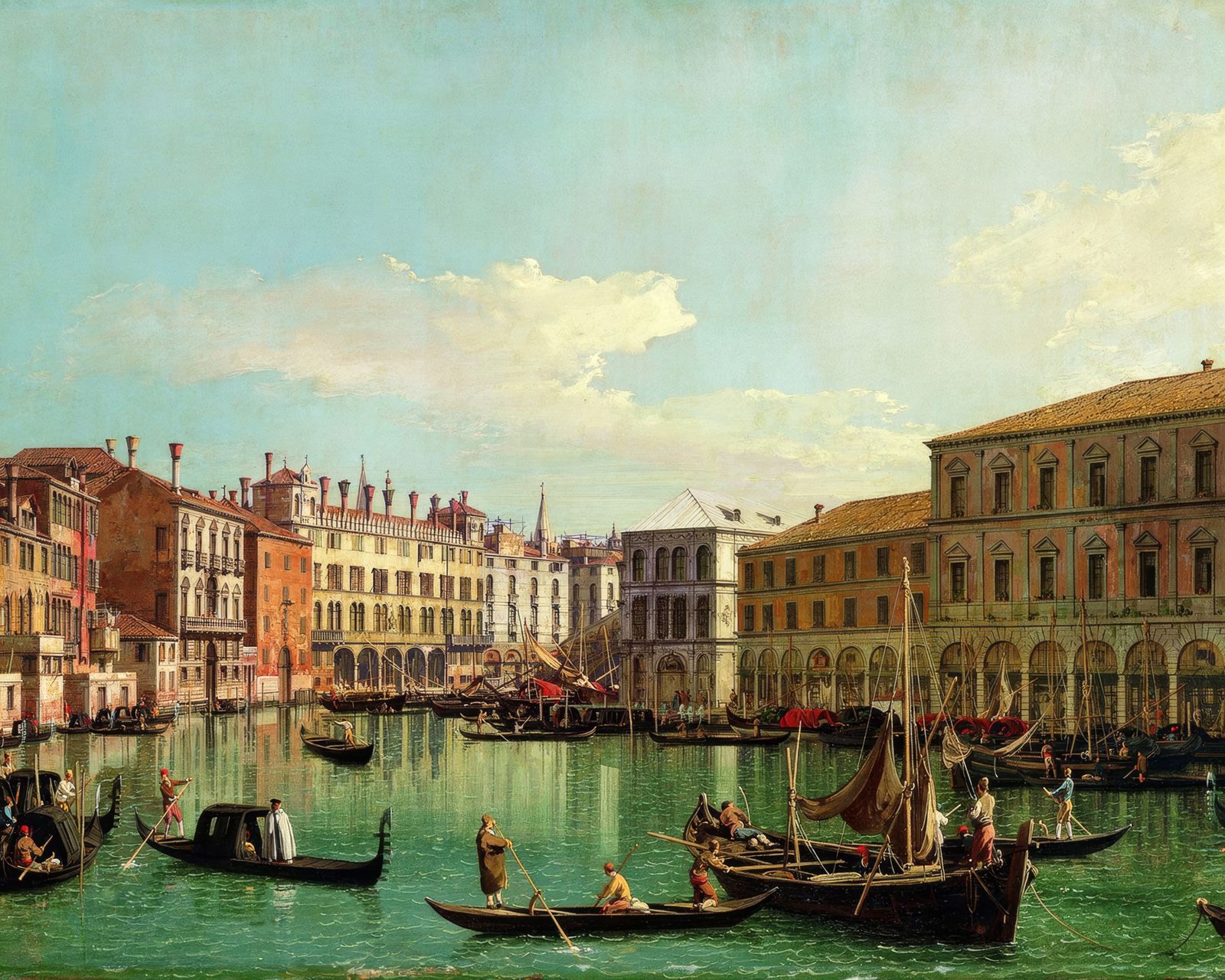
The Grand Canal and Rialto Bridge — Canaletto, 1730s. The Metropolitan Museum of Art, New York. Restored by Surrealium at Vaxholm Fortress, Sweden.
Palaces and gondolas frame the long stretch of water leading towards the bridge. Repeated windows and receding façades make depth legible, while the boats introduce changes of angle across the canal. Look at how the water provides room between the buildings: the painting describes a city whose open spaces are navigable surfaces, without requiring every small mark to serve as a record of a particular day’s traffic.
3. Giovanni Battista Tiepolo: Venice as a person
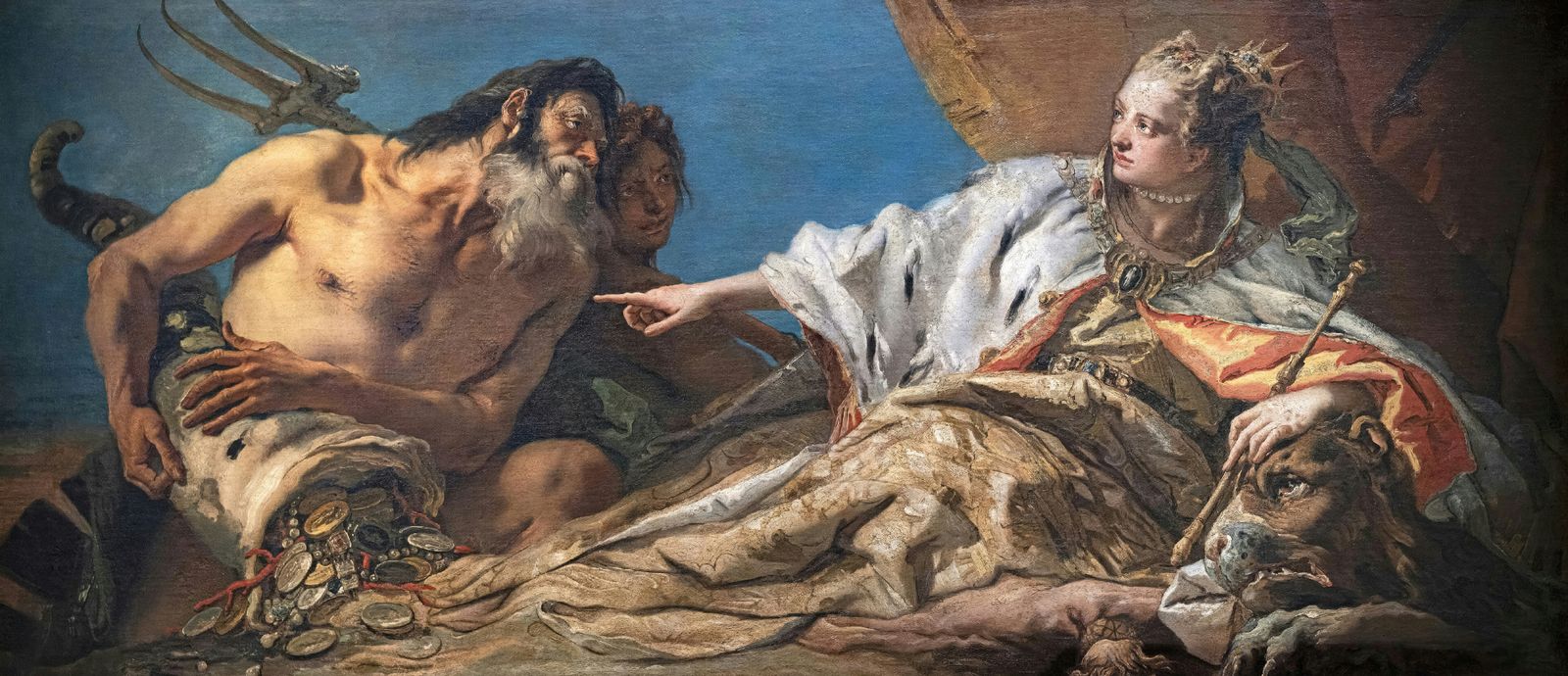
Neptune Offering Gifts to Venice — Giovanni Battista Tiepolo, c. 1745–50. Palazzo Ducale, Venice. Prepared for print by Surrealium at Vaxholm Fortress, Sweden.
Neptune extends gifts towards an enthroned woman in an allegory of Venice. This is a symbolic presentation of the city’s relationship with the sea, not an observed event or another canal view. The large bodies, rich fabric and contrasting positions turn the exchange into public theatre; keep the painting’s personification separate from the real inhabitants and political history it cannot fully represent.
4. Giovanni Battista Tiepolo: a meeting from history
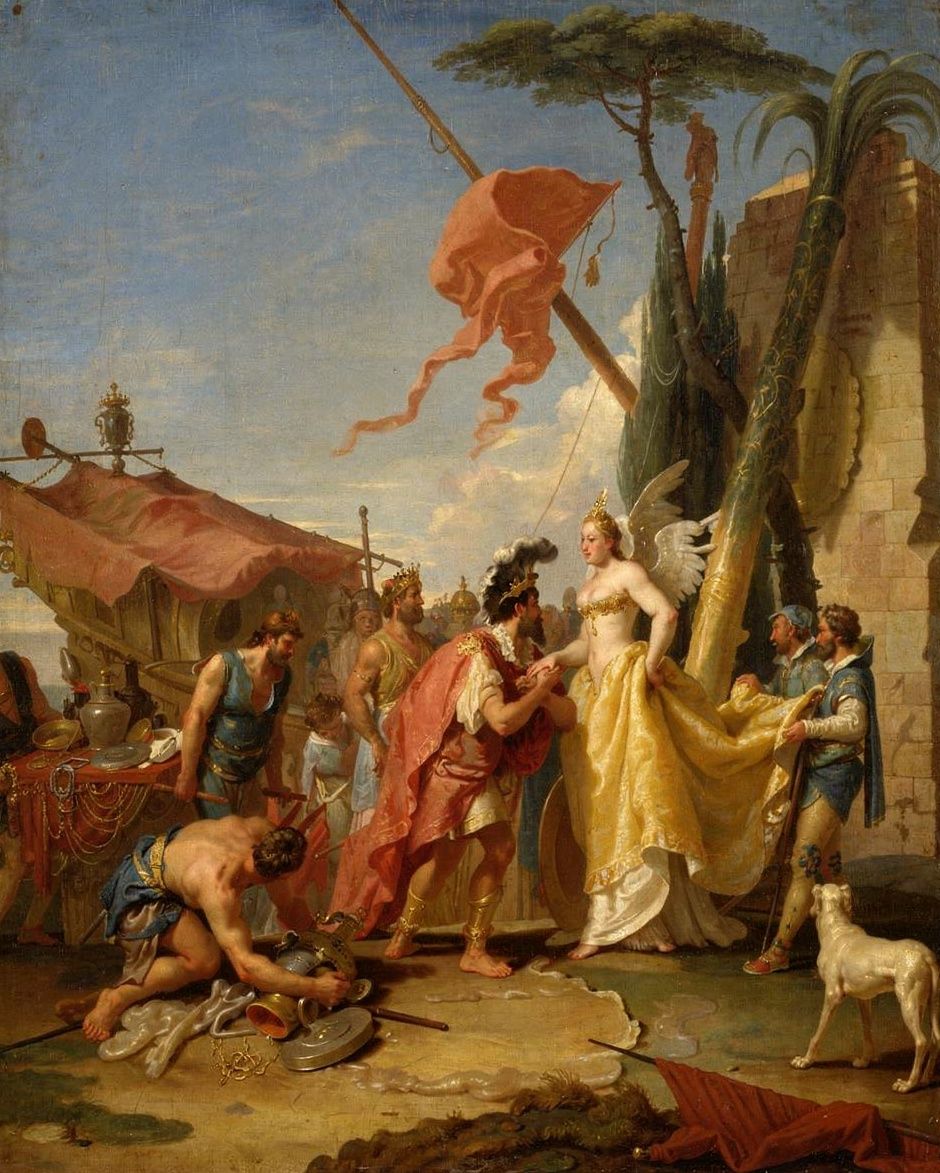
The Meeting of Antony and Cleopatra — Giovanni Battista Tiepolo, ca. 1745–47. The Metropolitan Museum of Art, New York. Restored by Surrealium at Vaxholm Fortress, Sweden.
Antony and Cleopatra meet amid attendants beside a ship in an elaborate architectural setting. The title places the story in the ancient Mediterranean, even though its sumptuous staging belongs to the painter’s own imaginative language. Compare the gestures of the central pair with the surrounding columns and fabric: their encounter becomes legible through a designed space, not through an attempt to document an ordinary Venetian gathering.
5. Giovanni Battista Tiepolo: an enchanted garden
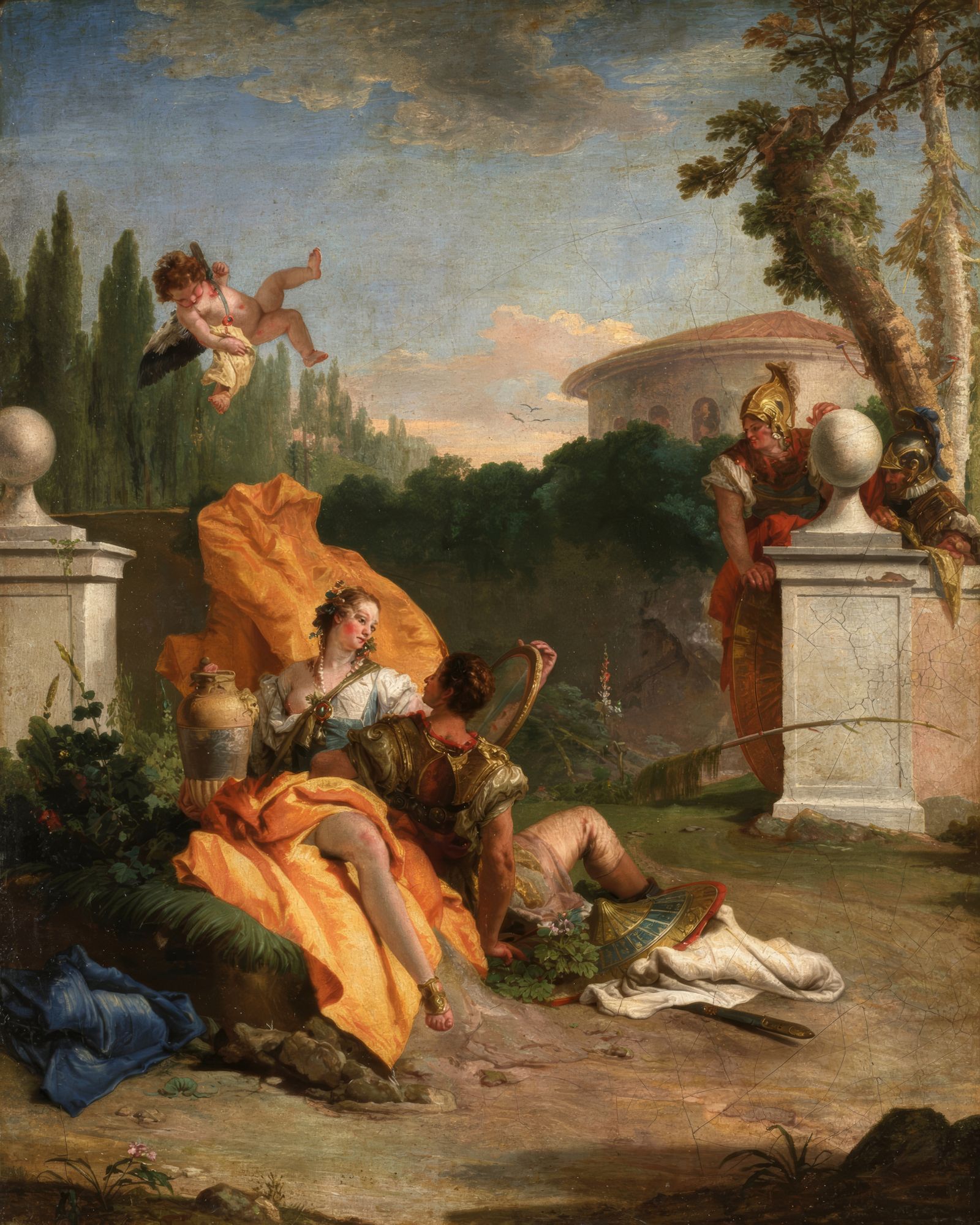
Rinaldo and Armida in Her Garden — Giovanni Battista Tiepolo, c. 1742–45. Art Institute of Chicago. Restored by Surrealium at Vaxholm Fortress, Sweden.
Rinaldo and Armida recline in a garden while other figures appear at a distance. The close grouping and open landscape establish a tension between private absorption and a wider narrative. This is a literary subject rather than a view of Venice, and that distinction lets us enjoy the soft light, curved poses and garden architecture without searching for a real place the painting never promises to identify.
6. Giovanni Domenico Tiepolo: company in the country
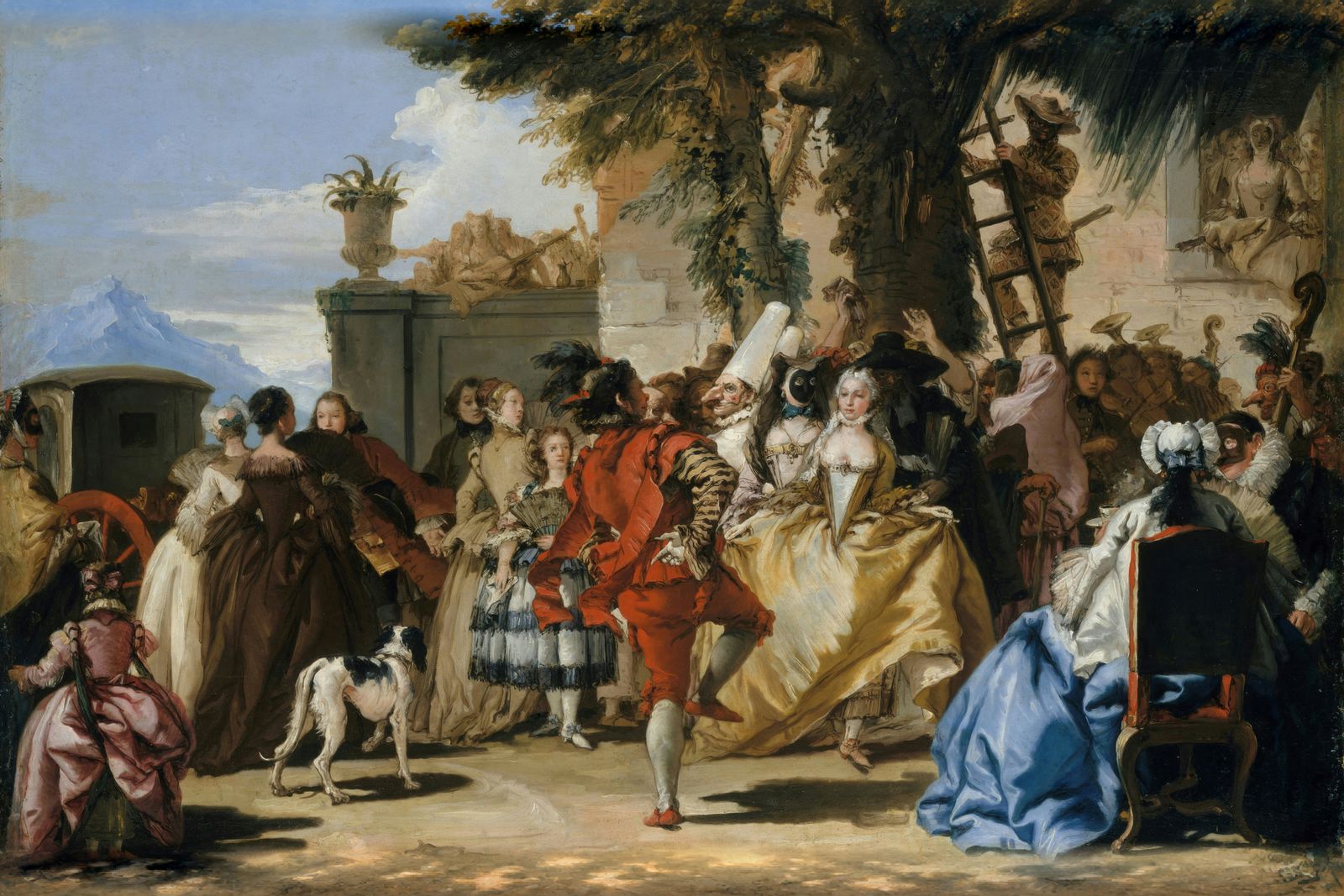
A Dance in the Country — Giovanni Domenico Tiepolo, ca. 1755. The Metropolitan Museum of Art, New York. Prepared for print by Surrealium at Vaxholm Fortress, Sweden.
Masked and costumed figures gather for an outdoor dance in A Dance in the Country. Their gestures and the spaces between them carry the scene more than any single monumental building. The artist is Giovanni Domenico, not his father Giovanni Battista; keeping the names separate helps the picture stand as its own social arrangement rather than as one interchangeable example of a family style.
7. Guardi: an interrupted sacrifice
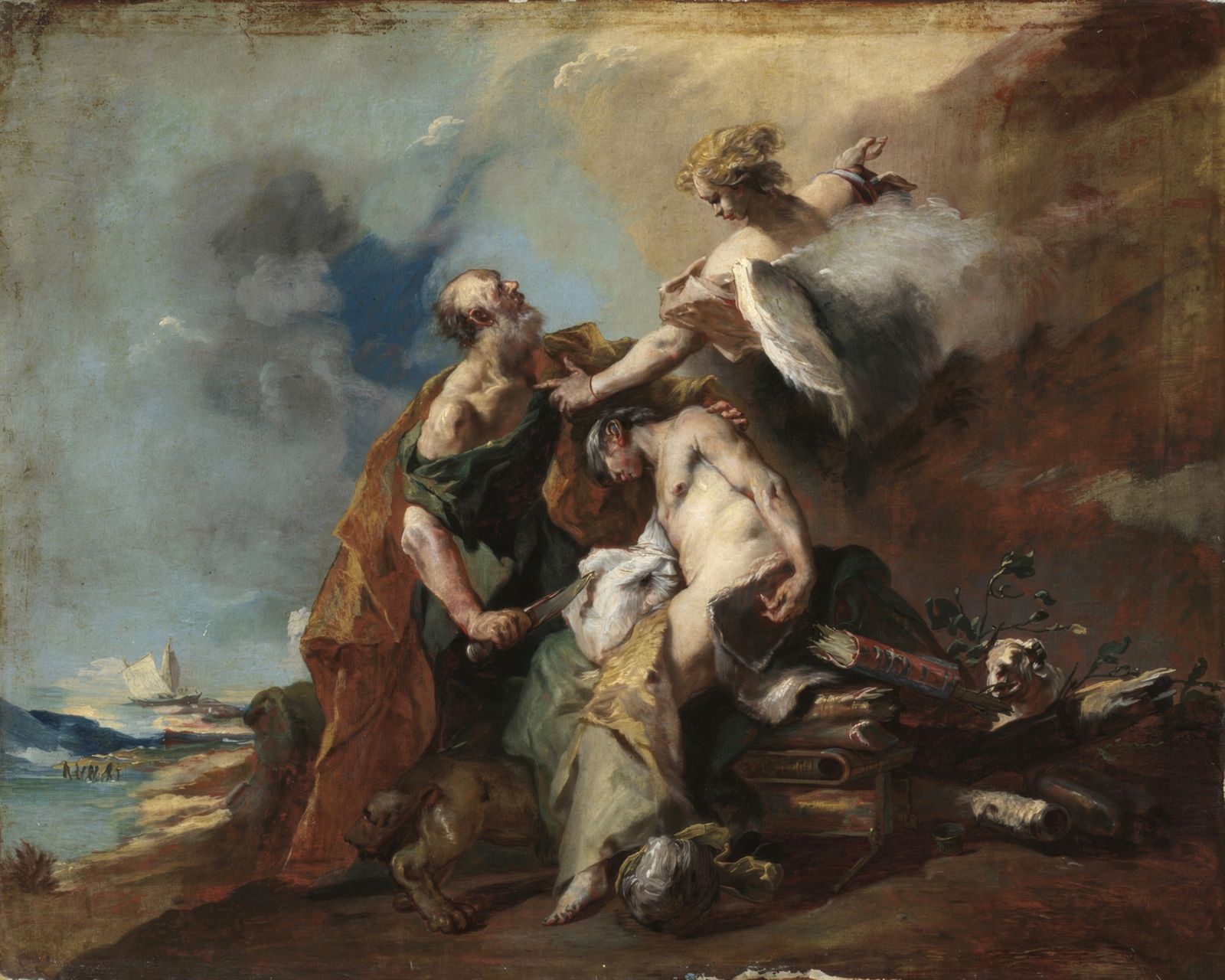
The Sacrifice of Isaac — Francesco Guardi, 1750s. Cleveland Museum of Art. Restored by Surrealium at Vaxholm Fortress, Sweden.
The Sacrifice of Isaac shows an angel interrupting an older man above a child near an altar. Guardi is familiar for Venetian views, but this work demonstrates a different subject within his practice. The urgent diagonal gestures and concentrated light make a useful comparison with the measured canal compositions: one organises a city across distance, while the other compresses a dramatic interruption into a small group.
8. Domenico Tintoretto: an allegorical figure
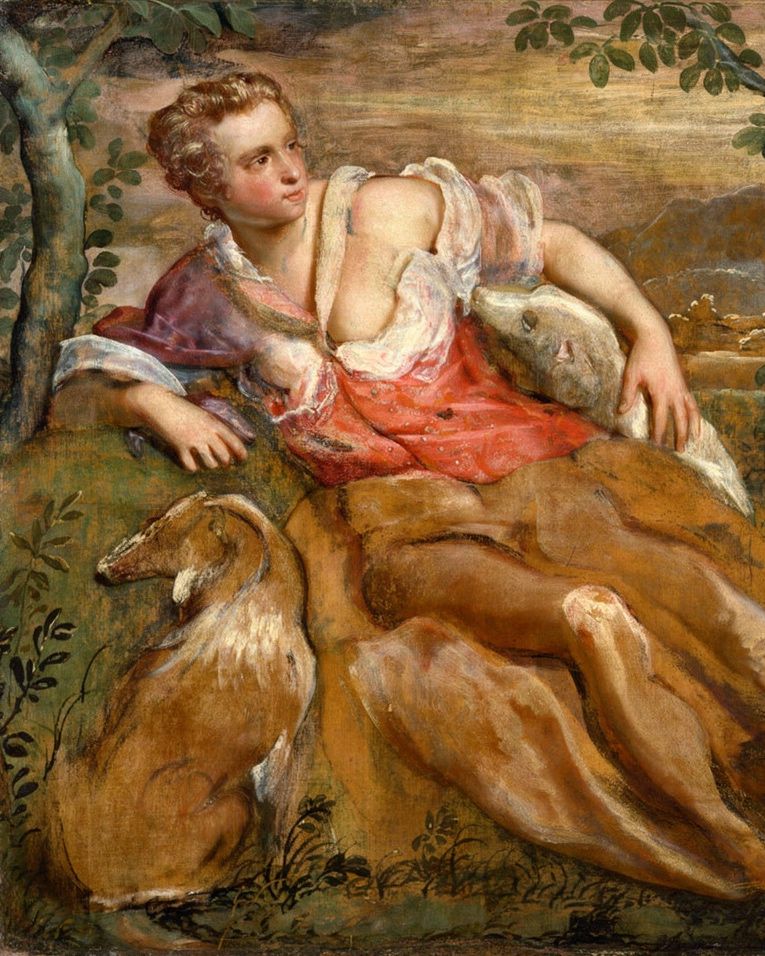
Personification of Fidelity — Domenico Tintoretto, c. 1595-1600. Harvard Art Museums. Restored by Surrealium at Vaxholm Fortress, Sweden.
Personification of Fidelity places a seated woman with animals beside her. The title identifies an abstract quality given bodily form, so the image is not introduced as an ordinary portrait or as evidence of a sitter’s character. Notice the balance between the figure, the pale animal and the darker dog; the composition makes relationships between shapes visible even before the allegorical title enters the reading.
9. Veronese’s workshop: a saint in the wilderness
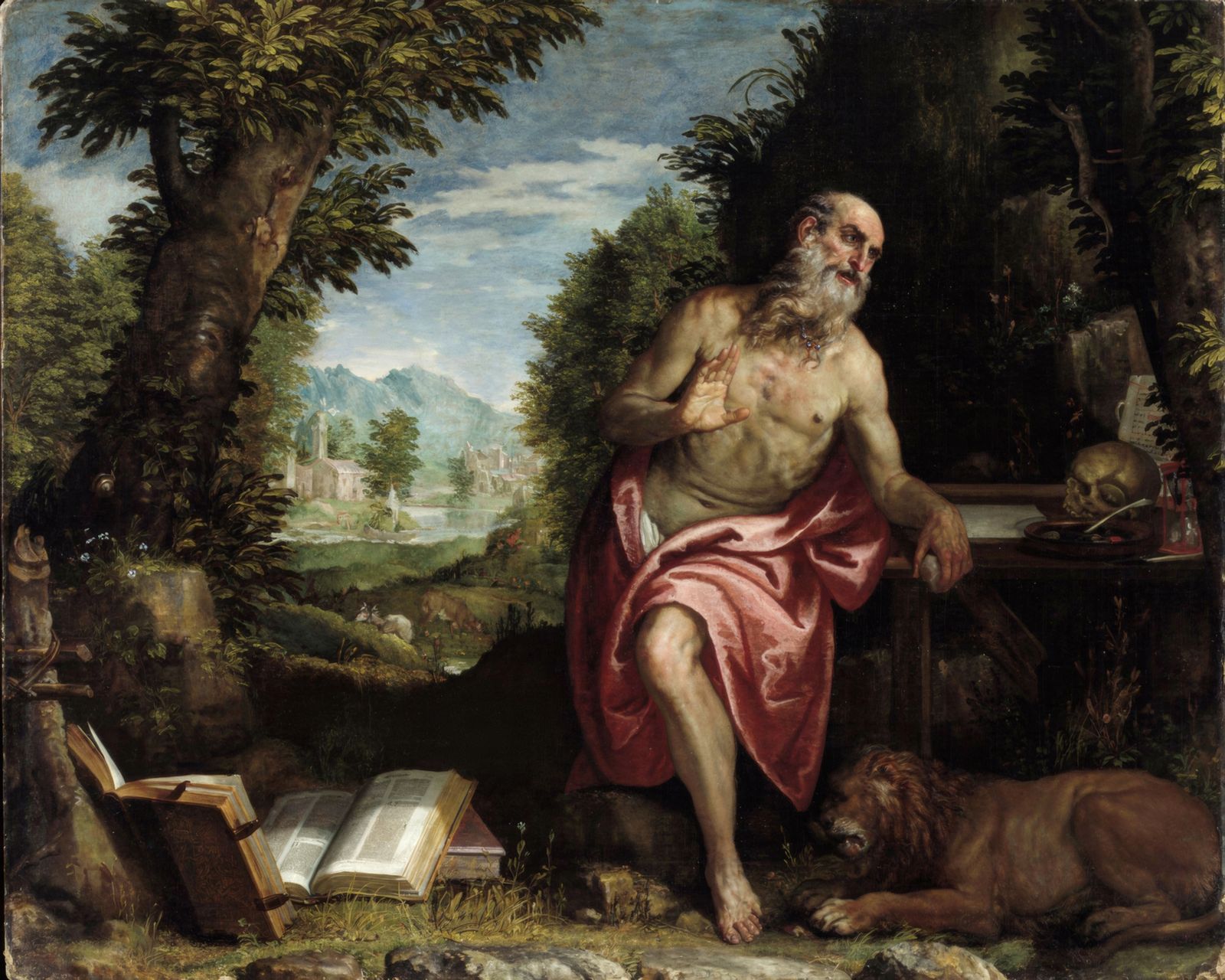
Saint Jerome in the Wilderness — Workshop of Veronese, 1585–90. Art Institute of Chicago. Restored by Surrealium at Vaxholm Fortress, Sweden.
An elderly Saint Jerome sits among books, a skull and a wooded landscape. The attribution is to Veronese’s workshop, a qualification that belongs with the image rather than being quietly removed for a more famous name. Its combination of figure and setting gives another route beyond Venetian canals, with the objects around the saint establishing a devotional subject instead of a tourist’s record of place.
10. Giovanni Domenico Tiepolo: a philosopher’s head
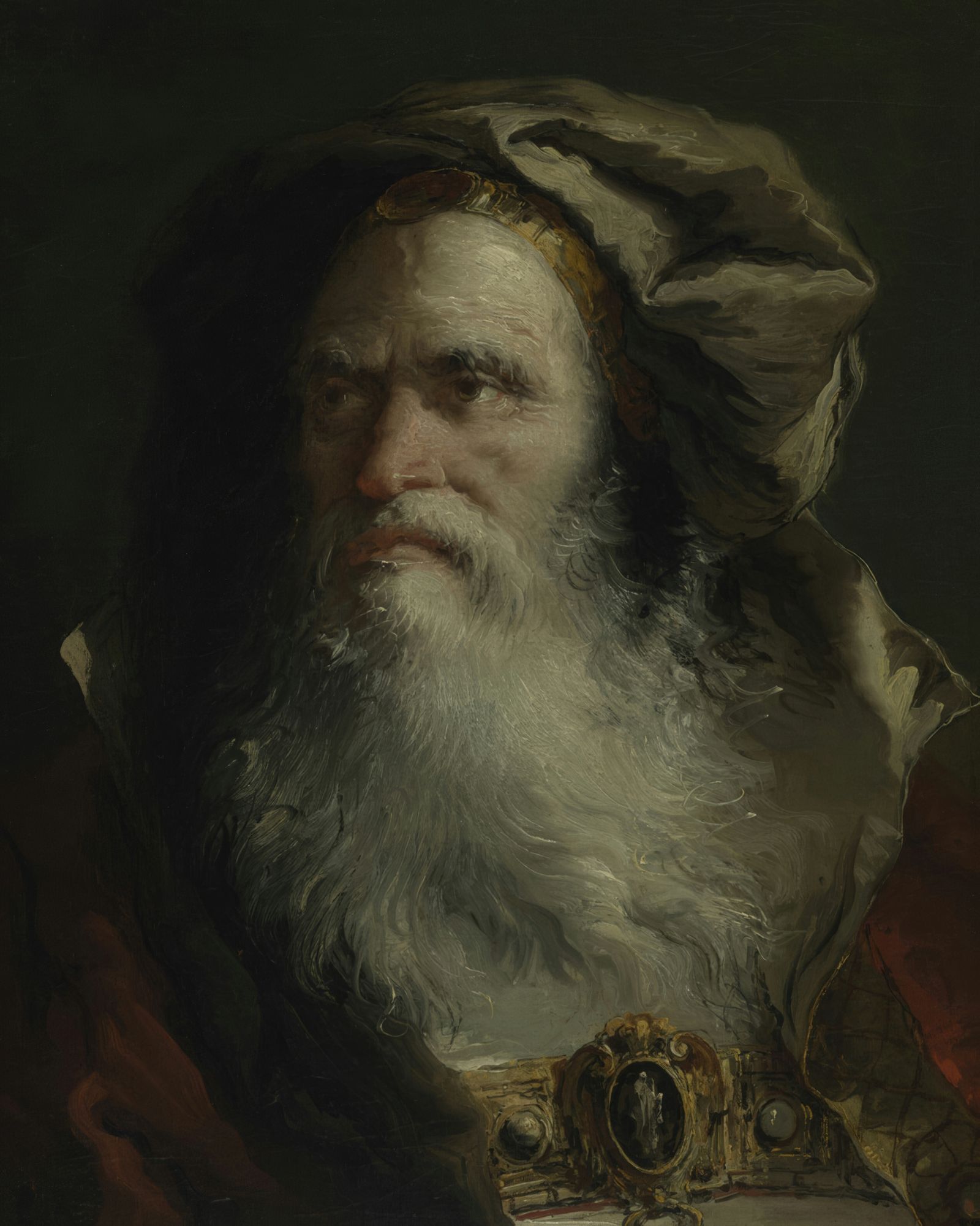
Head of a Philosopher — Giovanni Domenico Tiepolo, 1758–64. Art Institute of Chicago. Restored by Surrealium at Vaxholm Fortress, Sweden.
The bearded man turns towards the light beneath a soft cap. With little narrative action around him, the face and the handling of hair become the main places to look. The title calls him a philosopher, but it does not identify a specific thinker or let us reconstruct his thoughts; this close encounter ends the selection at a very different scale from Marieschi’s distant church.
The famous portrait paintings guide is useful for the philosopher’s head, while the Baroque collection offers further comparisons in gesture, drapery and dramatic space.
If the gift or room calls specifically for Venice, begin with the two canal views or the allegory that names the city. If it is the painters’ handling of light and figures that interests you, follow the later works into their separate subjects. That distinction makes the choice easier to explain. Browse the Masterworks catalogue from a particular image, keeping the place depicted, the artist and the workshop attribution clear.
- Are all ten pictures views of Venice?
- No. The first two are city views, the third is an allegory of Venice, and the remaining seven are other subjects by Venetian artists or a Venetian workshop. Each is labelled so the distinction stays clear.
- What is a veduta?
- The Italian term refers to a view, especially a detailed representation of a city or landscape. Canaletto and Marieschi are associated with Venetian view painting, but a carefully composed view is still an artist’s arrangement rather than a neutral camera record.
- Where can I compare the figure paintings?
- Begin with the philosopher’s head and compare the concentration on the face with the broad gestures in the Tiepolo scenes. Keep the different subjects and artists attached to each work.