Victorian paintings: ten different kinds of drama
Moonlit streets, modern rooms and imagined histories show how varied Victorian painting can be.
Victorian paintings do not share one mood. A wet lane at night, a crowded rescue, a fashionable seaside room and an invented medieval garden can all belong to the same broad period. The term refers to the years of Queen Victoria’s reign, 1837–1901; the works shown here are from before 1900. It is a historical frame rather than the name of a single painting technique.
These ten selections follow what the pictures ask us to do: wait, read a gesture, recognise a story, or enjoy a surface. They give a more useful starting point than treating every Victorian room as dark and every Victorian painting as a moral lesson. For the room around the picture, see Victorian décor; for the sitter and clothing, the Victorian portrait story takes a closer look. Here, begin with the whole composition before deciding which detail should command your attention.
1. A street that asks you to slow down
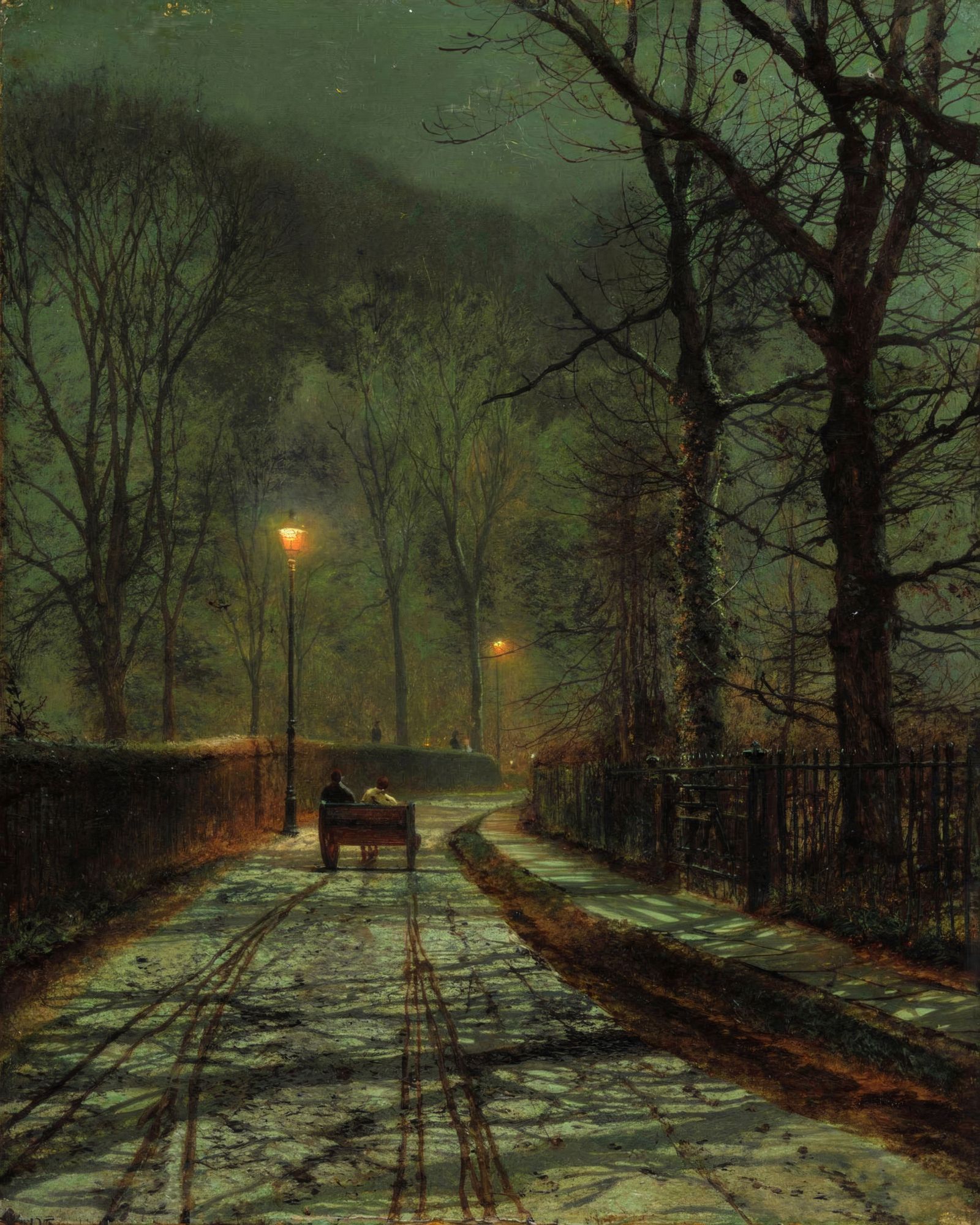
Lane Scene at Night · John Atkinson Grimshaw, 1872 · Art Institute of Chicago. Restored by Surrealium at Vaxholm Fortress, Sweden.
Grimshaw’s lane narrows between walls and bare trees, with small lights set against a greenish night. The paving carries the eye into the distance before any figure can become the subject. If you enjoy this picture, give it a place where you can see its depth from across the room; reducing it to a decorative strip would lose the measured approach that makes the scene persuasive.
2. A hiding place in plain sight
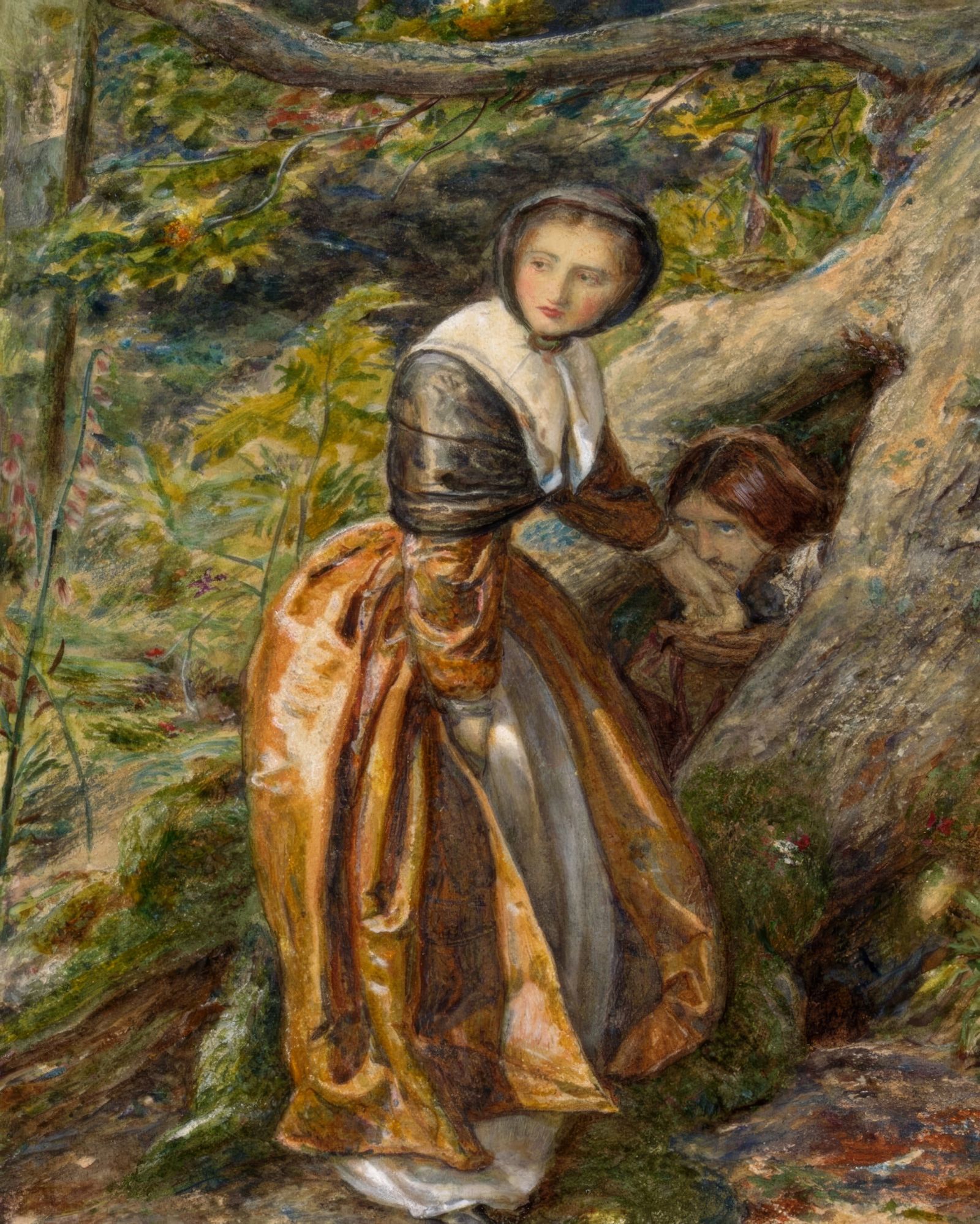
The Proscribed Royalist · John Everett Millais, 1864 · Harvard Art Museums/Fogg Museum, Bequest of Grenville L. Winthrop. Restored by Surrealium at Vaxholm Fortress, Sweden.
In Millais’s woodland scene, the woman’s body and bright skirt stand between the viewer and the man concealed against the tree. Looking becomes an act of discovery, because the plot is distributed through gestures and overlapping forms. You need not solve every historical reference to feel the tension, but keep the title with the picture so that its specific story is not flattened into a generic romantic embrace.
3. A negotiation written in hands
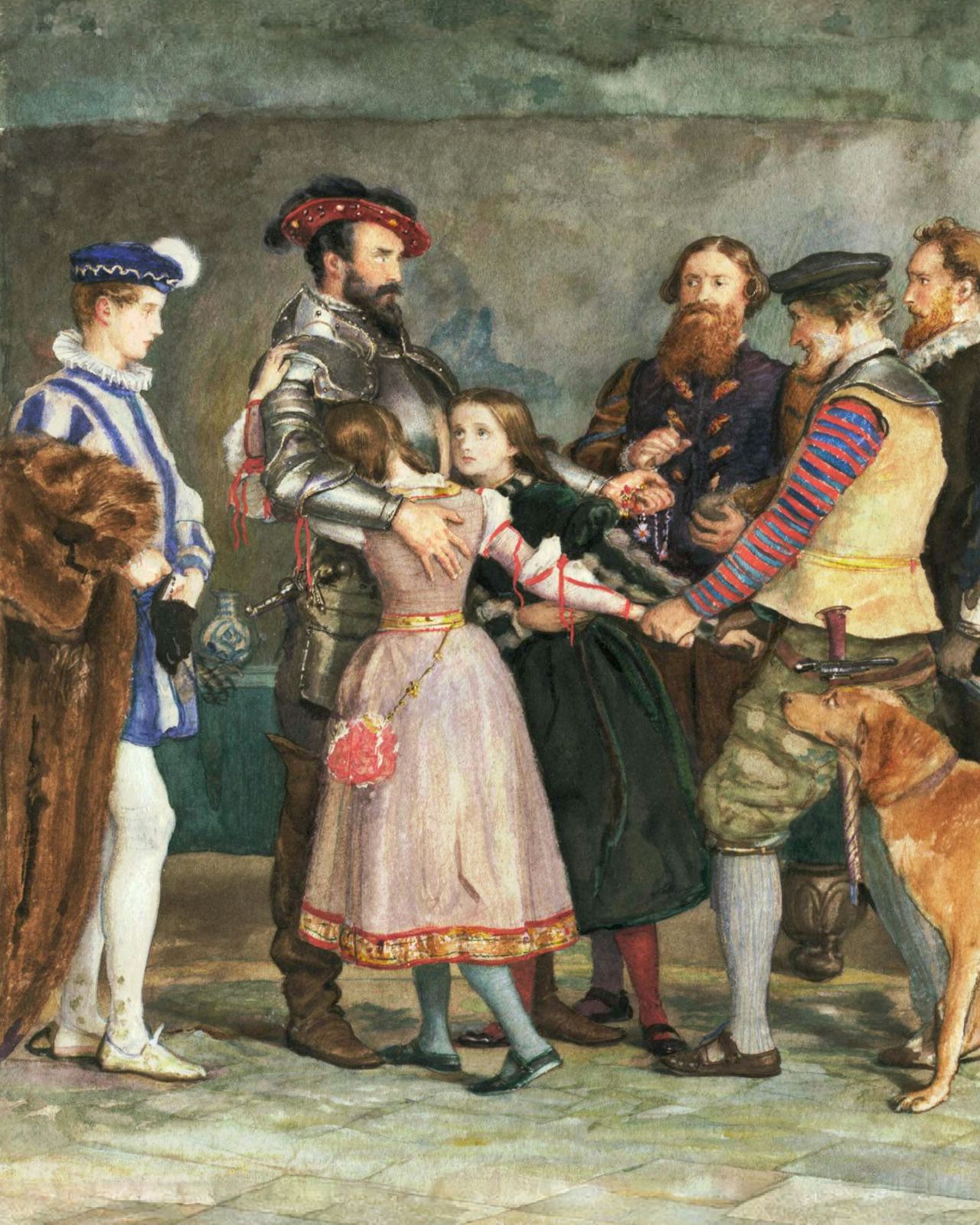
The Ransom · John Everett Millais, c. 1860 · Harvard Art Museums/Fogg Museum, Bequest of Grenville L. Winthrop. Restored by Surrealium at Vaxholm Fortress, Sweden.
The Ransom brings adults and children together in a tightly arranged exchange. Hands, faces and the spaces between bodies carry more information than a single dramatic expression could. Look from one figure to the next and ask who can move freely, who waits and who holds another person close; the answer helps explain why a crowded composition can remain clear rather than simply becoming busy.
4. A medieval setting made for Victorian looking
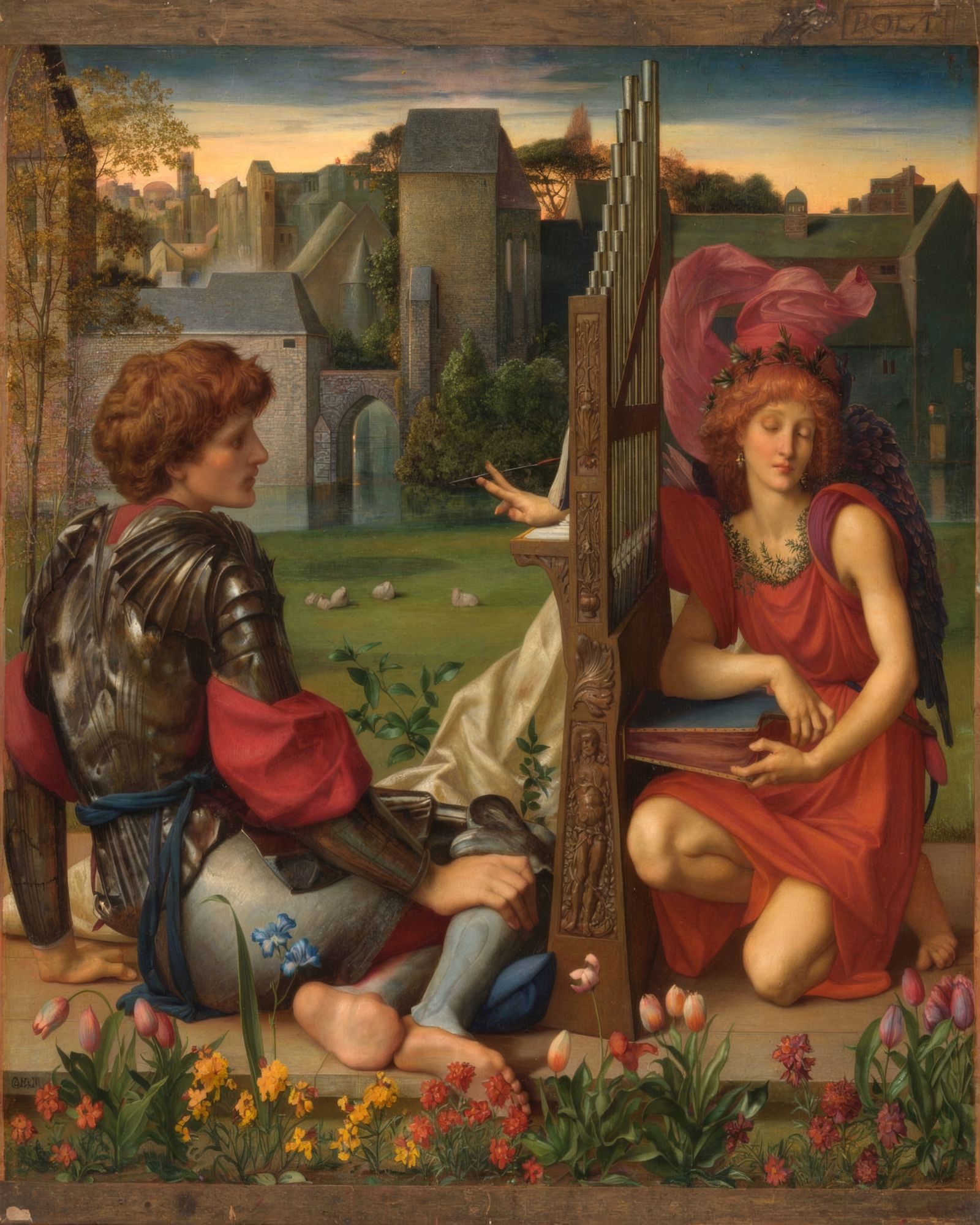
The Love Song · Sir Edward Burne-Jones, 1868–77 · The Metropolitan Museum of Art. Restored by Surrealium at Vaxholm Fortress, Sweden.
Burne-Jones sets music beside a carefully ordered garden, with figures gathered around an instrument and distant architecture. Armour, drapery and flowers belong to an imagined world rather than a documentary account of everyday medieval life. Its appeal is the deliberate arrangement: choose it if you enjoy a picture that rewards attention to repeated shapes and colours, without asking it to serve as evidence of how people actually lived centuries earlier.
5. Modern leisure at the window
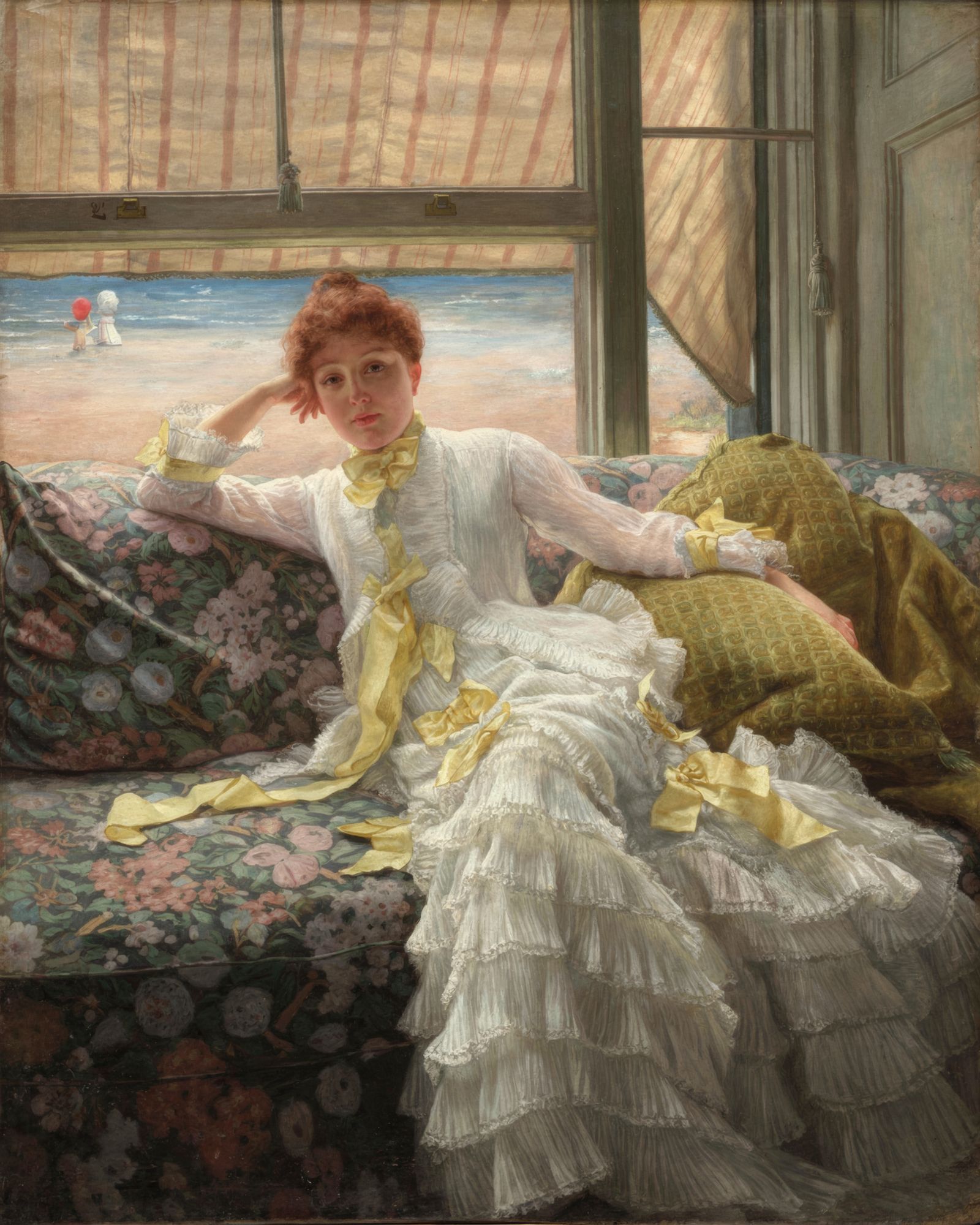
Seaside (July: Specimen of a Portrait) · James Tissot, 1878 · Cleveland Museum of Art. Restored by Surrealium at Vaxholm Fortress, Sweden.
Tissot’s seaside sitter reclines among patterned cushions while the beach remains visible beyond the window. The room and its fabrics take up enough space to become part of the portrait’s subject. This is a useful counterexample to the idea that Victorian painting always escapes into the past: the image makes contemporary dress, comfort and looking outward feel as worthy of attention as a legend.
6. A story balanced on an embrace
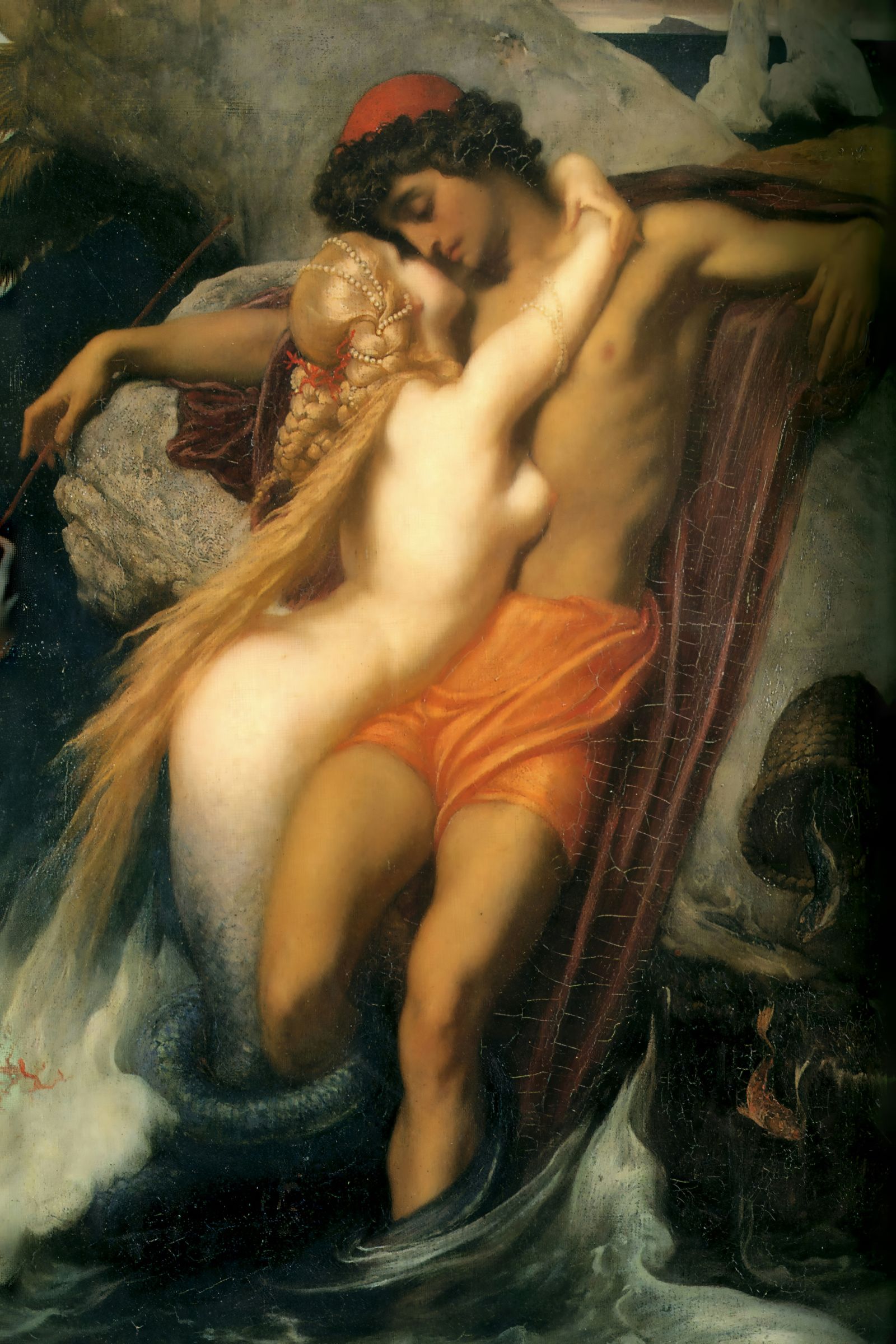
The Fisherman and the Syren · Frederic Leighton, c. 1856–58 · Bristol Museum & Art Gallery. Restored by Surrealium at Vaxholm Fortress, Sweden.
Leighton’s fisherman bends into the figure emerging from the water, with their bodies forming a close, unstable curve. The surrounding rocks and dark sea make the embrace feel very different from a domestic portrait. Read the scene as a constructed mythic encounter, and notice how the painter lets attraction and danger occupy the same gesture rather than assigning one simple emotion to the whole work.
7. Distance as part of the drama
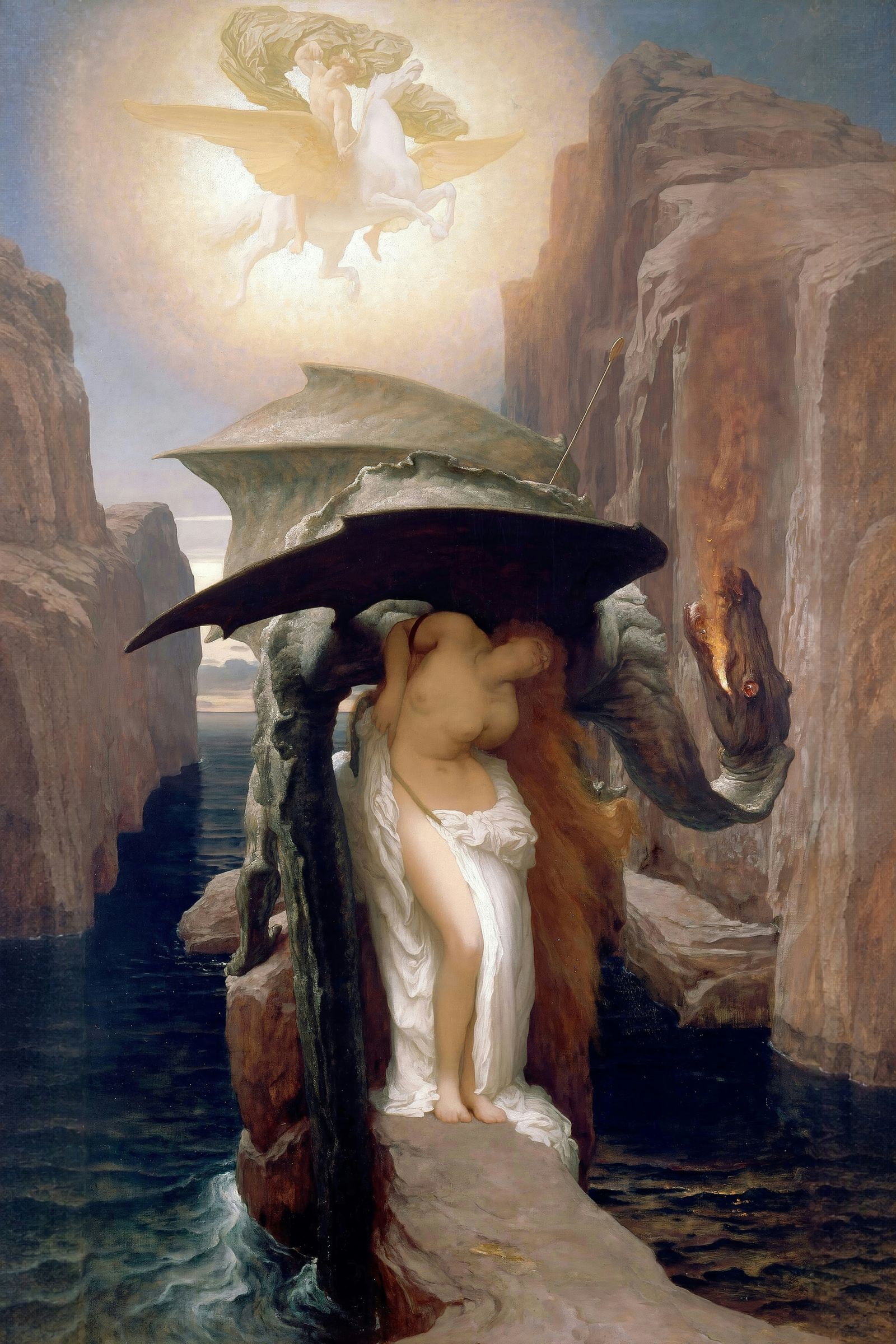
Perseus and Andromeda · Frederic Leighton, 1891 · Walker Art Gallery, Liverpool. Restored by Surrealium at Vaxholm Fortress, Sweden.
Perseus appears high in the illuminated distance while Andromeda and the creature fill the nearer space. That separation makes the rescue a matter of scale and timing as much as heroic action. A small cropped detail would remove the relationship between those zones; look at the entire vertical picture to understand how the viewer is made to anticipate something that has not yet reached the foreground.
8. Antiquity as a place of leisure
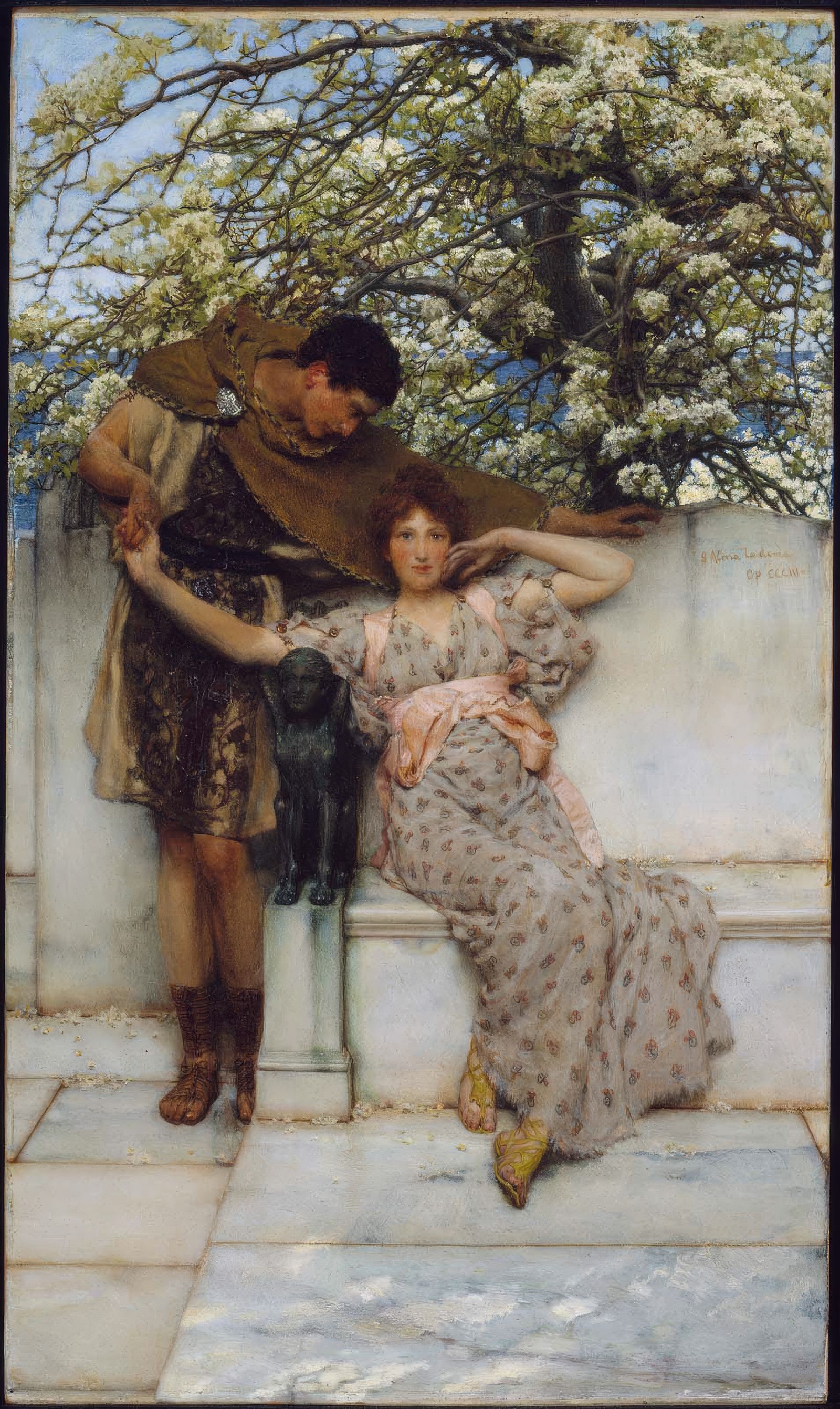
Promise of Spring · Lawrence Alma-Tadema, 1890 · Museum of Fine Arts, Boston. Restored by Surrealium at Vaxholm Fortress, Sweden.
Alma-Tadema’s figures rest beside pale stone beneath flowering branches, their conversation suggested more than explained. The surfaces are unusually insistent: steps, cloth and leaves invite comparison even before a narrative emerges. It offers another Victorian approach to the past, one built around an imagined sensory environment, so enjoy the carefully staged setting without treating it as a straightforward reconstruction of an ancient afternoon.
9. A book that changes the balance of power
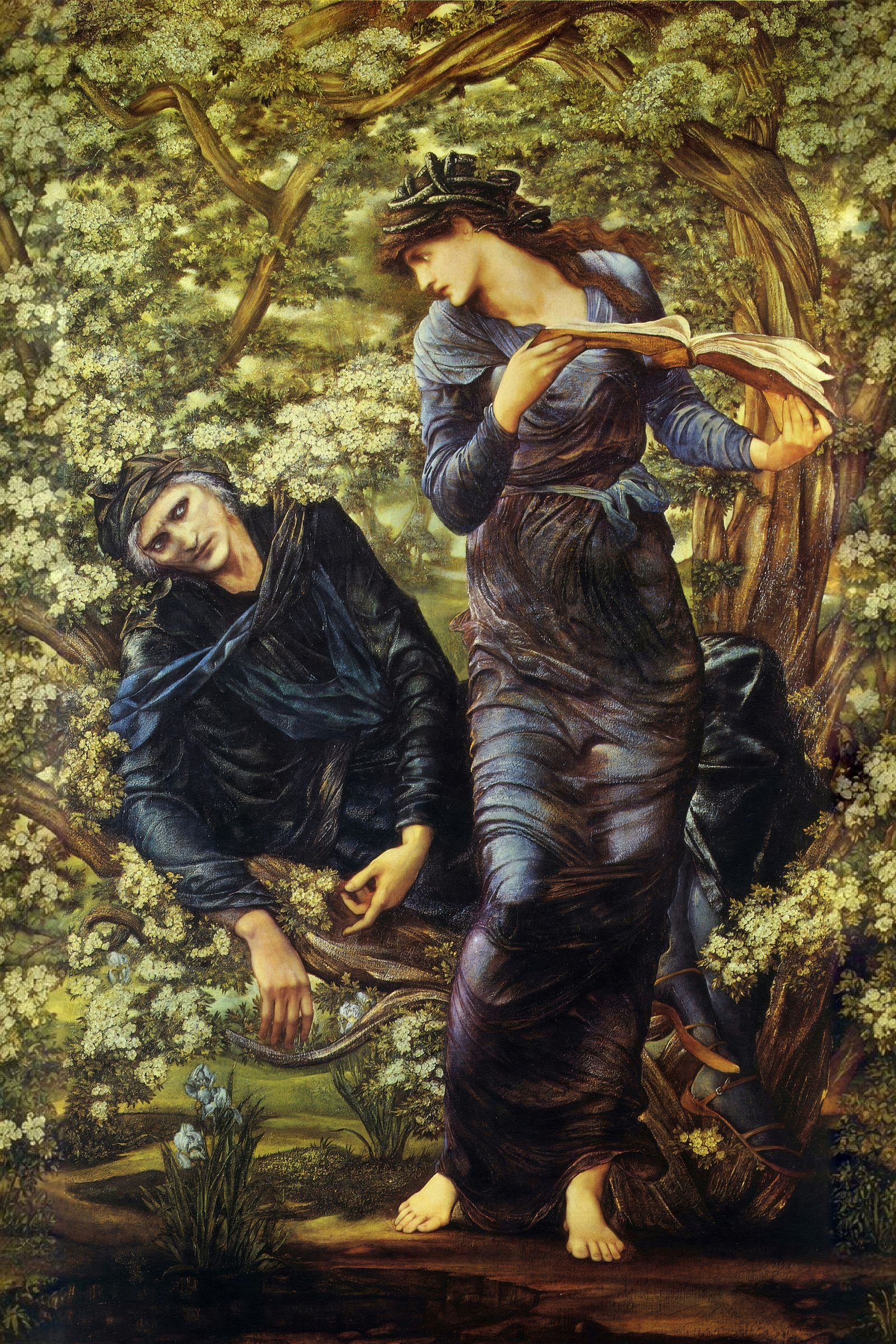
The Beguiling of Merlin · Edward Burne-Jones, 1872–77 · Lady Lever Art Gallery, Port Sunlight. Restored by Surrealium at Vaxholm Fortress, Sweden.
In The Beguiling of Merlin, the standing figure holds a book while the seated figure is enclosed by flowering growth. Their eyes and postures make the relationship more complicated than a simple decorative pairing. Follow the direction of the page and the angle of each body; the composition turns reading into an action with consequences, while leaving the viewer to consider how the two figures understand it.
10. A mythic figure seen from behind
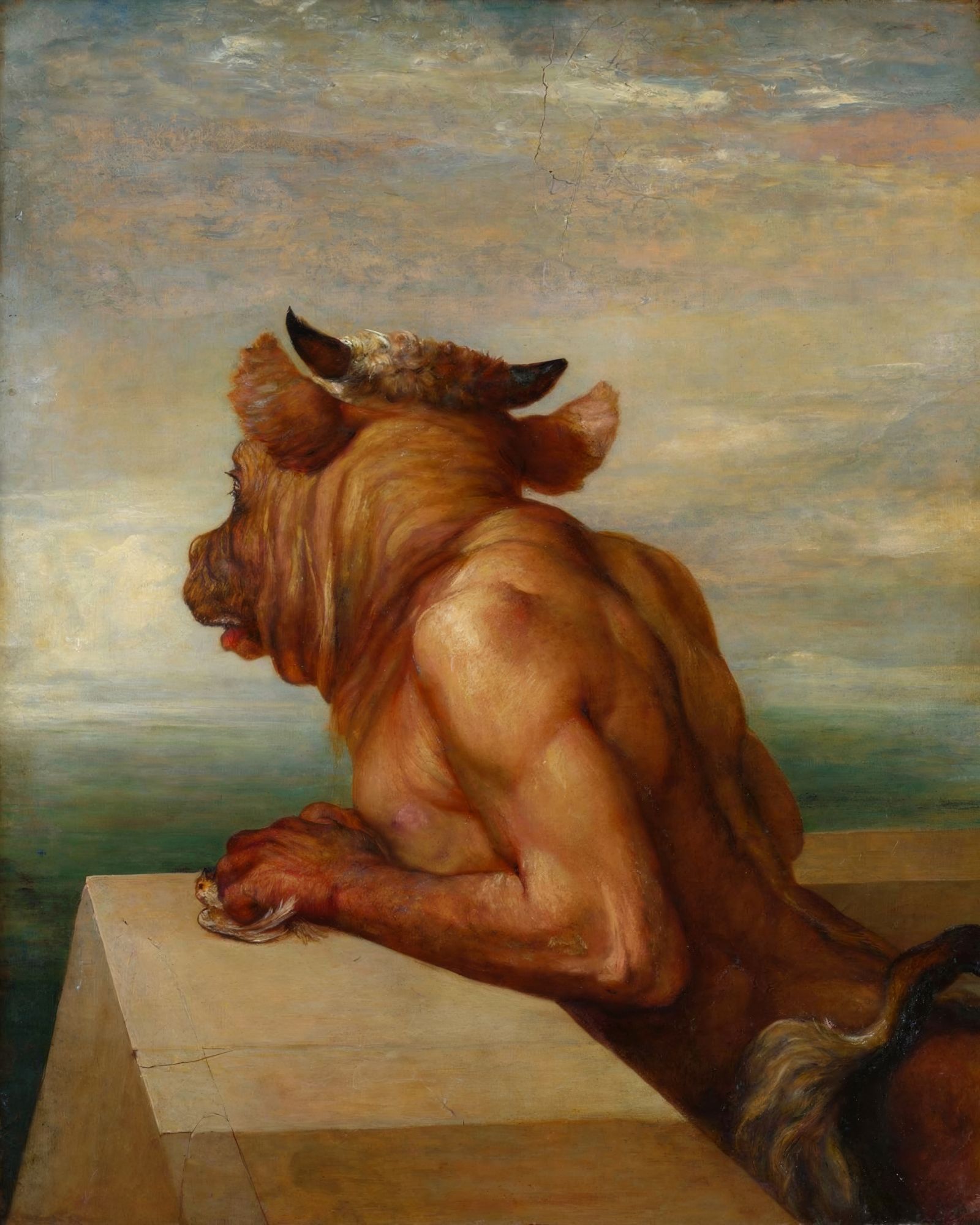
The Minotaur · George Frederic Watts, 1885 · Tate, London. Restored by Surrealium at Vaxholm Fortress, Sweden.
Watts places the Minotaur against a low wall, turning its head toward an open distance. The back and heavy forearms dominate, so the viewer encounters bodily weight before reading a facial expression. It is a demanding choice for a wall because it carries unease as well as sculptural strength; spend time with the whole image before choosing it solely for its warm colour or familiar mythological name.
Choose between these works by the kind of attention you want to return to. Grimshaw offers distance, Tissot a richly furnished pause, and Millais a sequence of decisions between people. The label Victorian will not make those experiences interchangeable. Pre-Raphaelite paintings explore one part of this field, while Dante Gabriel Rossetti gives it a more individual voice.
In Masterworks, compare the complete images at their own proportions. A densely narrated picture needs enough room for its smaller gestures to remain legible; a quieter portrait may depend more on the distance between a face and its surroundings. Choose the work you want to look at repeatedly, then choose the print format around that composition.
Compare the figure arrangements in John Singer Sargent’s paintings and the Impressionist collection.
- What years count as Victorian painting?
- The broad historical label follows Victoria’s reign, 1837–1901. It includes several movements and individual approaches rather than one uniform style. This selection uses works made before 1900.
- Are all Victorian paintings Pre-Raphaelite?
- No. Pre-Raphaelite painting is one part of the period. Moonlit landscapes, fashionable portraits, classical subjects and other kinds of work were also made during the reign, often with very different purposes and handling.
- How should I choose a Victorian print for a modern room?
- Begin with the whole picture and your own response to it. Compare its proportions, level of detail and dominant colours with the available wall space, then let the frame support the image rather than trying to recreate an entire period interior.