Vintage wall art: 12 posters, maps and prints from the past
Toulouse-Lautrec’s Jane Avril, Manet’s Punch, Ortelius’s Iceland, Currier and Ives on the Hudson and a Cassatt colour print: twelve real vintage pieces for your walls.
Vintage wall art is at its best when it is truly old: posters, maps, caricatures and colour prints that were made to be sold, pinned up and enjoyed in their own time. They have the charm of real printing, real paper and real history.
Here are twelve, in three groups: posters and caricatures, maps and marvels, and colour prints. Each is shown with its colour palette, and each can be ordered as a print.
Posters and caricatures
Paris nightlife and London satire.
1. Jane Avril
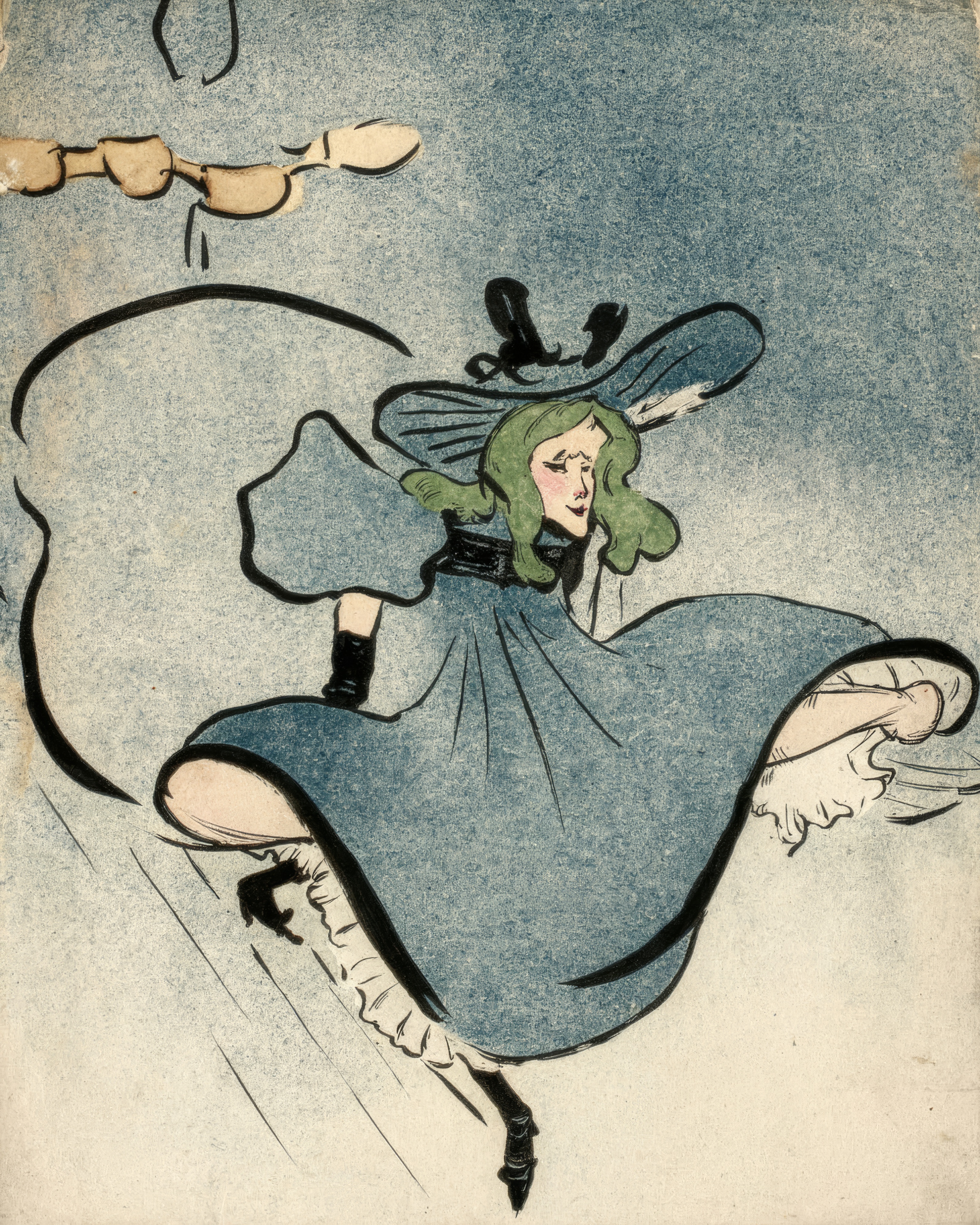
Henri de Toulouse-Lautrec, Jane Avril, 1893. Lithograph. Cleveland Museum of Art.
Henri de Toulouse-Lautrec made this poster of his friend, the dancer Jane Avril, in 1893 for her show at the Jardin de Paris. It is one of the great posters of the Belle Époque.
The classic vintage poster for a living room or hall.
2. Punch
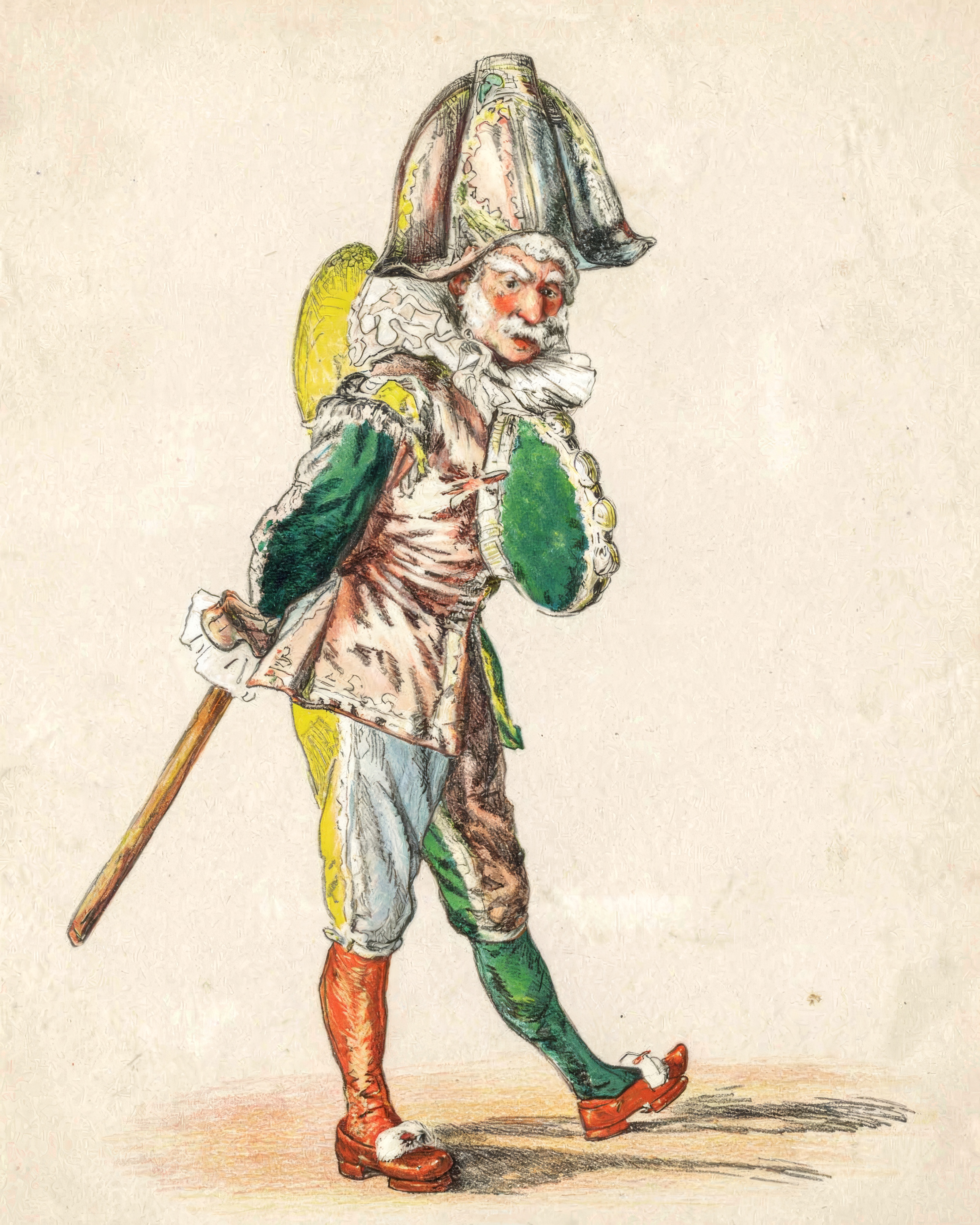
Édouard Manet, Punch, 1874. Lithograph printed in color from seven stones (beige, orange, green, yellow, light blue, white, black), with scraping, on ivory wove paper. Art Institute of Chicago.
Édouard Manet made this colour lithograph of Punch, or Polichinelle, in 1874, printed from seven stones.
A cheerful, colourful print for a playroom or study.
3. A Russian Dandy
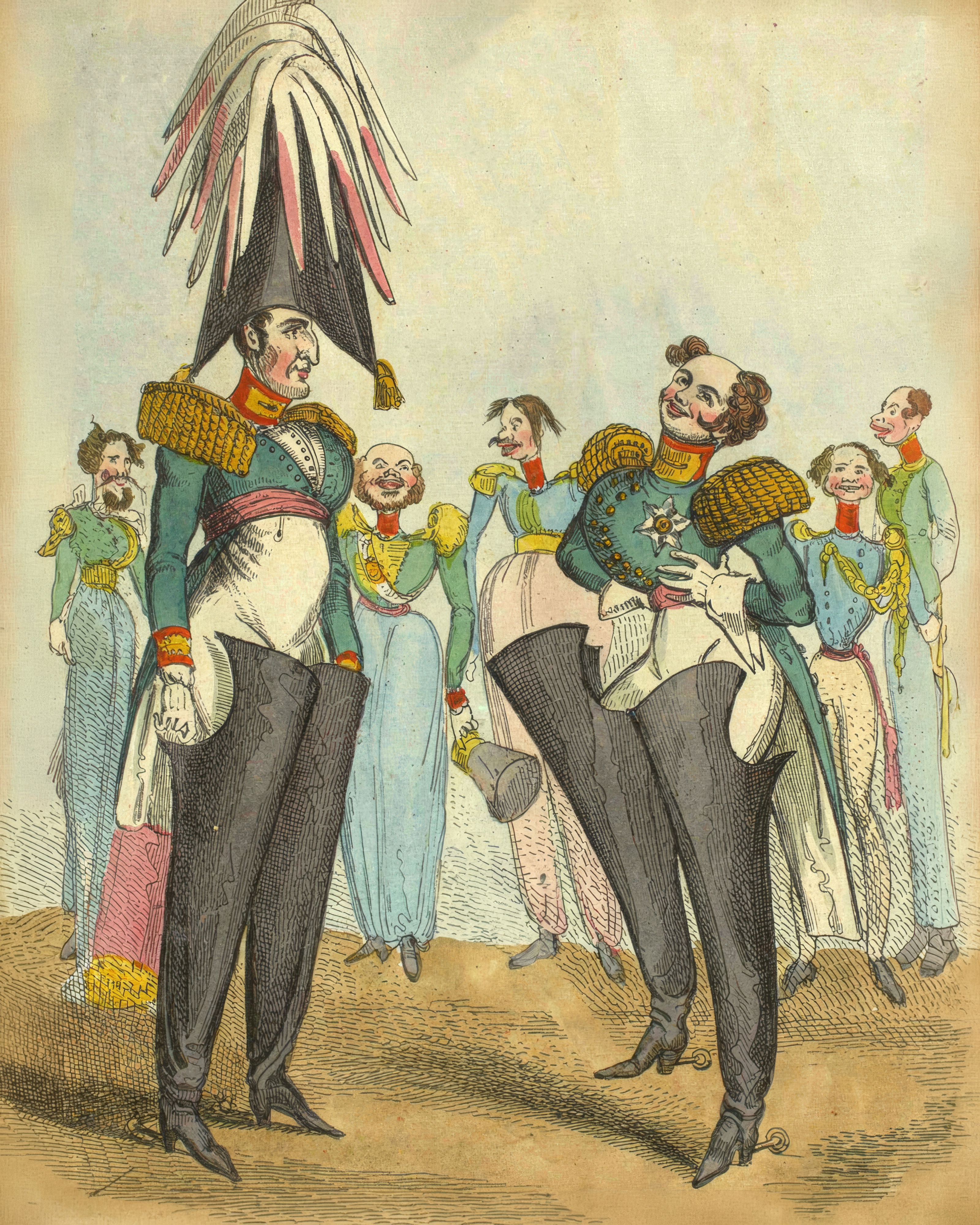
William Heath, A Russian Dandy, 1818. Hand-colored etching on ivory laid paper. Art Institute of Chicago.
William Heath made this hand coloured caricature of a dandy in 1818, when London print shops sold satirical prints to crowds at their windows.
A witty print for a dressing room or a hallway.
4. The Supper after the Masked Ball
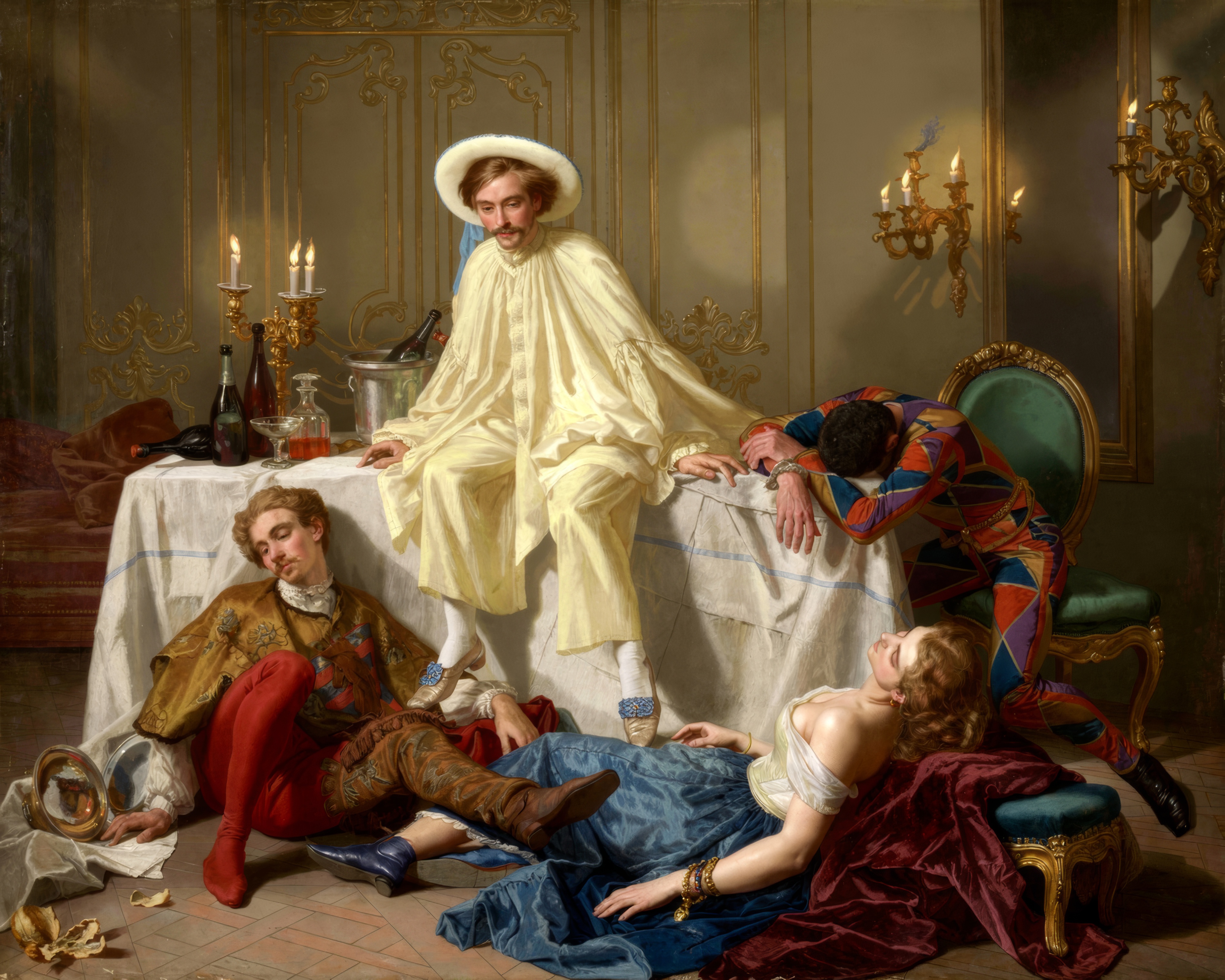
Thomas Couture, The Supper after the Masked Ball, c. 1855. Woodcut with painted and stenciled additions on tan wove paper, laid down on fabric, and stretched on a wooden stretcher. Art Institute of Chicago.
This print after Thomas Couture was made around 1855 by Jules Desfossé, a famous Paris wallpaper maker, with colour added by stencil.
Muted red and teal for a dining room.
Maps and marvels
Old maps, sea monsters and river views.
5. Islandia
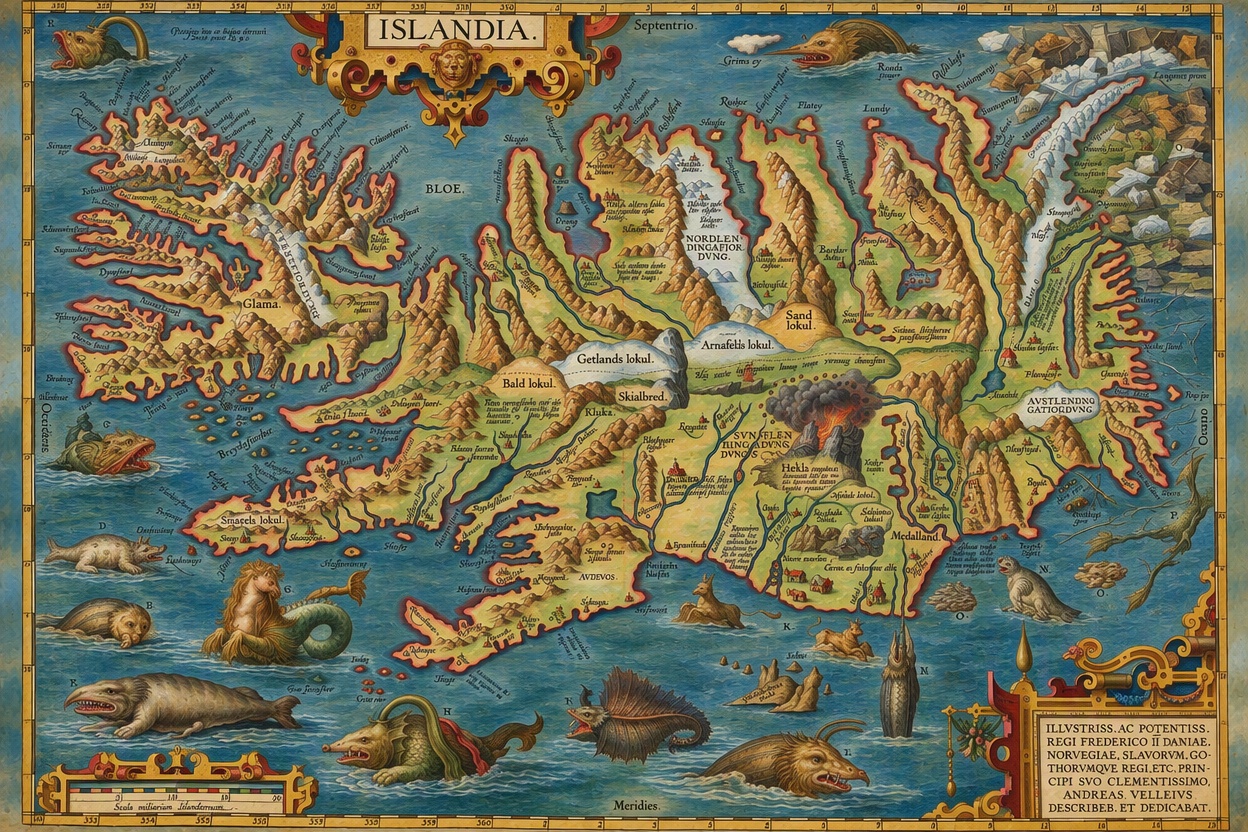
Abraham Ortelius, Islandia, 1590. Atelier colour edition of the engraved map.
Abraham Ortelius published his map of Iceland in 1590 in the first modern atlas. Its sea monsters are among the most famous on any map. This is an atelier colour edition.
A wonderful map for a study or a child’s room.
6. Sea Wonders and Strange Beasts
After Sebastian Münster, Sea Wonders and Strange Beasts, c. 1570. Hand-coloured woodcut (from Münster's Cosmographia).
This woodcut comes from Sebastian Münster’s Cosmographia, the great sixteenth century description of the world. It gathers all the monsters sailors feared.
A curiosity for a bathroom, study or hallway.
7. Up the Hudson
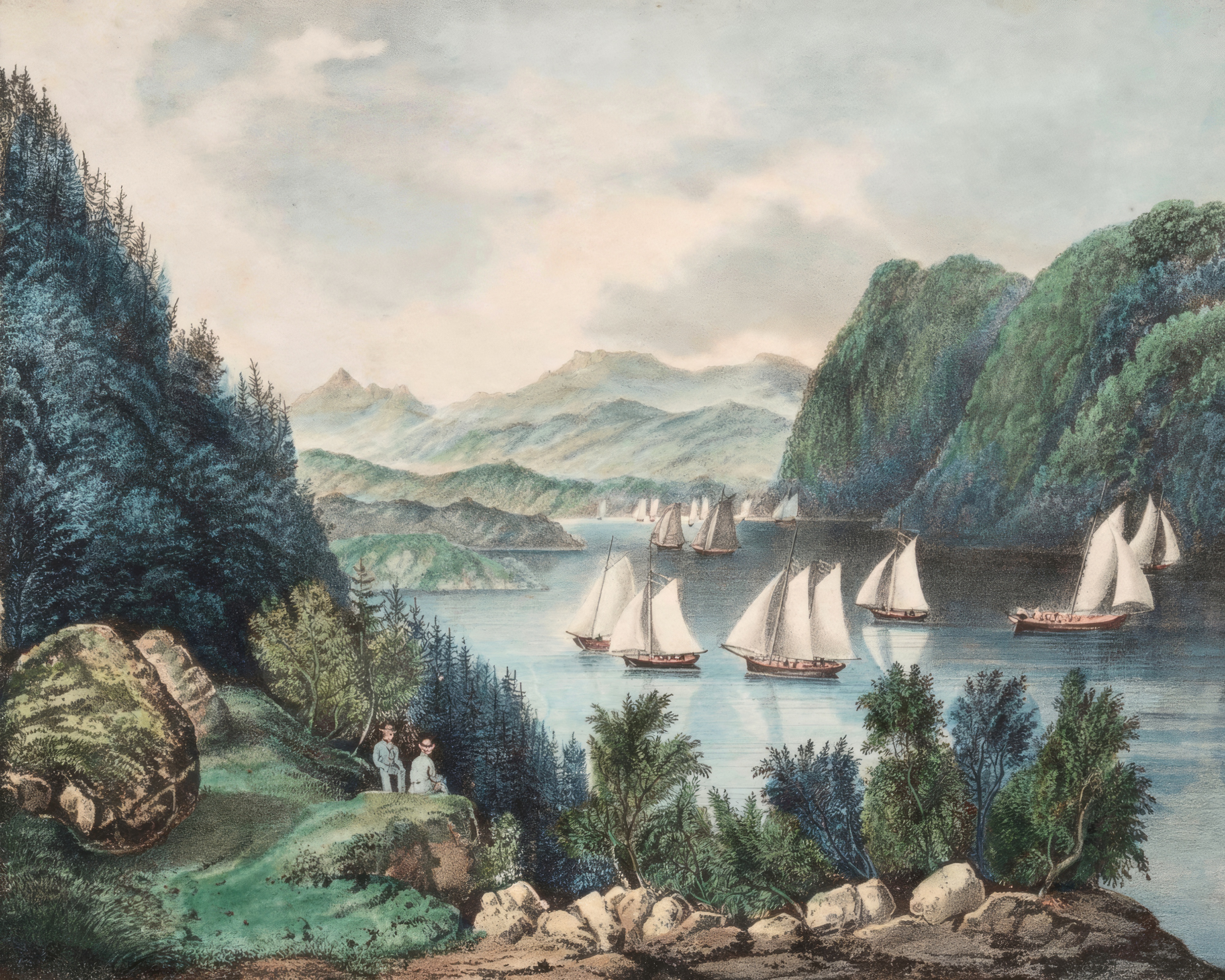
Currier and Ives, Up the Hudson, c. 1857–72. Lithograph, hand colored. Cleveland Museum of Art.
Currier and Ives sold cheap, cheerful lithographs to American homes in the nineteenth century. This view up the Hudson was made between about 1857 and 1872.
Soft blues and greens for a family room.
8. The Palisades (No. 19 of The Hudson River Portfolio)
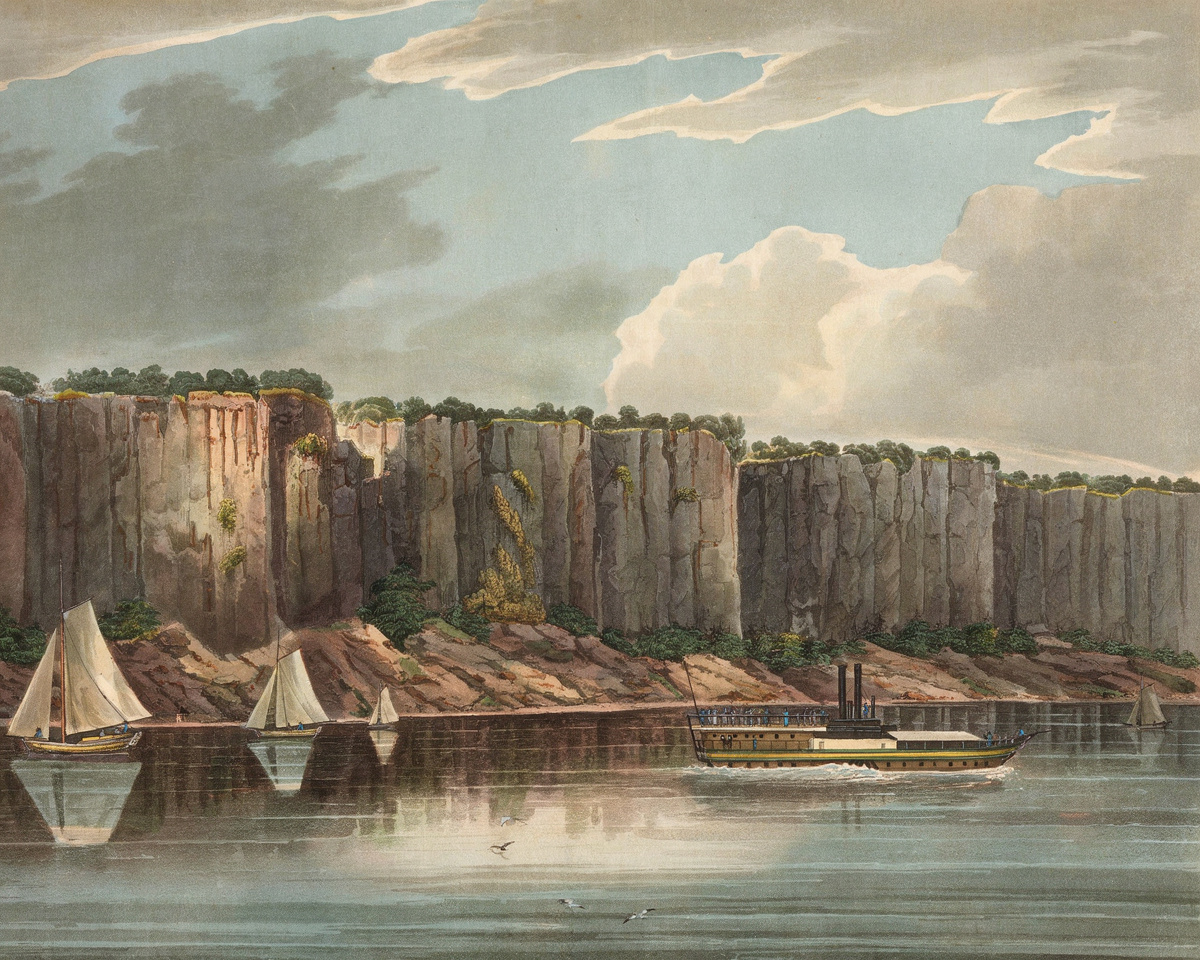
John Hill, The Palisades (No. 19 of The Hudson River Portfolio), 1823–24. Aquatint printed in color with hand-coloring; first state of two (Koke). The Metropolitan Museum of Art, New York.
John Hill engraved The Hudson River Portfolio in 1823 and 1824, one of the first great American picture books. This is the Palisades.
Quiet greys for a calm study.
Colour prints
French, American and Japanese printmaking at its finest.
9. La Rose (The Rose)
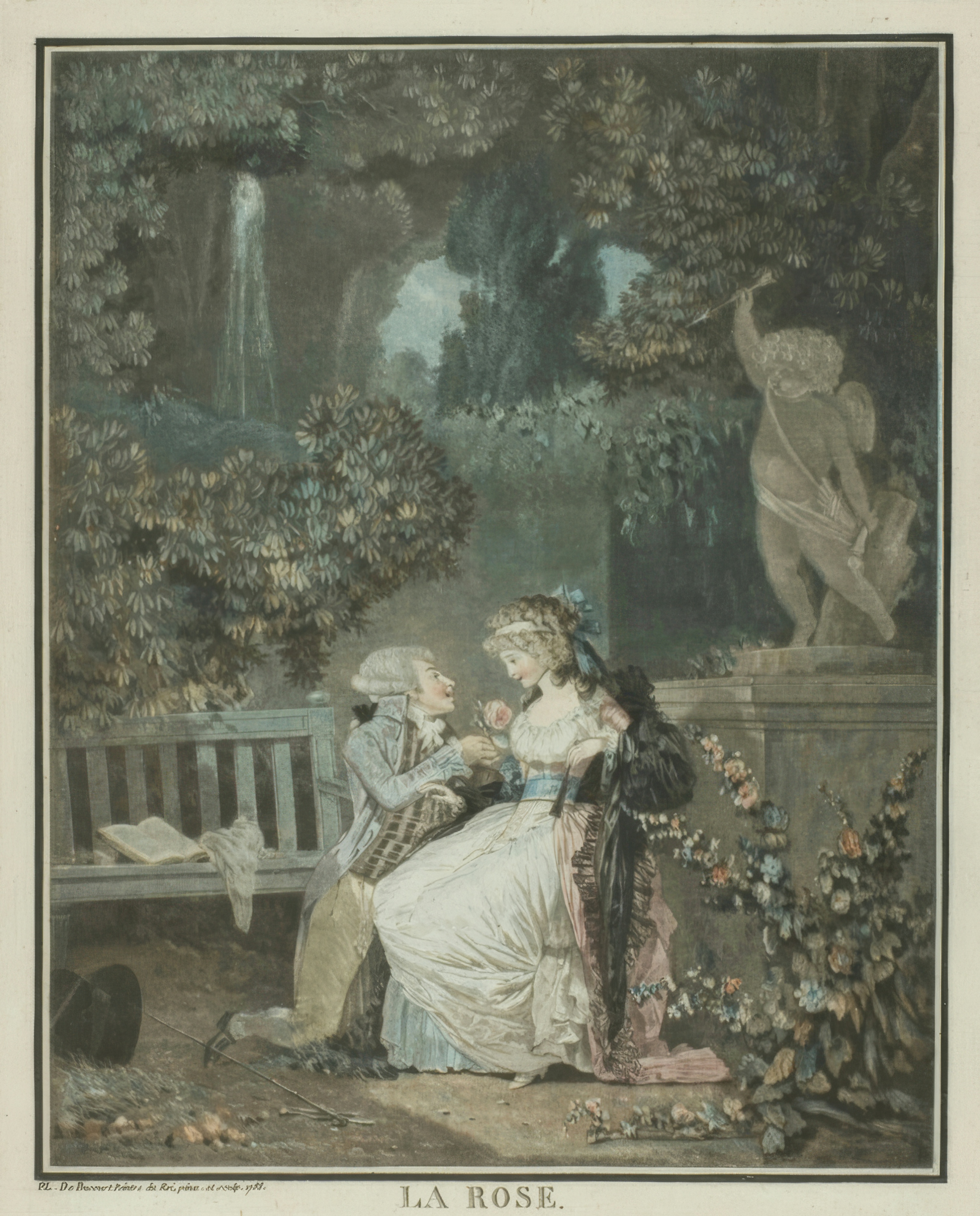
Philibert Louis Debucourt, La Rose (The Rose), 1788. Color aquatint with engraving and etching in black ink on cream laid paper. Art Institute of Chicago.
Philibert Louis Debucourt was the master of French colour printing. He made La Rose in 1788, on the eve of the Revolution.
Soft greens for a bedroom.
10. Gathering Fruit
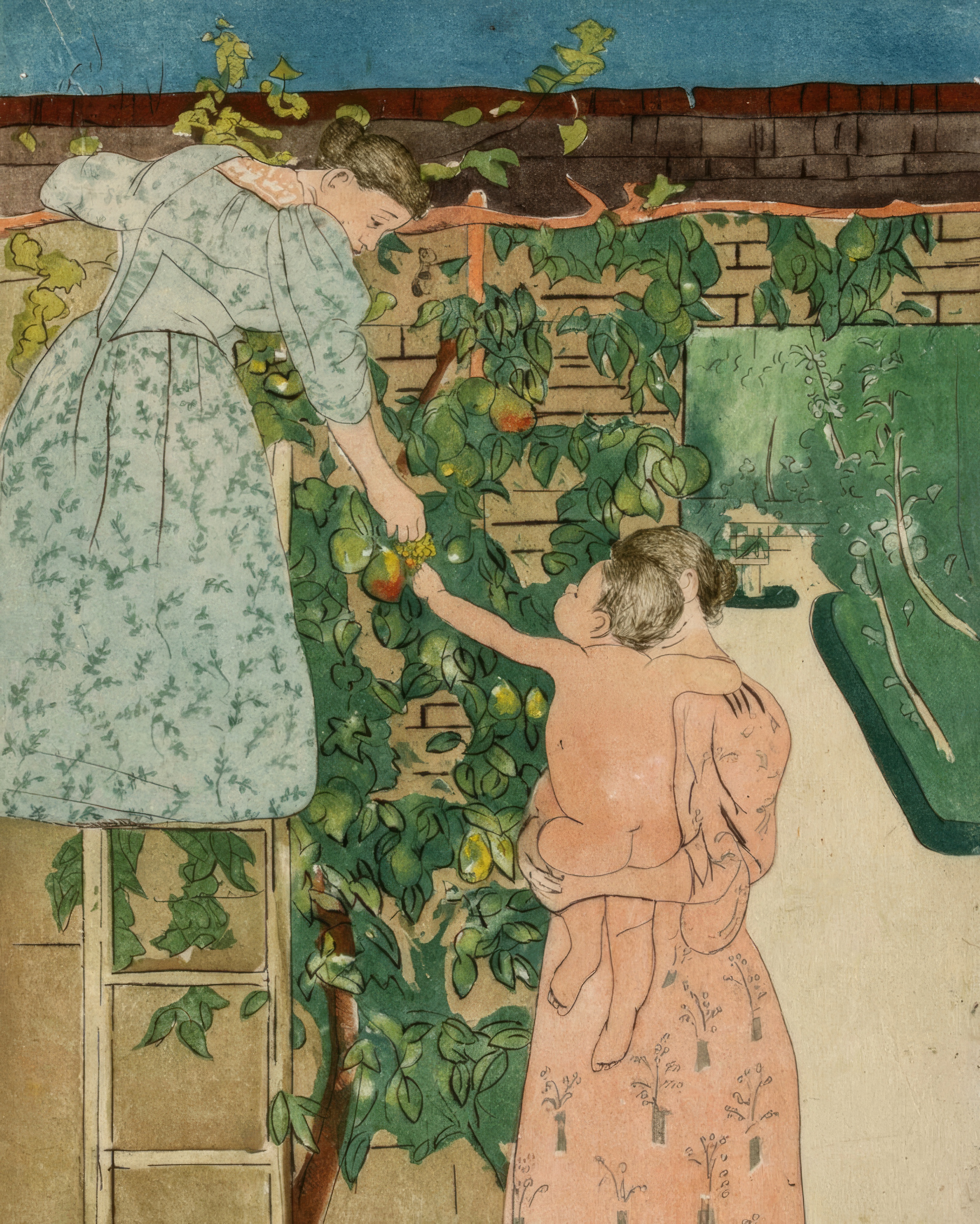
Mary Cassatt, Gathering Fruit, c. 1893. Drypoint, softground etching and aquatint in color on ivory laid paper. Harvard Art Museums.
Mary Cassatt made her colour prints in the early 1890s after seeing Japanese prints in Paris. Gathering Fruit dates from about 1893.
Soft blue and peach for a nursery or bedroom.
11. Goldfish
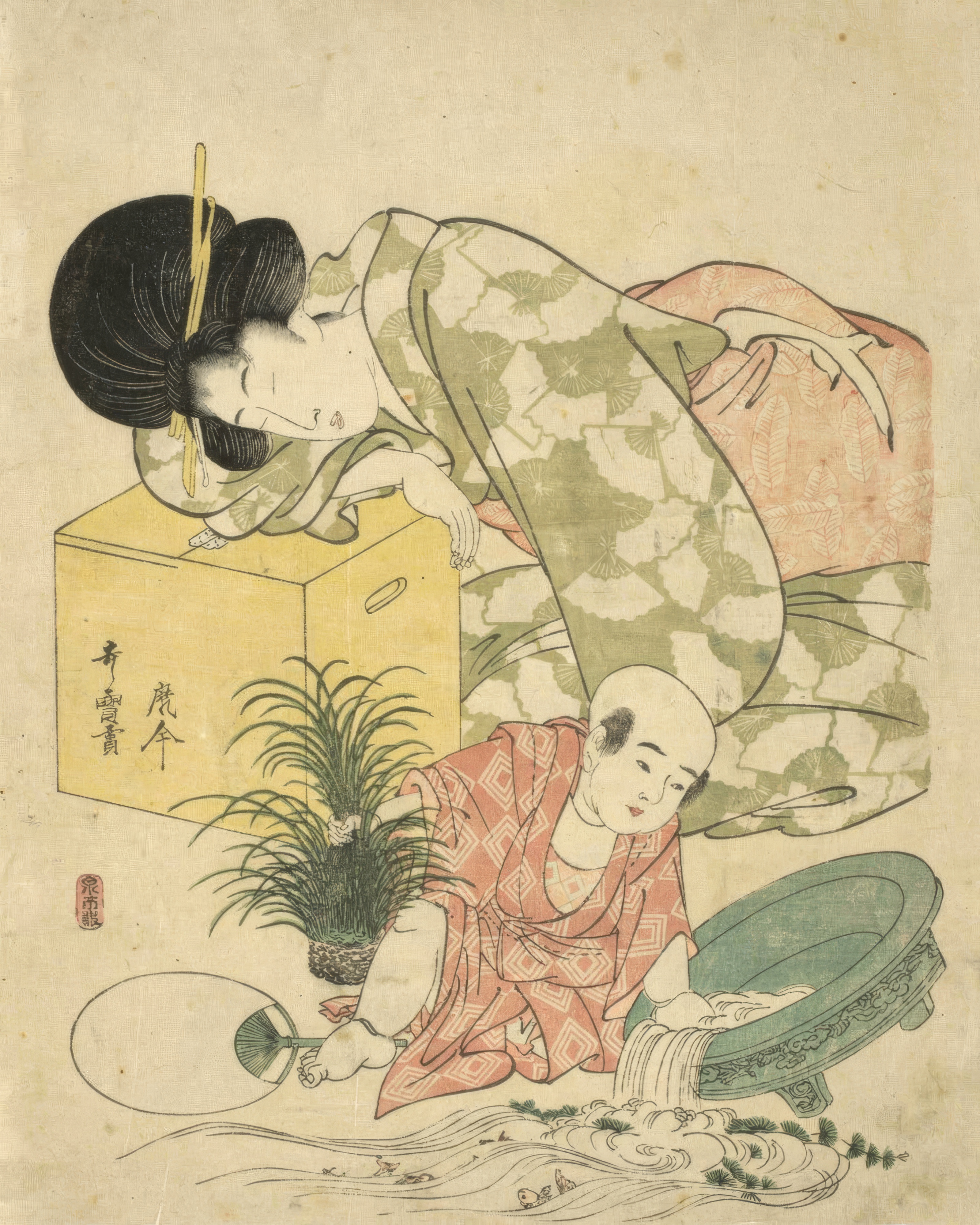
Kitagawa Utamaro, Goldfish, c. 1802. Color woodblock print; oban. Art Institute of Chicago.
Kitagawa Utamaro made this print around 1802, part of a series comparing children to little treasures.
A gentle print for a child’s room or a bathroom.
12. Courtesan Reading a Letter
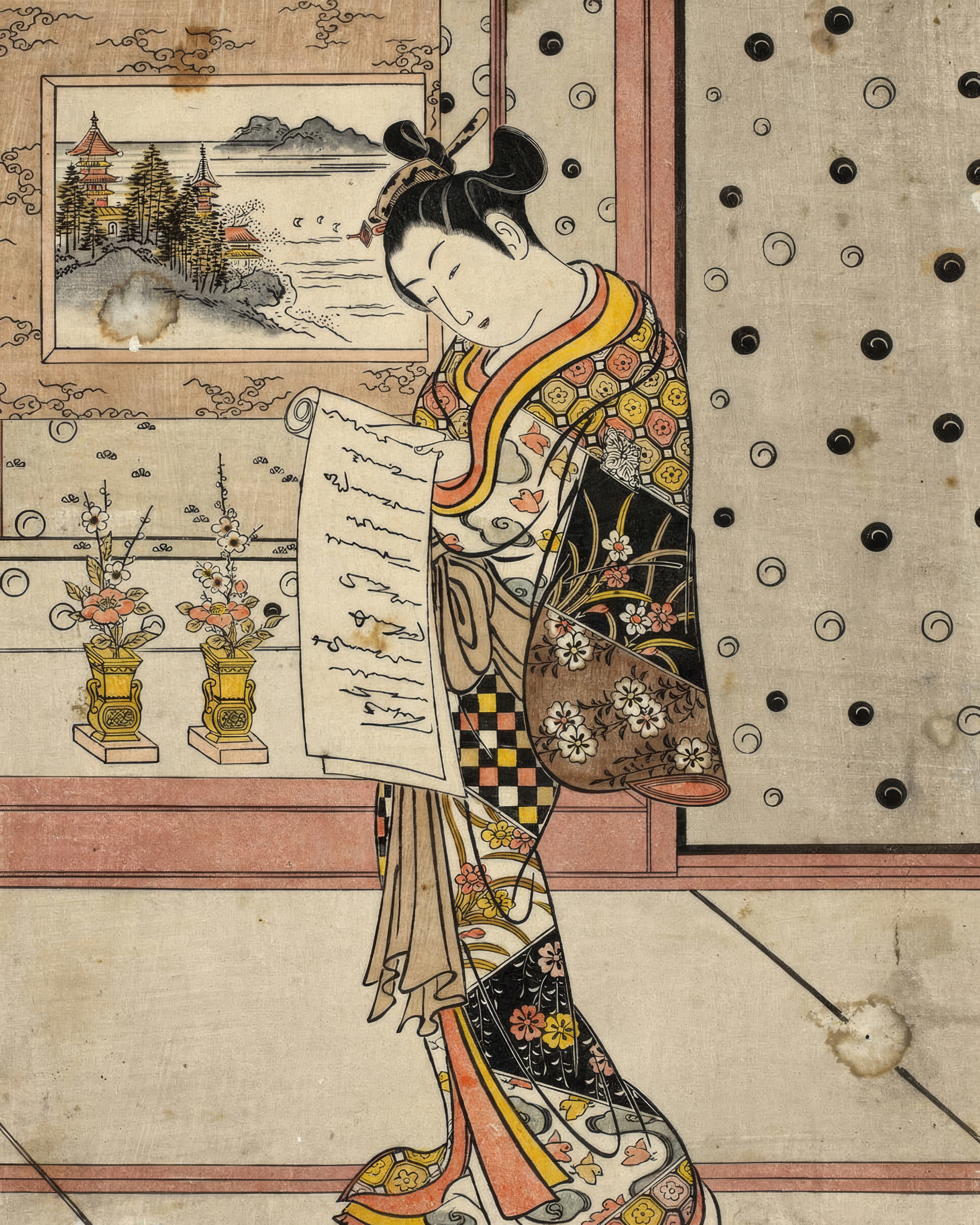
Ishikawa Toyonobu, Courtesan Reading a Letter, c. 1745. Hand-colored woodblock print; toku-oban, urushi-e. Art Institute of Chicago.
Ishikawa Toyonobu made this print around 1745, before full colour printing, so its colours were added by hand.
Soft gold and coral for a quiet corner.
Vintage prints look best in thin black, gold or old wood frames with a wide cream mount, the way collectors framed them. Group several in a hallway or above a desk, or let a single poster lead a room. For more, see gallery wall ideas and traditional home decor.
Questions
What counts as vintage wall art?
Old posters, maps, caricatures, botanical and natural history plates, and colour prints, usually from the 1500s to the early 1900s.
How do I frame vintage prints?
Use a cream mount and a thin black, gold or wooden frame, so the print feels like a collector’s piece.
Do vintage prints suit modern rooms?
Yes. A single old poster or map adds history and warmth to a white, modern room.
Where can I hang vintage maps?
In a study, hallway or above a desk, alone or as a pair.