What Makes Fable Fable
An archive with a long memory. Artists at Vaxholm Fortress. Original technology, made personal.
A painting can appear in seconds. The judgment behind it takes much longer.
Fable brings an extensive historical archive, the eye of working artists and its own image-making technology into one place to create. You choose the world you want to enter. The work behind that world has already begun.
From personal portraits to Fable Artist and Fable Heraldry, the idea is the same: make artistic depth easy to use.
1. A thousand years of looking
Thousands of pages. Hundreds of historical books. Thousands of paintings and colour swatches. Some of the original sources informing Fable’s research reach back more than a thousand years.
What matters is what they teach us to see: how a figure sits within a room, how a border gives a page rhythm, how a restrained palette can hold an entire atmosphere. Our artists study those relationships and turn selected references into directions you can make personal.
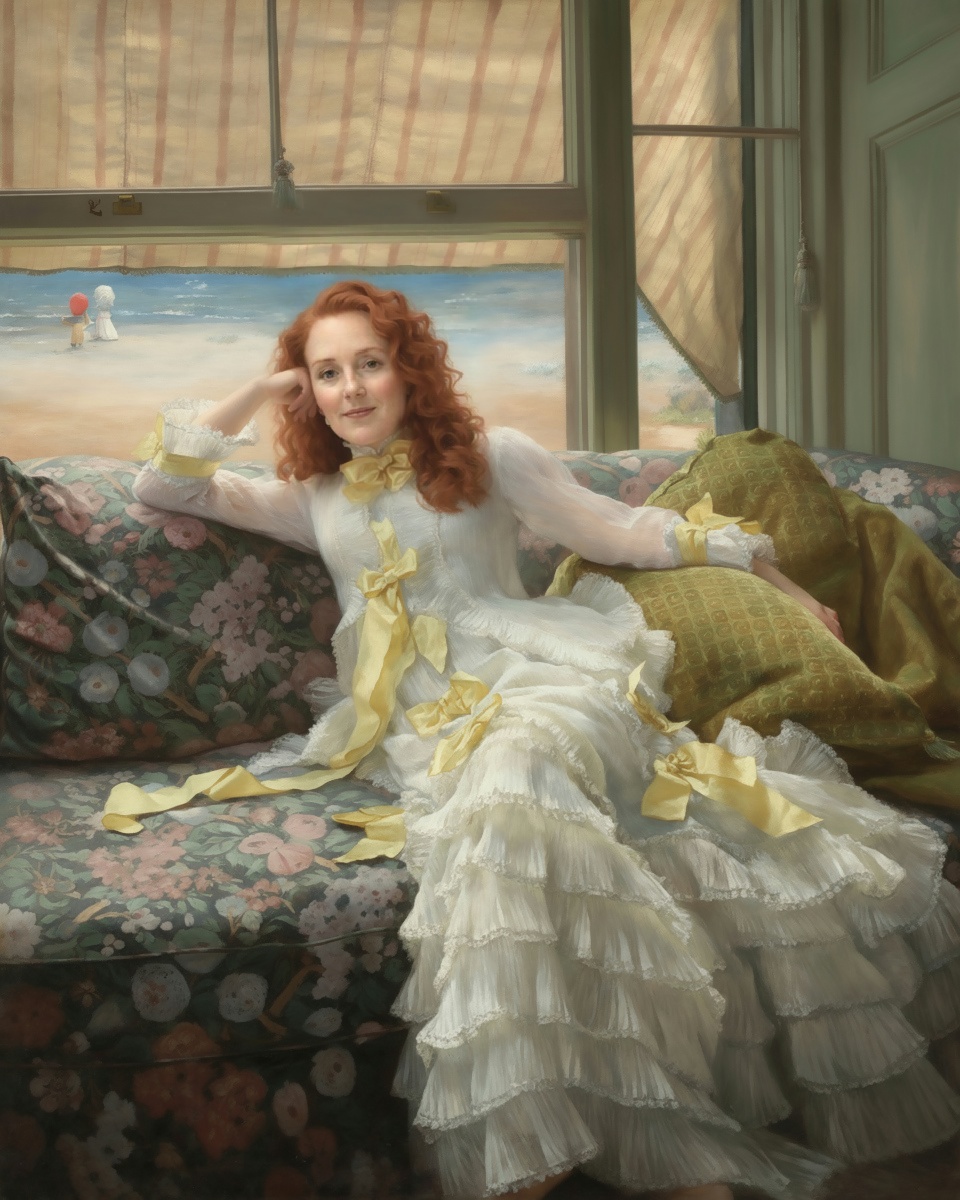
Seaside July begins with James Tissot’s 1878 Seaside (July: Specimen of a Portrait), held by the Cleveland Museum of Art. The floral upholstery, summer light and glimpse of the beach form a coherent world. In Fable, your photograph becomes the starting point for a new portrait within it.
2. The artists at Vaxholm Fortress
Fable is made by Surrealium at Vaxholm Fortress, a 16th-century sea fortress in the Stockholm archipelago. Painters, jewellers and craftspeople share an atelier where proportion, material and detail are part of daily work.
That experience shapes the curation. A reference needs more than historical interest: it must become a clear artistic direction, a useful choice, something a person can imagine living with. Our artists decide what belongs together and what to leave out.

The simplicity you feel as a customer comes from decisions made before you arrive. Artist-led curation shapes the experience. Each customer creation is AI-assisted digital art; curation does not mean individual painting or retouching of every result.
3. Thousands of swatches. A feeling you recognise.
Colour gives an artistic world its identity. A gold can feel luminous or muted; a blue can bring air into a room or deepen its shadows. The relationship between colours matters as much as the colours themselves.
In Fable Artist, that research becomes a choice you can see. Explore palettes such as Venetian Gold, Dutch Master, Nordic Light and Rose & Ash, alongside artistic eras and masterworks. Bring an everyday idea—a vase of flowers, a fishing harbour, a peacock in a hillside forest—and choose how it should feel.
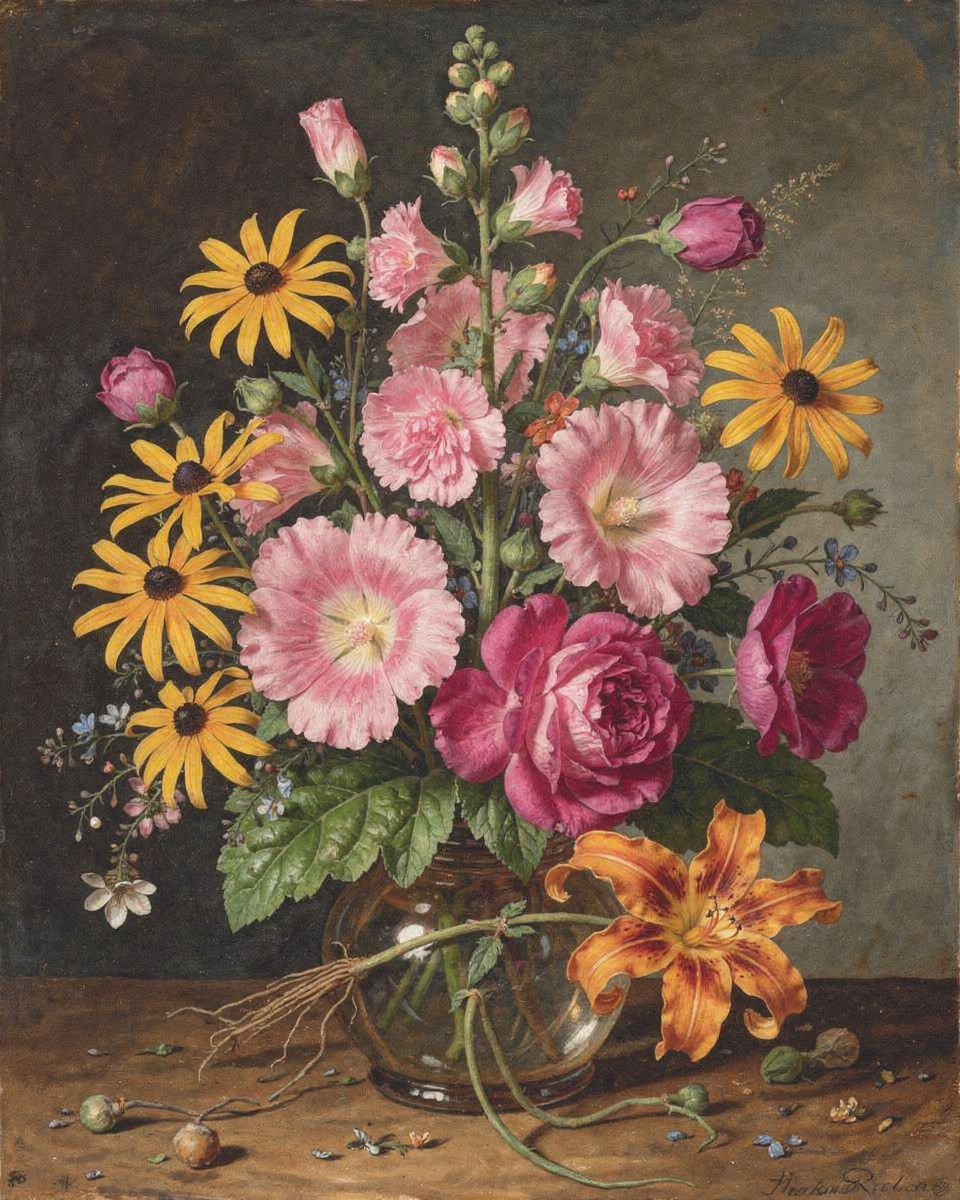
You do not need the technical vocabulary of a painter to recognise a direction you love. The palette and references carry part of that vocabulary for you.
4. Technology with an artistic purpose
Fable develops its own image-processing and finishing systems around generative AI. For styles that use them, these systems shape colour relationships, tonal character, edges and painterly surfaces while protecting important features.
A face and a broad area of fabric do not ask for the same treatment. An atmospheric image still needs readable details. Translating those judgments into reliable software is part of Fable’s craft.
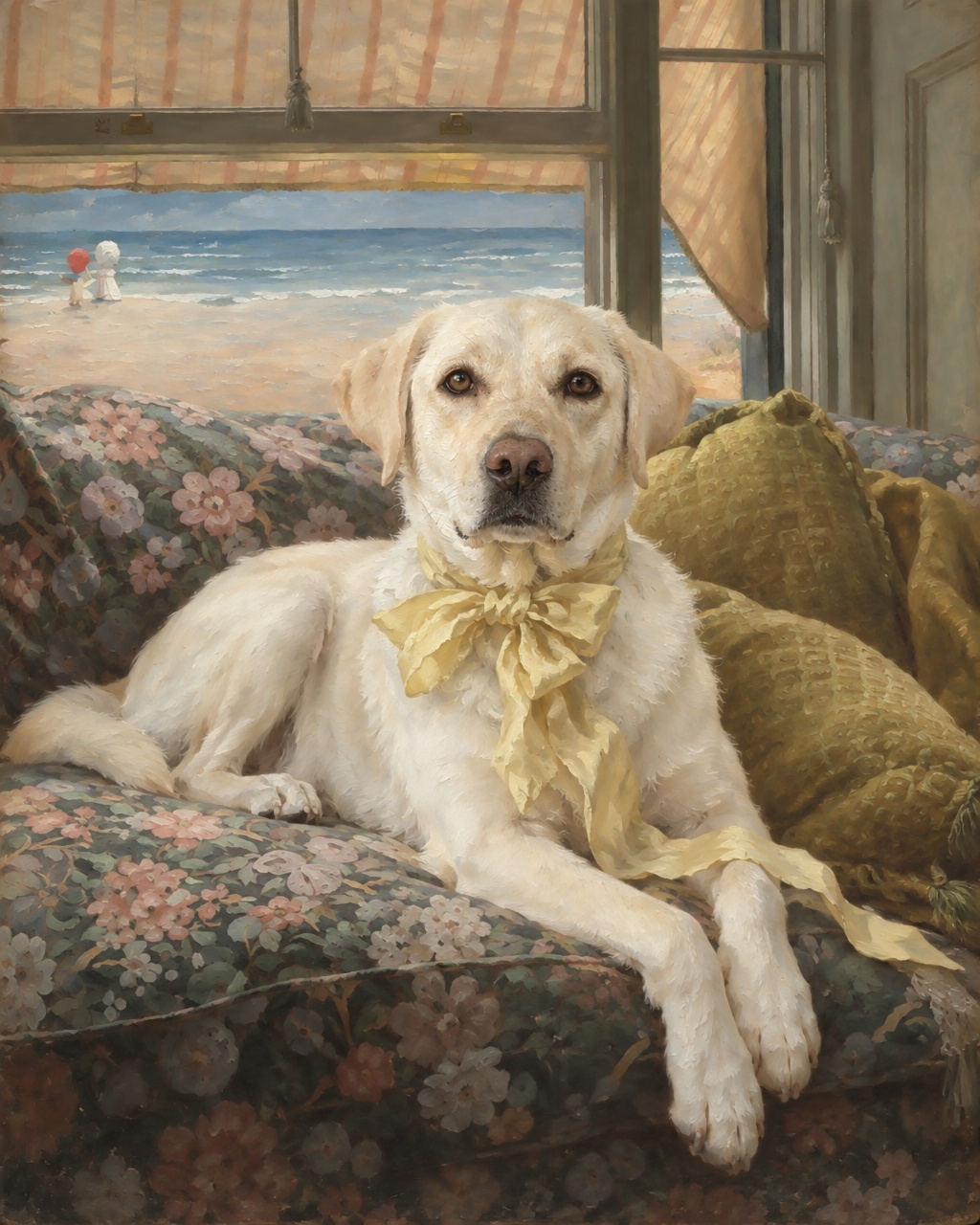
The finish can be built into the saved artwork itself, so it travels with the download. The selected treatment is retained with the creation; changing a style later should not silently change a piece someone already made. Treatments vary by style, and the result remains AI-assisted digital art.
Historical research, curation and proprietary technology work together here. Each gives the studio a different way to shape the finished image.
5. A personal story, drawn in symbols
In Fable Heraldry, the archive opens another door: initials become monograms, and a family story becomes a decorative coat of arms. Letterforms, ornament and symbols give personal details a visual language.
For the Lindqvist example, the brief began with a love of the sea, an oak for strength, a lighthouse for guidance and three stars for three children. The studio refined the name ribbon and the tall composition through three Fable attempts; the full process appears in The Fable Difference.
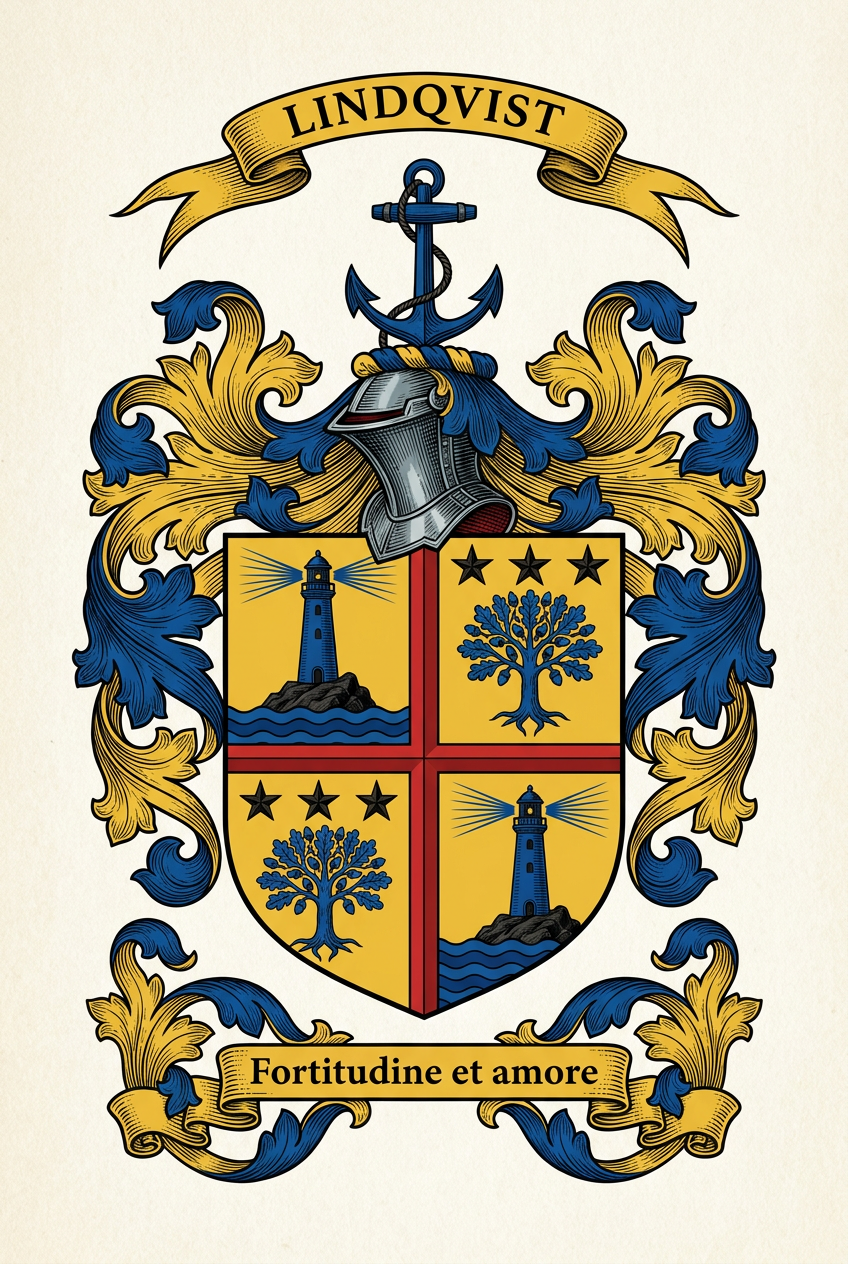
This is a newly created family emblem, rather than a claim to historically granted arms. Begin with your own story in Fable Heraldry, or explore its monogram creator.
6. Many models. One creative world.
Across Fable’s wider system, more than 50 model integrations support different tasks. Their complexity stays behind the experience: you do not need separate provider accounts, multiple AI subscriptions or lessons in prompting.
Choose a style and photographs in Fable Portraits. Bring an idea to Fable Artist. Start with initials or a family story in Fable Heraldry. The integration count describes the wider platform, not the number of models used for every image.
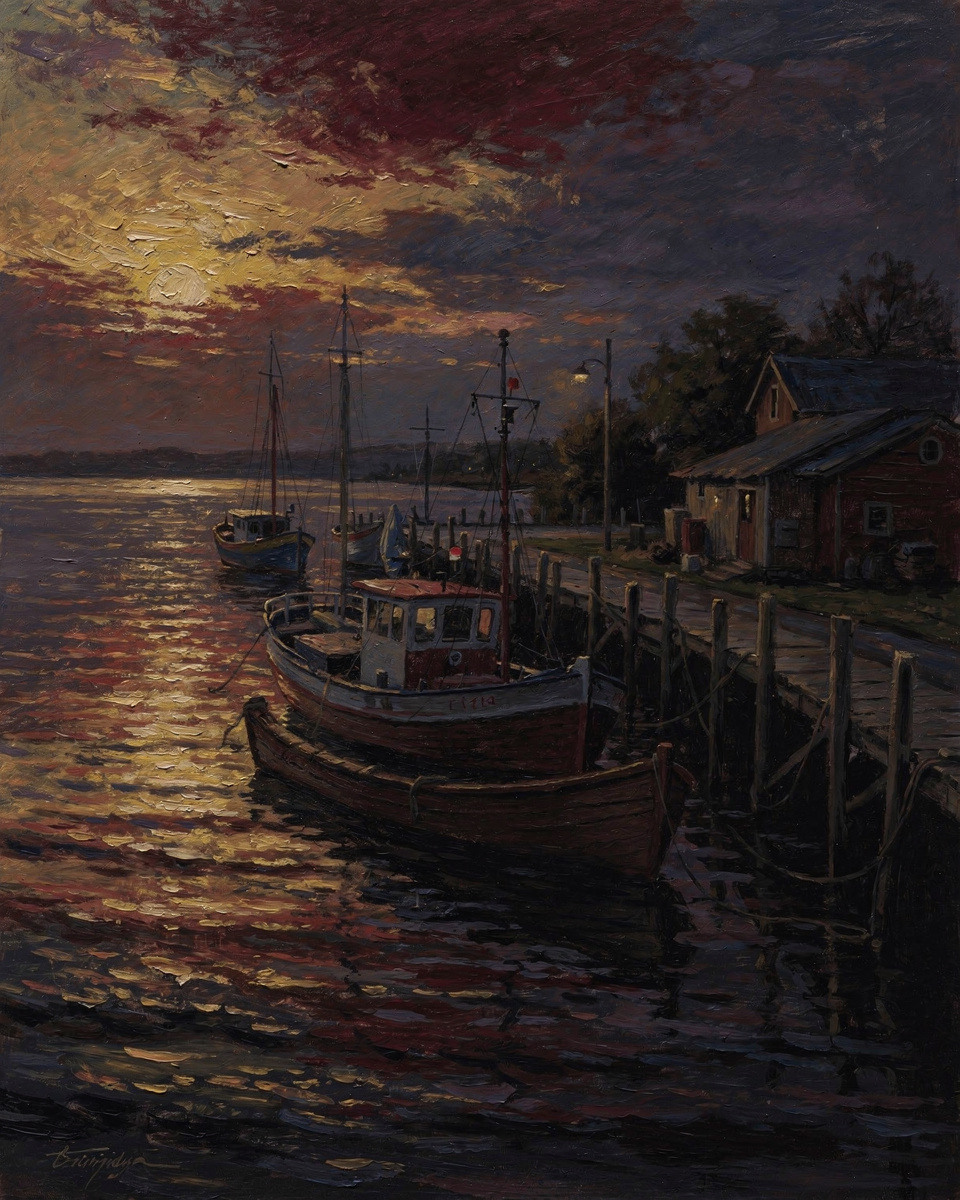
As AI models improve, Fable can bring new capabilities into a world that already has a point of view. The archive, the artists’ choices and the software that carries them into the artwork continue to develop together. That accumulated work gives Fable its identity.
Choose a world that speaks to you. Bring something of your own. See what it can become.
See the portraits, art and heraldry in The Fable Difference
Source note: archive scale, source age and integration counts are supplied by Fable’s founder. Ancient source material does not imply ownership of ancient manuscripts. Historical artwork details link to the museum; the images here are Fable examples and an atelier photograph. The technology descriptions reflect Fable’s documented implementation.