Black cat painting: finding the detail in dark fur
Look at black cats as individuals, with practical notes on light, silhouette and choosing a photograph for a pet portrait.
A black cat painting succeeds when dark fur has structure rather than becoming a single flat shape. The turn of an ear, the edge of a cheek and a small change of light across the coat can make one cat recognisable. Bright eyes matter, but they are only part of the animal's expression.
The historic pictures here include black cats and other coat patterns for comparison. Their captions identify the actual works; the comparison does not turn every dark patch into a black cat or every animal into the same breed. Look at how each artist separates the cat from its surroundings while leaving its natural posture intact.
See three individuals within a dark group
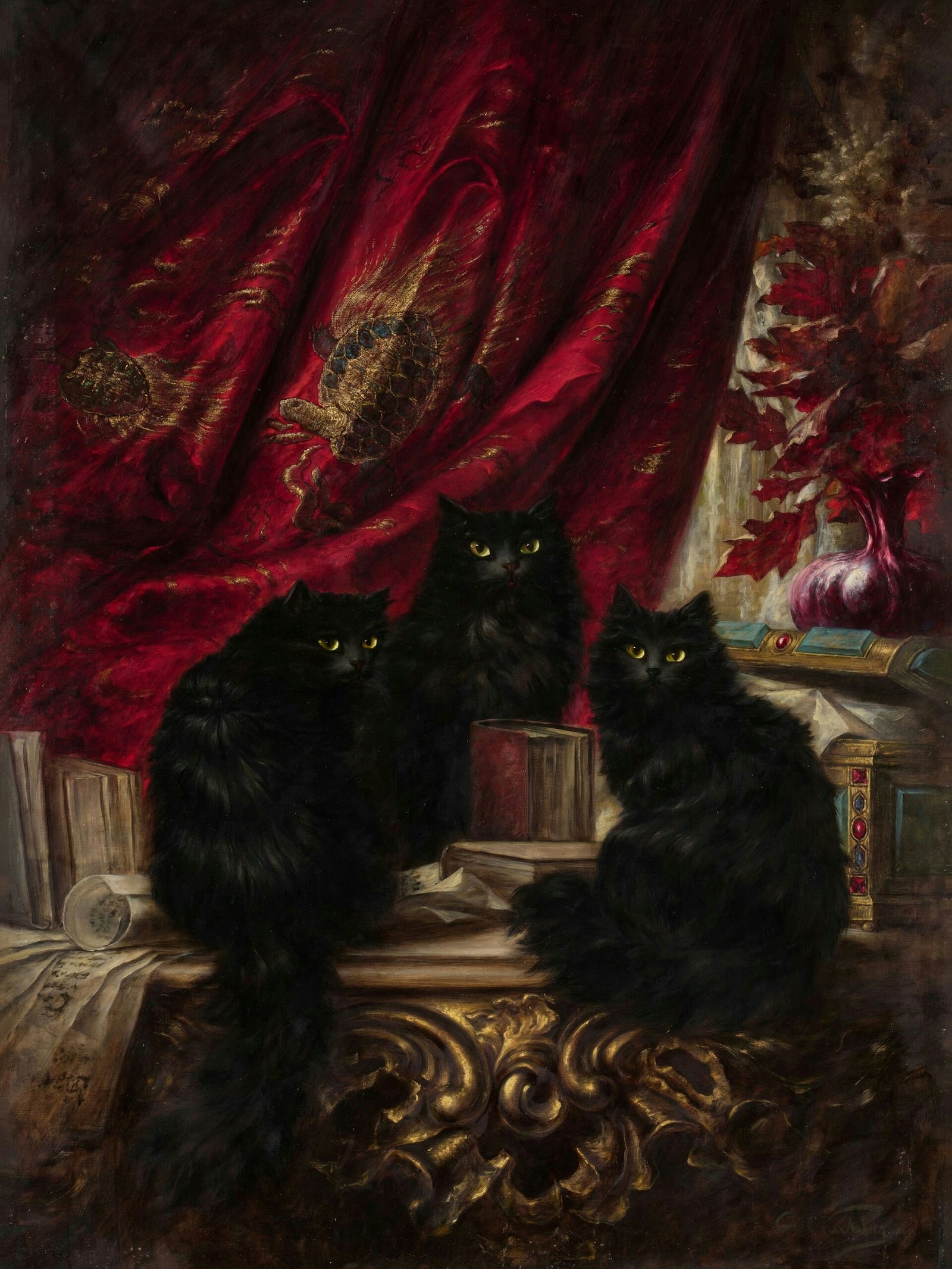
Three Black Cats · Carl Kahler · Late 19th century · Private collection (Sotheby’s 2025 catalogue). Prepared for print by Surrealium at Vaxholm Fortress, Sweden
Carl Kahler's Three Black Cats places the animals against rich furnishings and red drapery. Their eyes and the small differences in their positions help distinguish them. The surrounding colour gives the dark coats a setting without requiring the cats themselves to be turned into decorative objects.
Study the silhouettes first. Notice the separate heads, the direction of the ears and the way the bodies occupy different parts of the composition. Then look for the quieter changes within the fur. This is a useful way to judge a contemporary pet portrait too. If you recognise only “a black cat” rather than your particular animal, compare the head shape, muzzle, eye spacing and posture with the source photograph. A dramatic background is secondary to those individual features.
Photograph the coat as well as the eyes
Choose light that reveals the fur without washing out the eyes or turning the coat grey. Soft daylight can help you see the shape of the face, but inspect the actual photograph rather than relying on a rule about where to stand. A bright window behind the cat may leave the face much darker than you expected.
Move to the animal's level when it is comfortable to do so. Let the cat settle, and avoid forcing it to hold a pose. Take a few photographs with the face turned slightly different ways. A small change can reveal the edge of the nose or the shape of an ear. Keep the original image with its natural detail; heavy filters can obscure precisely the subtle variations that make dark fur readable.
Recognise quiet companionship
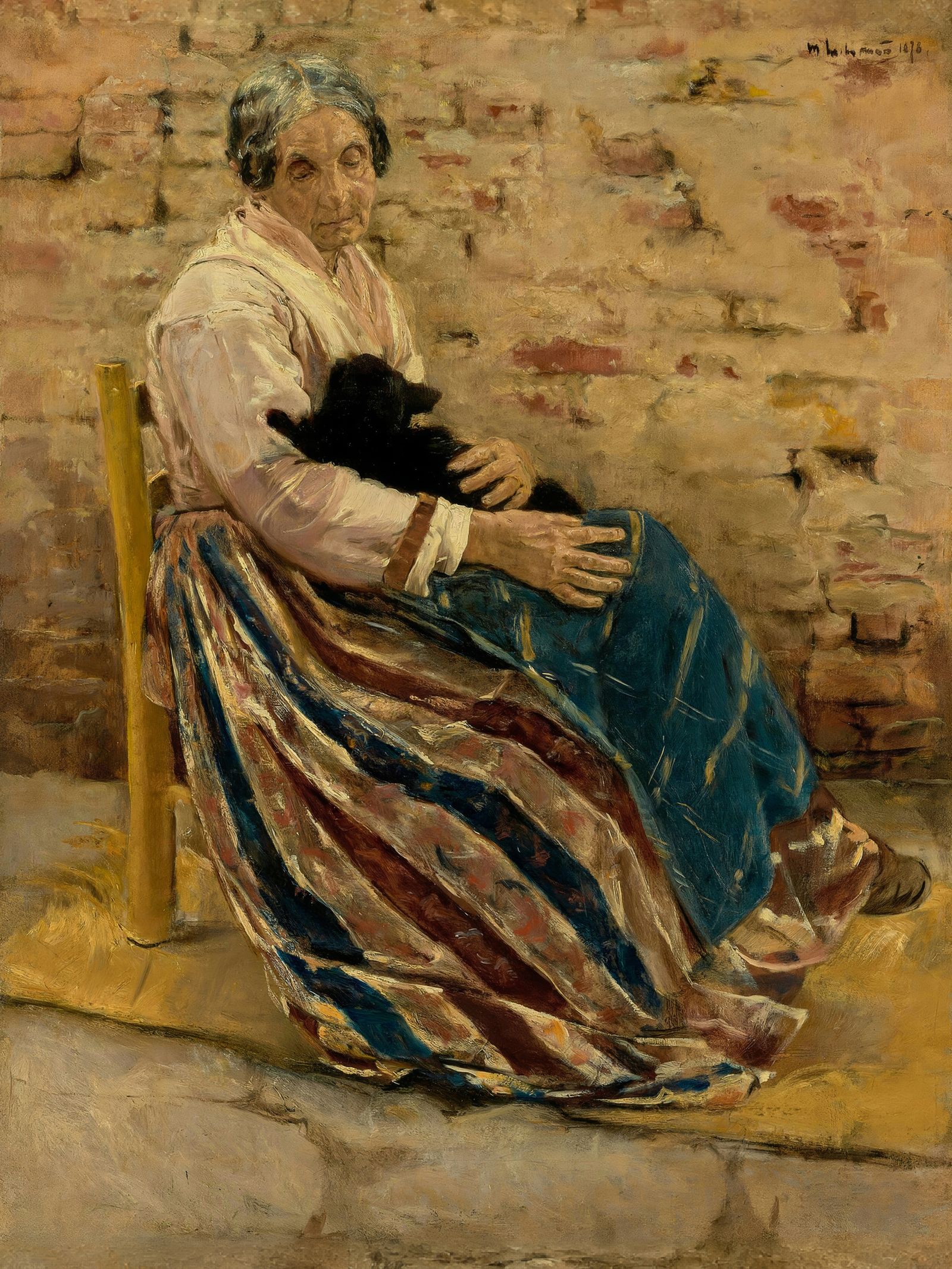
An Old Woman with Cat · Max Liebermann · 1878 · J. Paul Getty Museum, Los Angeles. Prepared for print by Surrealium at Vaxholm Fortress, Sweden
Max Liebermann's old woman holds a dark cat in her lap. The animal belongs to a larger arrangement of seated figure, clothing and wall, rather than dominating the picture by size. Its presence contributes to the sense of an ordinary shared space.
This can be a useful reference when the relationship between person and pet matters more than a formal animal study. If you choose a photograph of someone holding a cat, check that the animal is comfortable and that its face is not hidden against the person's body. The hands should support rather than constrain it. A natural lap pose may be more characteristic than a direct stare. Do not infer a biography or emotion from the historic scene beyond what the image and its record support.
Separate dark fur from a dark background
A dark background can work beautifully when the cat's outline remains clear. It can also swallow the ears and shoulders if the lighting provides no separation. Compare the edge of the animal against the surrounding tone before deciding that an image is suitably atmospheric.
For a source photograph, a modest contrast between coat and background is often helpful. That does not require a stark white wall. A muted surface can give the head enough definition while preserving a quiet mood. Avoid a busy pattern directly behind the face if it competes with whiskers and fur. When reviewing a portrait, look at the entire head rather than just the eyes. The contour, cheek shape and transition into the neck all contribute to the likeness of the individual animal.
Use other coat patterns as a comparison
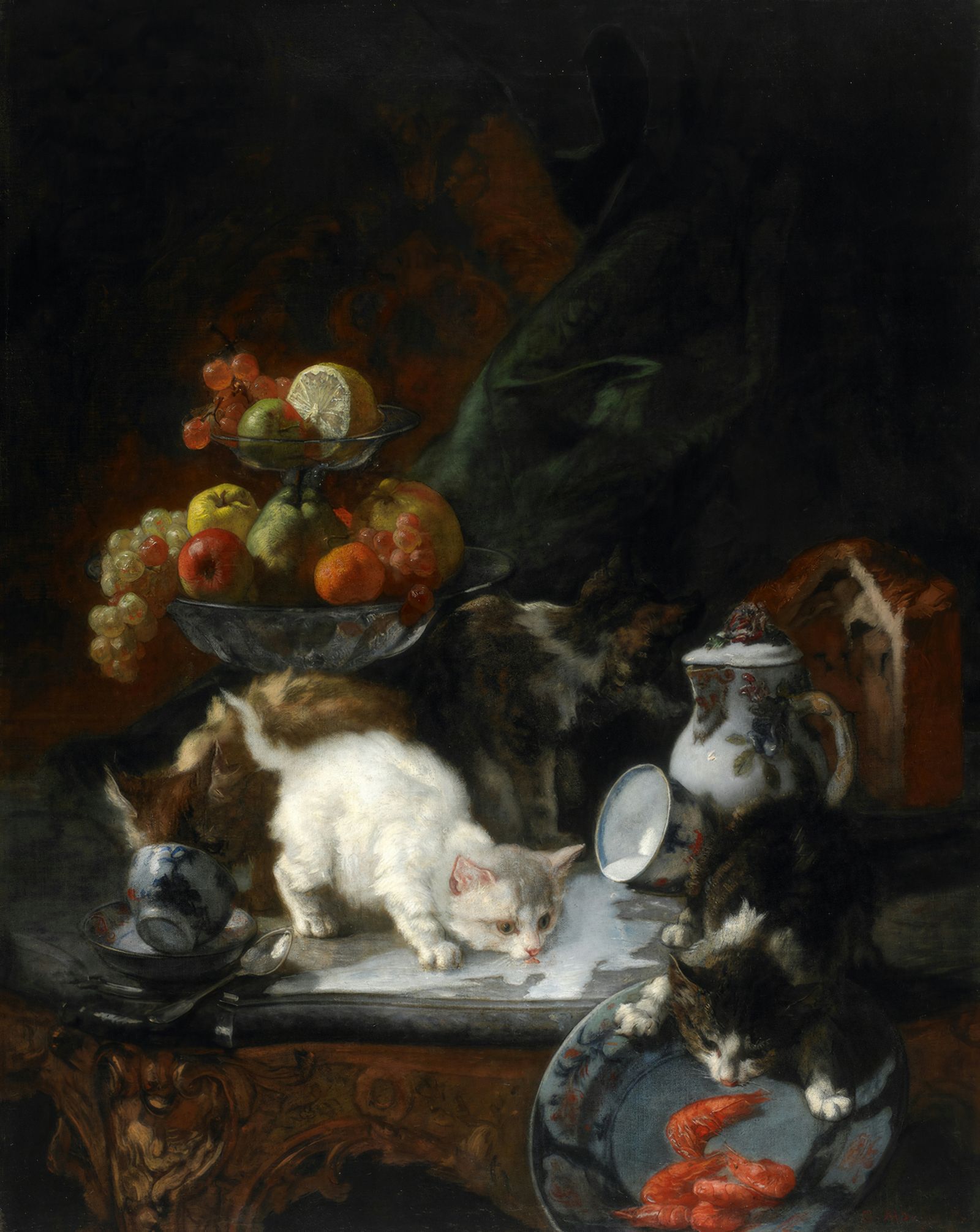
Cats on a Console · Charles Monginot · 1859 · Centre national des arts plastiques, Paris. Prepared for print by Surrealium at Vaxholm Fortress, Sweden
Charles Monginot's Cats on a Console brings several animals into a still-life setting with vessels, fruit and furniture. The different patches of fur help separate the cats from one another and from the objects around them. It is not a painting solely of black cats, and that distinction is part of the comparison.
Notice how a pale area makes a body easier to find in a crowded picture. A black-coated animal needs a different set of cues: edge light, changes of tone and a readable pose. This does not mean adding markings the cat does not have. A portrait should preserve the actual coat. Use the comparison to understand what information the source photograph needs to supply, not as a reason to make a dark cat lighter or more patterned than it is.
Keep superstition separate from the animal
Black cats arrive with many cultural associations, but those associations do not describe an individual pet's character. If you want a portrait, begin with the cat you know: its resting position, alert expression or characteristic tilt of the head. A symbolic theme is optional and should not replace the animal's own features.
Avoid making a sweeping historical claim about what black cats meant everywhere. Traditions differ, and a dark coat is not evidence of a single universal role in art. The paintings here are useful because you can see what their particular cats are doing. A contemporary portrait can be affectionate, dignified or playful without clothing the animal, placing a crown on its head or turning it into a human character. Natural posture gives ample room for personality.
Let attention become the action
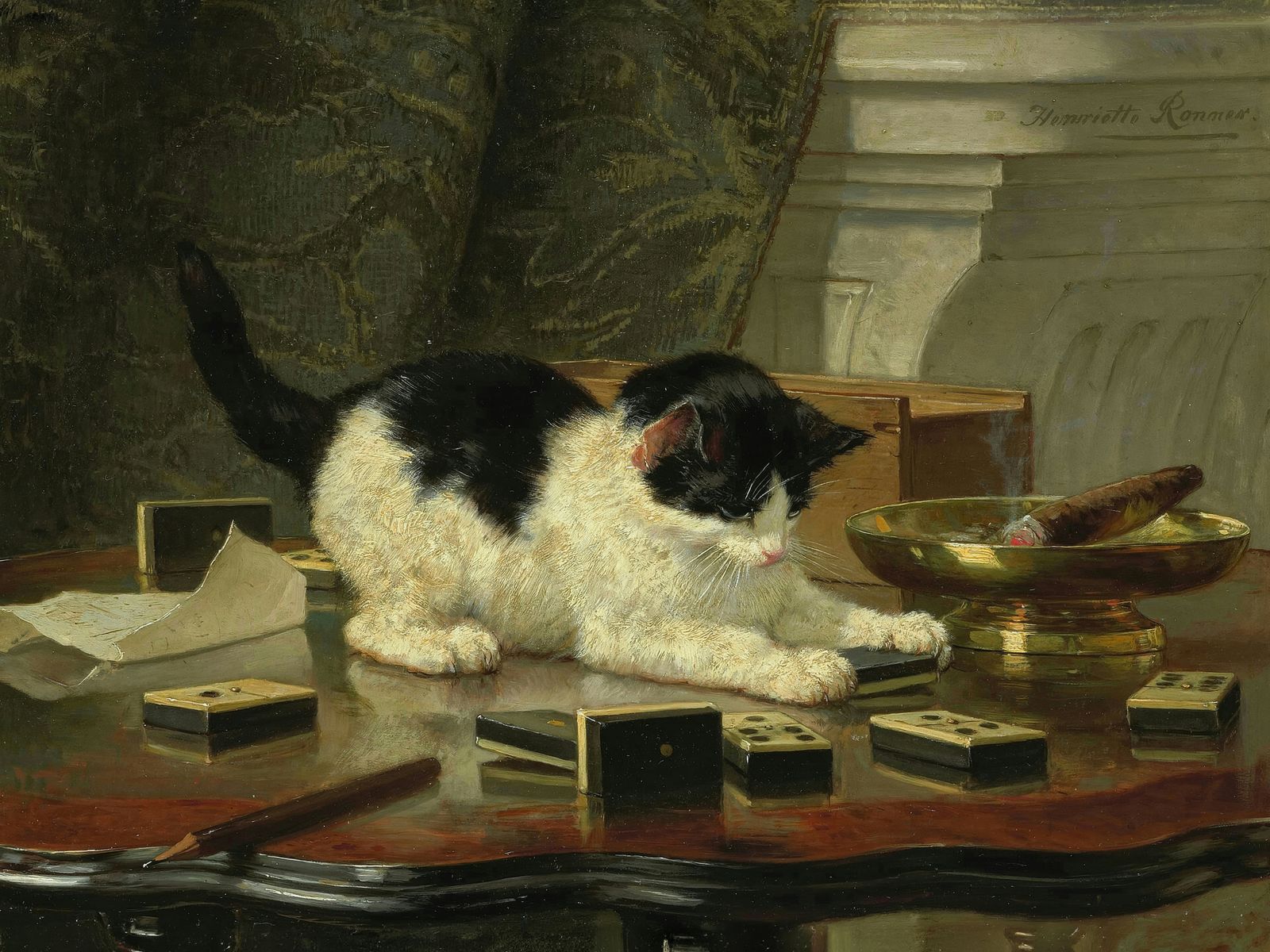
The cat at play · Henriëtte Ronner-Knip · c. 1860–1878 · Rijksmuseum, Amsterdam. Prepared for print by Surrealium at Vaxholm Fortress, Sweden
Henriëtte Ronner-Knip's cat at play is occupied by objects on a table. Its black-and-white coat makes this a comparison with a different pattern, while the focused posture shows how an ordinary activity can carry the picture. The cat does not need to look at the viewer to be the subject.
For your own reference, consider whether a familiar activity reveals more of the animal than a formal pose. A pause beside a toy or a quiet moment on a favourite surface can be useful if the face remains clear. Keep distracting objects out of the main line of sight and do not use anything that makes the cat uncomfortable. Compare several images for recognisable detail. The strongest source may be the moment you would identify immediately as your cat, even before noticing the setting.
Continue with witches in art: 20 paintings, from Baldung Grien to Waterhouse, custom cat portraits: 10 styles fit for a cat’s dignity, pet portraits: 15 styles to choose from, from royal hounds to Impressionist cats, german shepherd painting: ten lessons from historic dogs, and the full catalogue record for Three Black Cats.
Choose the pet portrait route with a clear, naturally lit photograph that preserves the shape of the face and the detail in the coat. Black fur offers subtle information rather than an absence of it. Give that information a chance to lead the portrait.
- How do I photograph a black cat for a portrait?
- Use light that reveals the face and coat, avoid a bright background that leaves the cat in silhouette, and photograph near the animal’s level. Keep the cat comfortable and compare several frames for clear eyes, ears and muzzle detail.
- Should a black cat portrait have a light background?
- Not necessarily. A dark setting can work if the outline remains readable. What matters is separation between the animal and its surroundings, together with enough tonal detail to describe the fur.
- Are all the cats in this article black cats?
- No. The lead work shows three black cats, and other paintings provide clearly labelled comparisons of coat pattern, posture and lighting. They are not presented as the same breed or colour.
- Can a pet portrait show my cat naturally?
- Yes; choose a comfortable, recognisable posture and a useful source photograph. This guide favours the animal’s own features and behaviour, without human clothing, crowns or an invented human role.