German shepherd painting: ten lessons from historic dogs
Prepare a portrait of your own German shepherd using clear photographs and honestly labelled historic dog comparisons.
A german shepherd painting search can lead to attractive dog images that do not actually show German shepherds. For a portrait of your own dog, that distinction matters. The head, ears, muzzle, coat and stance should belong to the individual animal you know. This guide uses ten historic dog paintings as clearly labelled comparisons for composition; it does not claim that they depict the modern breed.
No approved breed-specific Fable demo was available for this selection. Rather than relabel another dog, use the historic pictures to notice what makes an animal portrait readable, then bring a clear photograph of your own German shepherd to the pet portrait route. Keep the dog naturally posed and comfortable. The source photograph should reveal its particular features, not force it to match an admired historic silhouette.
1. Read the whole outline — a historic large dog
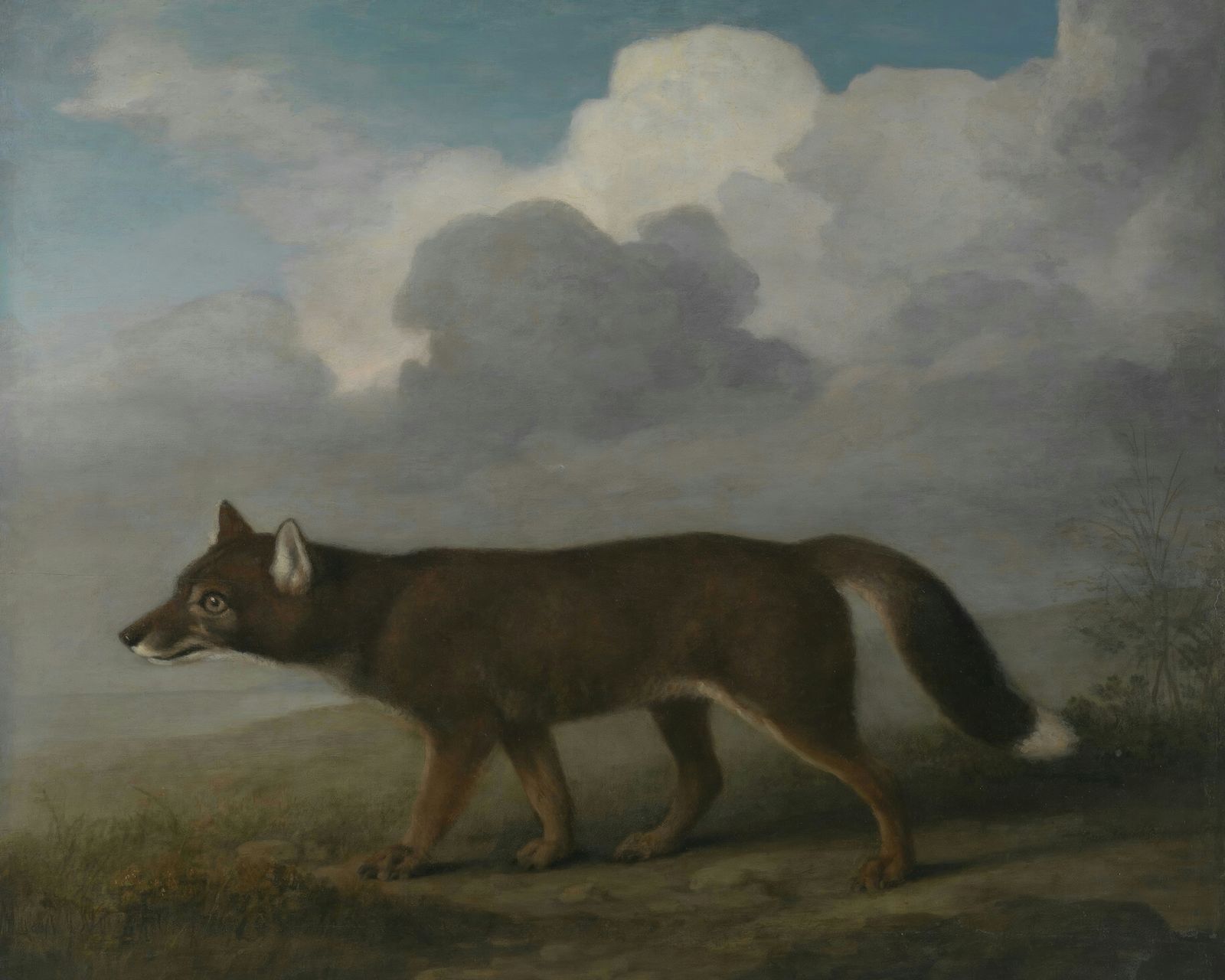
Portrait of a Large Dog · George Stubbs · 1772 · National Maritime Museum, Greenwich. Prepared for print by Surrealium at Vaxholm Fortress, Sweden
Stubbs's Portrait of a Large Dog gives the broadside animal a clear place against an open setting. It is dated 1772 and is not presented here as a documented German shepherd. The useful lesson is to see the relationship between head, body, legs and tail before concentrating on coat detail. For your own dog, choose a source with an understandable stance and enough space around the outline to keep it readable.
2. Separate alert ears from a tense pose — Fanny
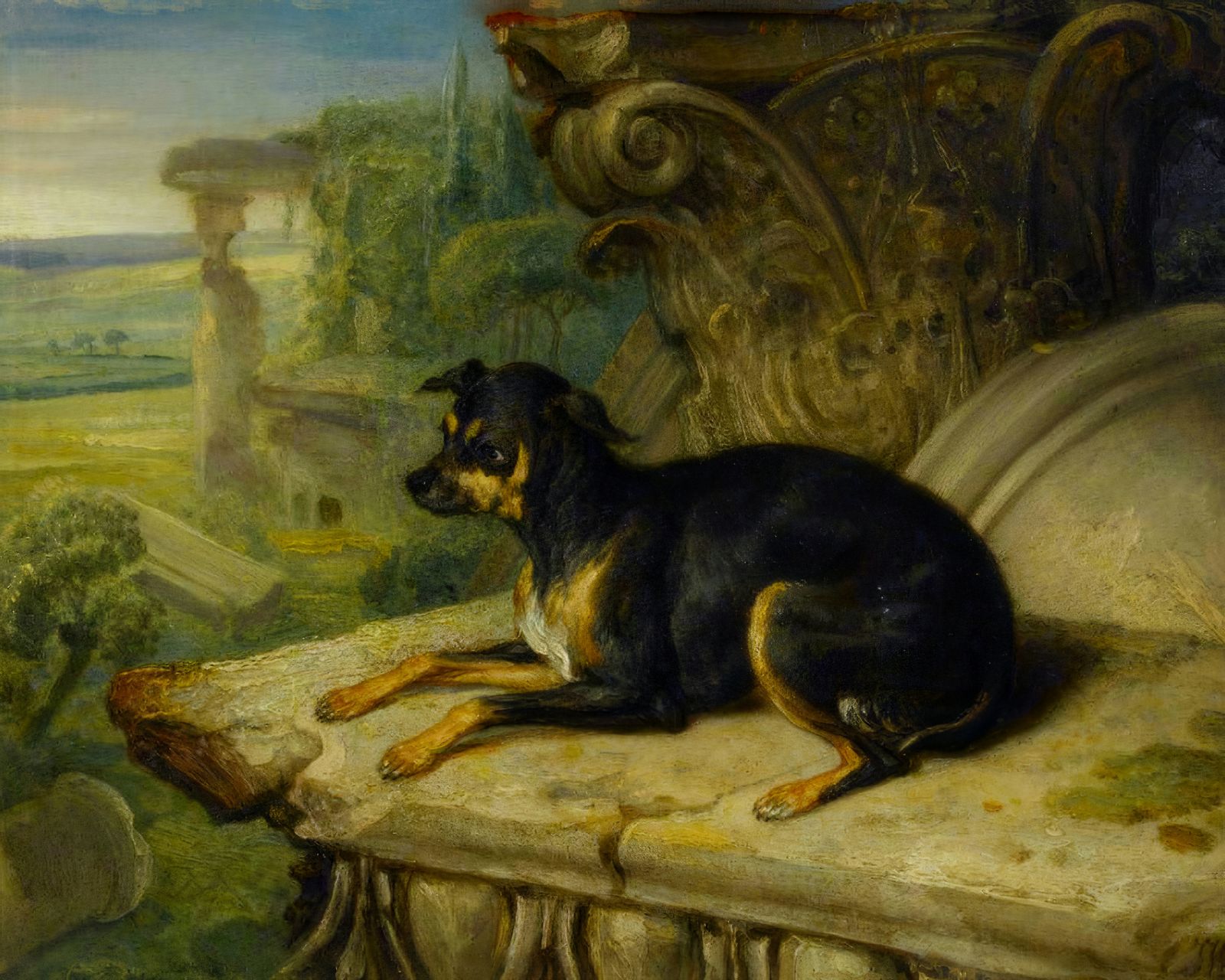
'Fanny', a Favourite Dog · James Ward · 1822 · Sir John Soane's Museum, London. Prepared for print by Surrealium at Vaxholm Fortress, Sweden
Ward's Fanny rests with ears raised, combining a settled body with an attentive head. This is a different dog, not a German shepherd example, but the contrast is useful when choosing a natural source photograph. Your dog does not need to stand rigidly to look alert. Watch for a comfortable moment with visible eyes and ears, and avoid forcing a posture that feels unfamiliar merely because it looks formal.
3. Let the coat describe the face — Brizo
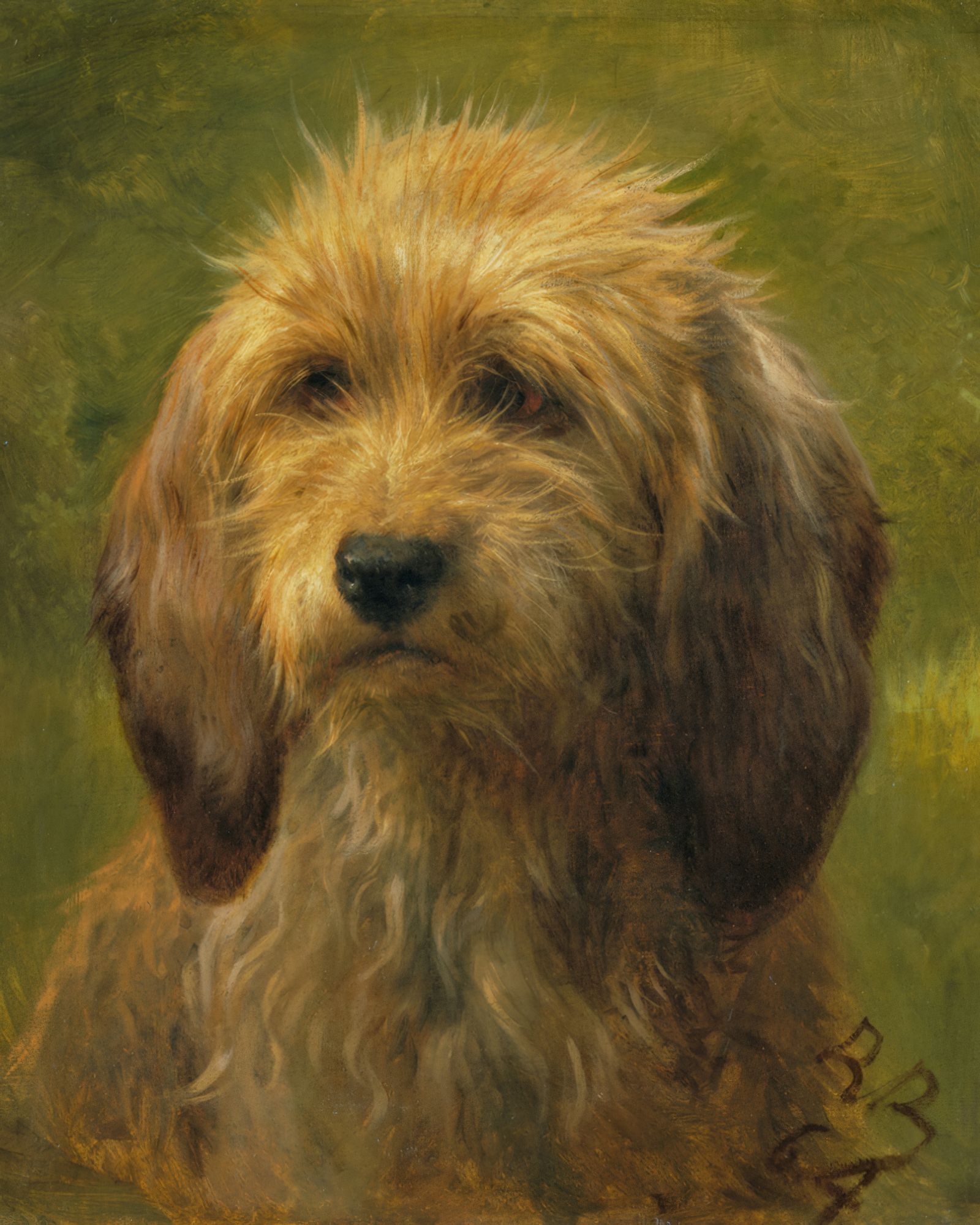
Brizo the dog · Rosa Bonheur · 1864 · Wallace Collection, London. Prepared for print by Surrealium at Vaxholm Fortress, Sweden
Bonheur's Brizo has a shaggy head whose fur turns around the muzzle and eyes. The Wallace Collection identifies the dog as an otterhound, despite the shepherd wording associated with its historic title. Use it to think about how fur can reveal or hide structure, not as a breed match. For a long-coated German shepherd, choose light and a head angle that preserve the eyes, muzzle and individual markings.
4. Give the setting a supporting role — Doughty's dog
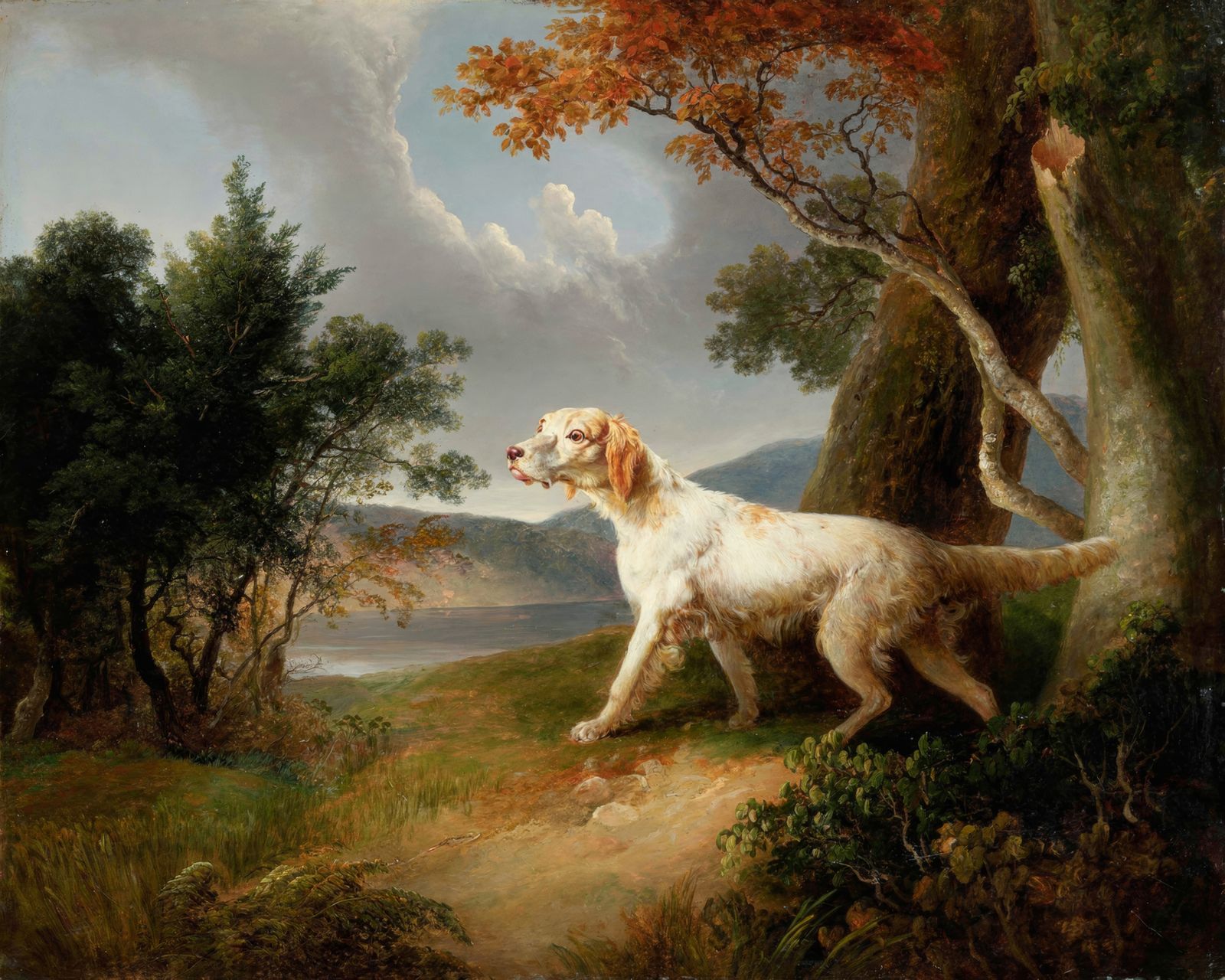
Landscape with Dog · Thomas Doughty · 1832 · Art Institute of Chicago. Restored by Surrealium at Vaxholm Fortress, Sweden
Thomas Doughty's dog occupies a wooded landscape, with enough surrounding space to establish a setting. The animal is a historic comparison, not a German shepherd, and the landscape is not a substitute for a clear likeness. If a favourite walking place matters to your portrait, keep the dog's face and body large enough to read in the source. A beautiful distant view can leave too little usable information about the animal itself.
5. Consider the familiar resting moment — Watching Dog
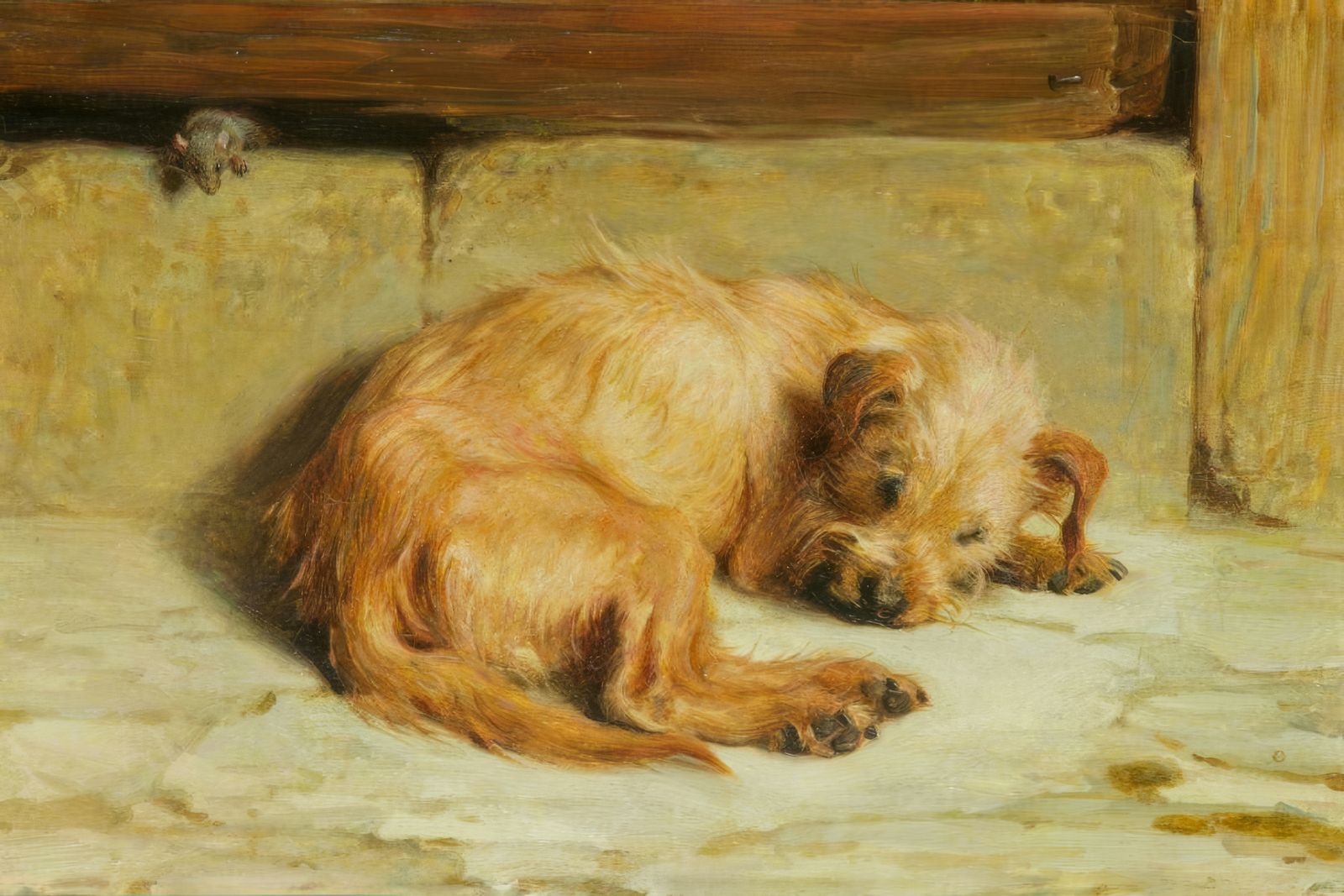
Watching Dog · Briton Rivière · 1875 · Sudley House, Liverpool. Prepared for print by Surrealium at Vaxholm Fortress, Sweden
The small dog in Watching Dog is curled near a hearth rather than standing in a show-like pose. Its scale and breed differ from a German shepherd, but the picture demonstrates how attention can survive within a resting posture. Think about the position in which you most often recognise your own dog at home. A comfortable source photo may carry more individual character than a stance selected only because it looks impressive.
6. Notice the direction of the head — Flèche
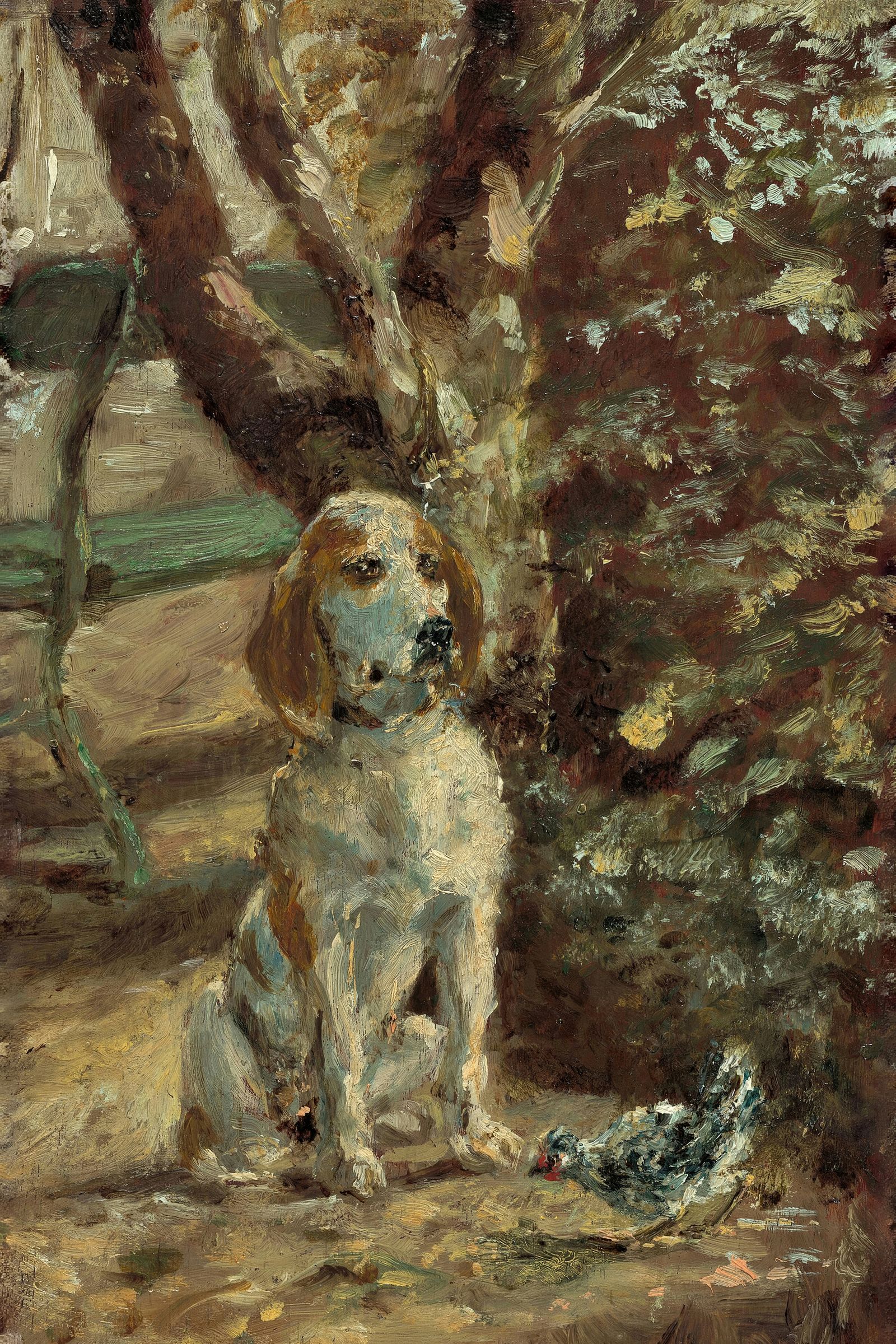
The Artist's Dog Flèche · Henri de Toulouse-Lautrec · c. 1881 · National Gallery of Art, Washington. Prepared for print by Surrealium at Vaxholm Fortress, Sweden
The artist's dog Flèche sits within a garden setting, its narrow head giving the pose a clear direction. It is not a German shepherd; the comparison concerns how the gaze relates to the body. A slight head turn can make a source photograph more expressive if the eyes and muzzle remain visible. Check that the ears do not merge with the background and that the camera angle has not distorted the proportions.
7. Compare two distinct animals — Stubbs's foxhounds
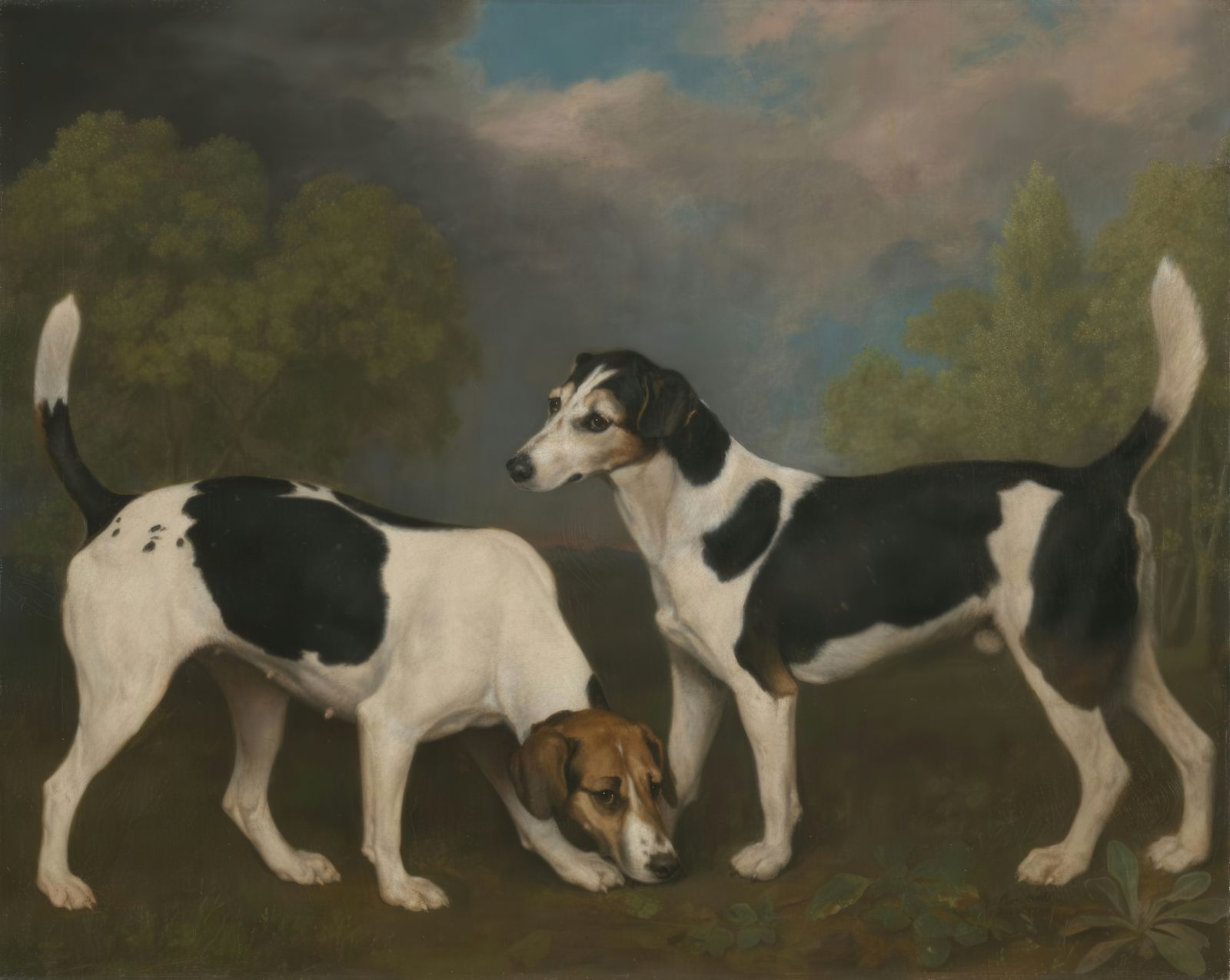
A Couple of Foxhounds · George Stubbs · 1792 · Tate, London. Prepared for print by Surrealium at Vaxholm Fortress, Sweden
Stubbs's pair of foxhounds occupies one landscape while retaining separate positions and attention. These are foxhounds, not German shepherds, and their value here is the clarity with which the two animals remain distinguishable. Even when making a single-dog portrait, compare the features that identify your pet rather than accepting a generic breed likeness. Markings, muzzle shape and a characteristic ear position may be more important than a broad label.
8. Preserve the shape of a relaxed body — Sleeping Bloodhound
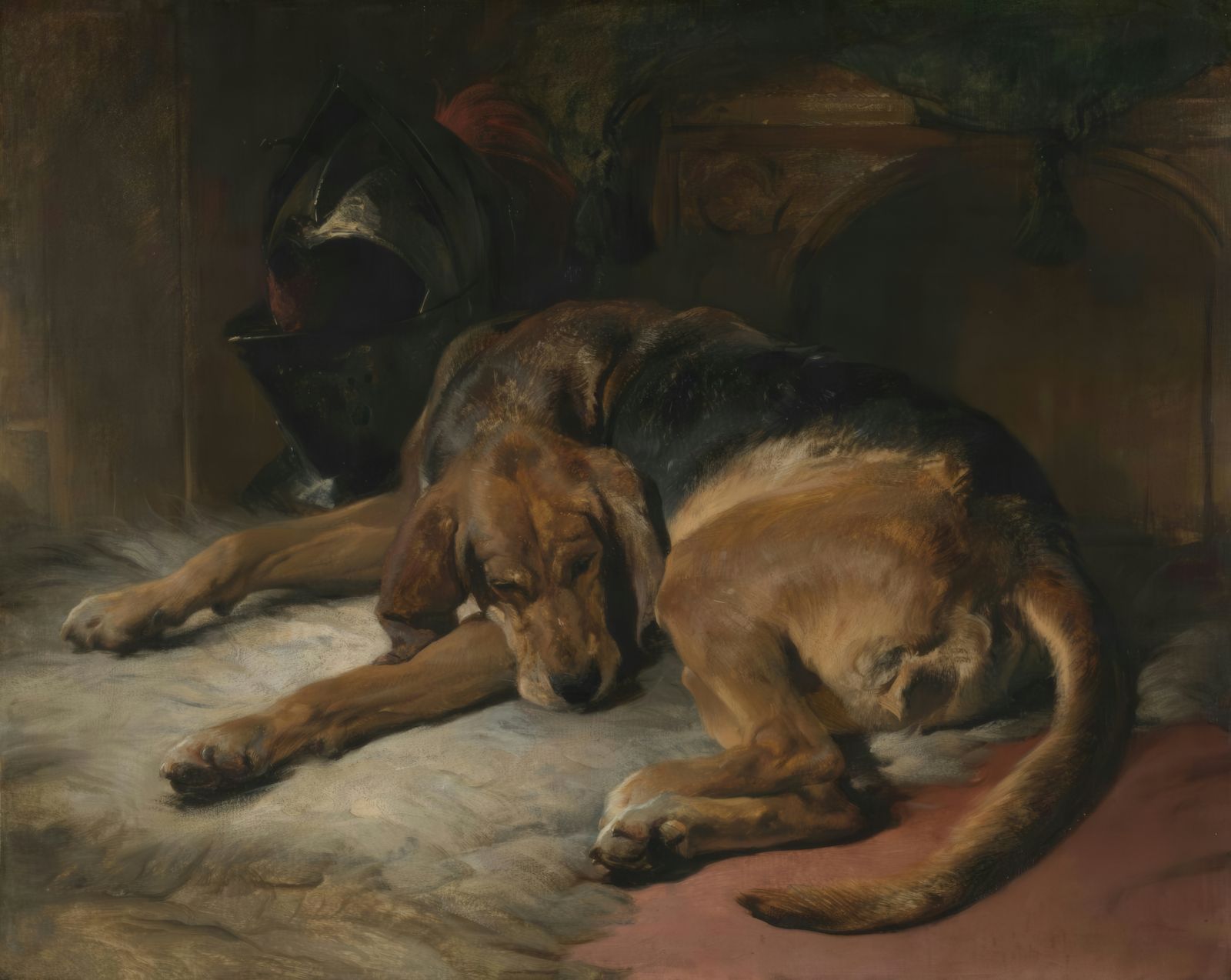
Sleeping Bloodhound · Edwin Landseer · 1835 · Tate, London. Prepared for print by Surrealium at Vaxholm Fortress, Sweden
The sleeping hound gathers its body into a compact curve on the floor. The breed and posture are different from an alert German shepherd, but the picture shows how a resting silhouette can be coherent and expressive. If you choose a curled or lying source photograph, make sure the head and limbs remain understandable. A natural pose should not become a confusing bundle simply because the camera was too close or too high.
9. Keep a substantial dog grounded — Lion
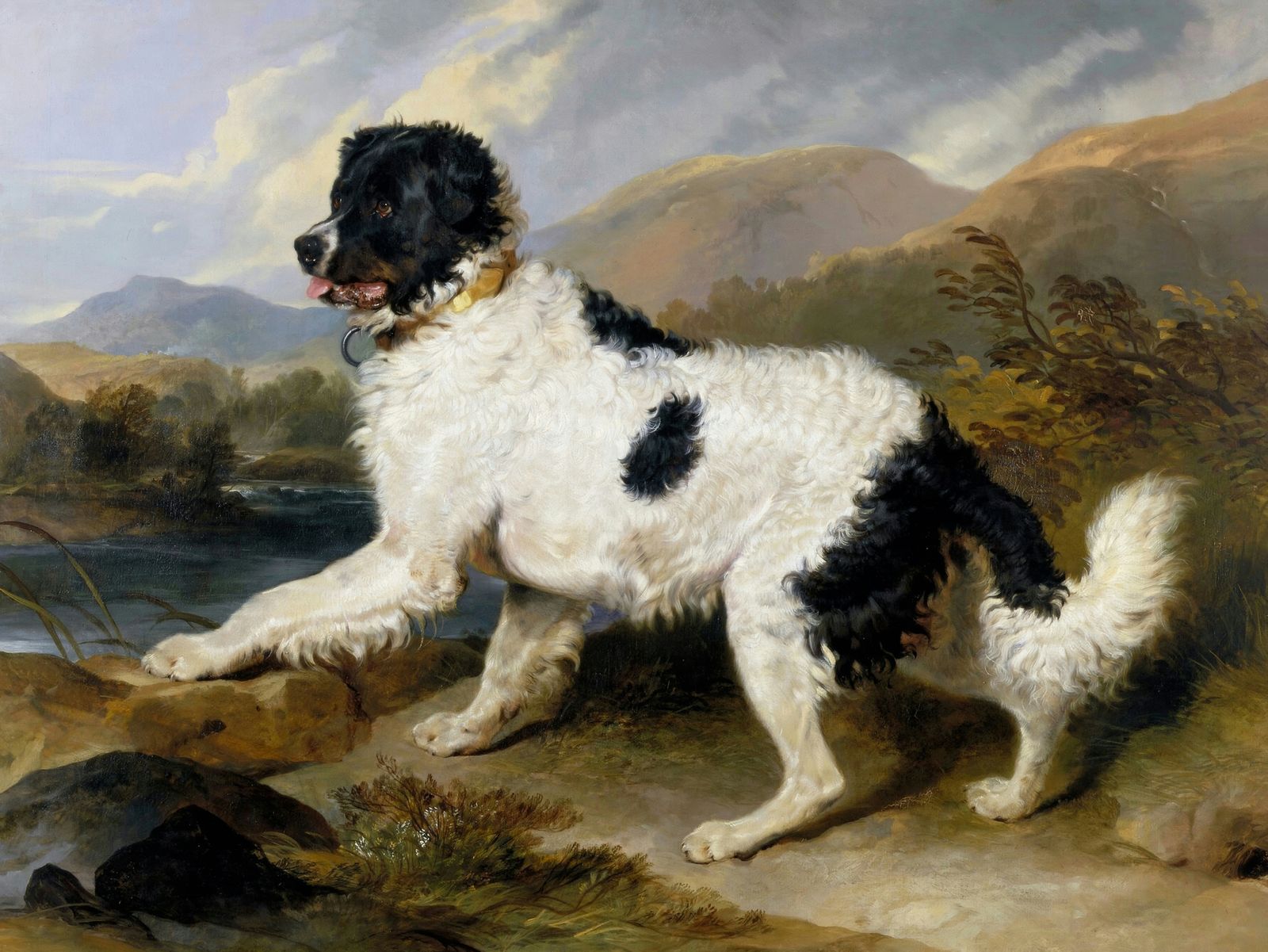
'Lion', a Newfoundland Dog · Edwin Landseer · 1824 · Victoria and Albert Museum, London. Prepared for print by Surrealium at Vaxholm Fortress, Sweden
The Newfoundland Lion sits within a coastal setting, with the animal's weight and broad form clearly established. It is explicitly a Newfoundland comparison, not a German shepherd portrait. Notice how the body meets the ground and how the setting leaves room for the head. For your own source, avoid angles that make the paws or muzzle disproportionately large, and choose a position the dog can hold without discomfort.
10. Let personality come from attention — Tama
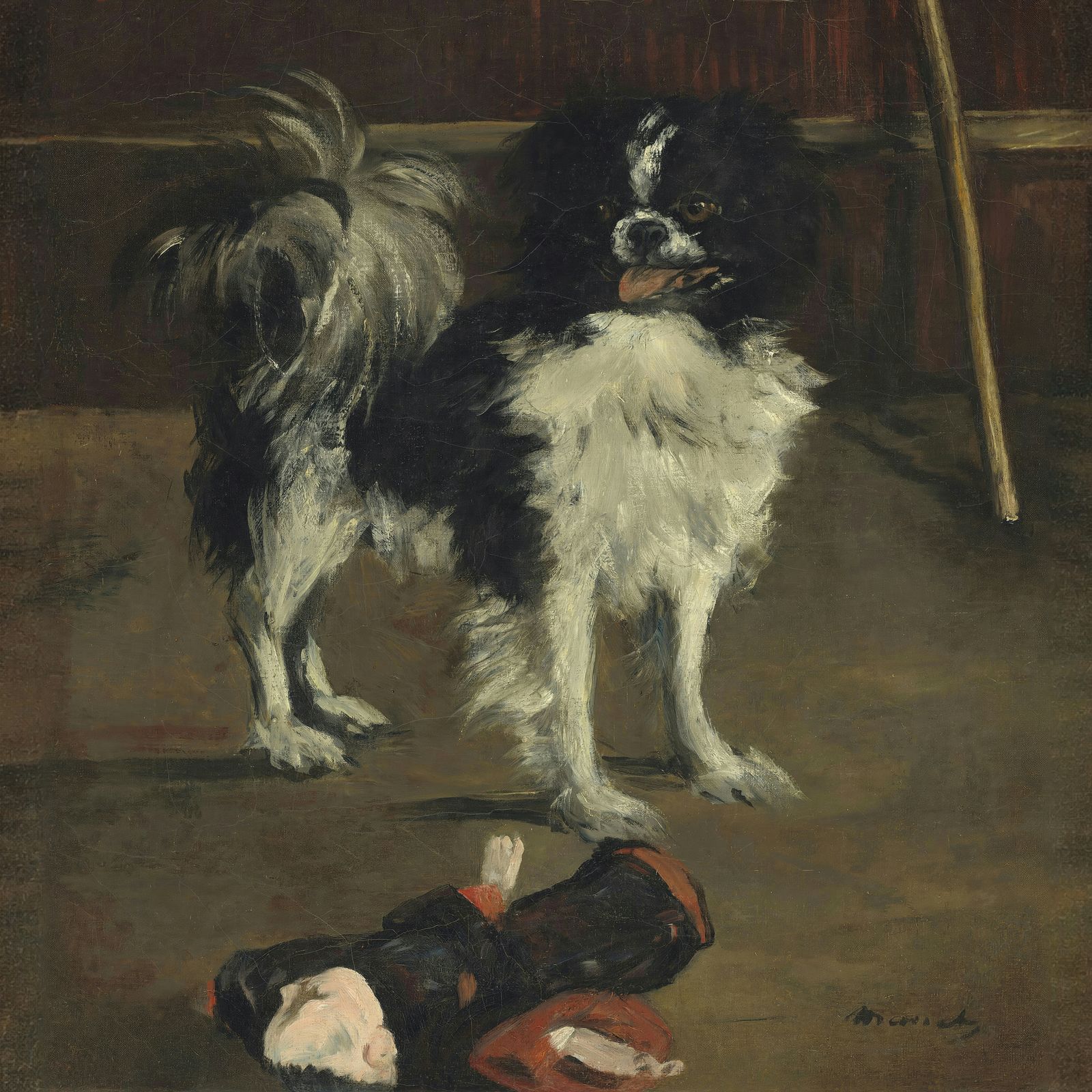
Tama, the Japanese Dog · Édouard Manet · c. 1875 · National Gallery of Art, Washington. Prepared for print by Surrealium at Vaxholm Fortress, Sweden
Manet's Tama presents a small Japanese dog beside a vivid object, with the animal's stance and gaze carrying its presence. The size and breed are very different, but the lesson is that a dog can be memorable without a human role or costume. Choose a photograph that captures your German shepherd's familiar attention. The portrait should preserve the animal you know, while the historical comparison remains honestly identified as a different dog.
Continue with custom dog portraits: 12 styles, and the photo that works best, pet portraits: 15 styles to choose from, from royal hounds to Impressionist cats, black cat painting: finding the detail in dark fur, and the full catalogue record for Portrait of a Large Dog.
Begin a pet portrait with a clear photograph of your own German shepherd and a short note about the features you want to preserve. Use these historic works as lessons in looking, not as breed evidence. A recognisable individual is the goal, with natural posture and accurate markings.
- Do these historic paintings show German shepherds?
- No. They are explicitly labelled comparisons involving other dogs. The article uses them to discuss silhouette, fur, posture and setting. It does not relabel an eighteenth- or nineteenth-century dog as a documented example of the modern breed.
- What photo is best for a German shepherd portrait?
- Choose a sharp photograph with clear eyes, ears, muzzle and coat markings. Photograph near the dog’s level when comfortable, avoid extreme wide-angle views and preserve enough of the body to explain the pose.
- Does my dog need to stand for the portrait?
- No. A seated or resting position can be more characteristic and more comfortable. Choose a natural posture with a readable head and body. The dog should not be made uncomfortable to match a formal historic reference.
- Is there a breed-specific Fable demo in this guide?
- No approved German shepherd demo was available for this selection. The paintings are historic references, and the pet portrait route provides the current creation choices. Use your own dog’s photograph as the basis for its individual likeness.