A bunny portrait that keeps the rabbit naturally itself
bunny portrait: One historical hare work and practical guidance for a portrait from your own rabbit’s photo.
A bunny portrait begins with a particular rabbit: the shape of its ears, the way it settles its body, the markings around its nose or the look it gives a person bringing food. A photograph that records those small facts is more useful than a human costume or an elaborate prop. For a Fable pet portrait, follow the live route's subject guidance and choose a reference that keeps the animal comfortable and clear.
The historical work shown here is Dürer's The Holy Family with Three Hares, in the catalogue's explicitly identified contemporary colour interpretation. It is a religious scene containing hares, not a historical portrait of your pet, and a hare should not be relabelled as a domestic rabbit. One honest work is enough to start looking carefully. This guide focuses on making a useful photograph and choosing a portrait without inventing a larger rabbit catalogue.
Begin with the animal you know
A rabbit's individuality can be easy to miss in a hurried photograph. Look through the images you already keep and notice what makes the animal recognisable to you: the set of the ears, a patch of fur, a familiar resting posture. Those observations give the portrait a more personal beginning than a generic description of a breed.
The photograph need not be made for an occasion. A clear image in the rabbit's usual space may record more character than a staged scene. Choose a moment when the animal is at ease, and allow it to move away. A portrait reference is something you can collect patiently, rather than a pose the rabbit must hold for a gift.
Look at the historical work without changing its subject
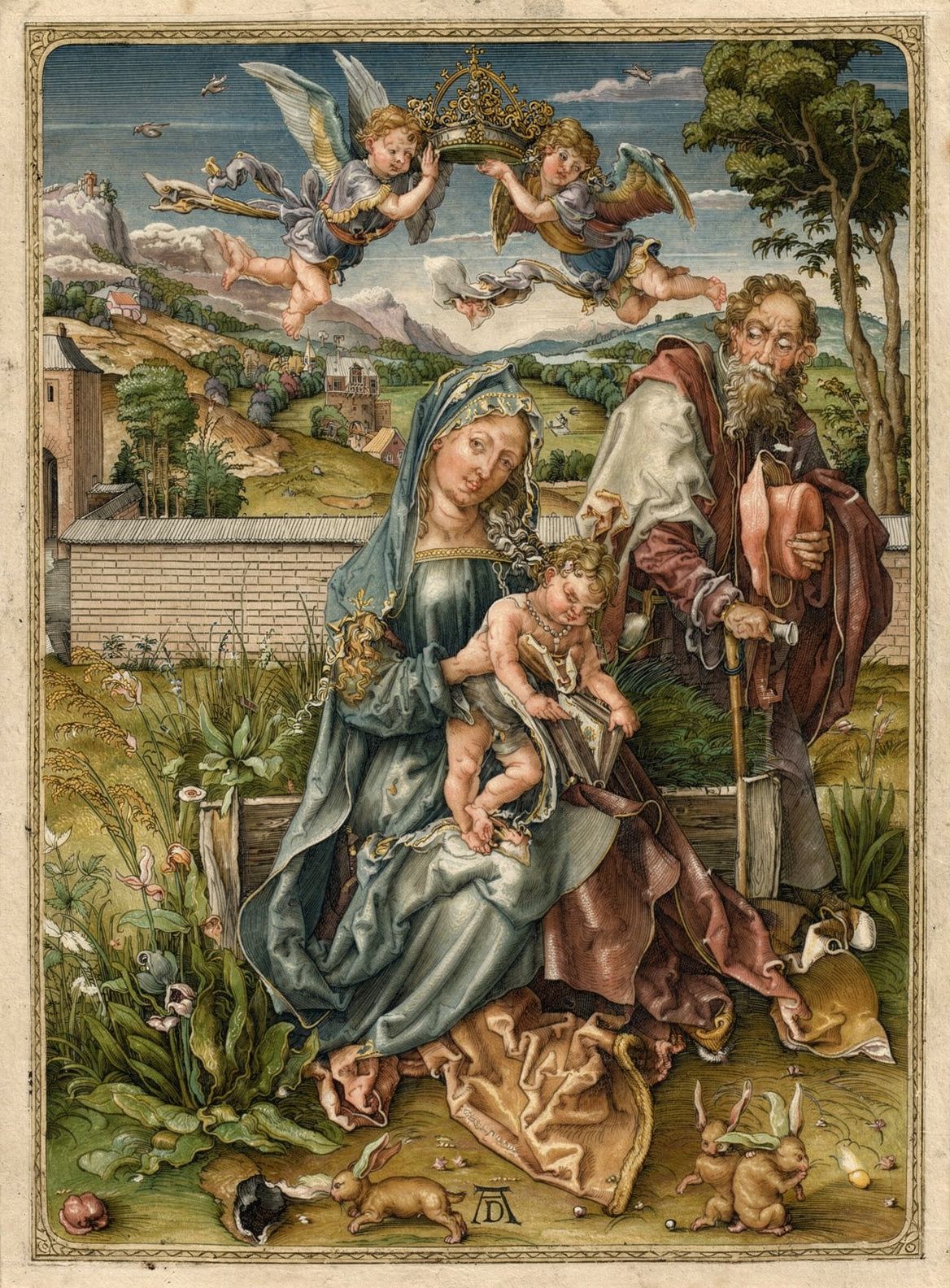
The Holy Family with Three Hares · artist: Albrecht Dürer (German, 1471–1528) · 1497–98 · Cleveland Museum of Art · Fable contemporary colour interpretation after the historical work
The Holy Family with Three Hares brings animals into a larger devotional scene. The catalogue dates Dürer's historical source to 1497–98 and identifies the version displayed here as a contemporary colour interpretation. Those details belong together: the modern colours should not be described as the surviving colours of the historical woodcut.
The hares are part of that work's own subject, rather than substitutes for domestic rabbits. What the image can encourage is attention to an animal's outline and place within a composition. If you want the historical picture itself, follow its masterwork page. A portrait of your bunny begins separately with your photograph.
Photograph at the rabbit’s level
A phone held high above a small animal can turn its body into an unfamiliar shape. Try sitting at a comfortable distance and bringing the camera nearer the rabbit's eye level. Keep the entire ear shape in the frame, including the space above upright ears or the outline of lop ears beside the face.
The aim is not to make the rabbit look larger or more imposing. It is to record proportions the portrait can use. Avoid pushing the phone close to the nose, which can exaggerate the muzzle. A slightly wider original photograph with clear detail is often more useful than a dramatic close-up that loses the rest of the animal.
Use the light you can see clearly
Soft daylight can help distinguish the face from the coat without the sharp shadows of direct sun. For a pale rabbit, inspect the forehead and chest for visible detail. For a dark rabbit, check that the eyes and the edges of the head do not disappear into the background.
Do not use a bright flash merely to force a sharp image. Choose a calm moment in a place where the rabbit is already comfortable. If a photograph is meaningful but too dark, keep it as a memory and compare it with a clearer reference for the portrait. The best source is both personally recognisable and visually informative.
Keep the ears and paws inside the frame
The ears are often the first feature a person notices in a rabbit, but the body and paws also help the pose make sense. If you want a full-body portrait, choose a photograph that contains the whole animal. A crop cannot supply what was outside the original image.
A rabbit settled beside a familiar object may feel like a natural picture, provided the object does not hide the face or most of the body. Avoid placing the animal in a container solely for the photograph. The portrait should begin with the rabbit's ordinary posture and clear anatomy, not with a scene that makes it look like a human character.
Choose a quiet background for a small subject
A rabbit can be lost among blankets, patterned fabric or the bars of an enclosure. Look for a reference in which the outline remains readable and the face is not crossed by an object. You do not need an empty studio background; you need the animal to be the clear subject.
If a favourite image contains too much visual clutter, see whether another photograph from the same day is clearer. Do not assume every unwanted object will be removed perfectly later. Choosing a useful source before selecting a treatment keeps the portrait centred on the rabbit rather than on correcting an unnecessarily difficult photograph.
Read the pet route before choosing a treatment
Fable's pet route is the starting point linked here, but the live flow and selected style set their own current guidance. Check that the subject is supported and read the photo requirements before continuing. A dog-based historical comparison should not be presented as evidence that a rabbit will acquire another species' anatomy.
Keep the rabbit naturally itself. A historic mood can be expressed through the portrait's handling and setting without human clothes, a crown or a uniform. If the available route does not fit the reference you have, pause and choose another approach rather than forcing the animal into a treatment whose subject guidance does not suit it.
Consider whether the portrait is a gift
For a gift, the keeper often knows which expression and posture feel most like the rabbit. Ask them to choose from a small group of photographs if possible. A surprise can be pleasant, but recognising the right animal matters more than keeping every decision secret.
If the portrait is a memorial, move at the recipient's pace and ask whether they would welcome an image now. A clear photograph should not become another task they feel obliged to complete. You can help preserve the original file and return to the portrait later. The photograph has value even if it never becomes a product.
Review the portrait before choosing its physical form
Look at the ears, eyes, markings and body together in the available preview. Ask whether the result feels like the rabbit in the reference, rather than judging it only as an attractive animal image. A portrait should preserve the particular qualities that prompted you to choose that photograph.
Then inspect the current print options, dimensions and prices in the ordering flow. A small animal does not automatically require a small print, but the intended wall and viewing distance matter. Choose a presentation that keeps the image whole. There is no need to add a caption across the portrait when a separate gift note can carry its personal story.
Choose one clear photograph that records your rabbit's own shape and character, then open the pet route to inspect its current guidance. Keep the animal comfortable, review the portrait and select a physical format only after you know what is offered. The historical hare image can remain a work to explore in its own right, with its modern colour version clearly identified. Your bunny's portrait has a different beginning: an ordinary photograph of an animal you know well, and the decision to give that small presence careful attention.
Explore the pet portrait route
- Is a hare the same as a domestic rabbit?
- No. The historical work here contains hares and is identified accordingly. It is a point of reference for looking at animals in art, not a substitute for your own rabbit’s photograph or a claim that the subjects are the same species.
- What photograph works best for a bunny portrait?
- Choose a clear image at the rabbit’s level, in comfortable light, with the eyes and complete ear shape visible. Include the whole body if the intended composition needs it. Keep the animal at ease and avoid forcing a pose.
- Are the colours in the Dürer image historical?
- The displayed catalogue version is labelled a contemporary colour interpretation after the historical work. Its colours should not be presented as those of an original woodcut impression. The masterwork page explains the version being offered.