Rabbit painting: look beyond the famous hare
Three historical works distinguish rabbits, hares and the different roles animals play in art.
A rabbit painting can mean a portrait of a companion animal, a small creature within a religious scene or an image about the hunt. Those are very different things to hang on a wall. Before choosing, look for what the animal actually does in the picture and whether the recorded title calls it a rabbit or a hare. The names are not interchangeable, even when a small reproduction makes the differences hard to see.
Dürer’s Young Hare, dated 1502 and held by the Albertina, is an obvious reference for this subject. It is not among the pictures shown here. Instead, three works available in Fable offer a more particular comparison: hares within a family scene, a terrier watching a rabbit hole, and Courbet’s hunting dogs beside a dead hare. The last is a hunting subject and may be unsuitable for someone seeking a gentle pet image. The pet portrait styles guide is a better starting point when the aim is a new portrait of your own animal.
Start with the whole scene
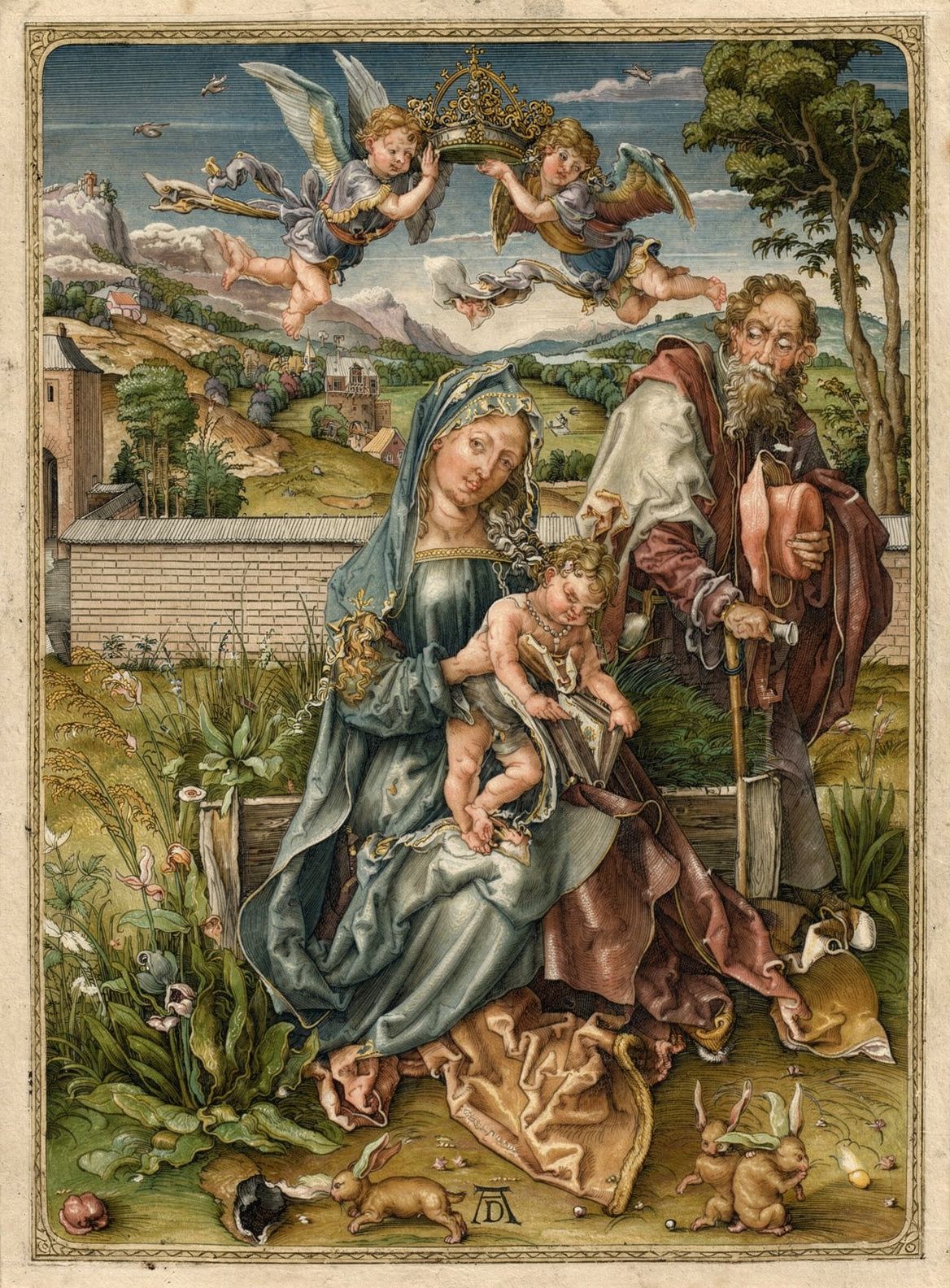
The Holy Family with Three Hares · Albrecht Dürer, 1497–98 · Cleveland Museum of Art. Contemporary Fable colour edition after the historical print. Restored by Surrealium at Vaxholm Fortress, Sweden.
In The Holy Family with Three Hares, the animals occupy the foreground beneath a much larger arrangement of people, trees and architecture. The hares are easy to notice once you know to look for them, but they do not turn the entire work into an animal portrait. The scale between them and the figures is part of the composition. A crop that isolates one hare would change the subject as well as the shape of the picture.
Look at the repeated curves of ears, backs and foliage, then follow the image upward. The animal forms belong to a network of small marks that gives the scene its density. This is an appealing choice for someone who likes discovering details, although it requires more sustained looking than a simple close portrait. It also asks the viewer to accept the religious subject that surrounds the animals; liking rabbits alone does not establish that the whole picture suits a recipient.
A colour edition is not the original print
The Dürer image displayed here is Fable’s contemporary colour edition after a historical print. Its colour belongs to the new presentation, rather than serving as evidence of Dürer’s original palette. That difference matters especially when comparing reproductions online: two images can represent the same composition while making substantially different choices about tone and surface.
For a print you want to live with, consider those choices openly. Notice whether colour makes a small animal easier to see or brings foliage forward, and whether that is the experience you prefer. For historical study, consult the holding museum’s record alongside the edition. You do not have to reject a modern interpretation to keep its identity clear. A good caption lets the historical work and the later treatment remain visible as separate layers, so admiration for the result does not depend on a mistaken account of how it was made. Our Renaissance portrait story provides a wider period comparison.
An animal can be present through its absence
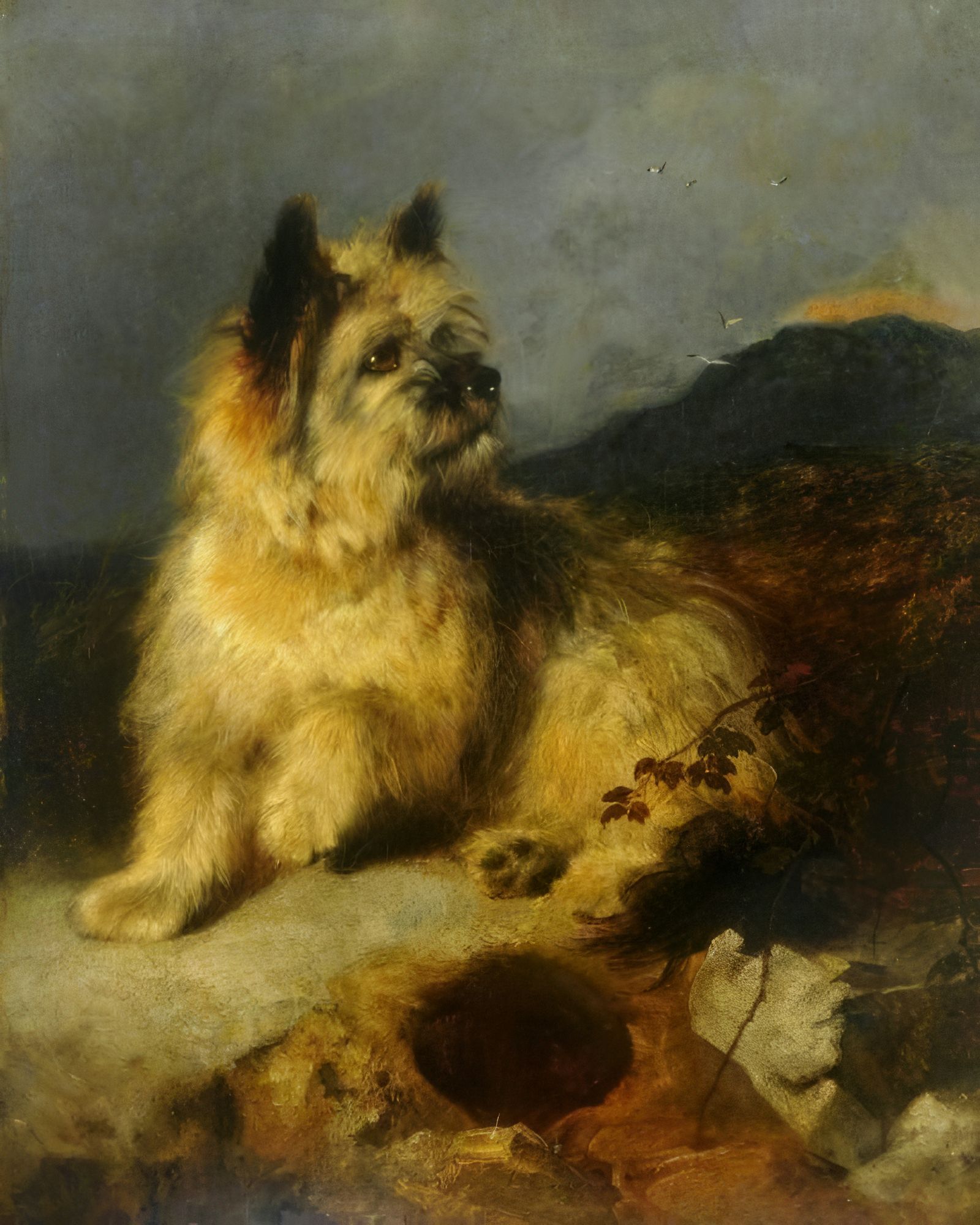
A Terrier by a Rabbit Hole · Attributed to George Earl, Late 19th century · Cooper Gallery, Barnsley. Restored by Surrealium at Vaxholm Fortress, Sweden.
A Terrier by a Rabbit Hole concentrates attention on the dog and the opening it watches. The rabbit named in the title is not presented as a clear sitter waiting to be admired. That absence is the point of the scene: posture and direction turn an ordinary patch of ground into a place where something might happen. The dog’s body makes the viewer anticipate an encounter beyond what the picture actually shows.
This can be a satisfying animal picture for someone interested in behaviour, but it is a poor substitute for a requested rabbit portrait. Read the title literally and check the image before choosing it as a gift. The work offers observation and suspense, not a clear record of a rabbit’s markings. Comparing it with Landseer’s dogs also helps separate stories told through animals from images whose principal purpose is to show an individual animal’s appearance. Neither approach is inherently better; they answer different wishes.
Do not turn an unfamiliar animal into a breed claim
A painted ear, coat or body shape may suggest a familiar animal, but that is not enough to assign a modern breed name. Historical titles, museum records and visible details sometimes provide different levels of certainty. Keep the most specific supported description, and stop there. If the record says hare, retain hare. If the animal is too small to identify confidently, describe its position or behaviour instead of supplying a precise label.
This is especially useful when choosing a portrait reference. A real photograph can show the length of your rabbit’s ears, the pattern around its eyes and the way it settles its body. Those features are more personal than a guessed resemblance to a famous painting. Select a photograph with the whole head visible and a natural posture, then compare it with other pictures of the same animal. The strongest reference will usually be the one the owner recognises immediately, even before anyone points out its technical clarity.
A hunting picture carries a different emotional weight
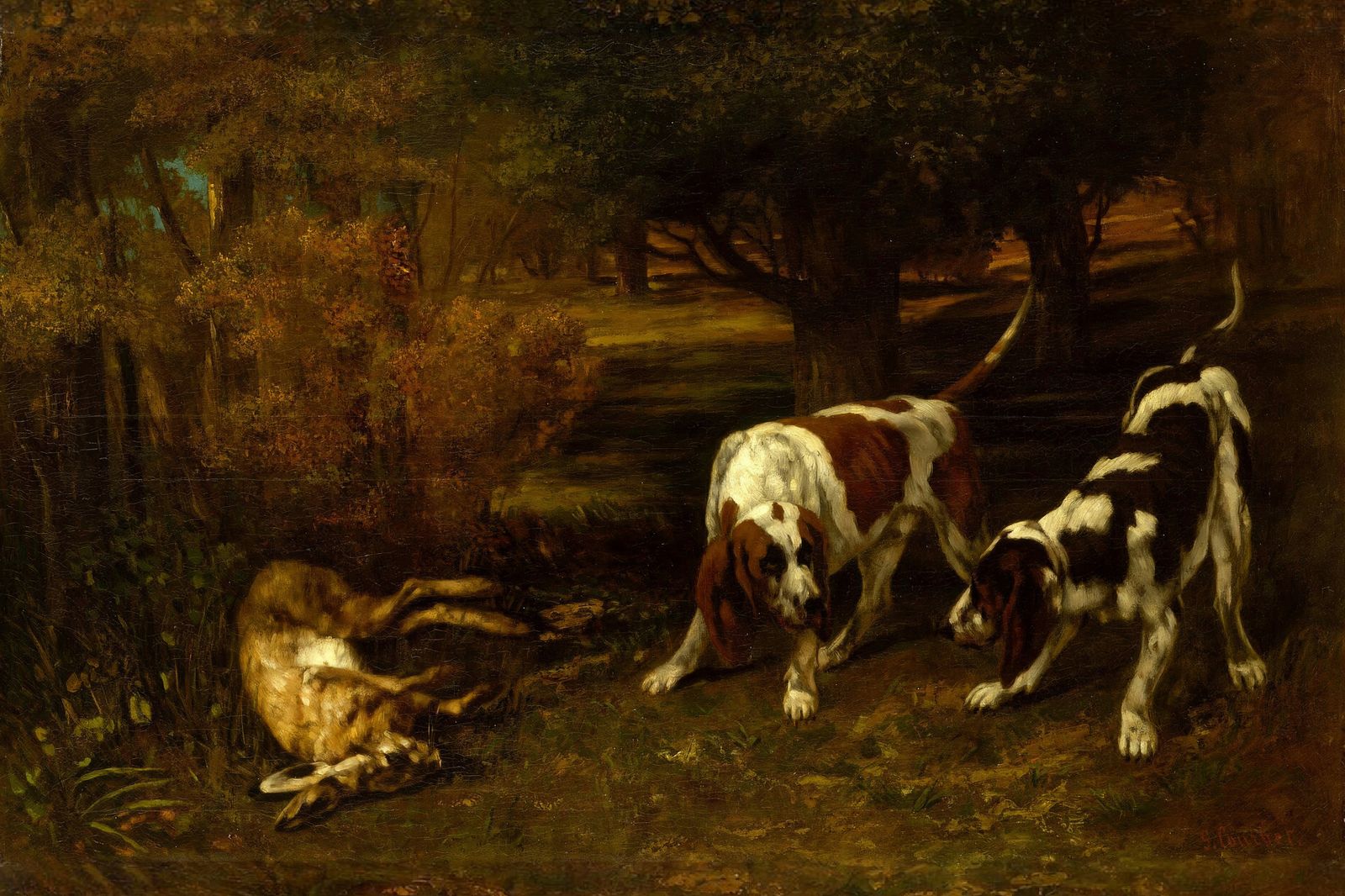
Hunting Dogs with Dead Hare · Gustave Courbet, 1857 · Metropolitan Museum of Art, New York. Restored by Surrealium at Vaxholm Fortress, Sweden.
Courbet’s Hunting Dogs with Dead Hare shows an animal that has been killed. The dogs and the hare occupy the same landscape, but their situations are unmistakably different. This is historical hunting imagery, not a reassuring scene of pets at rest. The distinction should be stated before someone encounters it, especially in a guide reached through a broad search for rabbit art.
Look at how the bodies sit against the ground and how the surrounding space directs attention toward them. The composition can be studied for its treatment of animals, texture and scale without making it a suitable choice for every home. If you are buying for a rabbit keeper, ask rather than assuming that any image containing the animal will be welcome. The same care applies to remembrance: a picture of hunted prey is not a neutral alternative to a portrait of a companion. The recipient’s relationship to the subject should decide whether this work belongs in the conversation.
Choose the kind of attention you want
The three pictures offer three ways of looking: searching for small creatures, watching a dog’s expectation, and confronting the outcome of a hunt. A person seeking a peaceful portrait may prefer none of them, and that is a useful conclusion. A catalogue does not have to contain the right answer to every search for the search itself to become clearer.
If one composition does suit you, compare the full image at its own proportions before choosing a print. Small animal details need enough space to remain legible; a larger sheet is not automatically better if you intend to view it closely in a small room. Browse the Renaissance works for the world around Dürer, or compare the more direct animal subjects in art prints of dogs. If your interest remains your own rabbit, start with that individual and its photographs. Historical art can guide attention without replacing the animal you wanted to remember in the first place.
A thoughtful animal image begins with an accurate description. Keep rabbit and hare distinct, name the historical subject, and tell a modern colour edition from the original print. Those small decisions make the choice more personal because they prevent a familiar search phrase from doing all the thinking.
For a new portrait, choose a photograph that shows your rabbit naturally and clearly. Let its ears, markings and posture lead the decision. The historical examples can help you notice what you value, but the finished choice should still concern the particular animal whose face you know.
For a gentler route centred on a companion animal, the bunny portrait story keeps the individual rabbit in view.
- Is Dürer’s Young Hare a rabbit painting?
- Its recorded subject is a hare. The Albertina dates the work to 1502. It is discussed here as a famous reference, but no substitute image is displayed under its title.
- Are all three pictures suitable gifts for rabbit lovers?
- No. One contains small hares within a religious scene, one centres on a dog watching a hole, and one shows a dead hare after a hunt. Ask about the recipient’s preferences before choosing an animal subject.
- Can I use a photograph of my own rabbit for a portrait?
- Choose a clear photograph with recognisable markings, visible ears and a natural posture, then explore the pet portrait path. The historical images here are references for looking, not examples of customer portraits.