Cat Christmas cards: ten paintings for people who know cats
Natural poses, inquisitive paws and comfortable baskets: ten historical cat pictures suggest a more personal Christmas greeting.
Cat Christmas cards can be funny without putting a cat in a hat. A paw reaching for an object, a kitten half out of a basket or an adult cat surveying the room already supplies a story. The Christmas part can come from your words, leaving the animal free to look and behave like an animal.
These ten historical works offer different moods for the recipient who knows exactly how a cat occupies a home. They are paintings to look at, not finished card mockups. Check the designer’s available images and the actual preview before deciding on a card face. If you choose a portrait of your own pet instead, use a clear photograph and let the cat’s markings and familiar expression carry the personality.
For a related starting point, read Christmas cards with pets.
1. The basket has other plans
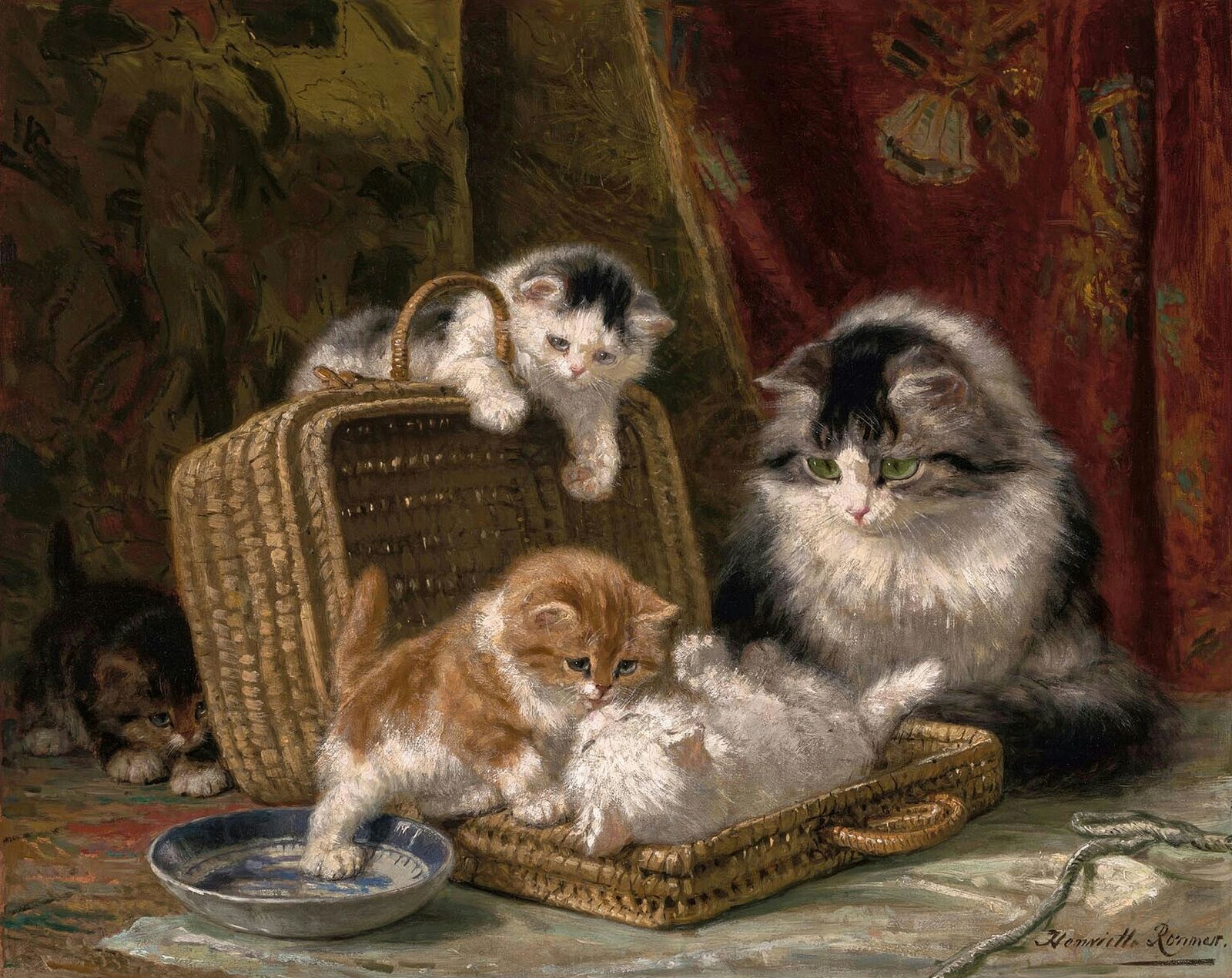
Kittens playing — Henriëtte Ronner-Knip, c. 1880. Museum Boijmans Van Beuningen, Rotterdam. Prepared for print by Surrealium at Vaxholm Fortress, Sweden.
Ronner-Knip’s kittens spill around a tipped basket, with one looking out while another investigates the dish below. The comic energy comes from their different interests rather than an imposed human activity. For a friend whose cat treats every delivery as a new possession, write a small observation about the box that will outlast the present, then keep the picture free of extra props.
Explore Christmas cards · Explore this artwork
2. A greeting for a quiet afternoon
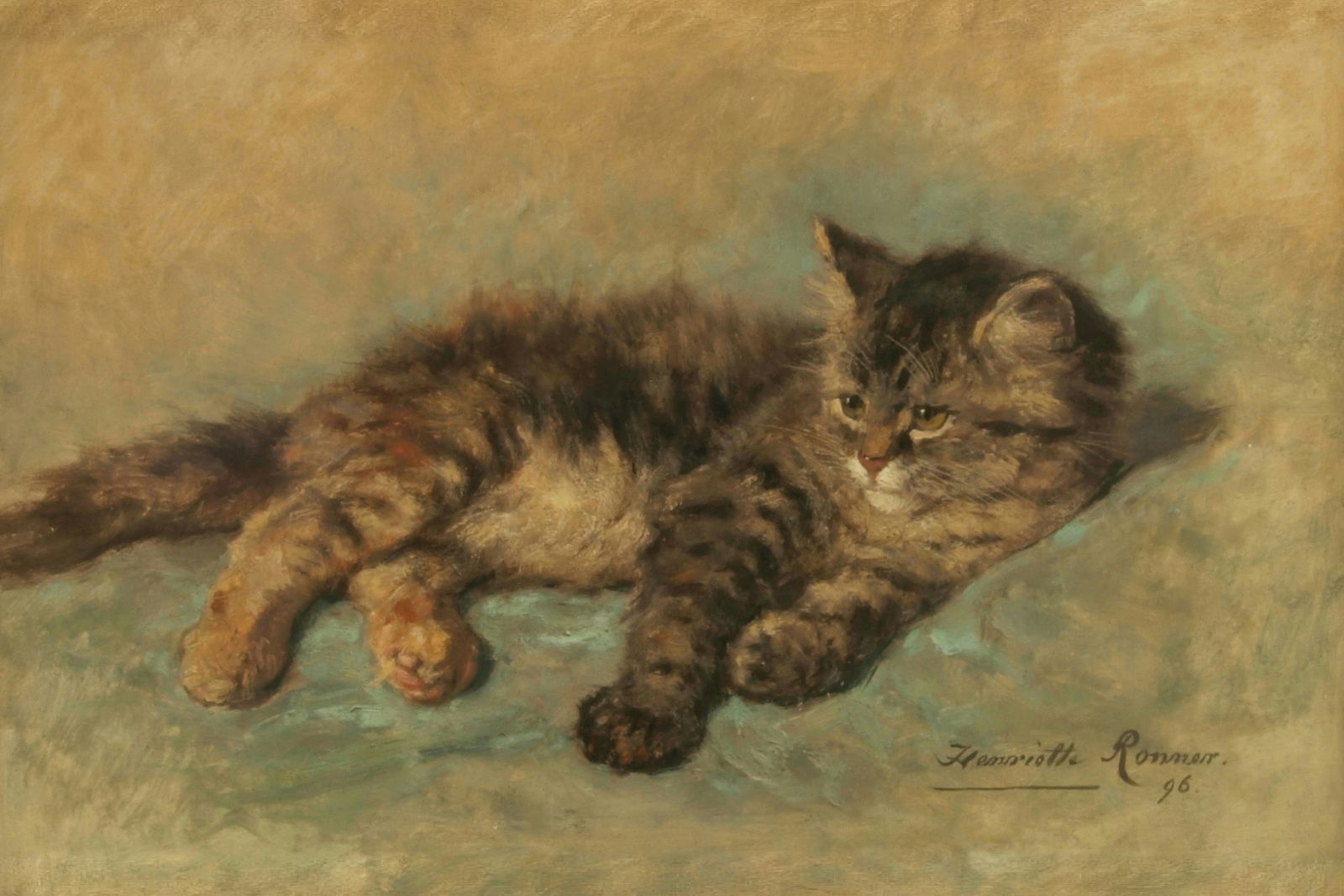
Kitten Lying Down — Henriëtte Ronner-Knip, 1896. Teylers Museum, Haarlem. Prepared for print by Surrealium at Vaxholm Fortress, Sweden.
The reclining kitten in the Teylers painting stretches across a pale background, its paws and face carrying almost all the detail. It offers a gentler card than a scene full of activity. Pair it with a wish for an unhurried break or a comfortable afternoon, without claiming that the animal is smiling, grateful or celebrating a holiday it cannot understand in human terms.
Explore Christmas cards · Explore this artwork
3. The cat that belongs on a lap
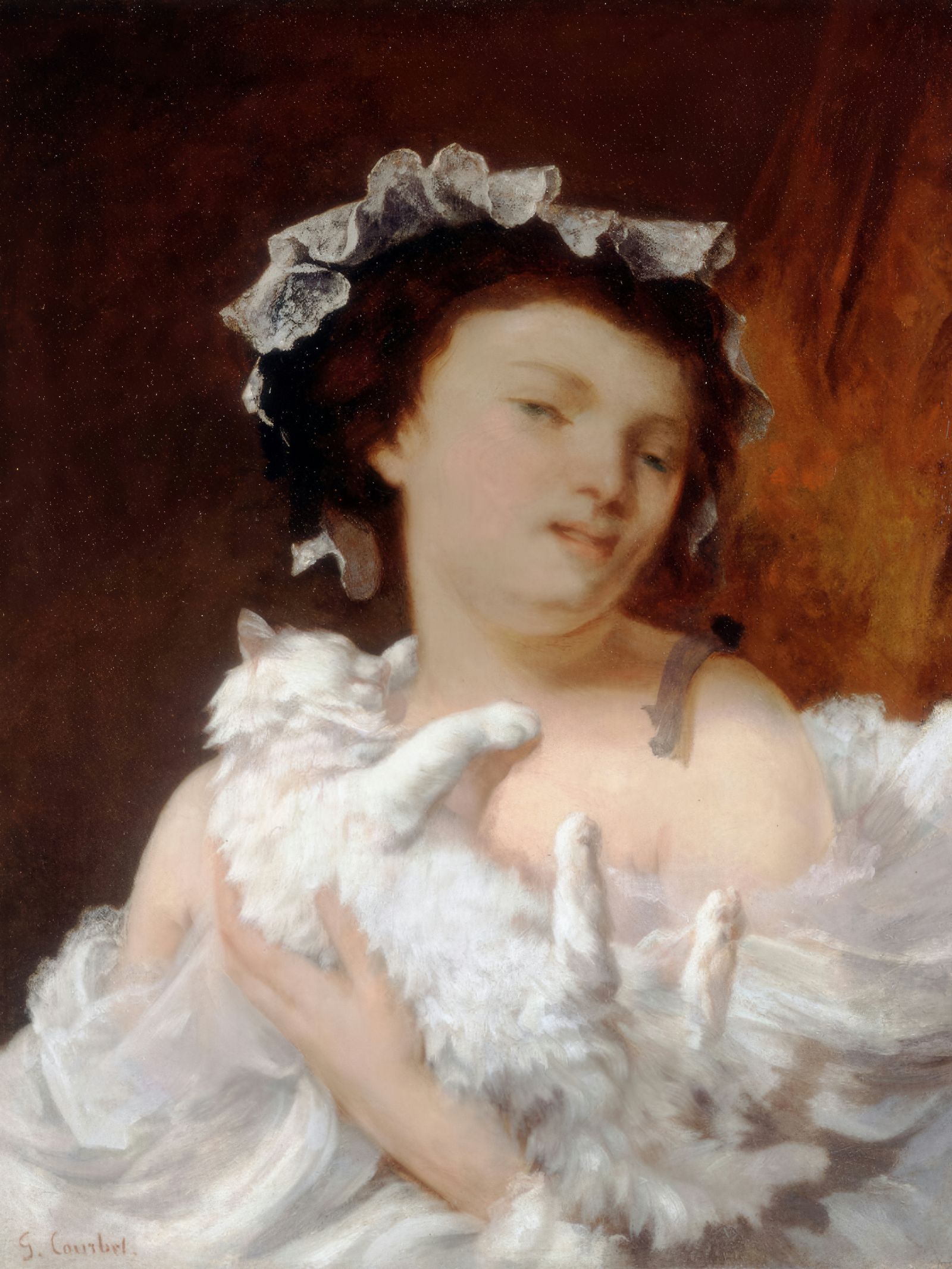
Woman with a Cat — Gustave Courbet, 1864. Worcester Art Museum. Prepared for print by Surrealium at Vaxholm Fortress, Sweden.
Courbet’s woman holds a pale cat close against her dress, with the animal forming part of the portrait’s soft movement. This direction suits a recipient whose idea of a good evening includes a cat settling beside them. Keep the message about the companionship you actually know, and avoid using the painting to make assumptions about the sitter’s private feelings or circumstances.
Explore Christmas cards · Explore this artwork
4. A small companion in a large landscape
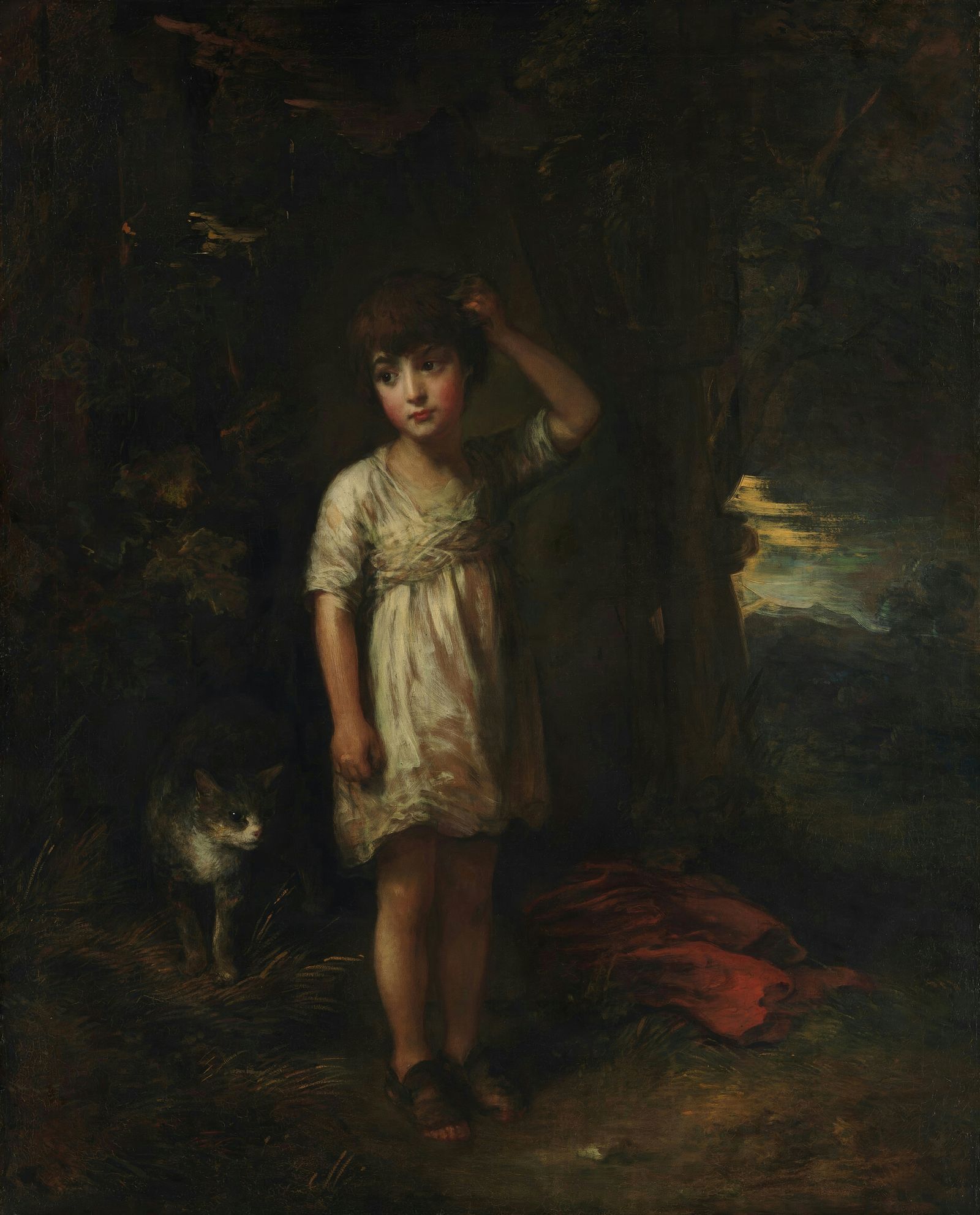
A Boy with a Cat—Morning — Thomas Gainsborough, 1787. Metropolitan Museum of Art, New York. Prepared for print by Surrealium at Vaxholm Fortress, Sweden.
Gainsborough’s boy and cat stand beneath a tree, with the surrounding landscape giving their relationship a quiet setting. The animal is not merely a decorative emblem pasted into a portrait. A card for a family that has grown up with a much-loved pet can follow that example: mention a shared memory, but do not invent a child-and-cat story just to match the artwork.
Explore Christmas cards · Explore this artwork
5. The temptation on the table
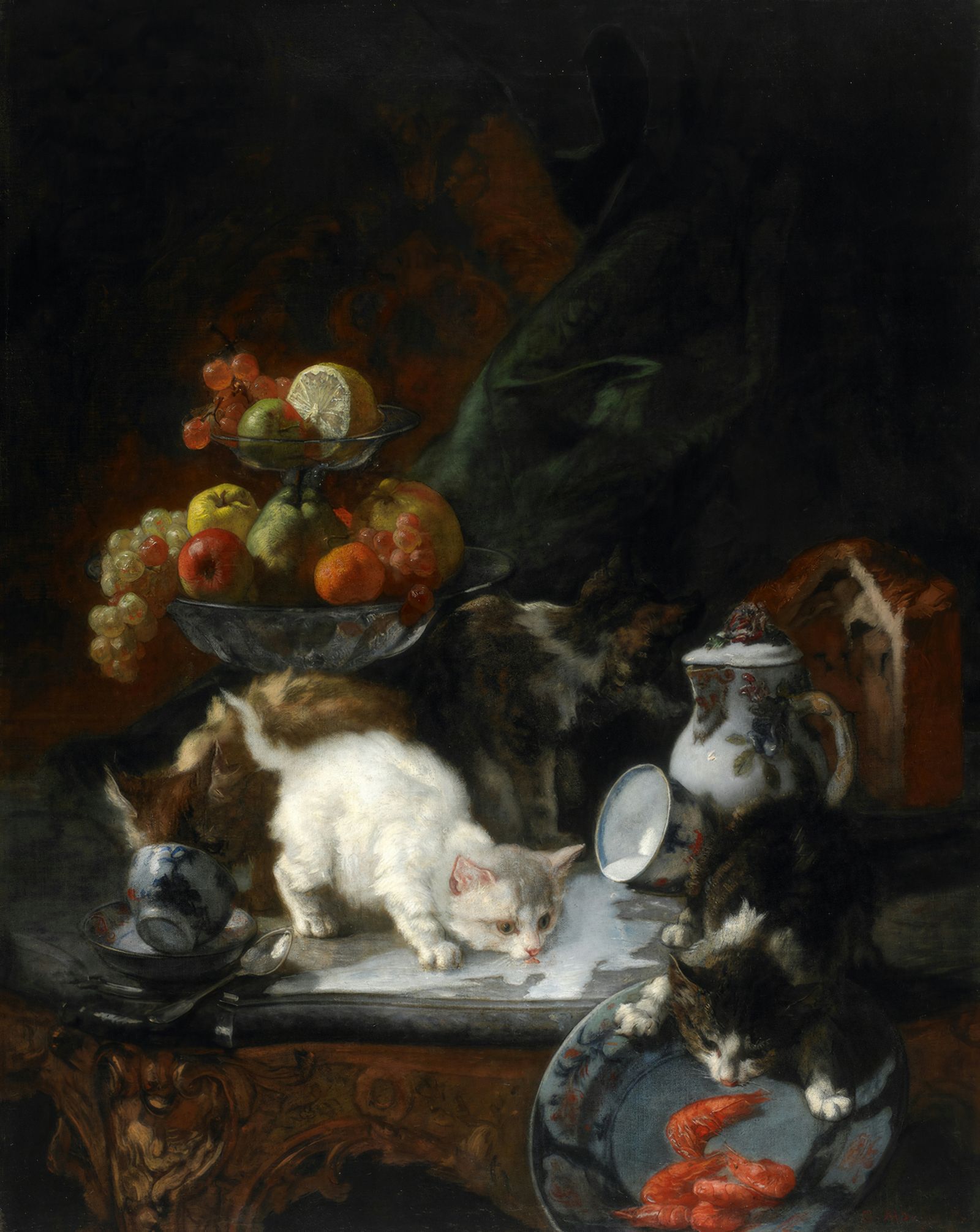
Cats on a Console — Charles Monginot, 1859. Centre national des arts plastiques, Paris. Prepared for print by Surrealium at Vaxholm Fortress, Sweden.
Monginot’s cats explore a crowded console among fruit, vessels and other inviting objects. The painting supplies a familiar domestic joke about curiosity and the limits of household rules. A short line about the safest place for the Christmas snacks may be enough, provided it stays an affectionate observation rather than advice to feed a cat anything pictured in a historical still life.
Explore Christmas cards · Explore this artwork
6. Company without a performance
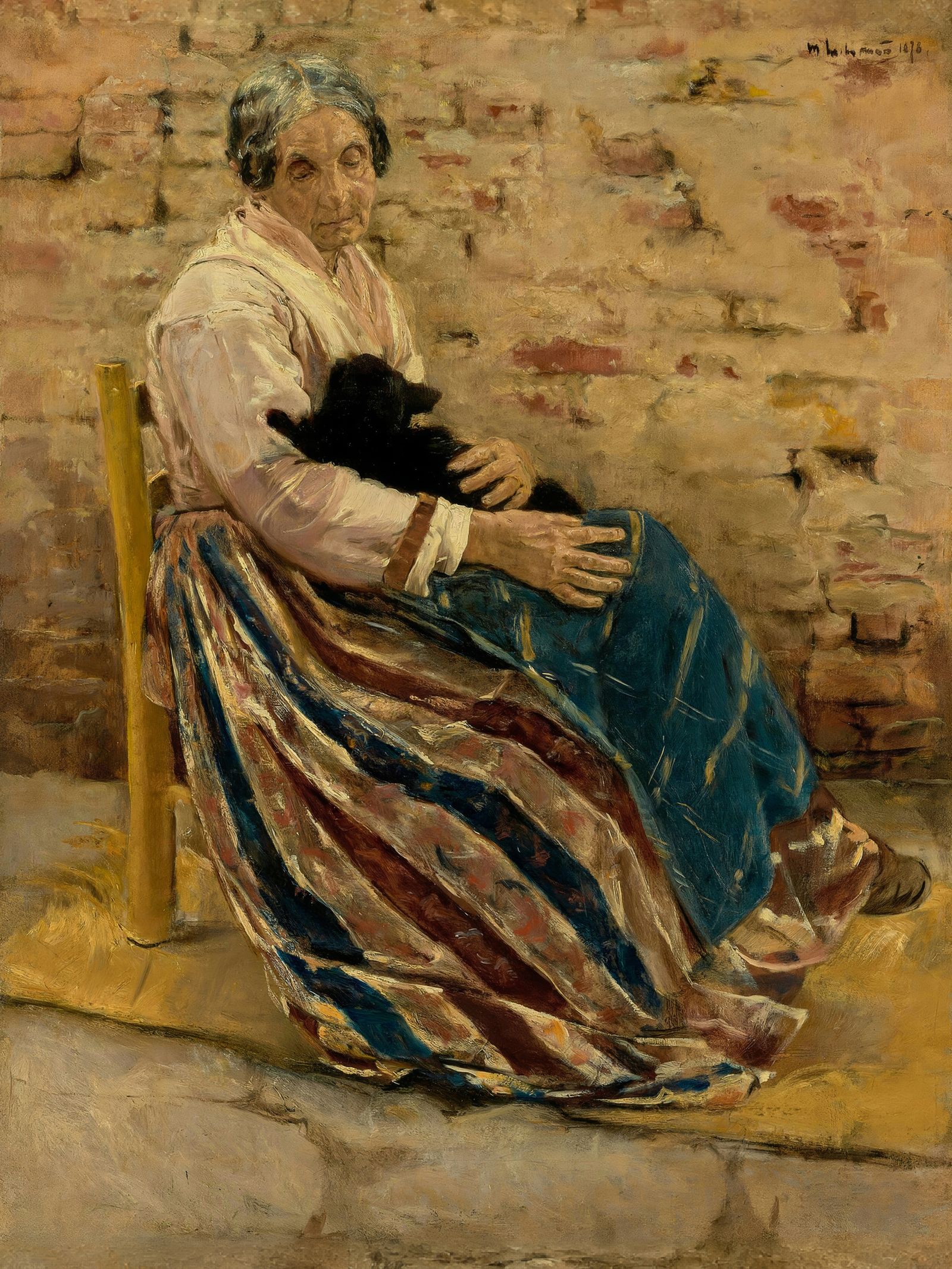
An Old Woman with Cat — Max Liebermann, 1878. J. Paul Getty Museum, Los Angeles. Prepared for print by Surrealium at Vaxholm Fortress, Sweden.
Liebermann’s seated woman holds a dark cat against her lap, the rough wall behind her giving the scene a very different atmosphere from a polished salon. It is a good choice of mood for someone who prefers a warm, plain greeting. Let the note honour companionship without turning age into a joke or assuming that every older recipient lives alone or needs cheering up.
Explore Christmas cards · Explore this artwork
7. A paw among the dominoes
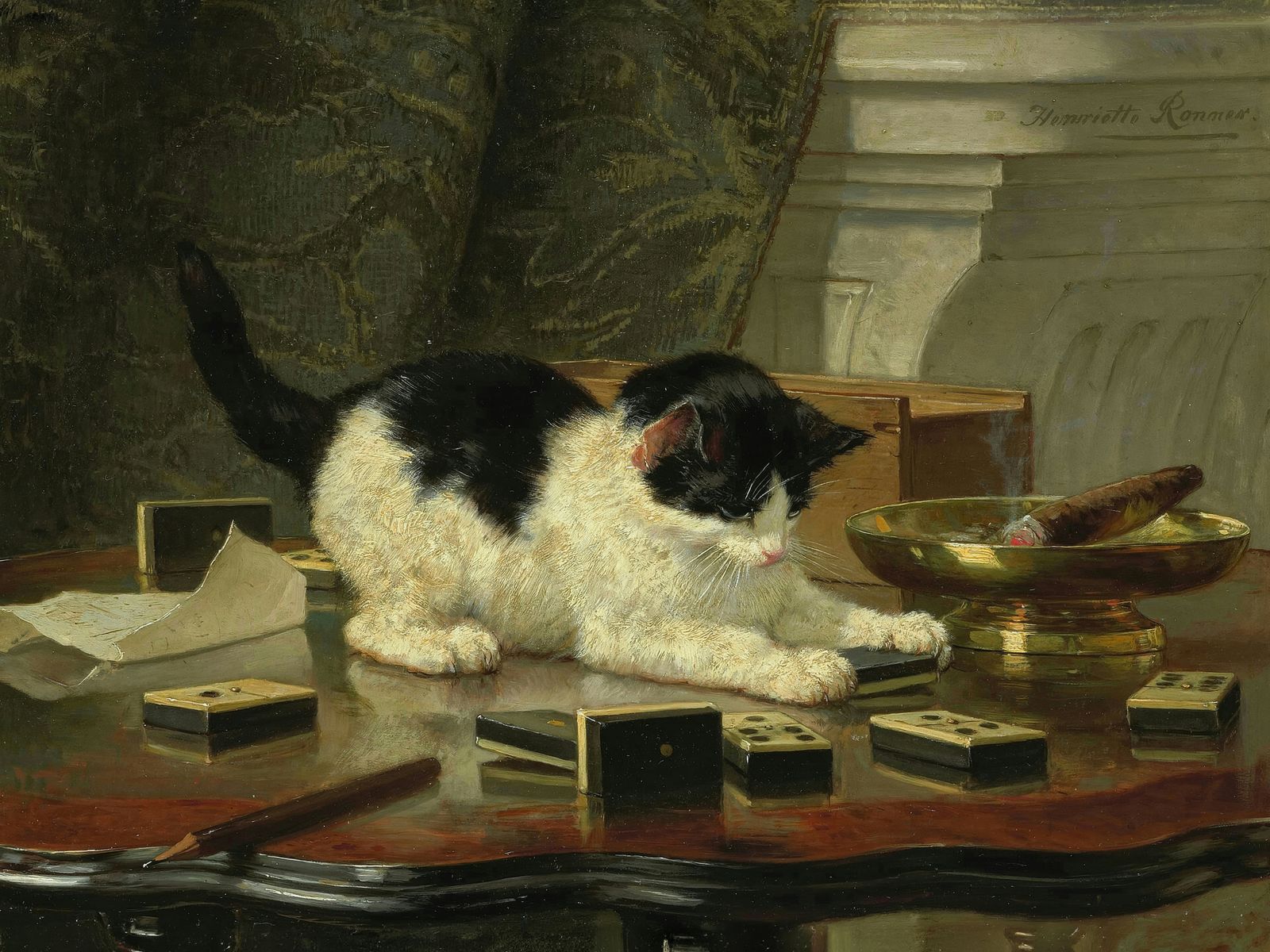
The cat at play — Henriëtte Ronner-Knip, c. 1860–1878. Rijksmuseum, Amsterdam. Prepared for print by Surrealium at Vaxholm Fortress, Sweden.
The cat at play reaches across a tabletop scattered with small game pieces, while a bowl and a pipe sit nearby. Its attention gives the whole still life a point of movement. For a household where the cat interrupts every quiet activity, the picture can carry the humour on its own; the greeting need not describe an elaborate fictional adventure for the animal.
Explore Christmas cards · Explore this artwork
8. Shelter in a dark corner
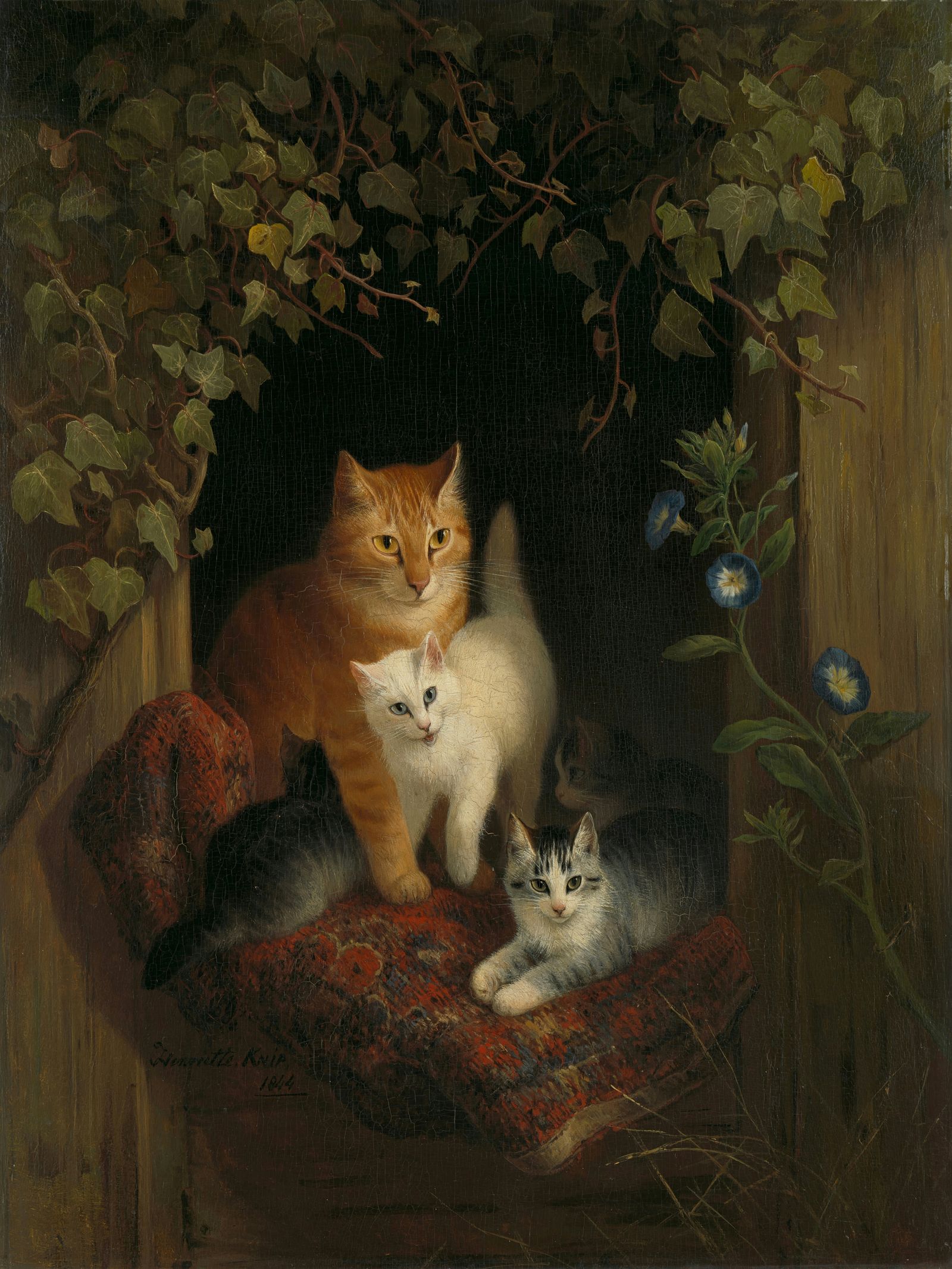
Cat with Kittens — Henriëtte Ronner-Knip, 1844. Rijksmuseum, Amsterdam. Prepared for print by Surrealium at Vaxholm Fortress, Sweden.
Ronner-Knip places a cat and kittens inside a leafy recess, with the warm fur standing out against the darker shelter. This direction feels more intimate than a busy parlour scene. A simple wish for a comfortable Christmas can sit beside it, while the full image preserves the contrast between the animals and their surroundings rather than reducing them to isolated cut-out faces.
Explore Christmas cards · Explore this artwork
9. The basket as a family seat
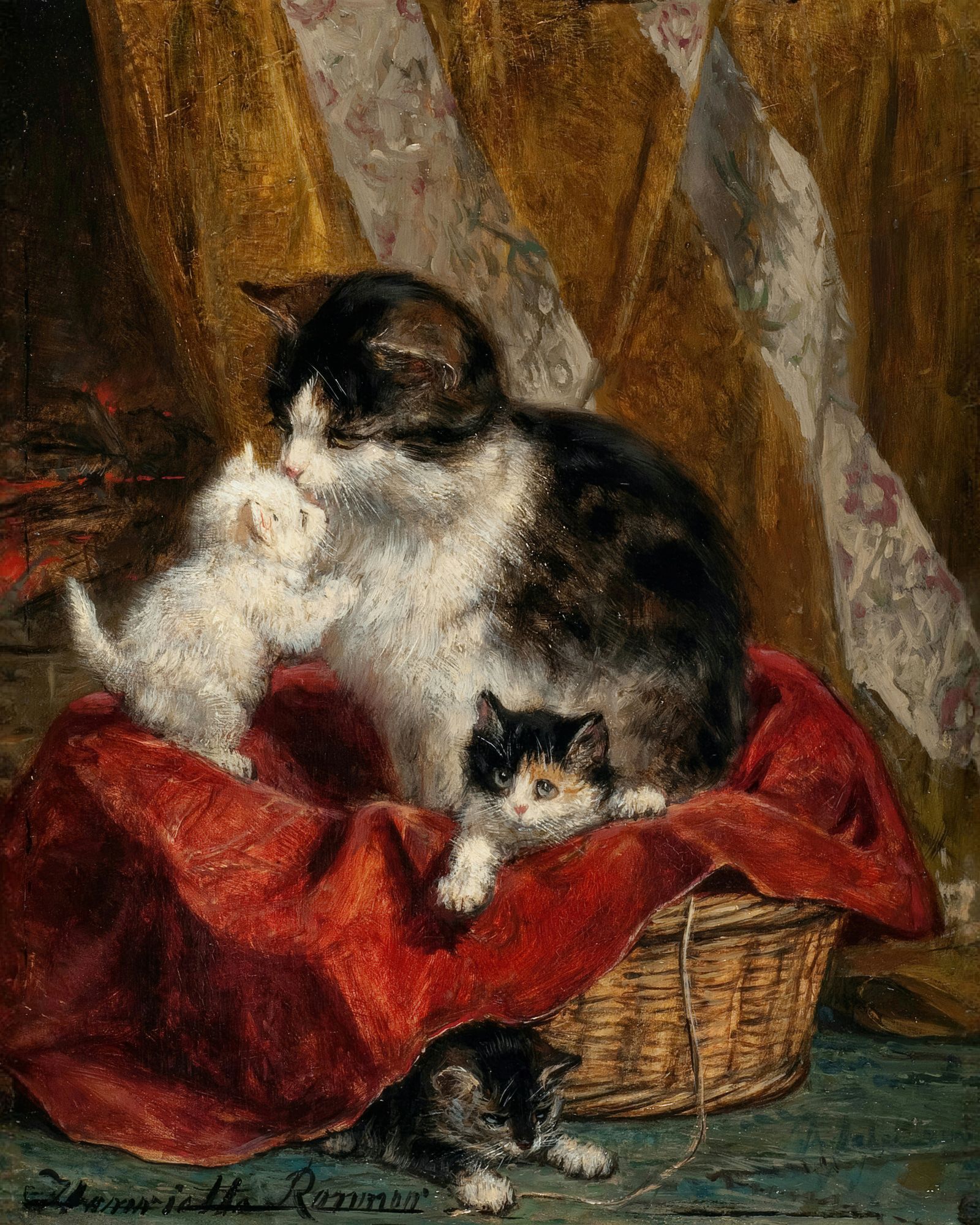
A Cat with Three Kittens — Henriëtte Ronner-Knip, 1889. Cultural Heritage Agency of the Netherlands. Prepared for print by Surrealium at Vaxholm Fortress, Sweden.
A Cat with Three Kittens gathers the animals on red fabric inside a basket, using the folds to connect the group. The arrangement can suggest a greeting from a multi-cat household without pretending that the painted animals are your own. If you personalise the words with your pets’ names, make the distinction clear and let the art remain a historical illustration rather than a false portrait.
Explore Christmas cards · Explore this artwork
10. Everyone finds a different place
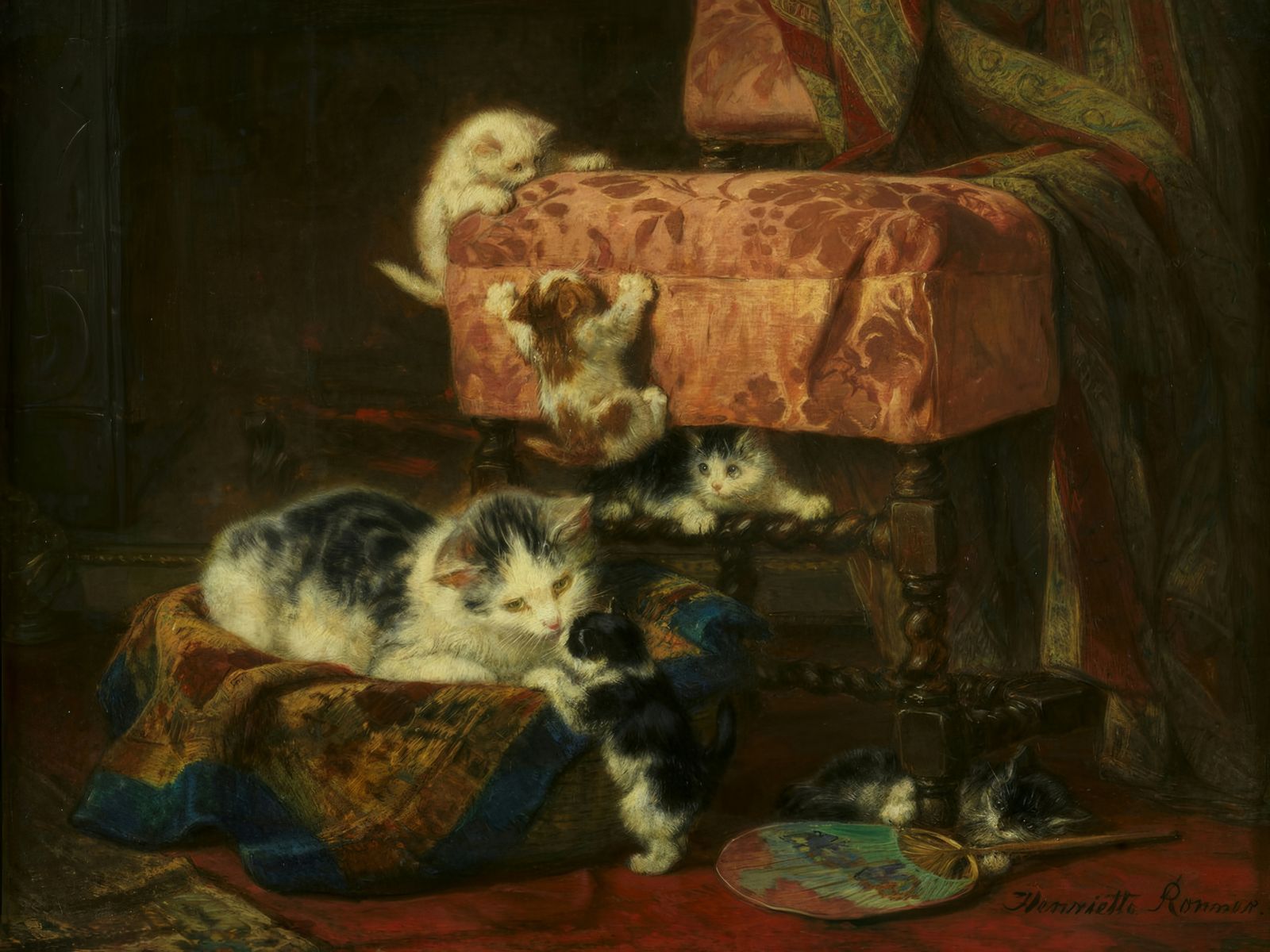
Cat with Five Kittens — Henriëtte Ronner-Knip, 1890. Noordbrabants Museum. Prepared for print by Surrealium at Vaxholm Fortress, Sweden.
In Cat with Five Kittens, the animals occupy a cushion, the floor and the furniture around them. The pleasure is in looking from one small action to another. It suits a recipient who enjoys discovering details, so preview the whole picture at card size and keep the message away from the busiest areas; reducing everything to a tiny central crop would lose the point.
Explore Christmas cards · Explore this artwork
Choose the picture for its tone before deciding how playful the words should be. A friend who enjoys a dry observation may prefer one sentence to a page of cat puns. For a pet portrait card, check the face, whiskers and coat markings in the preview, and never treat a historical painting as proof of an individual result. Start with the Christmas card collection, then use the available design choices to make a greeting that feels like something you would actually send.
Continue with the Christmas card picture guide, personalized Christmas cards.
- Can I make a cat Christmas card without dressing my cat up?
- Yes. A natural photograph or an art-led design can provide all the character you need. Fable’s cat references keep animals in natural poses; the seasonal meaning can come from your own greeting.
- Are these pictures finished Fable cards?
- No. They are historical artworks shown to help you choose a mood. Check the available card designs and the actual preview before selecting a face or assuming a specific layout is offered.
- What photograph works for a black cat?
- Choose one where the face and fur remain visible, with enough light to distinguish the eyes and outline. Avoid a silhouette against a bright window or a compressed image that loses the dark detail.
- What should I write in a cat-themed Christmas card?
- Use an observation the recipient will recognise, such as the cat claiming a parcel or interrupting a game. Keep it affectionate and brief, and avoid attributing a customer story or a real pet’s behaviour to an unrelated painting.