Christmas card ideas: ten pictures with something to say
Ten historical artworks suggest a welcome, a winter walk or a gentle joke; choose the image first and let your own message follow.
Christmas card ideas work best when the picture and the message belong together. A snowy road can carry an invitation home; a quiet room can accompany a wish for rest. The art does not have to contain holly, a banner and a tree before it can become a Christmas greeting.
These ten works are shown whole so you can judge their composition before choosing a design. They are artworks, not photographs of finished cards or promises that every picture is a ready-made card template. Open the designer to check the available choices and preview the actual layout. Keep important faces and details intact, leave the message room to breathe, and choose a greeting that fits the recipient’s beliefs as well as your own.
For a related starting point, read historic Christmas cards you can send, vintage Christmas card styles.
1. A tree with the room around it
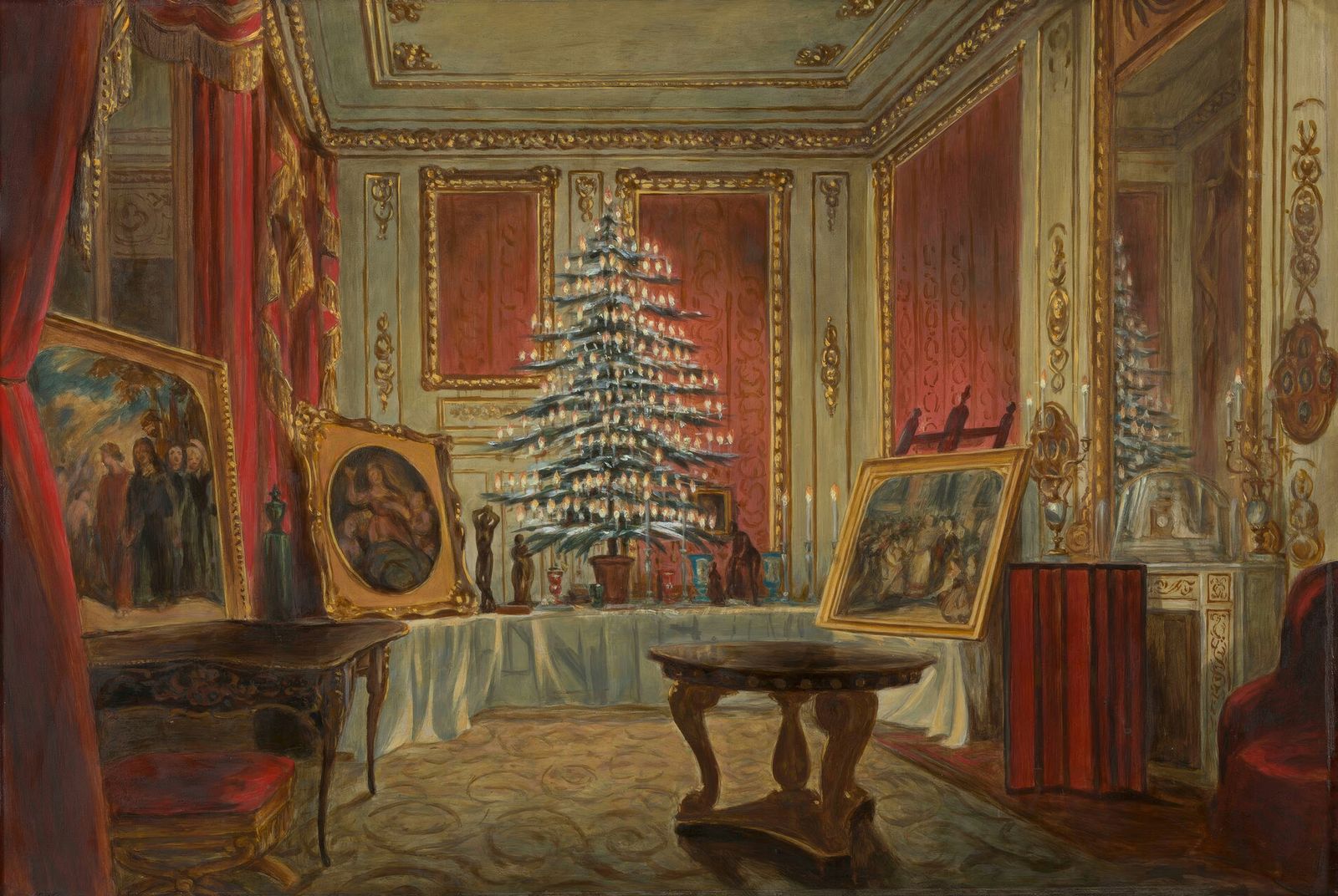
Queen Victoria's Christmas Tree — William Corden the Younger, 1850–51. Royal Collection (RCIN 402566). Prepared for print by Surrealium at Vaxholm Fortress, Sweden.
Corden’s view of Queen Victoria’s Christmas tree gives the decorated room almost as much attention as the tree itself. The framed pictures and empty chairs make it a card idea about hospitality rather than a close-up of ornaments. Pair a grand interior with a simple welcome, and resist covering the furniture with lettering: the space is part of what makes the invitation feel generous.
Design your Christmas card · Explore this artwork
2. Light in the windows
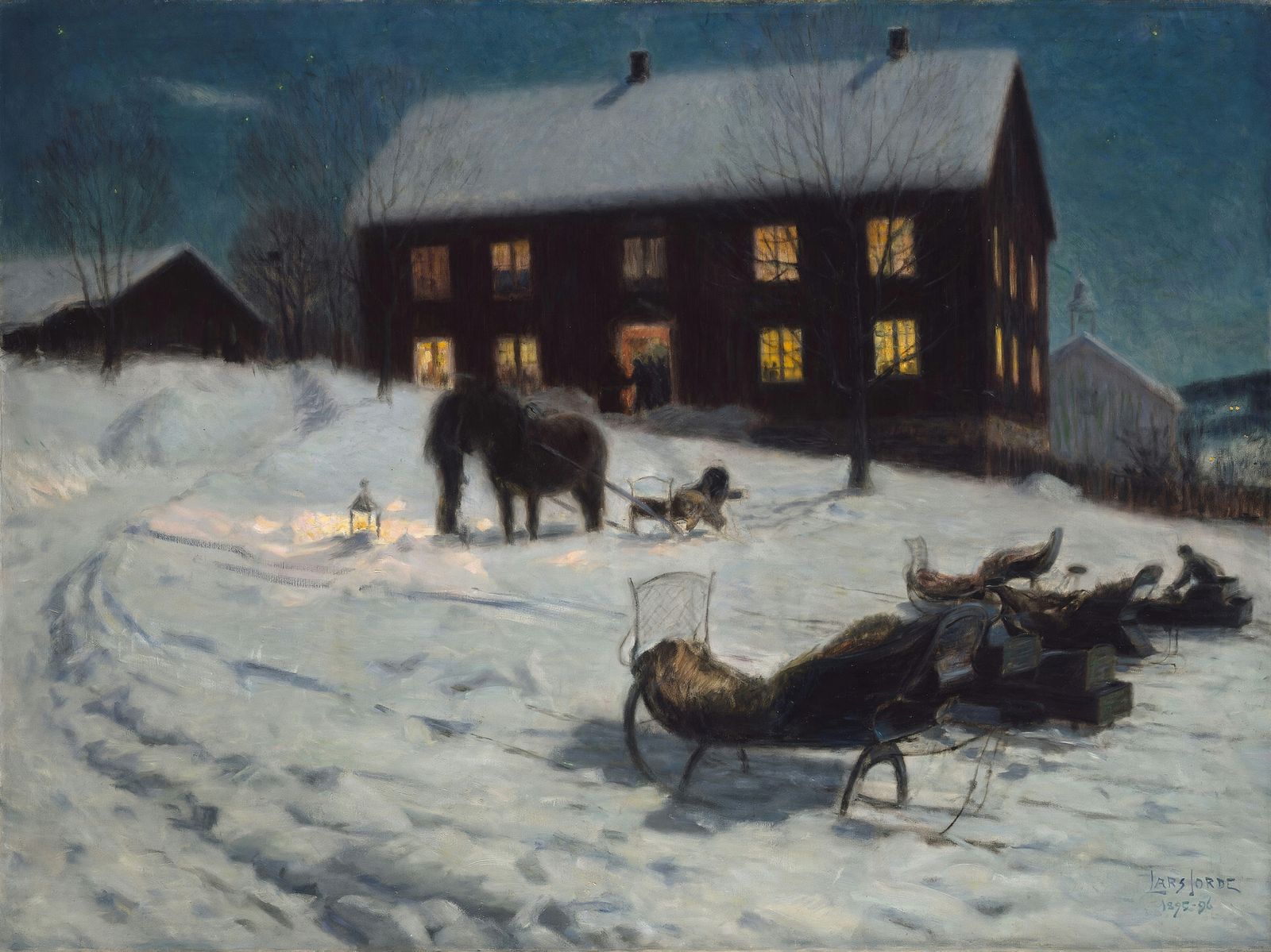
Christmas Party — Lars Jorde, 1895–96. Nasjonalmuseet, Oslo (NG.M.00475). Prepared for print by Surrealium at Vaxholm Fortress, Sweden.
The house in Christmas Party glows against the blue snow, while horses and sleighs wait outside. That contrast suggests an arrival card for people travelling to be together. A message about keeping a place for someone will feel more connected to the picture than a list of seasonal slogans, and it leaves the snowy foreground free to do its quiet work.
Design your Christmas card · Explore this artwork
3. A road towards home
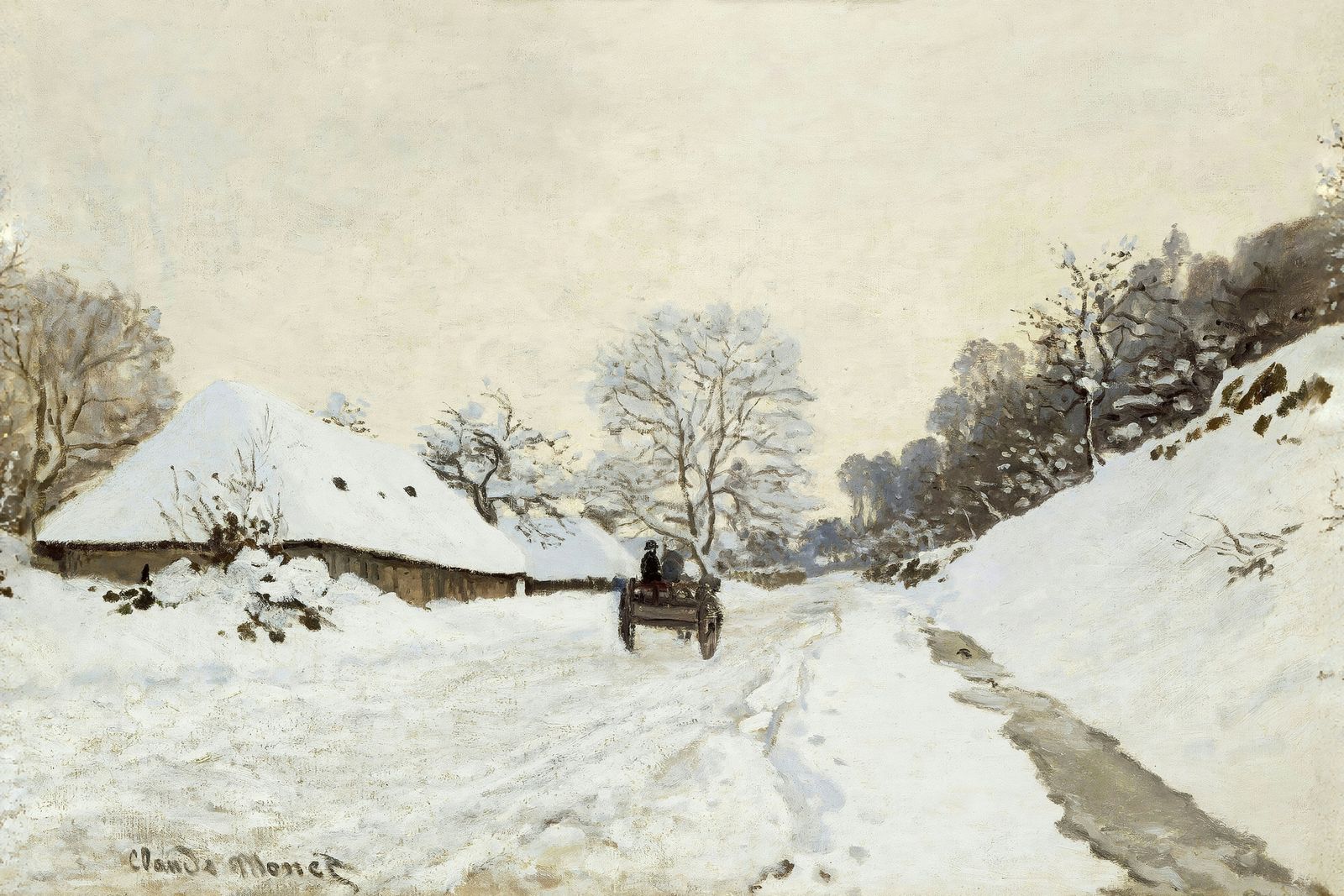
A Cart on the Snowy Road at Honfleur — Claude Monet, c. 1867. Musée d'Orsay, Paris. Prepared for print by Surrealium at Vaxholm Fortress, Sweden.
Monet’s snowy road bends past a cottage, with a small cart receding into the pale landscape. Use this as a direction for a card about journeys, a winter visit or a new home, rather than claiming the picture records Christmas itself. Its pale tones also make a useful reminder to examine the real preview carefully: delicate detail can disappear if a layout places a large block of text over it.
Design your Christmas card · Explore this artwork
4. A meeting in the street
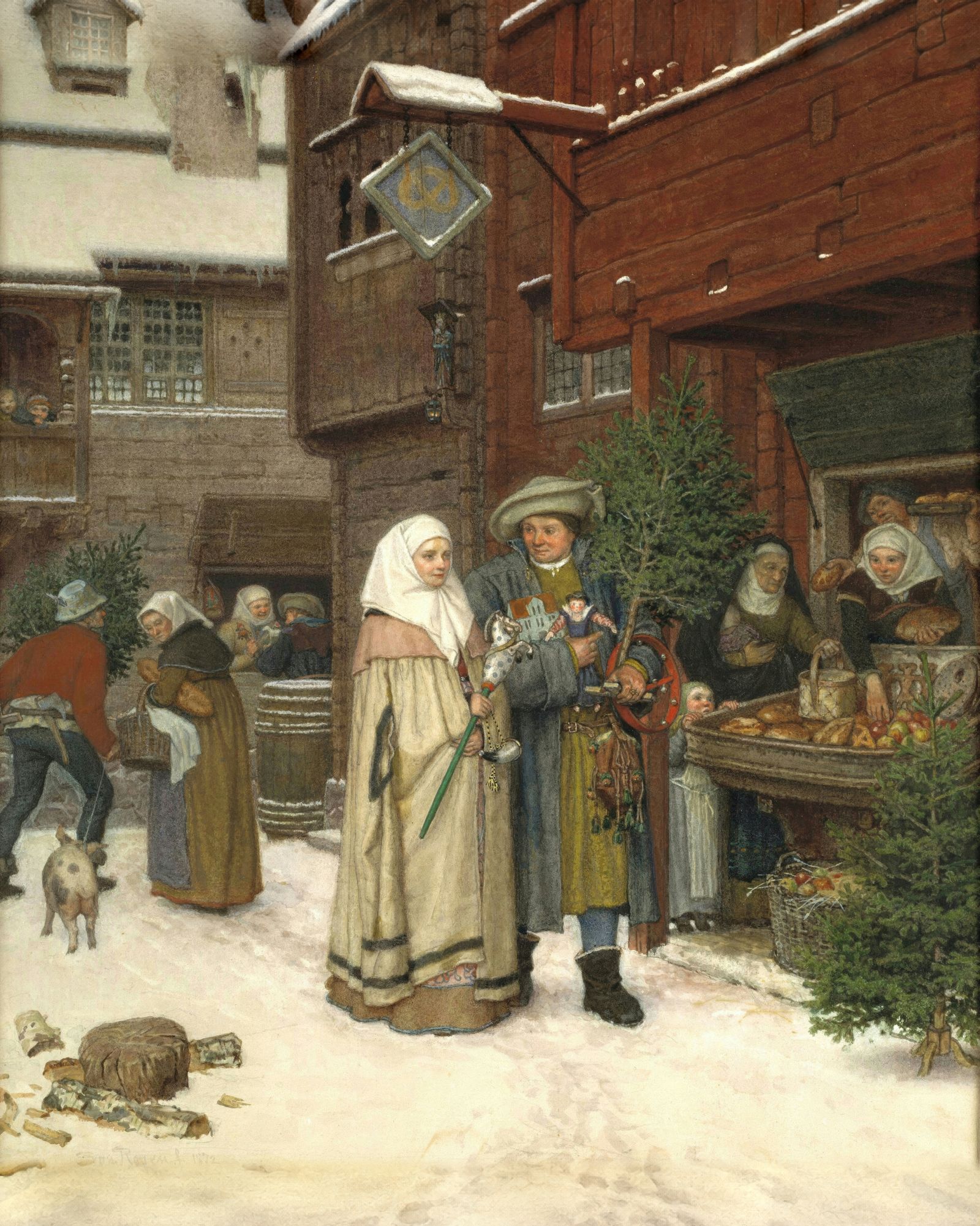
The Christmas Fair — Georg von Rosen, 1872. Nationalmuseum, Stockholm (NM 24400). Prepared for print by Surrealium at Vaxholm Fortress, Sweden.
The Christmas Fair offers a street full of small encounters, with two figures conversing in the foreground and trade continuing behind them. It suits a greeting for neighbours or friends you usually meet in passing. Write about one actual encounter from the year, perhaps the conversation that always runs longer than expected, so the card extends a relationship instead of merely announcing the season.
Design your Christmas card · Explore this artwork
5. A quieter Christmas Eve
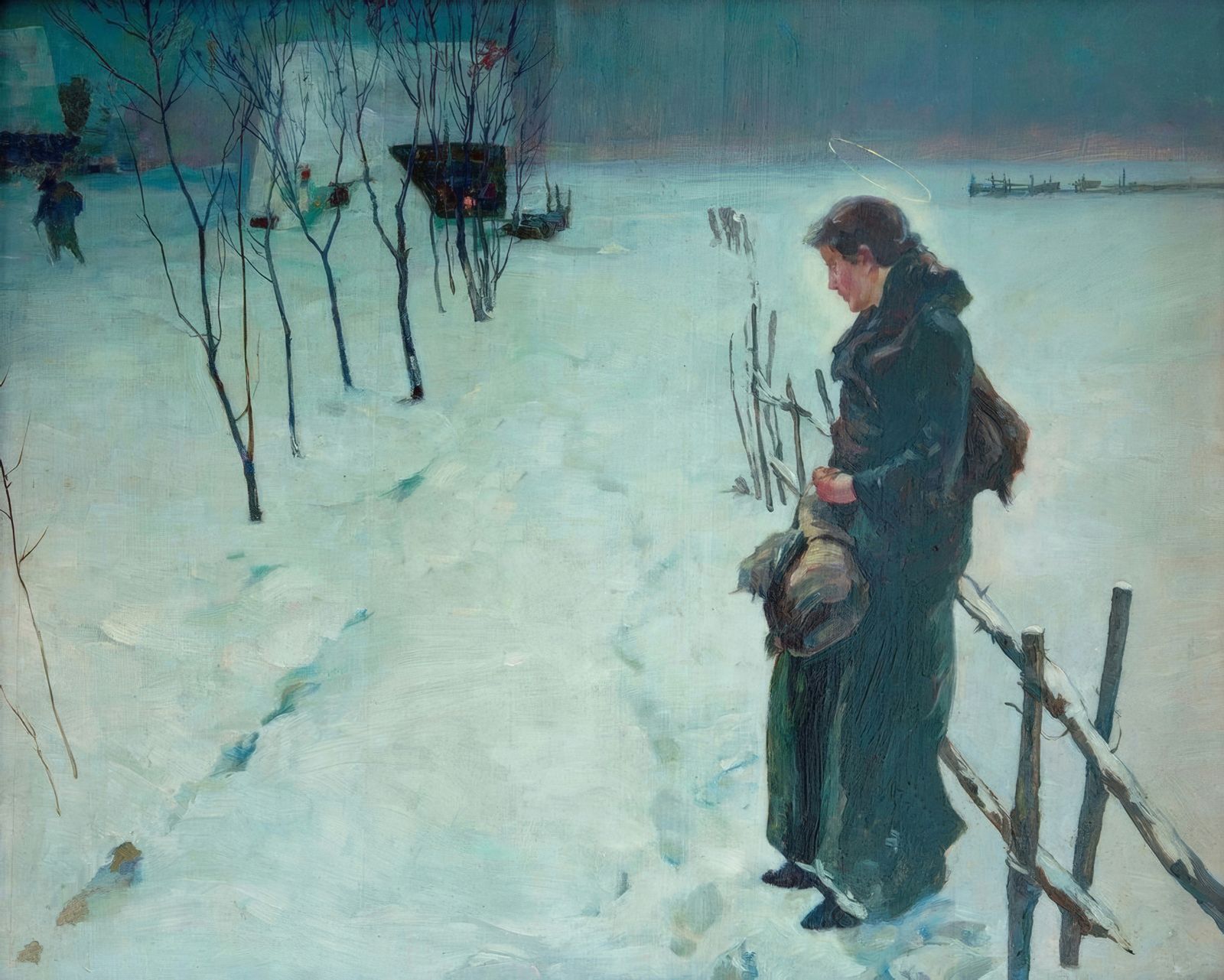
Winter Landscape, Christmas Eve — Fritz von Uhde, 1890. Josef M. Glück Collection. Prepared for print by Surrealium at Vaxholm Fortress, Sweden.
Fritz von Uhde’s winter scene puts a solitary figure in the snow, with bare stems and a distant cart around her. It offers a more reflective tone than a crowded celebration. Choose it thoughtfully for someone who prefers quiet imagery, but avoid deciding that a lonely-looking picture explains another person’s feelings; the message should leave room for their own experience of Christmas.
Design your Christmas card · Explore this artwork
6. The days after the celebration
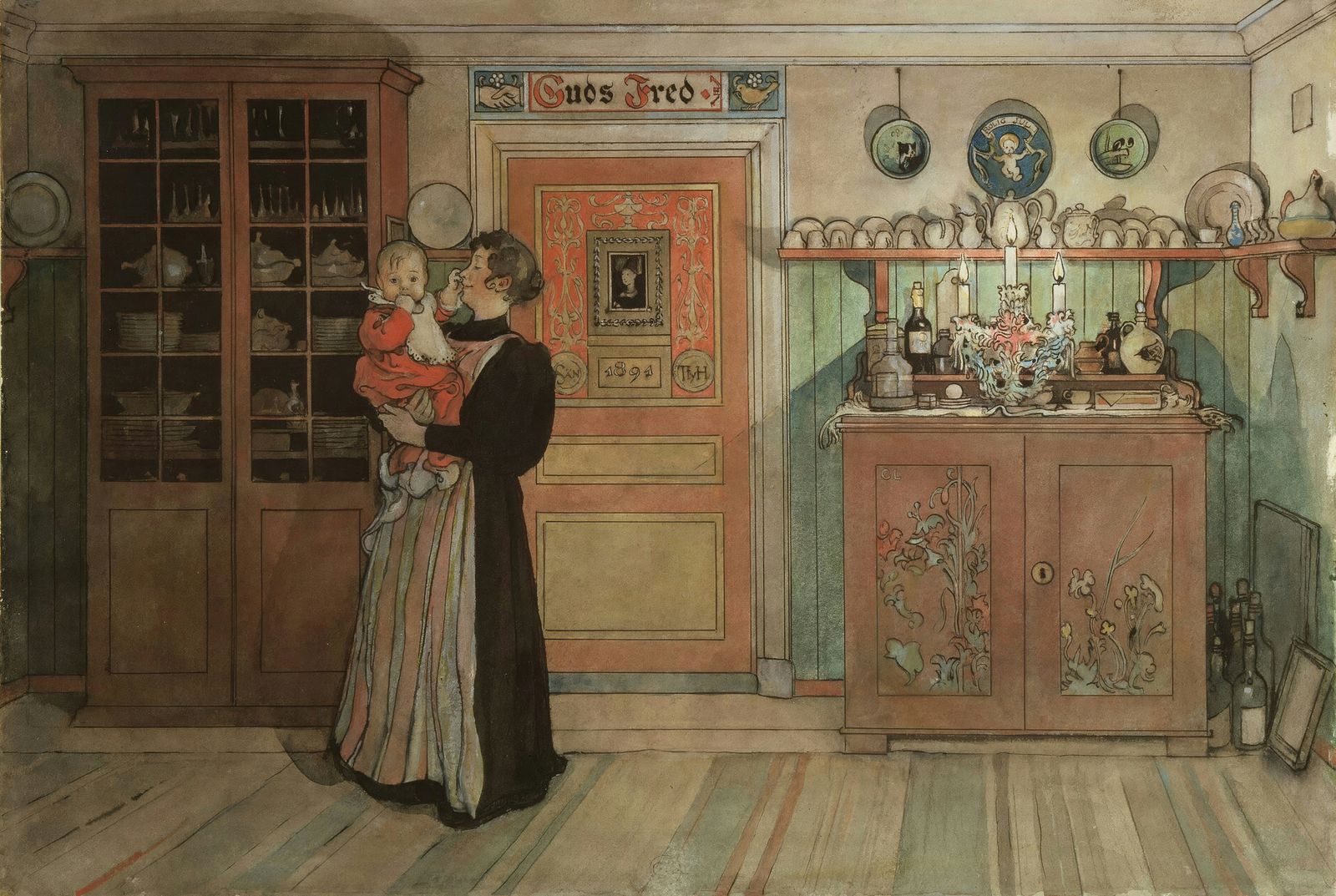
Between Christmas and New Year (A Home) — Carl Larsson, 1899. Nationalmuseum, Stockholm. Prepared for print by Surrealium at Vaxholm Fortress, Sweden.
Larsson’s Between Christmas and New Year shows an interior still carrying the signs of the season while an adult holds a child. This is an idea for a greeting that values time at home rather than one spectacular day. A sentence about unhurried mornings or another visit can make the picture personal without turning the card into a report on everything your family achieved.
Design your Christmas card · Explore this artwork
7. A shared winter walk
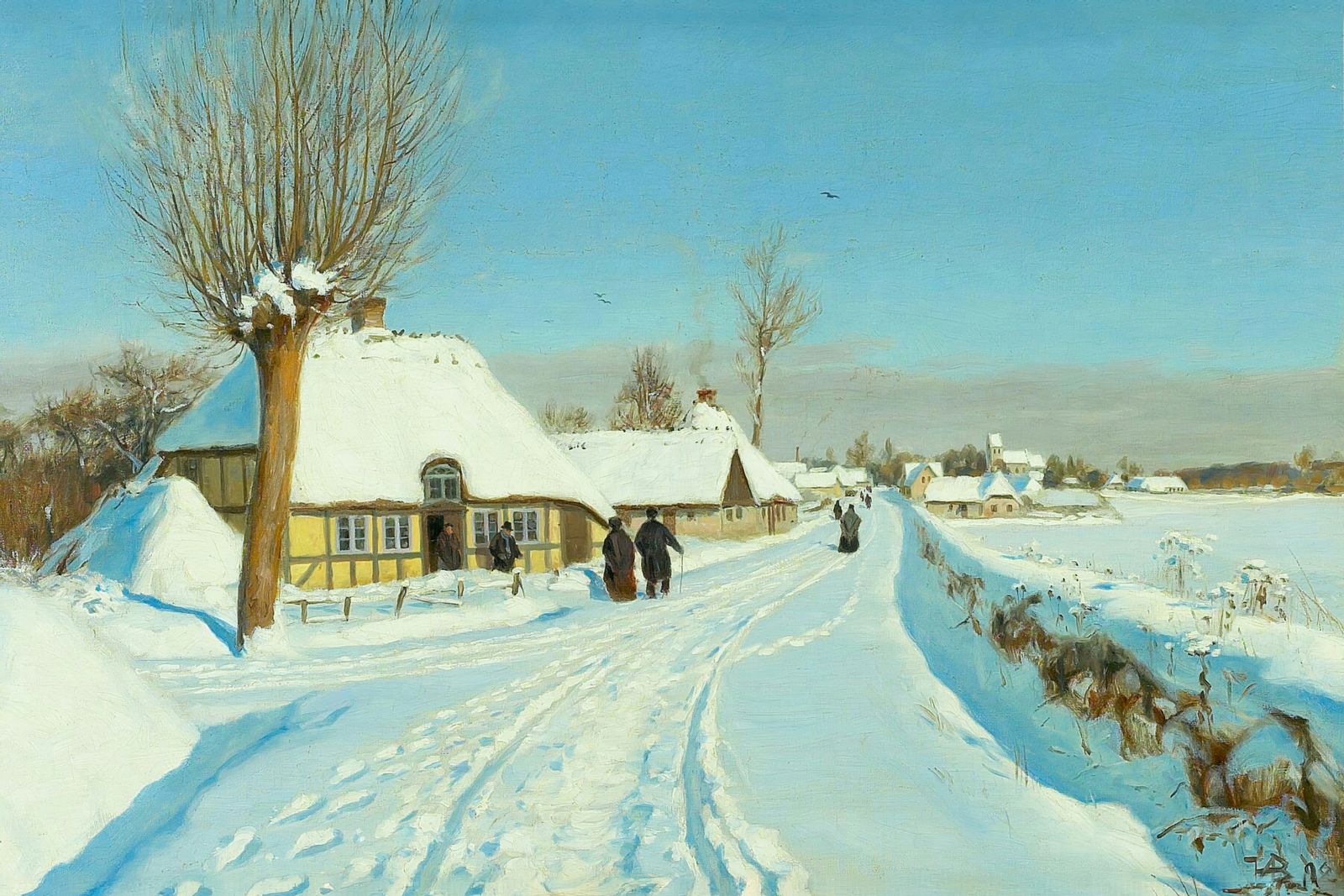
Churchgoers on Christmas Morning — Hans Andersen Brendekilde, 1898. Private collection (Bruun Rasmussen). Prepared for print by Surrealium at Vaxholm Fortress, Sweden.
Brendekilde’s churchgoers move along a snow-covered village road, their dark figures set against bright roofs and fields. The title gives the walk a religious context, so keep that meaning in mind when choosing the recipient. A churchgoing household may welcome the connection; for a more general winter greeting, choose a landscape whose subject better matches the words you intend to send.
Design your Christmas card · Explore this artwork
8. Something good on the table
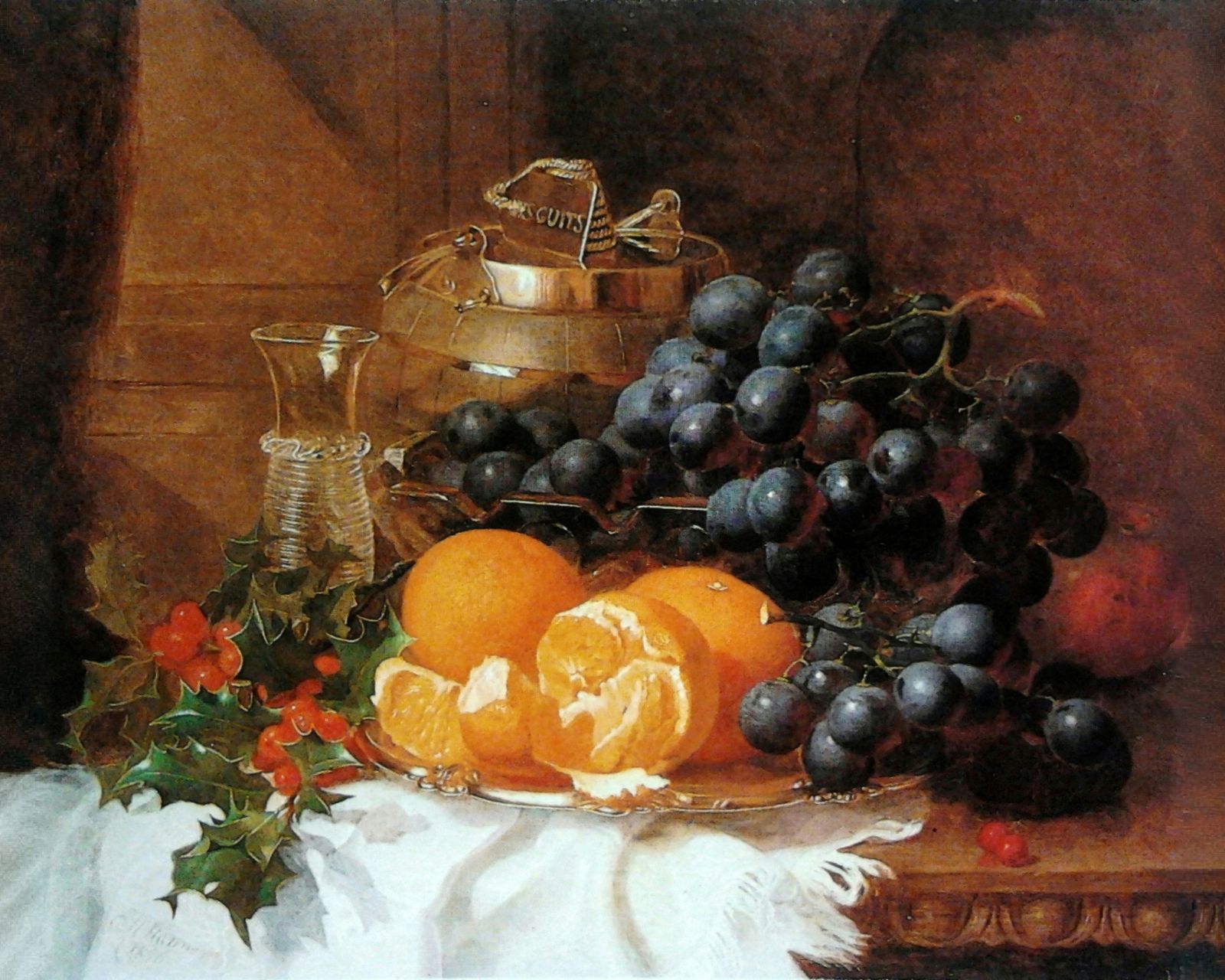
Christmas Still Life — Eloise Harriet Stannard, 1886. Museum of John Paul II Collection, Warsaw. Prepared for print by Surrealium at Vaxholm Fortress, Sweden.
Stannard’s still life brings together fruit, glass and a small sprig of holly, with the orange peel catching the light. It can suggest the pleasures of a meal without requiring a photograph of every guest. A note thanking someone for their table or their company makes a better partner for this image than a claim about a universal Victorian Christmas menu.
Design your Christmas card · Explore this artwork
9. A day made quiet by snow
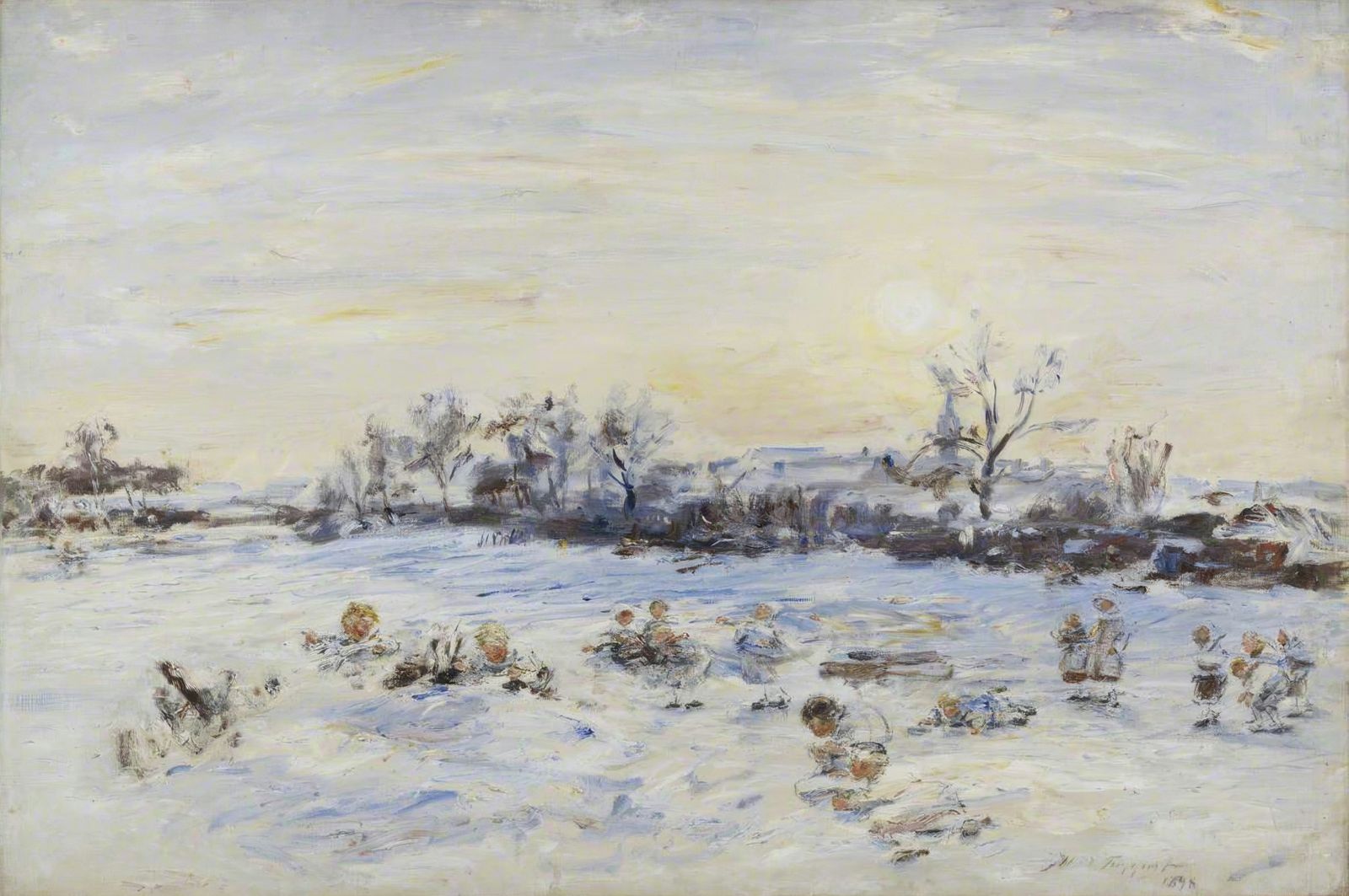
Christmas Day — William McTaggart, 1898. Kirkcaldy Galleries (KIRMG-274). Prepared for print by Surrealium at Vaxholm Fortress, Sweden.
Christmas Day spreads a pale landscape across the picture, with trees and low vegetation breaking the snow. Its seasonal title carries the occasion while the image leaves the reader plenty of room. This is a useful direction for a restrained card: choose a short greeting, keep the artwork’s wide proportions and let the recipient discover its small changes of colour at their own pace.
Design your Christmas card · Explore this artwork
10. A cat’s version of the festivities
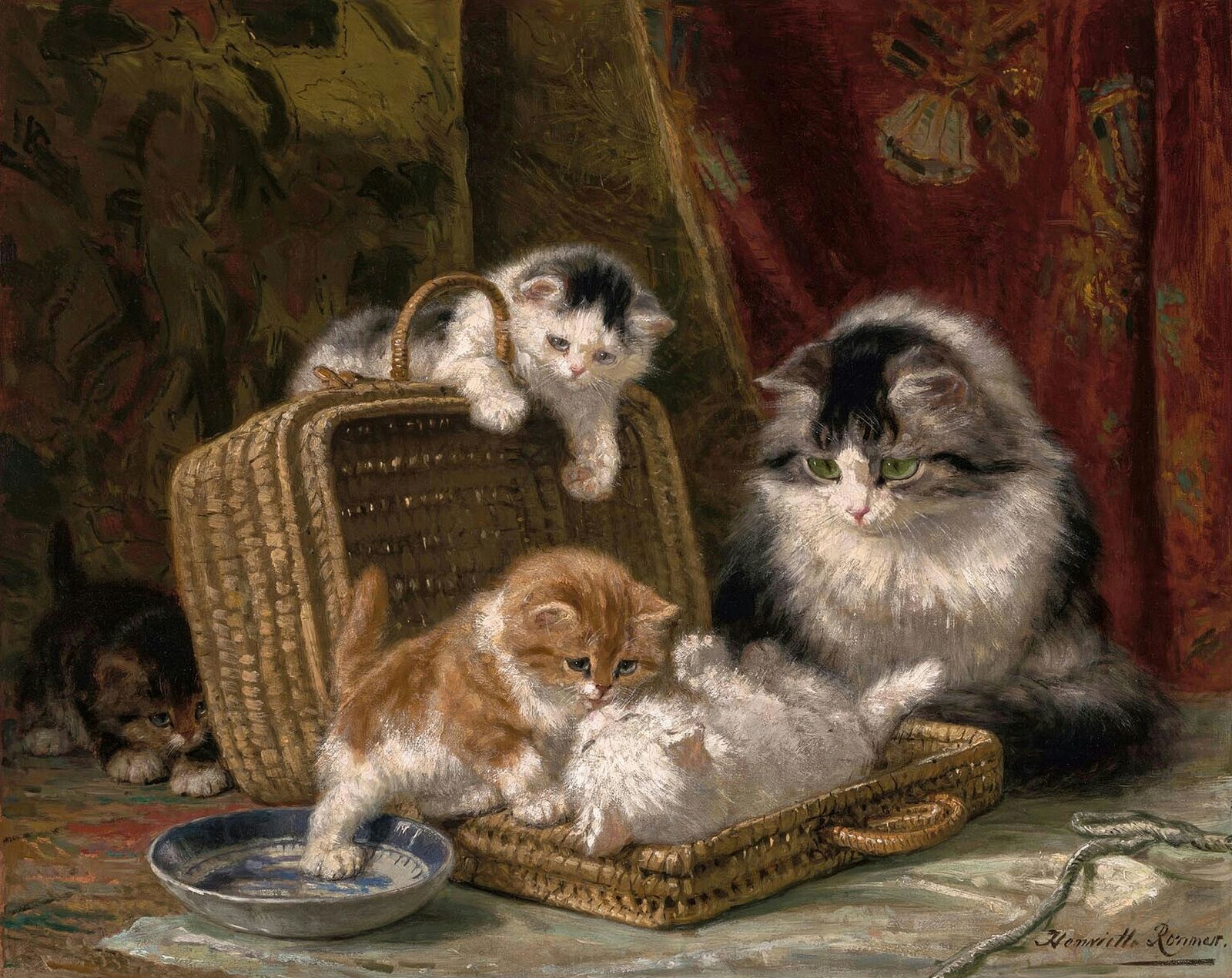
Kittens playing — Henriëtte Ronner-Knip, c. 1880. Museum Boijmans Van Beuningen, Rotterdam. Prepared for print by Surrealium at Vaxholm Fortress, Sweden.
Ronner-Knip’s kittens investigate a basket and a dish with the concentration that cats give to ordinary household objects. The painting offers humour without costumes or a human role imposed on the animals. A small observation about the recipient’s own cat can supply the Christmas connection, while the historical picture remains a picture of cats behaving like cats rather than a staged pet advertisement.
Design your Christmas card · Explore this artwork
Choose one direction before opening the designer: welcome, reflection, faith, friendship or humour. Then write a greeting that you could say naturally to that person. The designer is where you check the actual card face, message and available format; the paintings above help you judge tone and composition. A card does not become more personal by accumulating decorations. It becomes more personal when the image and a few well-chosen words show that you have thought about the person who will open it.
Continue with Christmas card from photo, personalized Christmas cards, choosing a digital greeting, cat Christmas cards, planning a seasonal photograph, finding your own card wording, planning when to send your cards, Christmas card for husband, Christmas card for teacher, religious Christmas card messages.
- What makes a Christmas card original?
- A specific connection between the image, the recipient and your message. A familiar winter scene can feel individual when you mention a shared walk or visit. More decoration is not necessarily more personal.
- Can I make a Christmas card without a family photograph?
- Yes. An art-led card can use a historical image and your own greeting. Preview the available design in the card maker rather than assuming that every artwork shown in an article is already offered as a template.
- Should every Christmas card have a religious picture?
- No. Match the picture and greeting to the person. A Nativity has a clear Christian meaning; a winter landscape, flowers or cats can support a different kind of seasonal message.
- How much should I write inside?
- Enough to greet the recipient, say one personal thing and sign clearly. If the preview feels crowded, shorten the message before reducing the type. A longer family update can be sent separately.