Christmas card for husband: ten pictures, ten personal lines
Choose a couple image for its mood, then write about the life you share. These original lines leave room for humour, tenderness and a difficult year.
A Christmas card for husband can say something more particular than a stock declaration of perfect love. Think about one thing you have shared this year: a walk, an ordinary evening, a decision made together or a difficult week made more bearable. The picture can set the mood; your own detail makes the words belong to the two of you.
These ten historical couple images suggest different tones. They are not portraits of Fable customers, and the original lines below are suggestions to adapt rather than quotations. If you choose a portrait card from your own photograph, preview the available couple treatment and check both faces. A beautiful historical reference is a starting point for looking, not a guarantee that your result will reproduce every pose or setting.
For a related starting point, read married Christmas cards, couples first Christmas card.
1. For the companion beside you
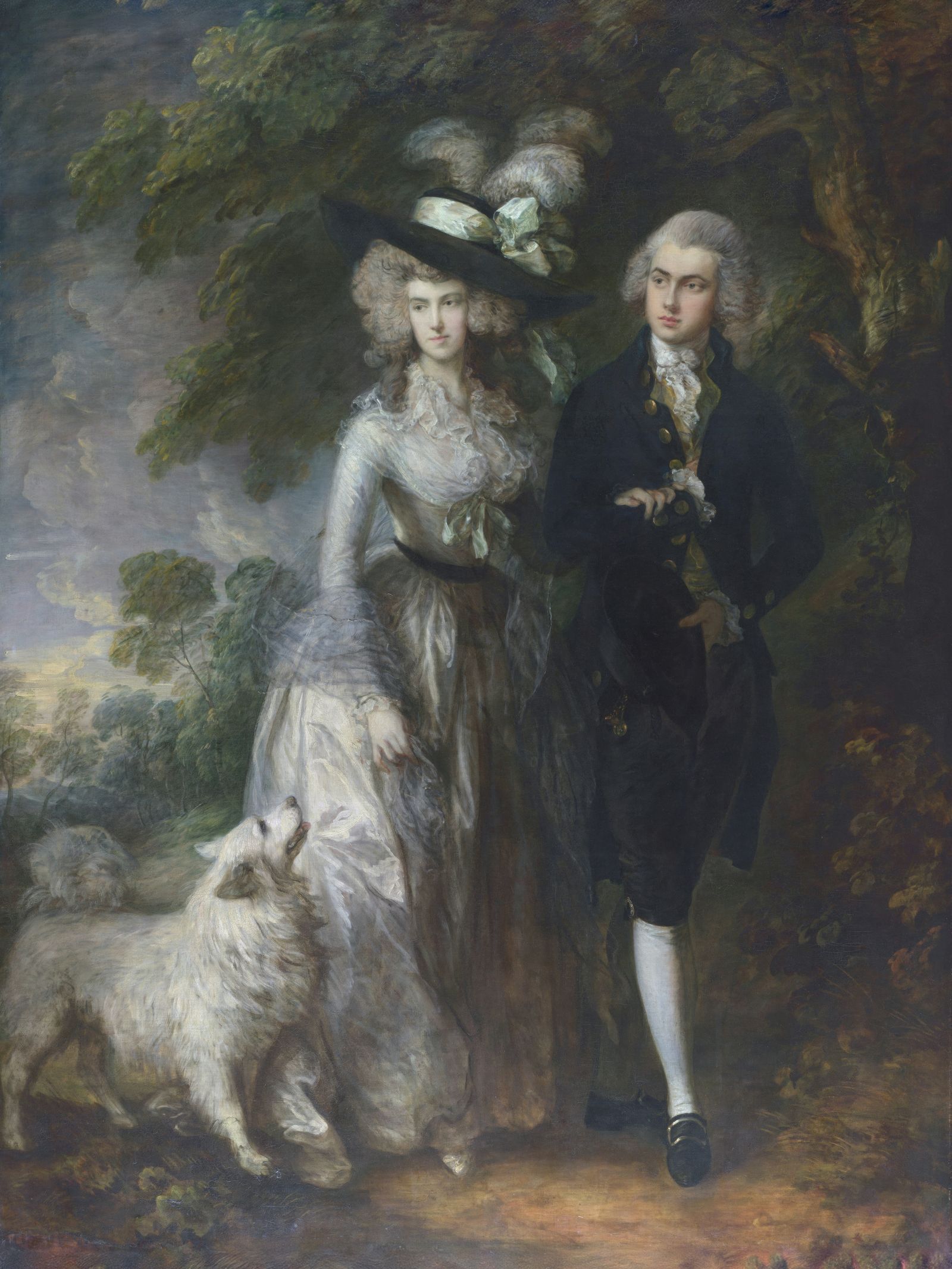
The Morning Walk (Mr and Mrs William Hallett) — Thomas Gainsborough, 1785. National Gallery, London. Prepared for print by Surrealium at Vaxholm Fortress, Sweden.
Gainsborough’s Halletts walk together in a wooded setting, their clothing and the nearby dog giving the full-length portrait a graceful movement. It suggests a message about companionship rather than a spectacular event. Try: “My favourite part of this year has been having you beside me for it, from the days we planned carefully to the ones we simply got through together.”
Explore Christmas cards · Explore this artwork
2. For a hand offered at the right moment
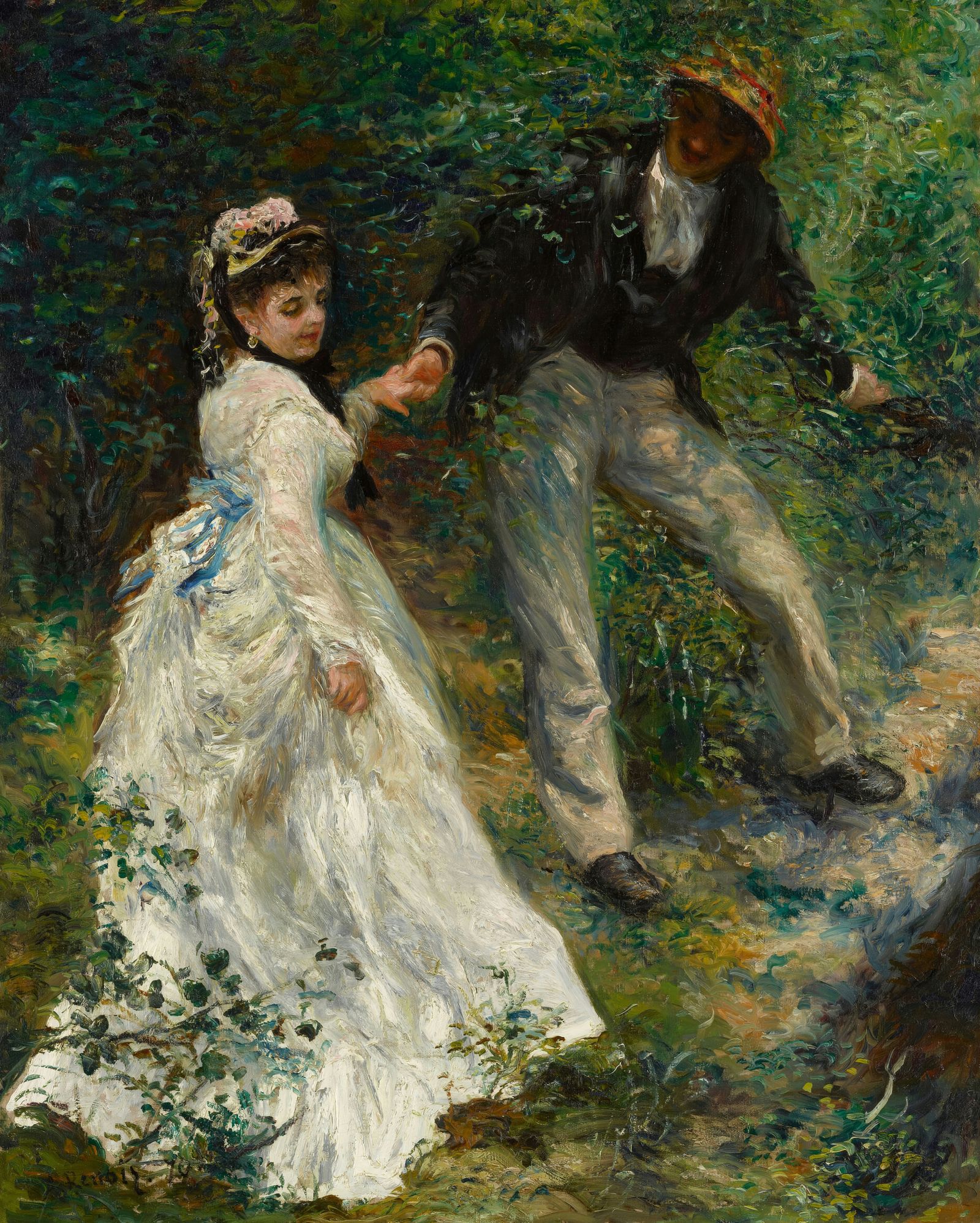
La Promenade — Pierre-Auguste Renoir, 1870. J. Paul Getty Museum, Los Angeles. Prepared for print by Surrealium at Vaxholm Fortress, Sweden.
Renoir’s La Promenade shows a man reaching towards a woman on a leafy path, with their hands connecting the figures. Let the gesture prompt a specific memory instead of a general claim that one partner always rescues the other. Try: “Thank you for the ways you make room for me, especially the small ones that could so easily pass without being noticed.”
Explore Christmas cards · Explore this artwork
3. For a first married Christmas
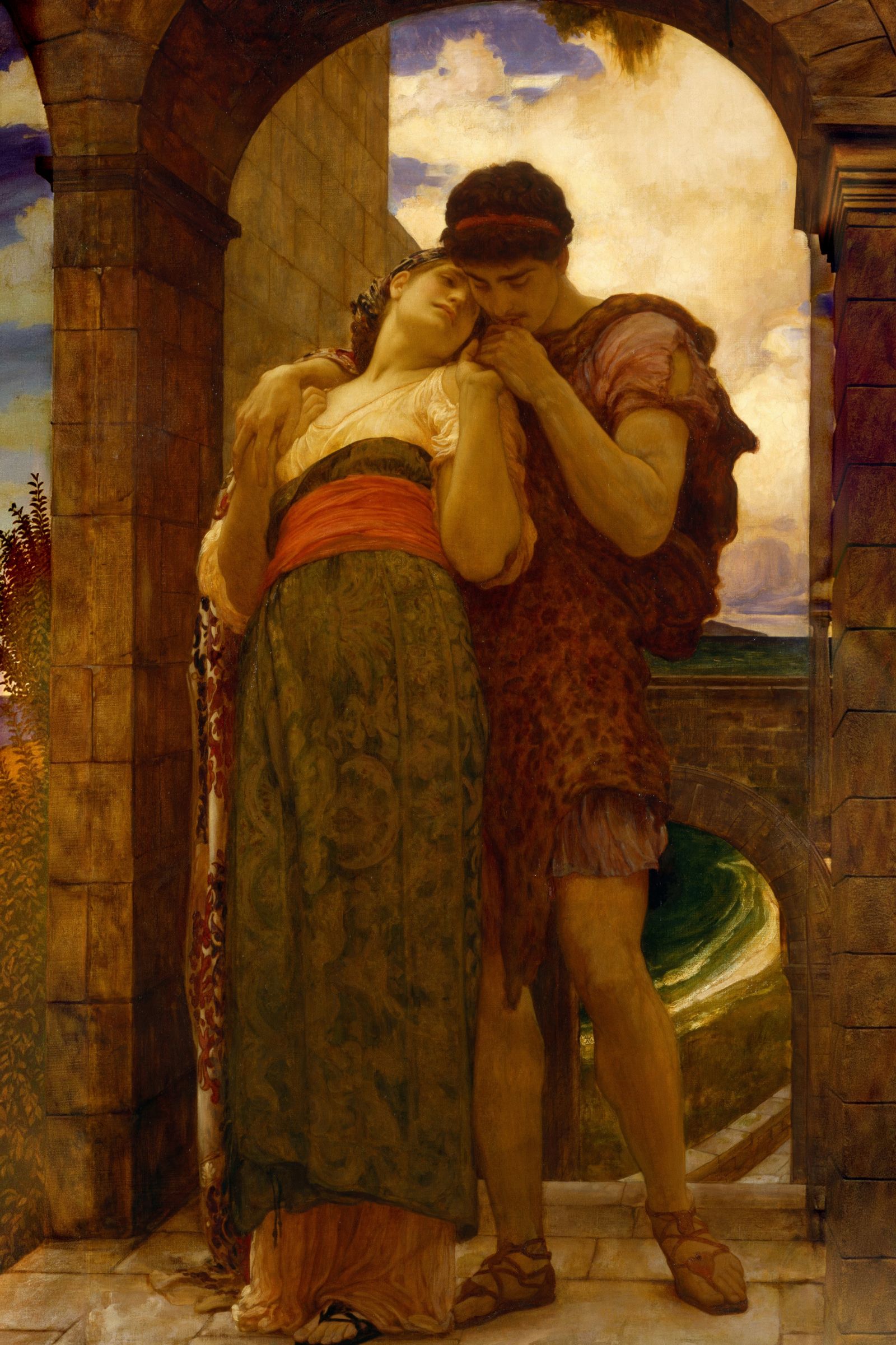
Wedded — Frederic Leighton, 1882. Art Gallery of New South Wales, Sydney. Prepared for print by Surrealium at Vaxholm Fortress, Sweden.
Leighton’s Wedded draws the couple into a close embrace beneath an arch, with their turned faces narrowing the whole composition to an intimate exchange. It can suit a message about beginning a shared life, if that formality feels right to you. Try: “Our first Christmas as a married pair feels like the beginning of many ordinary, wonderful traditions I want to discover with you.”
Explore Christmas cards · Explore this artwork
4. For the partner who still asks you to dance
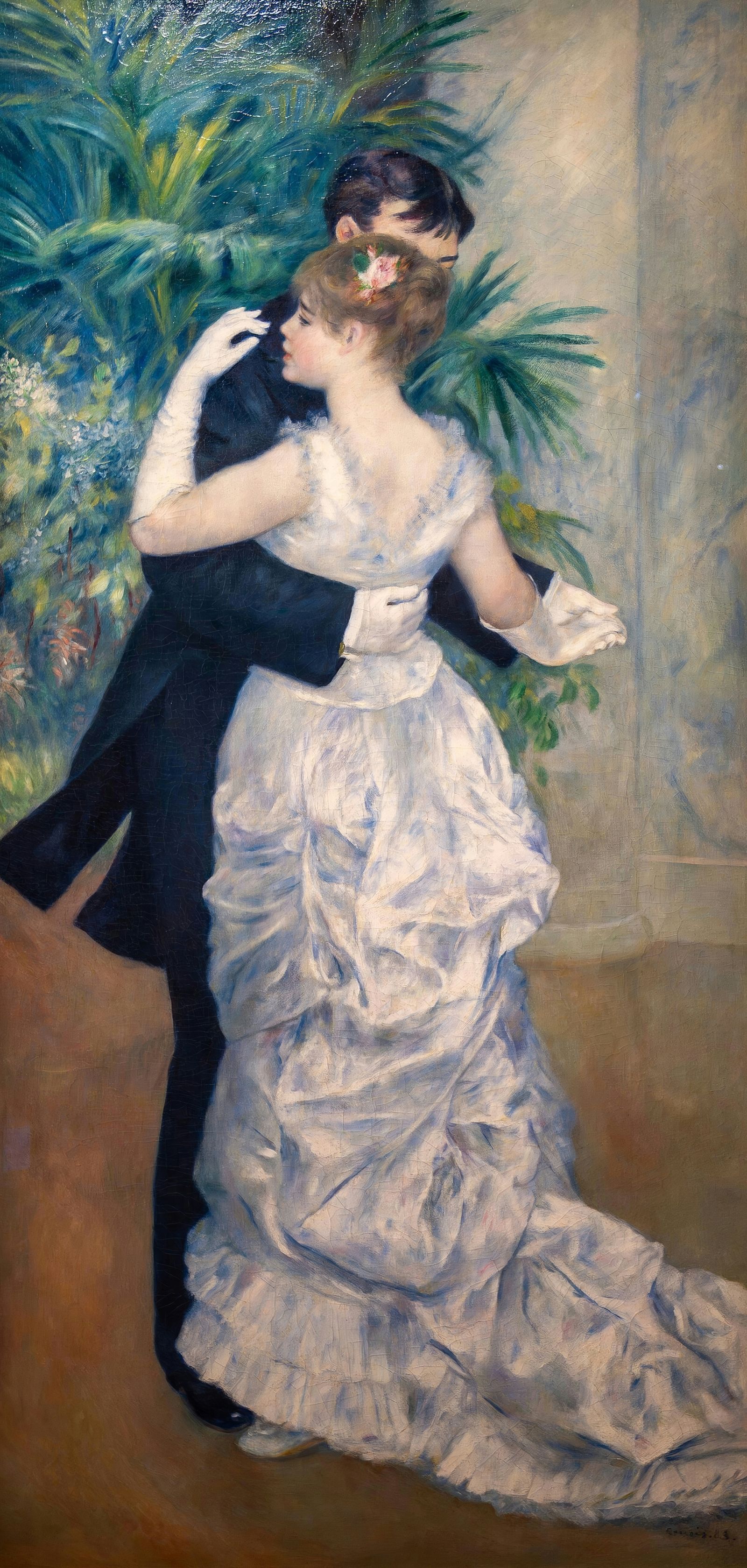
Dance in the City — Pierre-Auguste Renoir, 1883. Musée d'Orsay, Paris. Prepared for print by Surrealium at Vaxholm Fortress, Sweden.
Renoir’s city dancers turn together in a polished interior, with the pale dress carrying much of the movement. The picture can suggest pleasure in making an occasion of being together. Try: “I love that we can still make an evening out of very little; here is to more music, more laughter and the occasional decision to move the furniture aside.”
Explore Christmas cards · Explore this artwork
5. For a note that can be very short
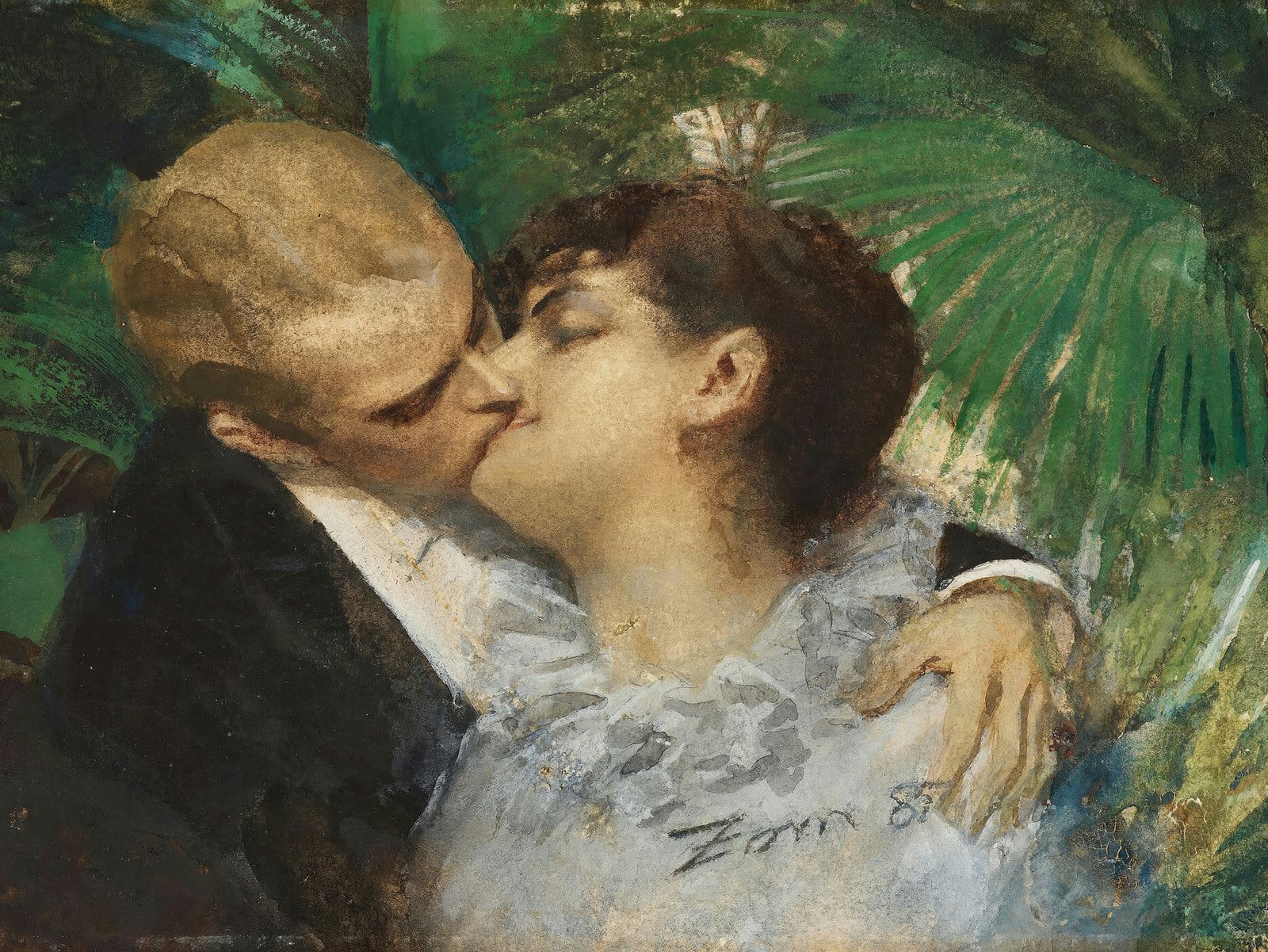
The Embrace — Anders Zorn, 1882–83. Private collection. Prepared for print by Surrealium at Vaxholm Fortress, Sweden.
Zorn’s Embrace brings two faces together so closely that the surrounding setting becomes secondary. It offers a direction for a card whose message does not need a long explanation. Try: “After all the talking, planning and rushing about, this is what I keep coming back to: I am glad it is you, and I am glad it is us.”
Explore Christmas cards · Explore this artwork
6. For Christmas spent apart
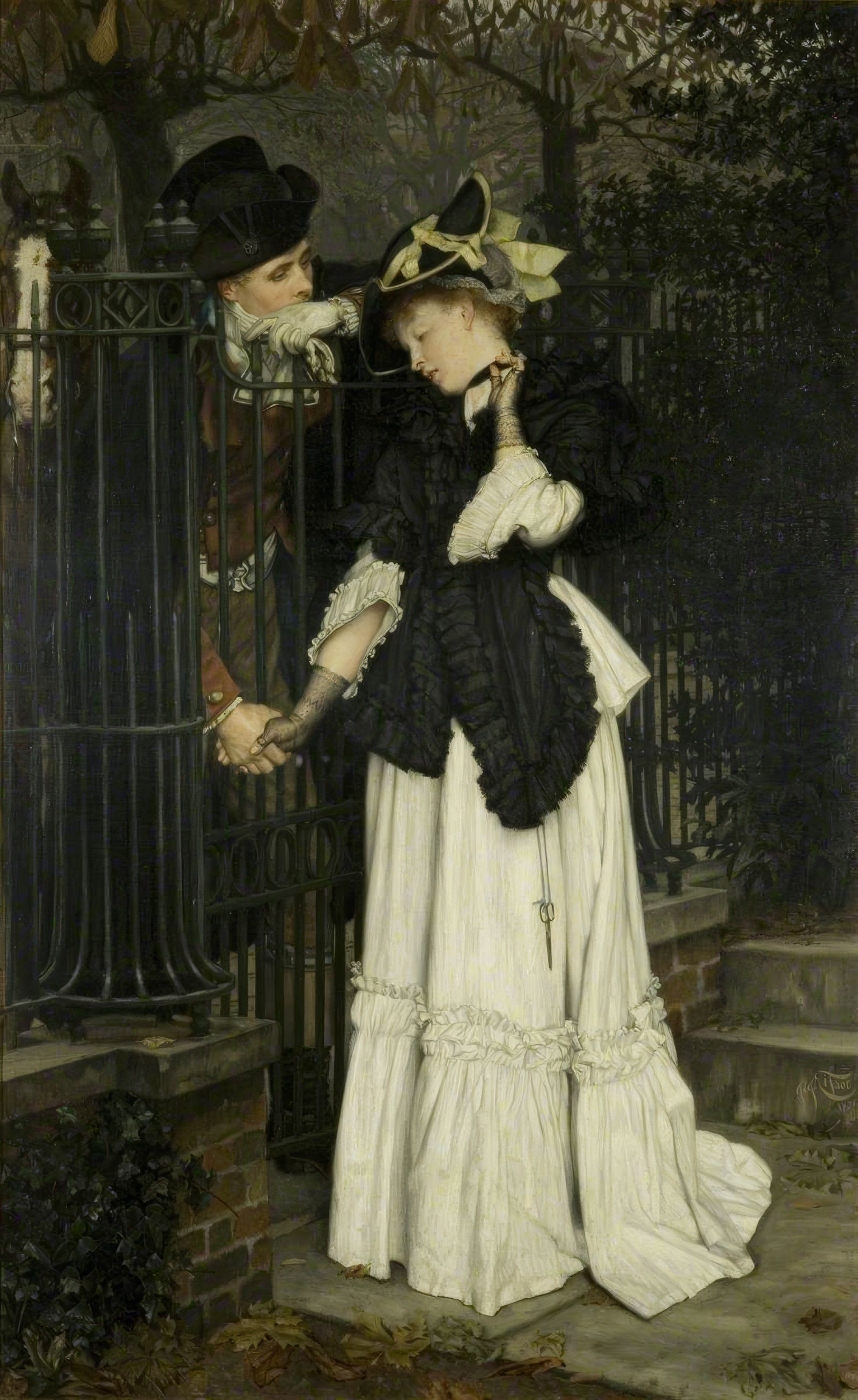
Les Adieux (The Farewells) — James Tissot, 1871. Bristol Museum and Art Gallery. Prepared for print by Surrealium at Vaxholm Fortress, Sweden.
Tissot’s farewell takes place beside a gate, with the figures meeting across a boundary that gives the scene its tension. It can accompany a note about separation without pretending distance is easy. Try: “I wish we were opening this together; until we are in the same room again, I am holding close the small things that make our days feel shared.”
Explore Christmas cards · Explore this artwork
7. For the walks that became a habit
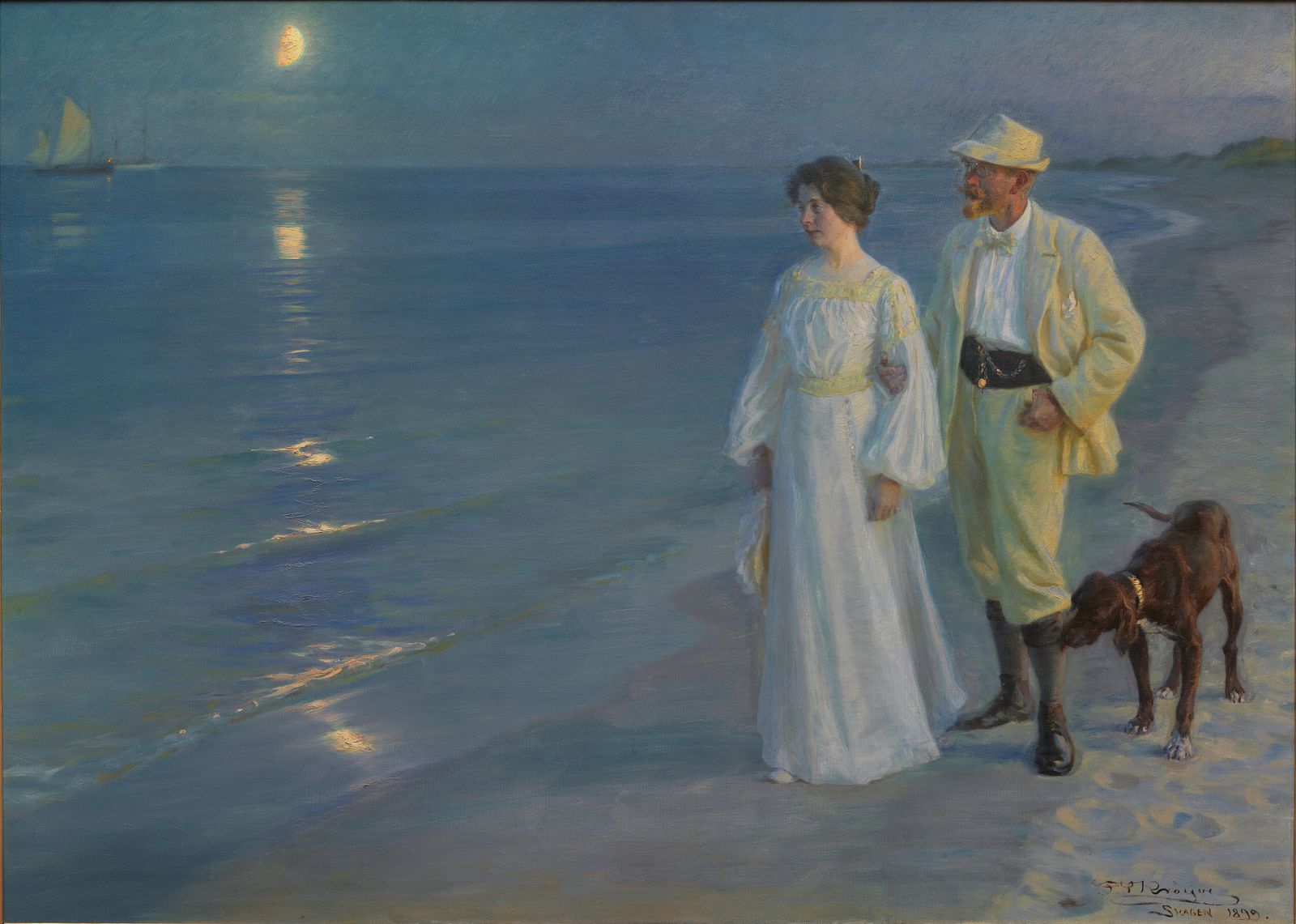
Summer Evening on Skagen's Beach — Peder Severin Krøyer, 1899. Hirschsprung Collection, Copenhagen. Prepared for print by Surrealium at Vaxholm Fortress, Sweden.
Krøyer’s beach scene places a couple and a dog beside the sea in evening light, with the shoreline giving them a long space to move through. It suggests a message about repeated time together rather than a single grand gesture. Try: “I treasure our walks because there is nothing to arrange once we have stepped outside, only the chance to be together and keep talking.”
Explore Christmas cards · Explore this artwork
8. For a relationship with its own quiet language
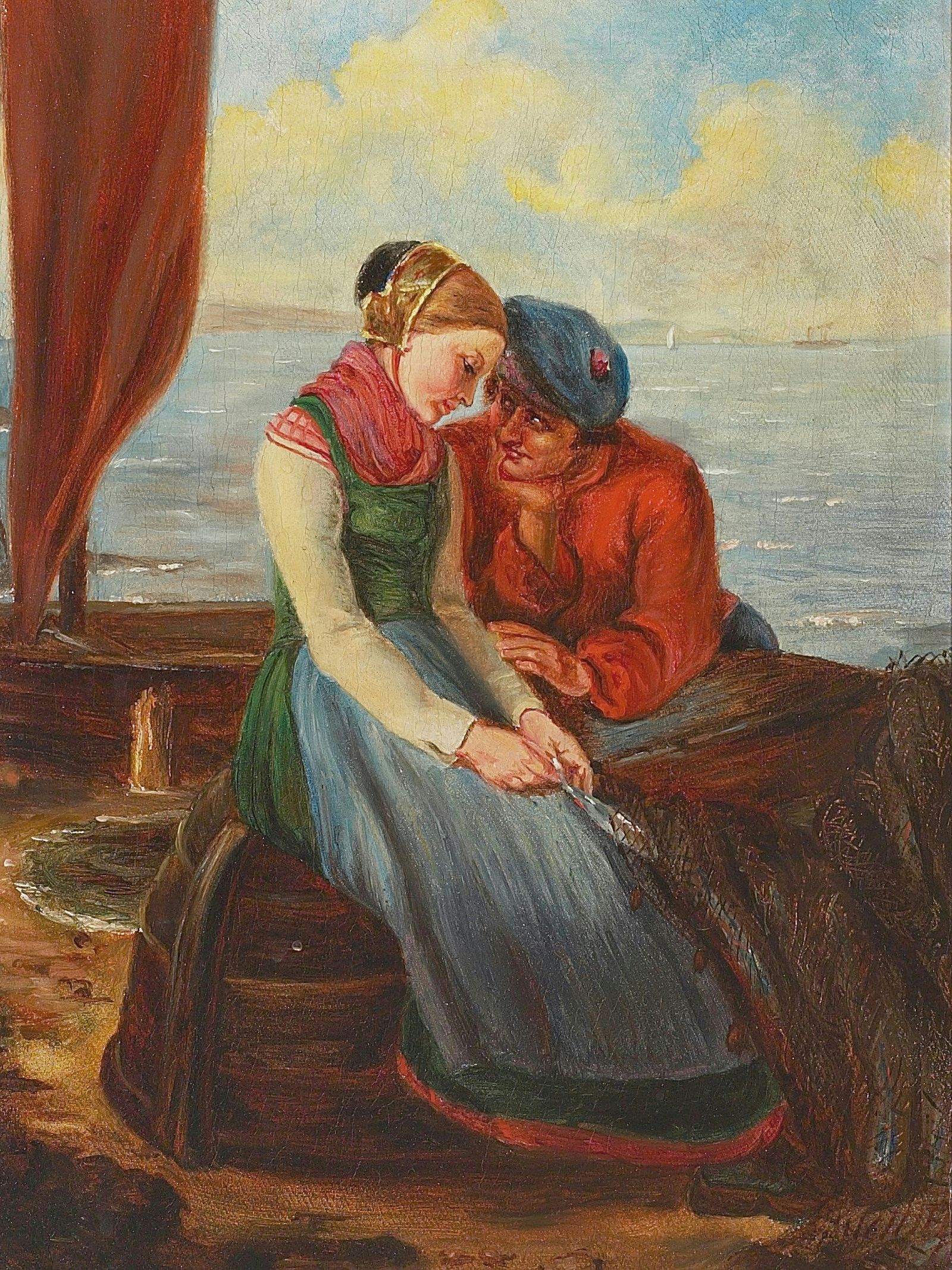
A Proposal: Fisherman and Fisher Girl — Kristian Zahrtmann, c. 1863. Private collection. Prepared for print by Surrealium at Vaxholm Fortress, Sweden.
Zahrtmann’s seated pair lean towards one another beside the water, their conversation carried by posture as much as expression. The scene can prompt a note about understanding that does not require a dramatic declaration. Try: “Thank you for knowing when I need a question, when I need a laugh and when I only need you to sit beside me for a while.”
Explore Christmas cards · Explore this artwork
9. For a difficult year weathered together

Lovers Beneath an Umbrella in the Snow — Suzuki Harunobu 鈴木 春信 , c. 1767. Art Institute of Chicago. Restored by Surrealium at Vaxholm Fortress, Sweden.
Harunobu’s lovers share an umbrella in the snow, their separate figures held inside one sheltered shape. The image can support a message about companionship through difficulty, without claiming that every problem is solved. Try: “This year has asked a lot of us; I am grateful for the ways we have kept turning towards each other, and for the care we are still learning to give.”
Explore Christmas cards · Explore this artwork
10. For the pleasure of being at home
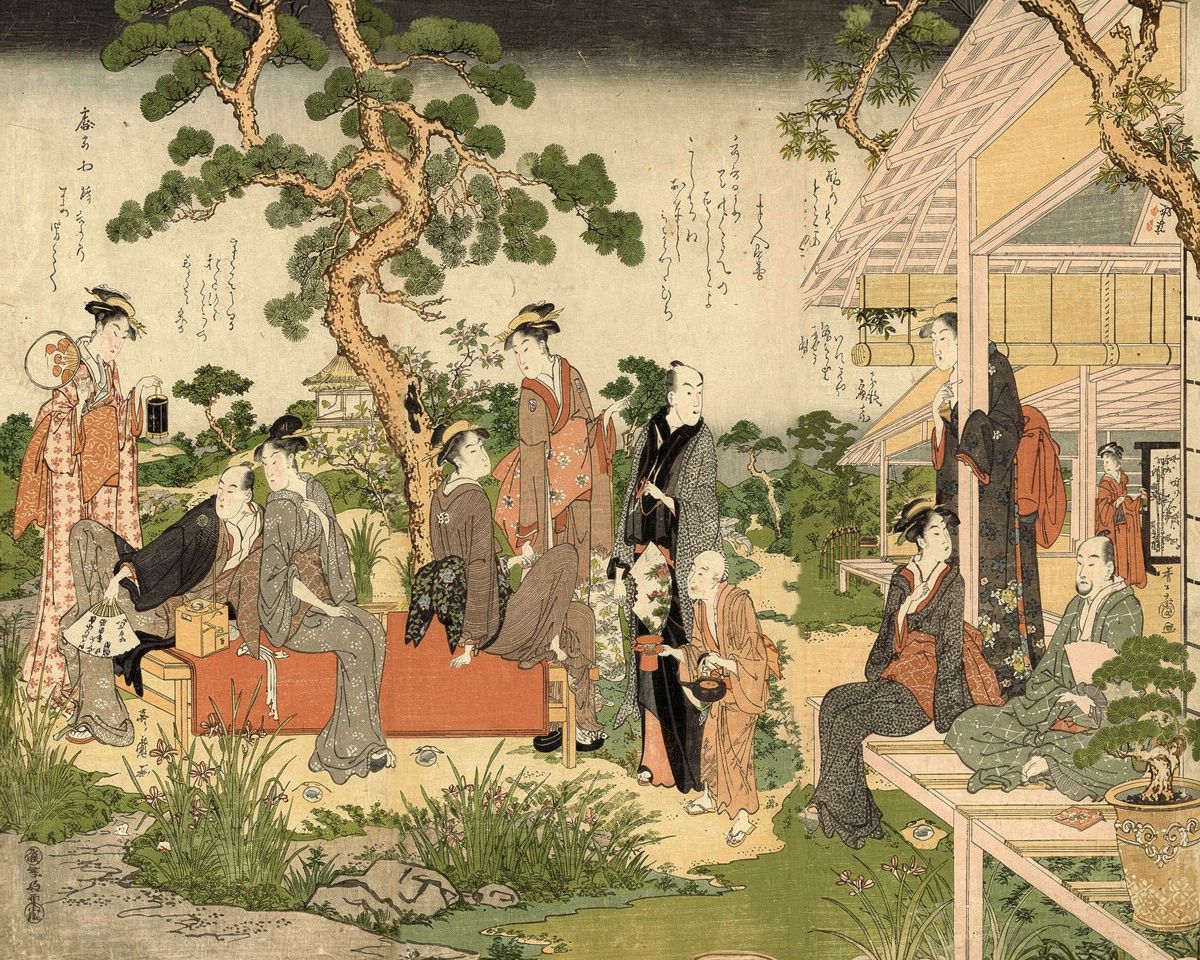
Enjoying the Cool in a Garden — Kitagawa Utamaro 喜多川 歌麿, c. 1788/90. Art Institute of Chicago. Restored by Surrealium at Vaxholm Fortress, Sweden.
Utamaro’s garden gathering offers a broader social setting, with people sharing shade and conversation rather than posing as a single isolated couple. It can suggest a card about the life around your relationship. Try: “I love the home we make in our own way, with room for friends, unfinished plans and the ordinary evenings that turn out to be the ones I remember.”
Explore Christmas cards · Explore this artwork
Choose a line that sounds like you, then replace its general detail with something real. A sentence about the walk you take every Sunday may be more convincing than a grand promise borrowed from elsewhere. If the year has been hard, acknowledge that without turning the Christmas card into the place to resolve an argument. The portrait card route lets you begin from your own photograph; keep the words personal and judge the finished preview as a new portrait, with both people equally recognisable.
Continue with the Christmas card picture guide, finding your own card wording.
- What should I write in a Christmas card for my husband?
- Mention one thing you appreciate about the life you share, then add a greeting in your own voice. A specific memory or everyday kindness can make a short message more personal than a long list of romantic phrases.
- Can I use these lines for a wife or partner?
- Yes. Adapt the wording and choose an image that fits your relationship. The useful part is the specific connection between two people, not the gendered label on a commercial greeting card.
- What if this has been a difficult year together?
- Acknowledge the effort or care you can name honestly. Avoid pretending everything was easy, but do not use the card to introduce a difficult conversation that deserves time and a reply. A modest, sincere message is enough.
- Do we need a special Christmas photograph?
- No. A clear photograph you both like can be a better starting point than a rushed festive pose. Check the available couple portrait options and the final preview rather than assuming a historical painting is a promised result.