What to write in a Christmas card: find your own words
Original lines for family, friends, colleagues and a difficult year, with a simple method for turning a greeting into something personal.
What to write in a Christmas card becomes easier when you choose the person before the phrase. Start with the relationship, add one true detail and finish with a wish you mean. A card does not need to sound like a formal speech or contain every good thing you hope for the recipient. A few precise words can carry the greeting.
The examples below are original lines, offered as starting points rather than quotations. Adapt the details so they are true for you. The floral artworks give the page a visual rhythm; they are not photographs of card insides or finished layouts. Use the real card preview to decide how much wording fits, and shorten the message before making it difficult to read.
For a related starting point, read short Christmas card messages.
For parents and close family: name the ordinary thing
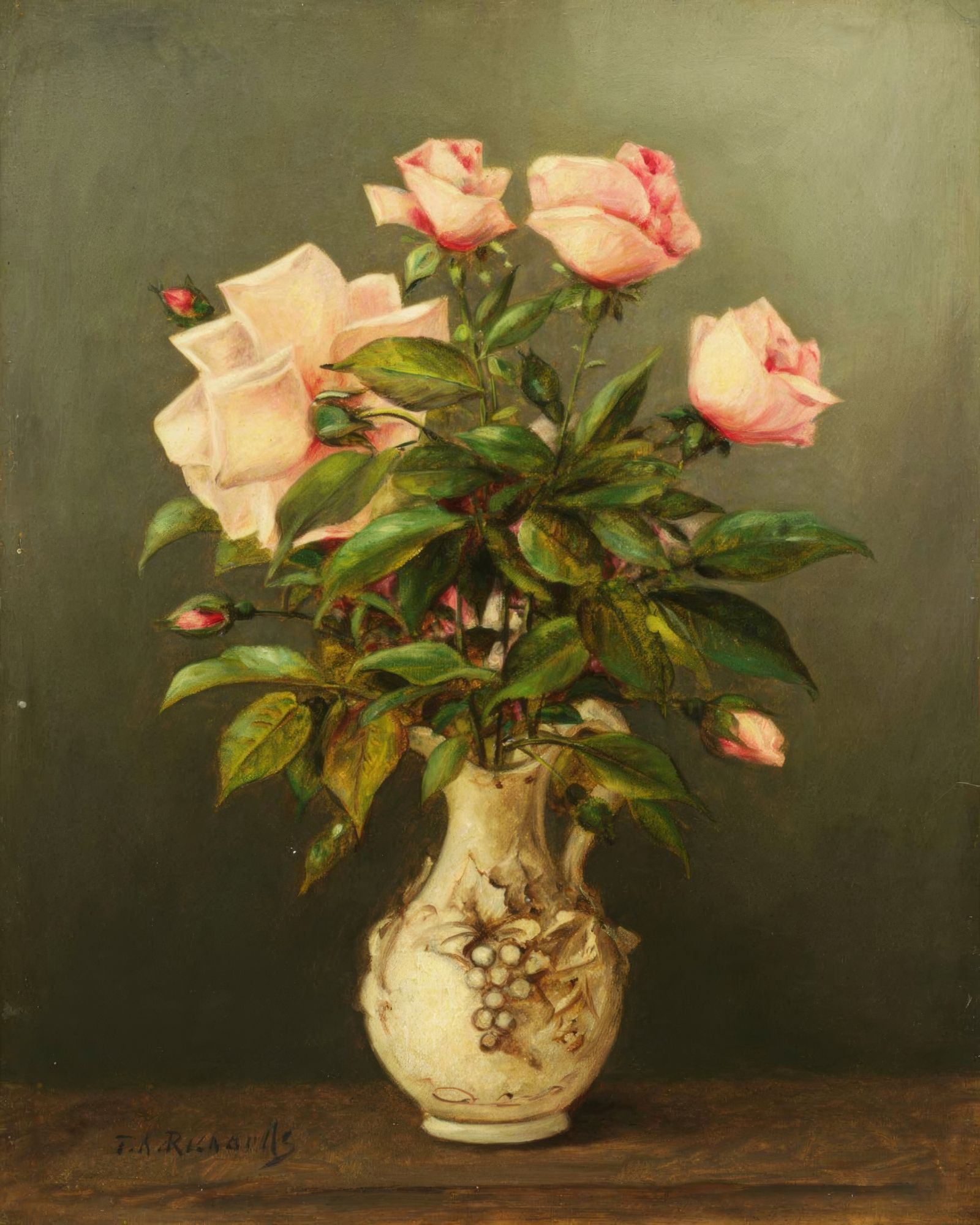
Vase of Roses — Thomas Addison Richards, c. 1865. Harvard Art Museums. Restored by Surrealium at Vaxholm Fortress, Sweden.
Thomas Addison Richards’s Vase of Roses gathers flowers into a clear, generous arrangement. It can suggest appreciation without requiring a grand declaration. For a parent or close relative, an ordinary remembered act often makes the strongest opening: the lift home, the meal after a hard day or the patient conversation when you needed one.
Try: “Thank you for making room at your table and time in your week. Wishing you a peaceful Christmas, with love from us all.” Or: “I keep thinking about our Sunday lunches this year. I hope Christmas brings you some of the care you give everyone else.” Change the detail to something real. If the relationship is complicated, a simpler wish is enough; the card does not have to settle the whole family history.
For a partner: keep the voice recognisable
A romantic card can be affectionate without sounding unlike you. Choose a shared detail that will make the recipient recognise the sender immediately. The best test is to read the message aloud: if you would never say the sentence to your partner, rewrite it in plainer language. A private joke works only if it remains kind and welcome.
Try: “Another year of your terrible puns and excellent company. I am glad this Christmas is ours.” Or: “Thank you for the small ways you make our days easier. I love the life we keep making together.” If the year has been difficult, avoid claiming that every moment was perfect. You can write, “This year asked a lot of us. I am grateful we kept finding our way back to each other.”
For friends: give the memory a place

La Rose (The Rose) — Philibert Louis Debucourt, 1788. Art Institute of Chicago. Prepared for print by Surrealium at Vaxholm Fortress, Sweden.
Debucourt’s La Rose makes a flower part of a human scene rather than an isolated ornament. It is a useful reminder that a greeting becomes personal through context. A friend may remember the café, the wet walk or the evening that ran much later than planned. Naming one such moment can do more than a string of general compliments.
Try: “That rainy walk and the tea afterwards were one of my favourite afternoons this year. Here is to more unhurried time together.” Or: “You made the ordinary weeks funnier. Wishing you a Christmas with good company and no urgent plans.” For a friend far away: “I miss having you round the corner. Sending love across the distance and hoping we can share a table again soon.” Only promise a visit if you mean to make it.
For colleagues and teachers: make thanks specific
Professional warmth works best when it respects the relationship. Thank a colleague for something they actually did rather than making an intimate statement they may find uncomfortable. For a teacher, a child’s own observation can be more meaningful than an elaborate paragraph written entirely in an adult voice. Check the name and title before signing.
For a colleague: “Thank you for your calm help when the project became complicated. Wishing you a restful break and a good start to the new year.” For a teacher: “Thank you for helping me keep trying when the work felt difficult. I hope you have a happy Christmas and time for the things you enjoy.” If the recipient does not celebrate Christmas, choose a general seasonal wish instead of assuming a shared faith or holiday practice.
After a difficult year: leave room for mixed feelings
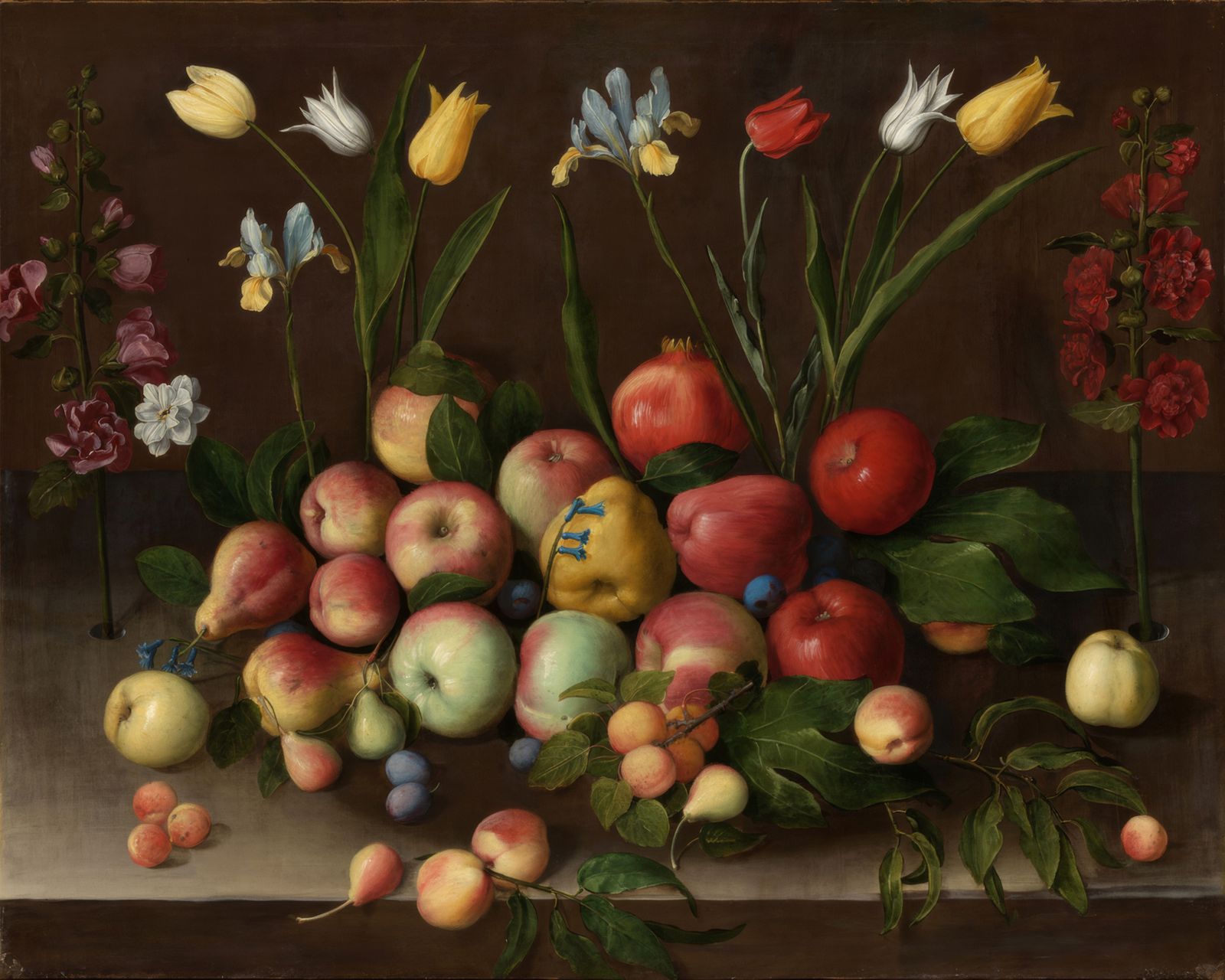
Fruit and Flowers — Orsola Maddalena Caccia, ca. 1630. The Metropolitan Museum of Art, New York. Restored by Surrealium at Vaxholm Fortress, Sweden.
Orsola Maddalena Caccia’s Fruit and Flowers brings different forms together in a still life. A floral image can support a restrained greeting when a cheerful crowd or a comic scene would feel wrong. The picture does not resolve grief or illness; it can simply accompany words that acknowledge the recipient without demanding a particular response.
Try: “I know this season may feel different. Thinking of you with love, and here if you would like company.” Or: “No need to reply. I wanted you to know you are in my thoughts this Christmas.” If you knew someone who has died, a brief, kind memory may be welcome, but do not assume the person wants a detailed account in a card. Avoid promises that time will fix everything or instructions to find a positive side.
For someone whose faith matters: be clear about the words
A religious greeting should suit the recipient and say what you mean. You can write an original blessing without presenting it as a Bible verse or a line from a hymn. If you choose a quotation, verify its wording and source separately; do not attach a familiar sacred name to a sentence simply because it sounds devotional.
Original options include: “May the peace of Christmas find a place in your home, and kindness guide the year ahead.” Or: “Wishing you a Christmas rich in faith, fellowship and the quiet joy of caring for one another.” For a mixed-belief household, a simple wish for peace and good company may be more inclusive. Let the image and wording agree: a sacred subject carries meaning, so choose it deliberately rather than treating it as neutral seasonal decoration.
For neighbours and hosts: acknowledge the welcome
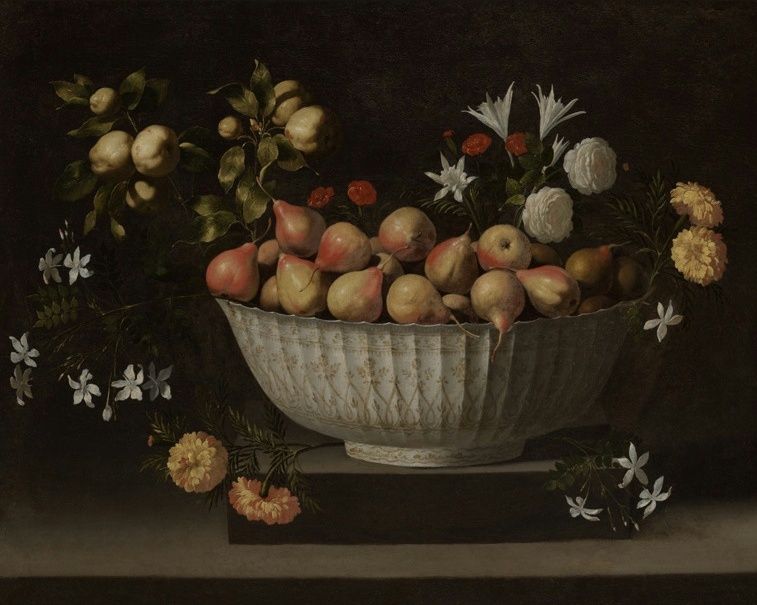
Flowers and Fruit in a Porcelain Bowl — Juan de Zurbarán, c. 1645. Art Institute of Chicago. Restored by Surrealium at Vaxholm Fortress, Sweden.
Juan de Zurbarán’s Flowers and Fruit in a Porcelain Bowl gives attention to a carefully arranged offering. It can suggest thanks for hospitality without turning the card into a statement about the value of a gift. A neighbour’s practical kindness or a host’s welcome is often best recognised through a clear, modest sentence.
Try: “Thank you for making us feel at home in the neighbourhood. Wishing you a warm and peaceful Christmas.” For a host: “We loved being around your table this year. Thank you for the welcome, the conversation and the extra helping.” For someone who helped with a small task: “Your help made a busy week much easier. I hope the Christmas break brings you some well-earned quiet.” Remove any detail that is not true rather than keeping it because the sentence sounds polished.
Edit the message as a complete card
Put the salutation, main message and signature together before judging the length. Check who is included in “we”, whether the names are spelled correctly and whether the sign-off suits the relationship. If several people are signing, leave enough space for everyone. A message that works alone in a document may feel crowded when it shares a card with a detailed image.
Read the preview at phone size as well as enlarged. Remove repeated wishes and vague praise before shrinking the lettering. One memory, one thank-you and one seasonal wish are usually enough for a concise greeting. Keep the final wording in your own voice, and check the recipient again before sharing or ordering. The card designer is the place to see the actual layout; the artwork illustrations here do not promise a particular printed inside spread.
Begin with one true sentence about the person, then add the wish you want to send. The original lines here are useful only when they help you say something honest; replace any detail that does not belong to your relationship. Choose a card image that supports the tone, read the complete preview and sign it naturally. A thoughtful greeting should feel like contact from you, not a performance of perfect seasonal language.
Continue with the Christmas card picture guide, Christmas card for husband, Christmas card for teacher, religious Christmas card messages.
- How do I start a Christmas card message?
- Use the recipient’s preferred name, then begin with a memory, a thank-you or a direct seasonal wish. You do not need an elaborate opening. A specific, true detail quickly makes the message personal.
- What can I write if I do not know the person well?
- Keep it warm and modest: wish them a peaceful season or thank them for a particular kindness. Avoid intimate language, assumptions about family life or religious wording unless you know it is welcome.
- What should I write to someone grieving at Christmas?
- Acknowledge that the season may be difficult and offer gentle contact without expecting a reply. Avoid telling them how to feel or promising that the holiday will heal their grief.
- Are these messages quotations from other writers?
- No. These are original suggested lines written for this guide. Adapt them to your own circumstances. Any separate quotation from scripture, poetry or a hymn needs its own accurate attribution and wording.