Christmas card for teacher: ten original ways to say thanks
Use a child’s real observation, a clear signature and a picture chosen with care. Ten examples cover learning, patience and the end of term.
A Christmas card for teacher is most useful when it says what the child or family actually appreciated. It does not need to announce the best teacher in the world or promise that a single lesson changed a life forever. One remembered moment can make the card worth keeping.
The lines below are original examples. Adapt them to the teacher, the child and the occasion, rather than presenting them as words a child has already said. The historical artworks suggest subjects for the card; they are not finished card-inside demonstrations. Choose an available face, preview the wording and let the child contribute in a way that feels natural, whether that is a sentence, a drawing or simply their own name.
For a related starting point, read short Christmas card messages.
1. For making room to think
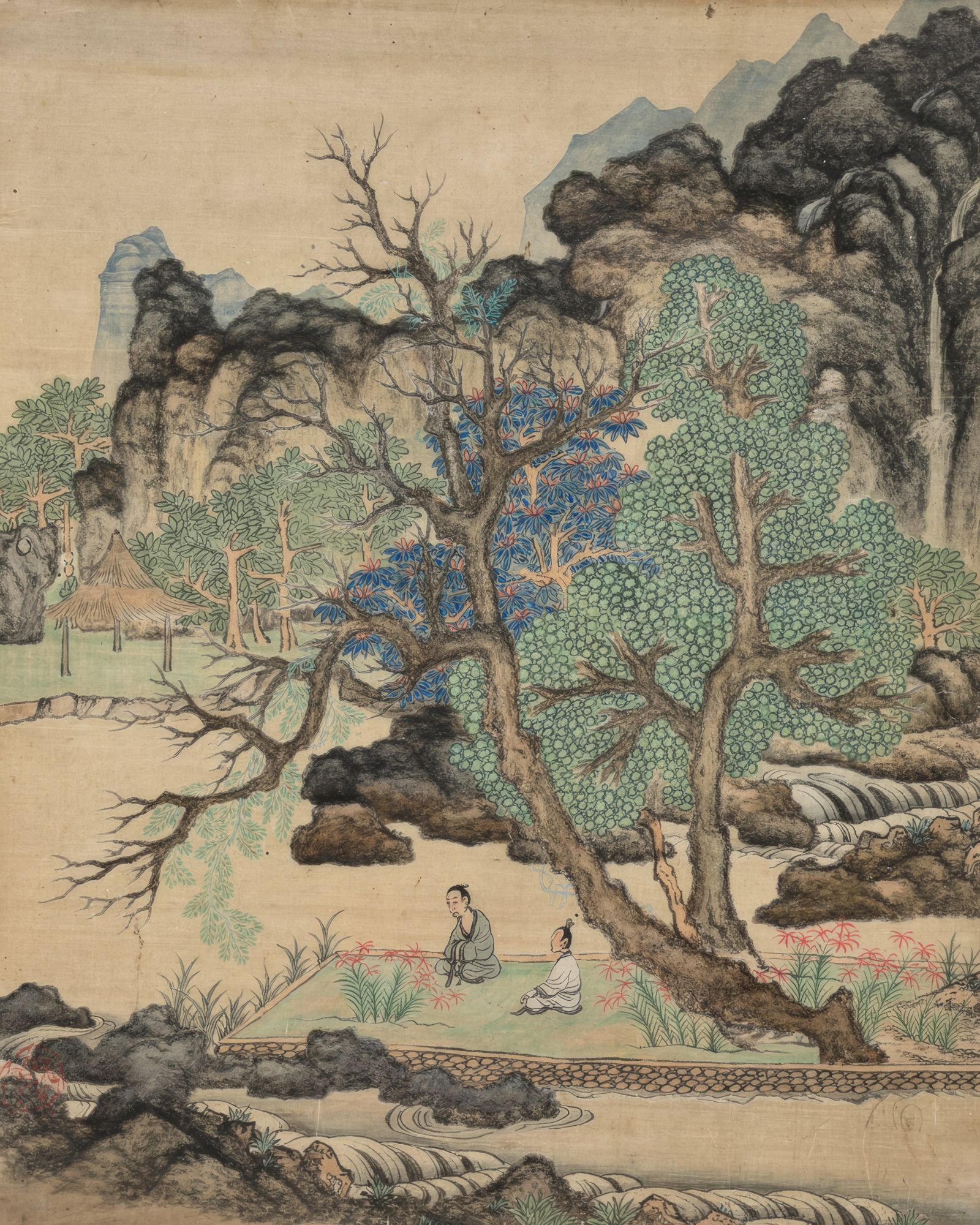
Paintings after Ancient Masters: Scholars in a Garden — Chen Hongshou, 1598–1652. Cleveland Museum of Art. Restored by Surrealium at Vaxholm Fortress, Sweden.
Chen Hongshou’s scholars sit within an elaborate garden, with trees and rocks providing space around their encounter. It can suggest a thank-you for a teacher who does not rush every answer. Try: “Thank you for giving me time to work things out and for listening when my first answer was not quite what I meant; I hope your Christmas break has plenty of time that belongs to you.”
Design your Christmas card · Explore this artwork
2. For words shared aloud
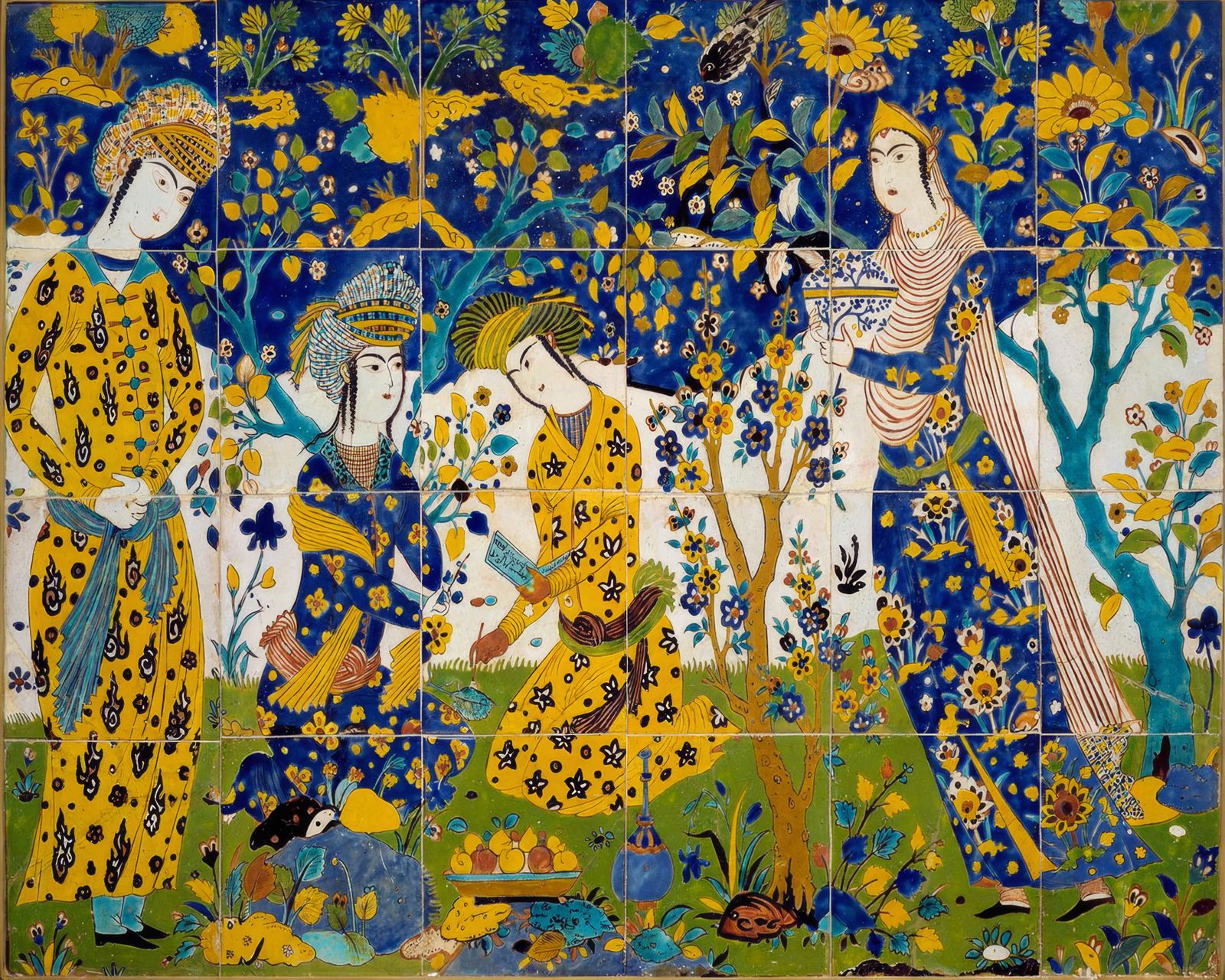
Reciting Poetry in a Garden — Unidentified Iranian artist, Isfahan, first quarter 17th century. The Metropolitan Museum of Art, New York. Restored by Surrealium at Vaxholm Fortress, Sweden.
The Iranian garden panel gathers figures around writing and conversation, its blue and yellow surface full of small changes. It can accompany thanks for poetry, language or discussion. Try: “I liked hearing how different people understood the same poem; thank you for showing us that a good question can make us look again, and for helping me feel brave enough to join in.”
Design your Christmas card · Explore this artwork
3. For the music teacher
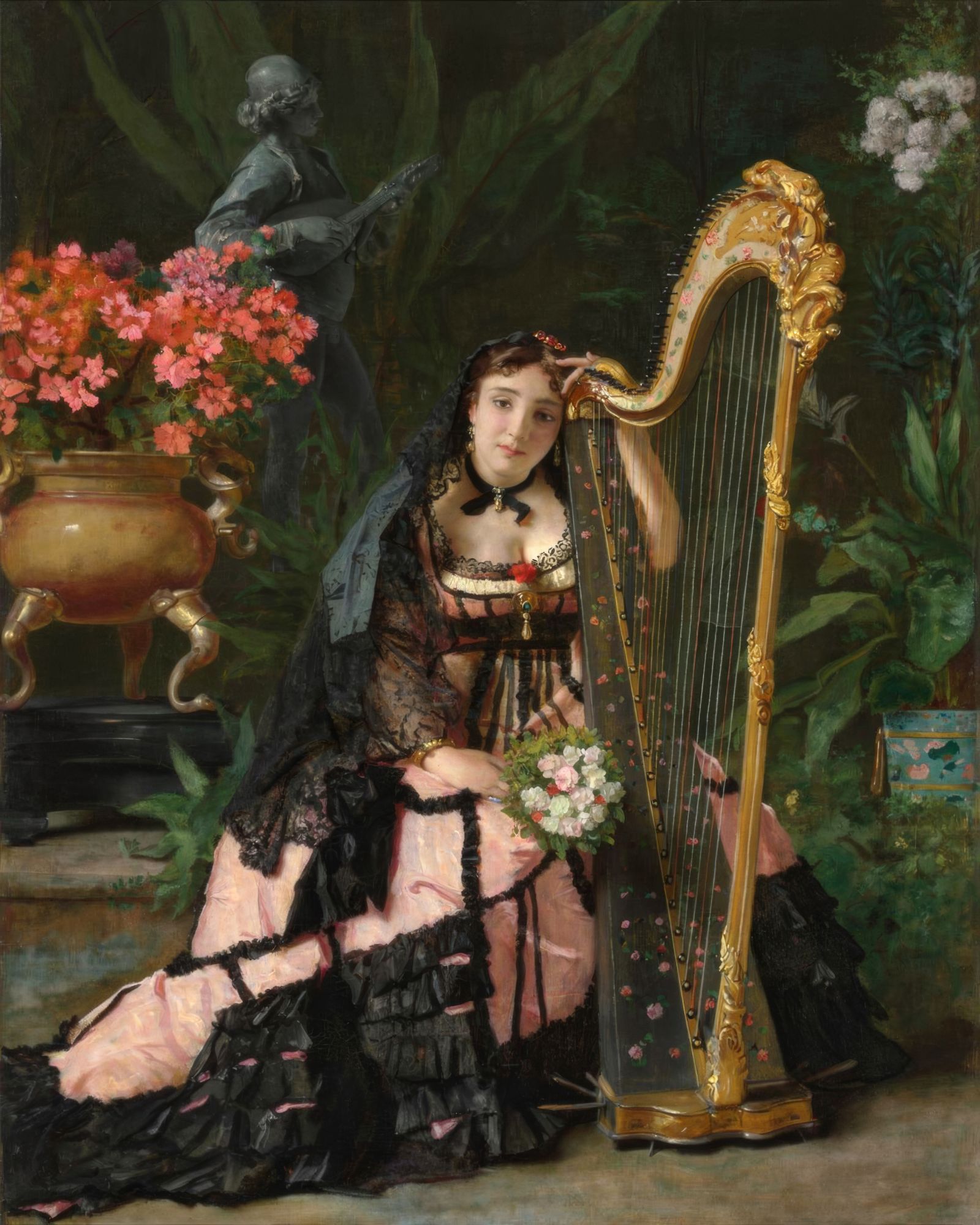
A Musician — Alfred Stevens, c. 1868-69. Harvard Art Museums. Restored by Surrealium at Vaxholm Fortress, Sweden.
Stevens’s musician sits beside a harp, with the instrument’s curve shaping the space around her. It suggests a card that recognises practice and listening rather than only a final performance. Try: “Thank you for hearing the small improvements while I was still hearing the mistakes; I am looking forward to playing again after the break, and I hope you have a restful Christmas.”
Design your Christmas card · Explore this artwork
4. For encouraging curiosity
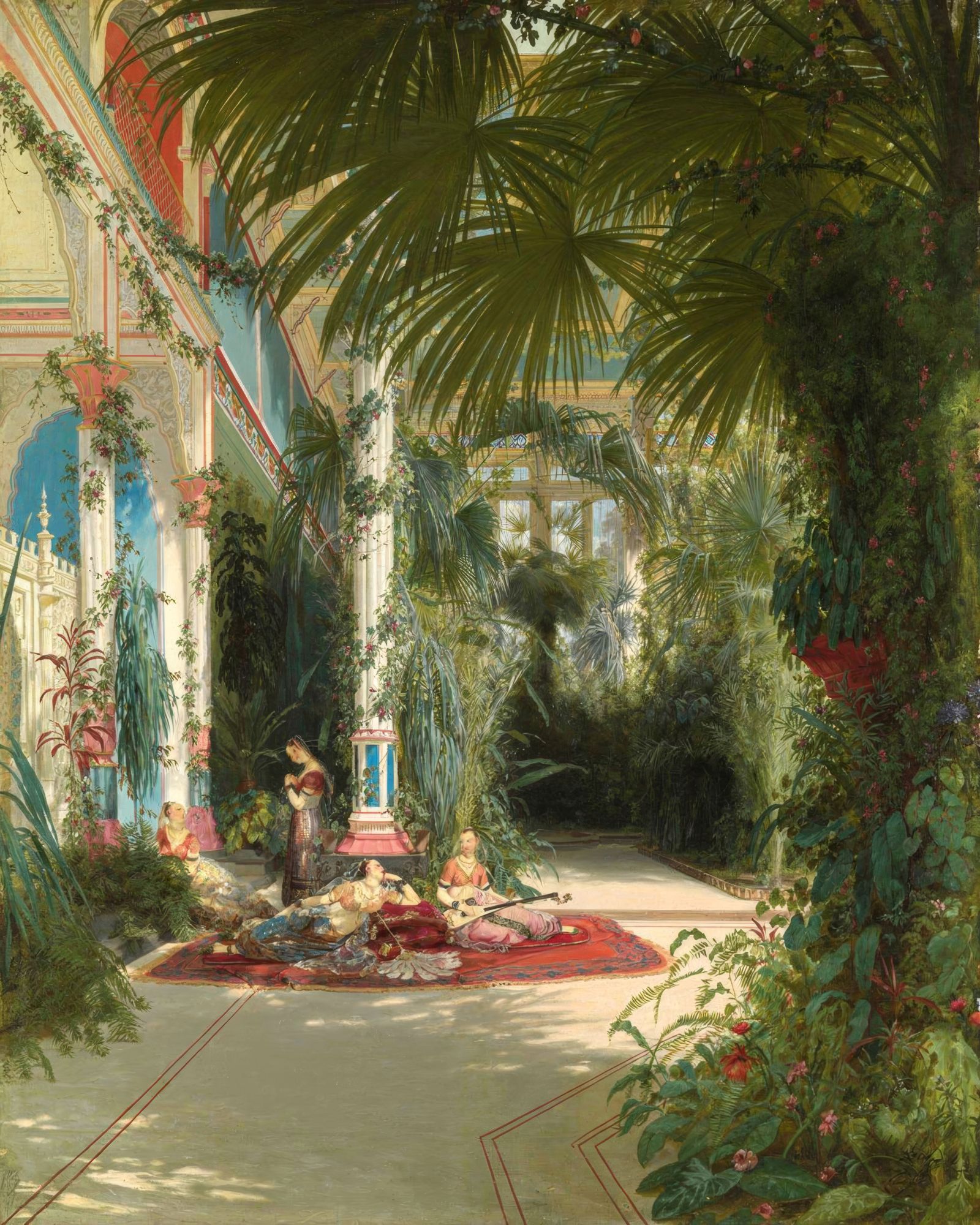
The Palm House Interior — Carl Blechen, 1834. Art Institute of Chicago. Restored by Surrealium at Vaxholm Fortress, Sweden.
Blechen’s palm-house interior turns a room into a dense world of plants, light and architectural detail. It can prompt a message about a teacher who makes unfamiliar subjects interesting. Try: “Thank you for helping me notice things I would have walked past before; I keep finding questions to ask, and that has made learning feel much bigger than the pages in my book.”
Design your Christmas card · Explore this artwork
5. For bringing history into view
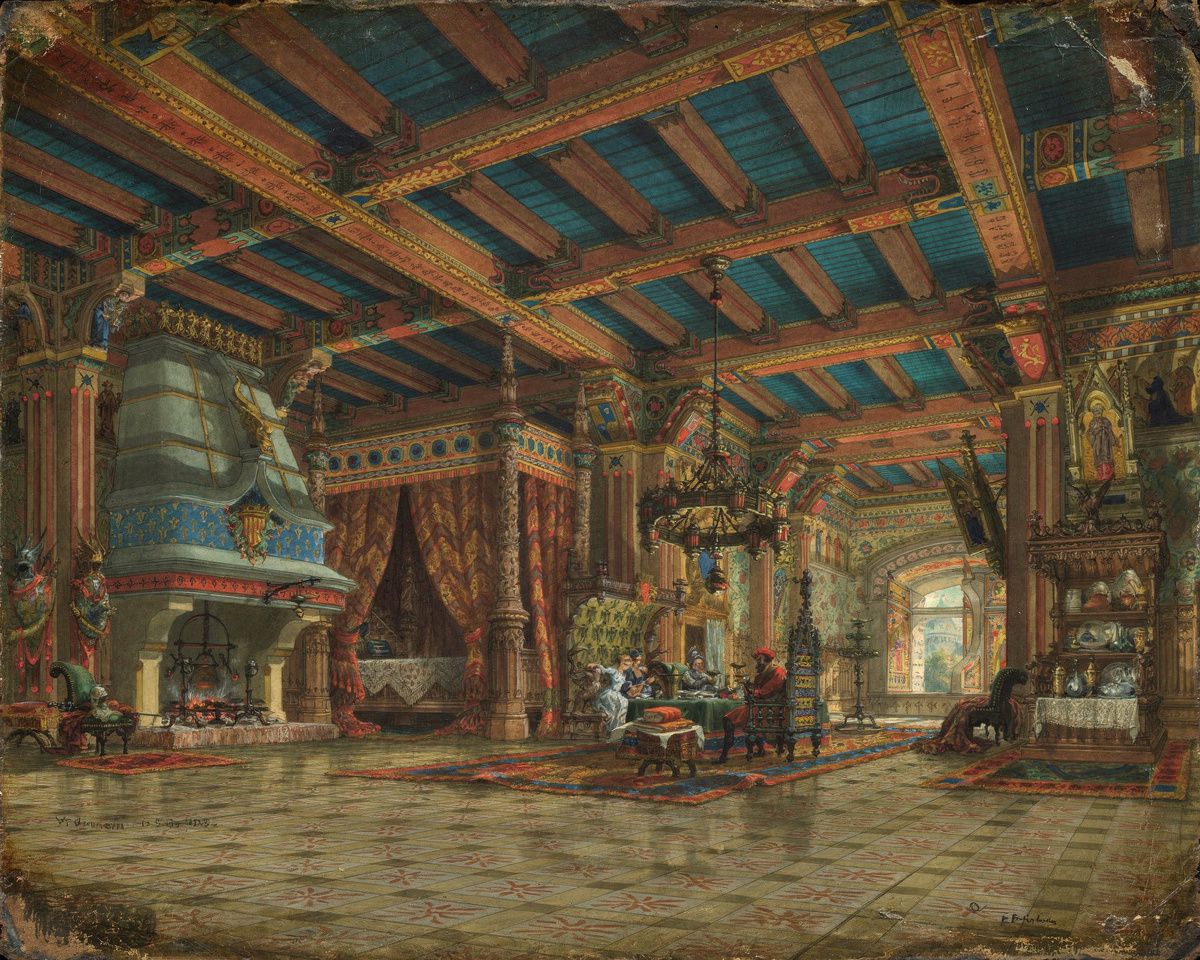
Château Interior — V. Germain, 1834. Cleveland Museum of Art. Restored by Surrealium at Vaxholm Fortress, Sweden.
Germain’s château interior fills a broad room with patterned surfaces and architectural detail, inviting the eye to explore. It is a direction for a card to a teacher who helped the past feel specific. Try: “I enjoyed learning how ordinary objects can tell us about people who lived long ago; thank you for making the details matter and for giving us time to look at them.”
Design your Christmas card · Explore this artwork
6. For a lesson in careful looking
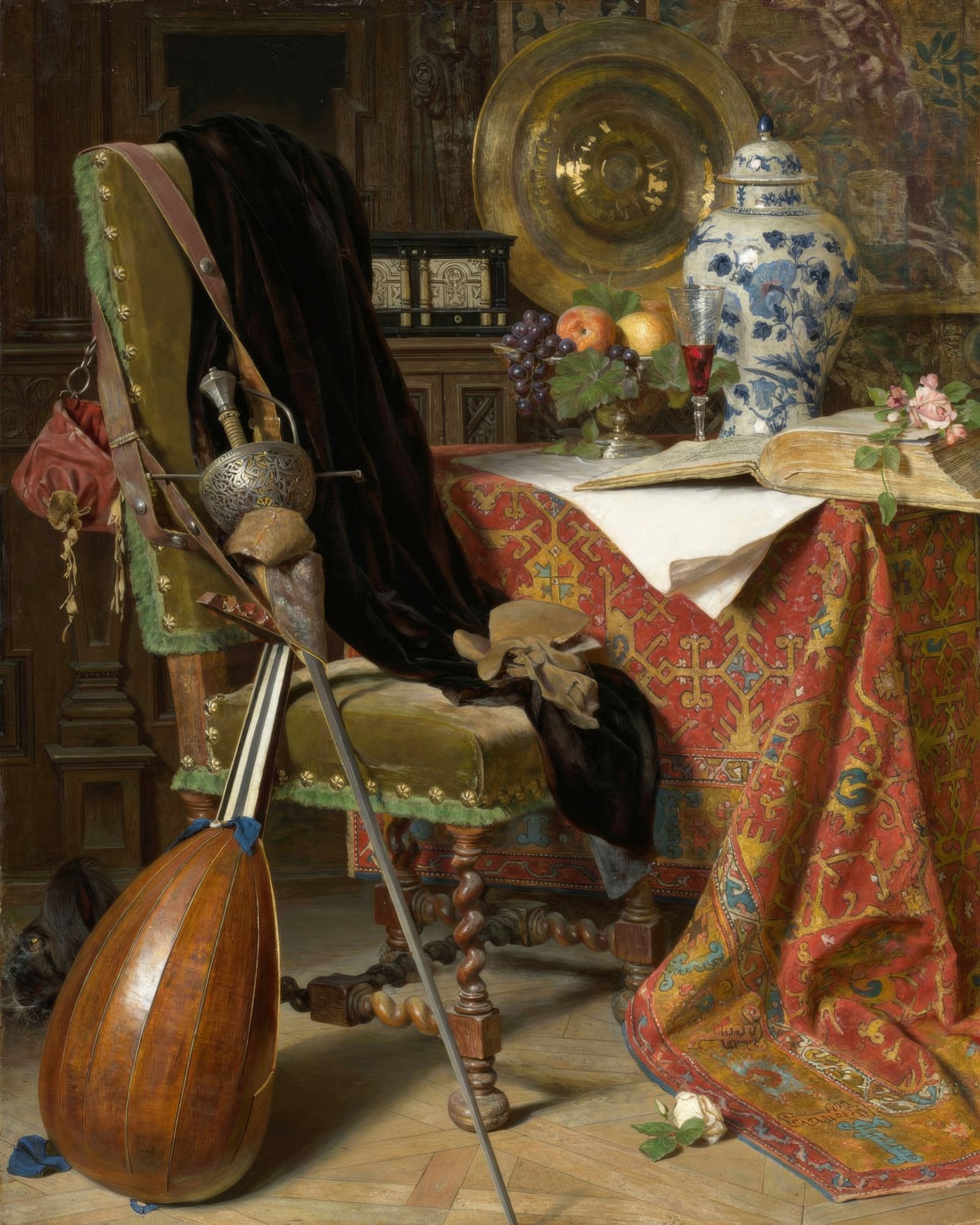
Seventeenth-Century Interior — Charles Gifford Dyer, 1877. Art Institute of Chicago. Restored by Surrealium at Vaxholm Fortress, Sweden.
Dyer’s interior combines furniture, instruments, books and vessels in a close arrangement, with each object changing how the others appear. It can accompany thanks for observation in art or another subject. Try: “Thank you for asking me to look once more before deciding I was finished; I have started noticing small things in my work that I used to miss.”
Design your Christmas card · Explore this artwork
7. For patient help
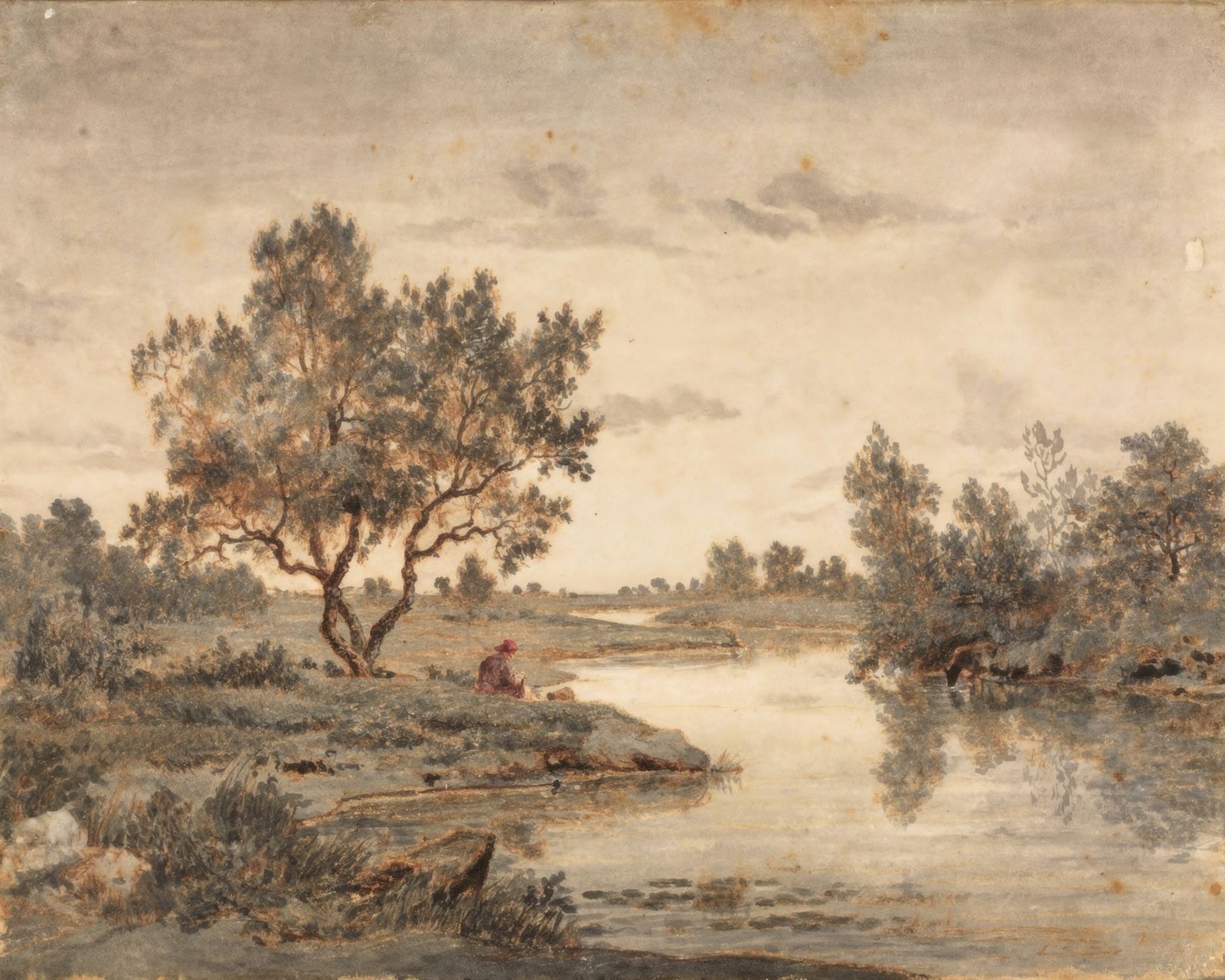
The Fisherman (Le Pêcheur) — Théodore Rousseau, c. 1840–45. Cleveland Museum of Art. Restored by Surrealium at Vaxholm Fortress, Sweden.
Rousseau’s fisherman occupies a small part of a broad landscape, leaving the activity unhurried. The picture can suggest patience without making the teacher into a moral example. Try: “Thank you for explaining it another way when I was stuck, and for letting me try without feeling embarrassed; that helped more than I knew how to say at the time.”
Design your Christmas card · Explore this artwork
8. For an end-of-term pause
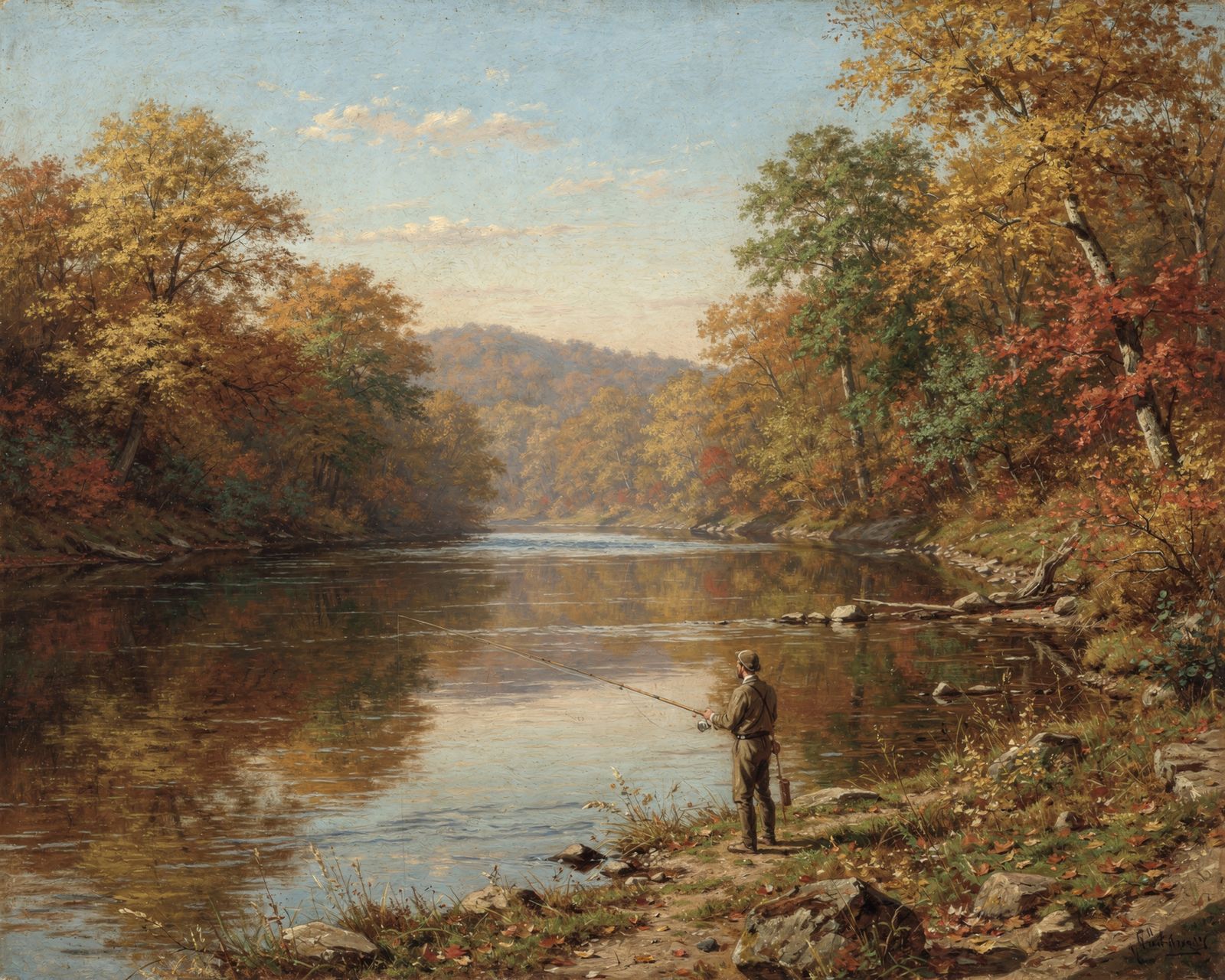
Autumn Landscape with Man Fishing — William Morris Hunt, 19th century. Harvard Art Museums. Restored by Surrealium at Vaxholm Fortress, Sweden.
Hunt’s autumn landscape follows the water past trees towards a standing fisherman, making the scene feel spacious. It can support a straightforward wish for the break. Try: “Thank you for the attention you have given us this term; I hope the holiday brings good company, some quiet hours and a chance to enjoy the things you do when school is finished.”
Design your Christmas card · Explore this artwork
9. For growing confidence
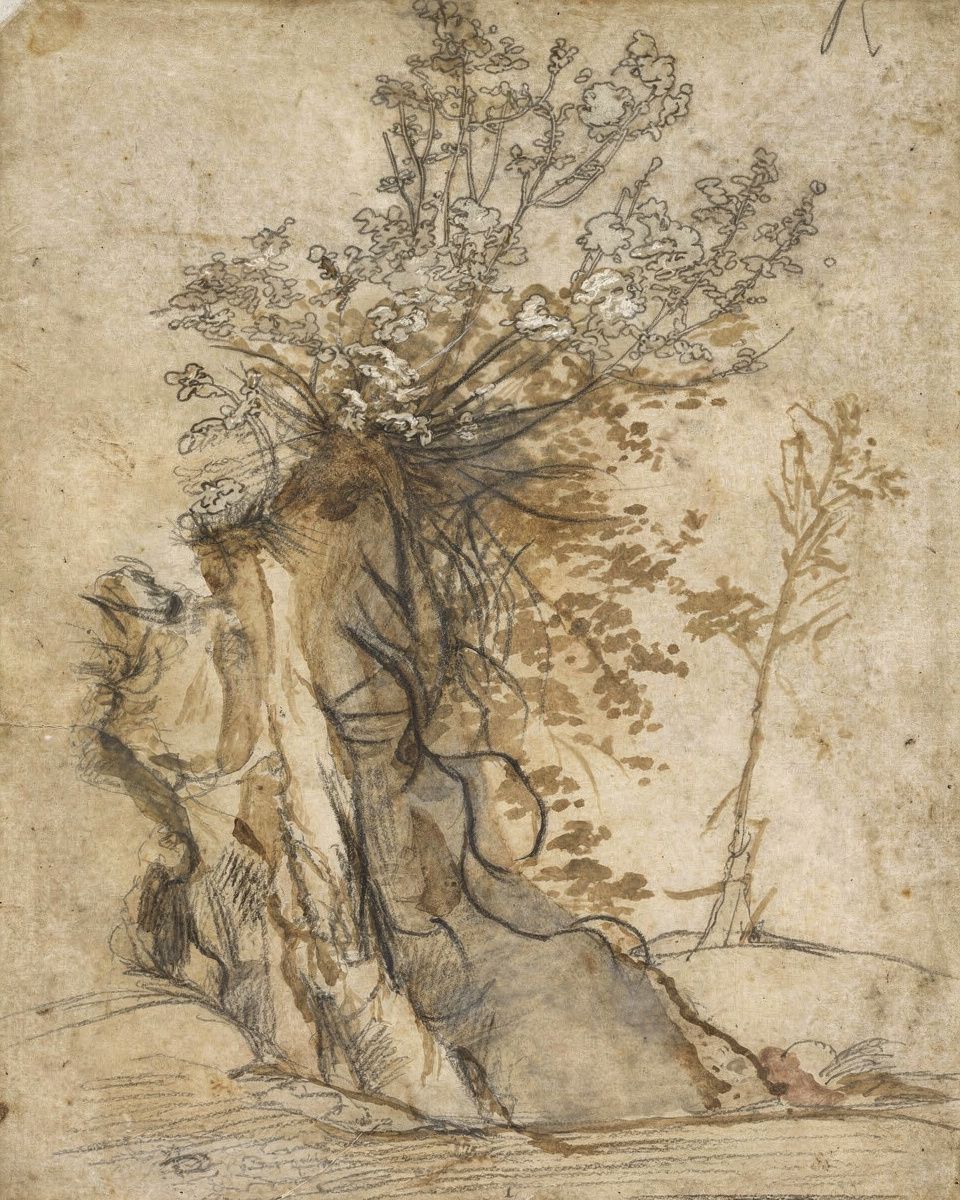
Flowering Bush above an Eroded Bank — Federico Barocci, c. 1572–1604. Cleveland Museum of Art. Restored by Surrealium at Vaxholm Fortress, Sweden.
Barocci’s study of a bush above an eroded bank pays close attention to a small piece of the natural world. It can prompt a message about progress that is real but not spectacular. Try: “I am more willing to have a go than I was at the start of term; thank you for noticing my effort and helping me see what I could try next.”
Design your Christmas card · Explore this artwork
10. For a whole class
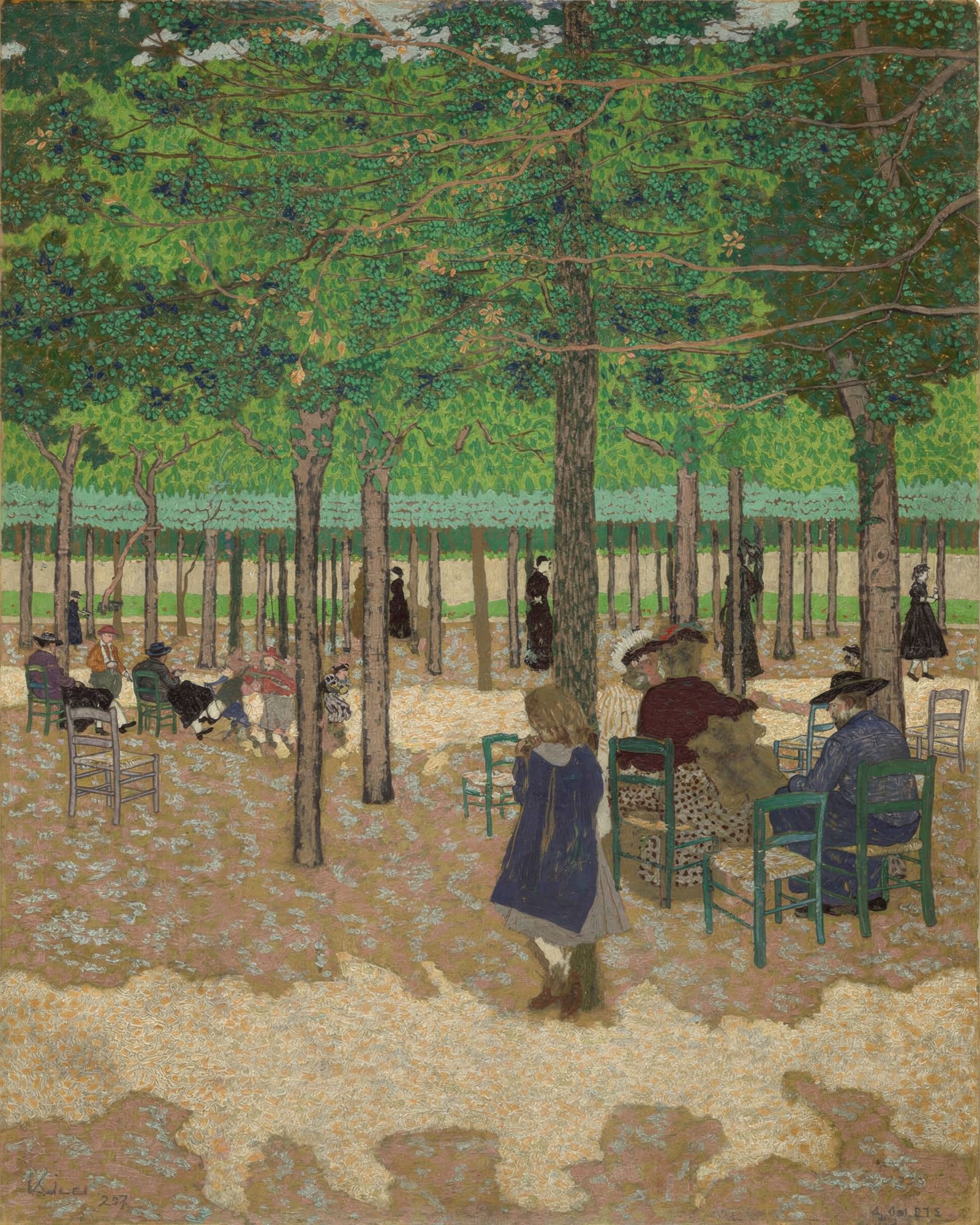
Under the Trees (from "The Public Gardens") — Édouard Vuillard, 1894. Cleveland Museum of Art. Restored by Surrealium at Vaxholm Fortress, Sweden.
Vuillard’s public garden spreads many figures among the trees, allowing people to share a place without doing exactly the same thing. It suggests a group card that leaves room for different voices. Try: “From all of us who wanted to add a message, thank you for this term and for the different ways you have helped us learn; we hope you enjoy a happy and restful break.”
Design your Christmas card · Explore this artwork
Ask the child for one memory before offering a ready-written line. Their answer may be smaller and more interesting than the message an adult would invent. Help with layout and spelling if they want it, but keep the speaker clear. A family can add its own thanks beneath the child’s contribution. Before sending a digital card, check the recipient and the visible names; before choosing print, read the complete preview. The card designer is the next step once the words feel like something you mean.
Continue with the Christmas card picture guide, Christmas gifts for teachers.
- What should a child write in a teacher Christmas card?
- One specific thank-you and a clear signature are enough. Ask what they enjoyed or what helped them this term. A short message in their own words is usually more convincing than an elaborate adult-written tribute.
- Can parents write a separate message?
- Yes. Make clear that it comes from the family rather than putting adult observations into the child’s voice. Mention a change you have actually noticed or a piece of support you appreciated.
- What should I write if the teacher does not celebrate Christmas?
- Thank them for the term and wish them a good break. Choose an image and greeting that fit what you know, without assuming a religion or asking them to explain their holiday plans.
- Can these messages be adapted for a boss?
- The structure can be adapted, but use a professional example and your own voice. Thank a manager for specific support without classroom language, exaggerated praise or wording that could feel like an obligation to return the gesture.