Christmas gifts for teachers: ten art-led thank-yous
A card can recognise a teacher’s work without adding clutter or making a costly gift feel expected. Choose the picture and the thanks together.
Christmas gifts for teachers can be a simple expression of thanks. Before buying anything, check the school’s gift policy and think about whether a card from the child, the family or the class would be the most comfortable choice. A gift should not create an obligation, and a teacher should not have to display a large personalised object to prove they appreciate it.
These ten artworks suggest different subjects for a Christmas thank-you. They are not a list of things teachers are presumed to like: use only the connections you actually know. The paintings and prints are shown as historical references rather than finished card faces. Let the child’s own observation shape the message, and preview the available card design before choosing the final image.
For a related starting point, read custom thank you cards.
1. For the teacher who opened a book
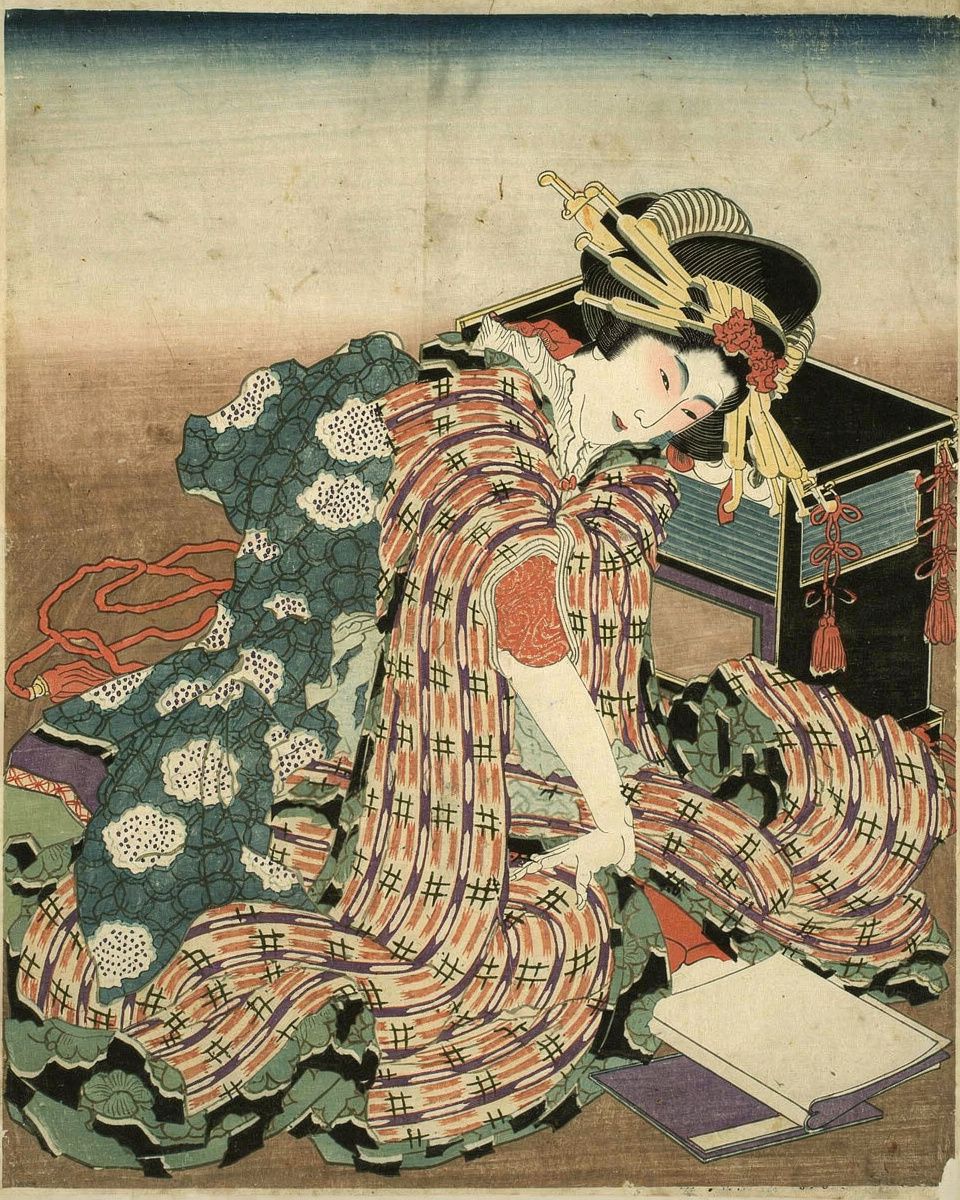
Young woman reading "The Pillow Book (makura no soshi)" — Katsushika Hokusai 葛飾 北斎, 1822. Art Institute of Chicago. Restored by Surrealium at Vaxholm Fortress, Sweden.
Hokusai’s absorbed reader suggests a thank-you for the person who helped a child find a book they wanted to finish. Name the book or the small change you noticed, rather than claiming the teacher transformed every part of the child’s life. A specific sentence gives the card its meaning, while the picture can remain an invitation to read rather than an illustration of a classroom you have not seen.
Explore Christmas cards · Explore this artwork
2. For the pleasure of listening
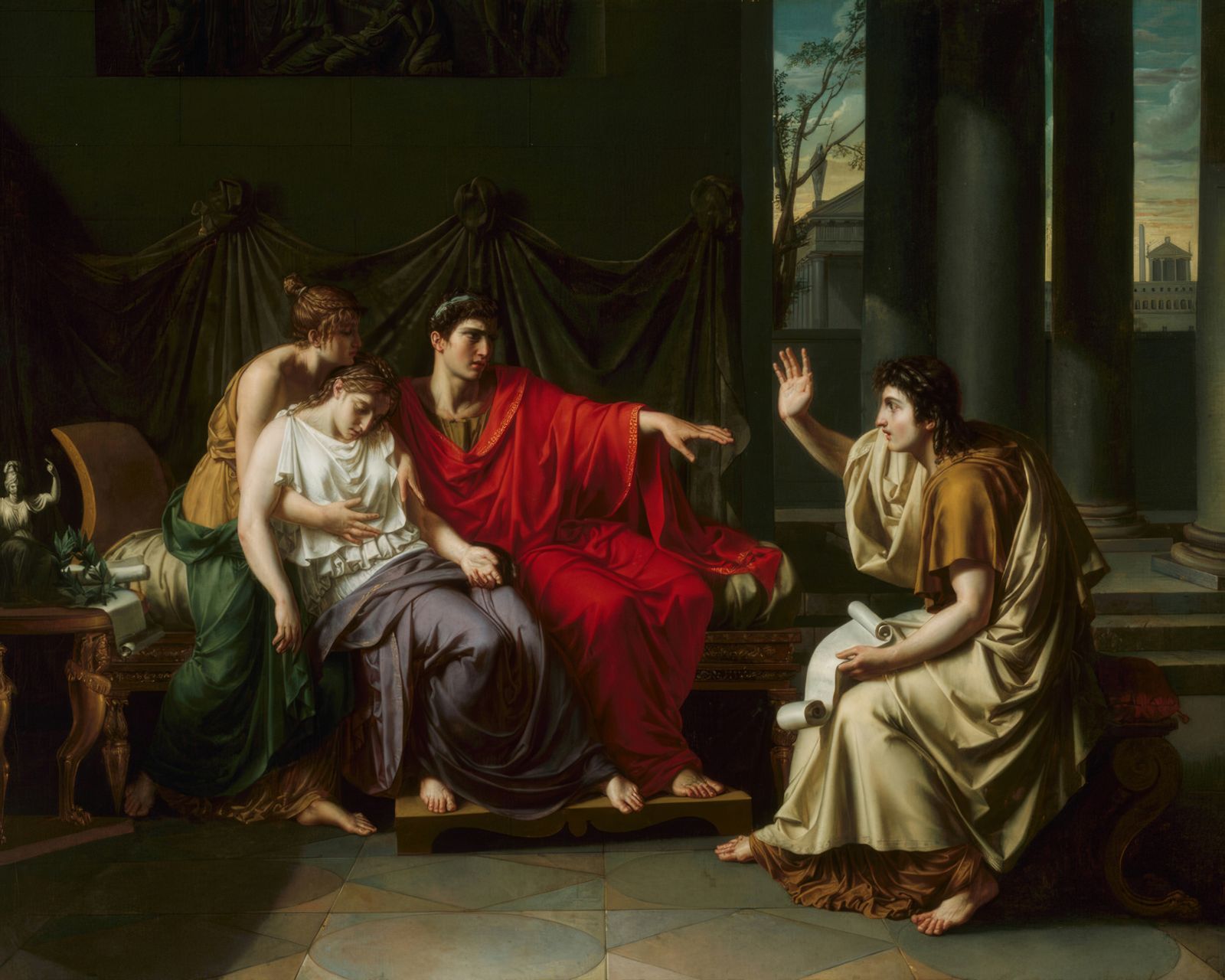
Virgil Reading the Aeneid — Jean Baptiste Joseph Wicar, 1790–93. Art Institute of Chicago. Restored by Surrealium at Vaxholm Fortress, Sweden.
Wicar’s scene of Virgil reading aloud makes the listeners’ responses part of the composition. It can prompt a note about a story read to the class or the teacher’s patience with a hesitant reader. Keep the praise grounded in what the child tells you, and avoid quoting a supposedly memorable classroom remark unless you know the words and the teacher would welcome seeing them repeated.
Explore Christmas cards · Explore this artwork
3. For the person who taught persistence
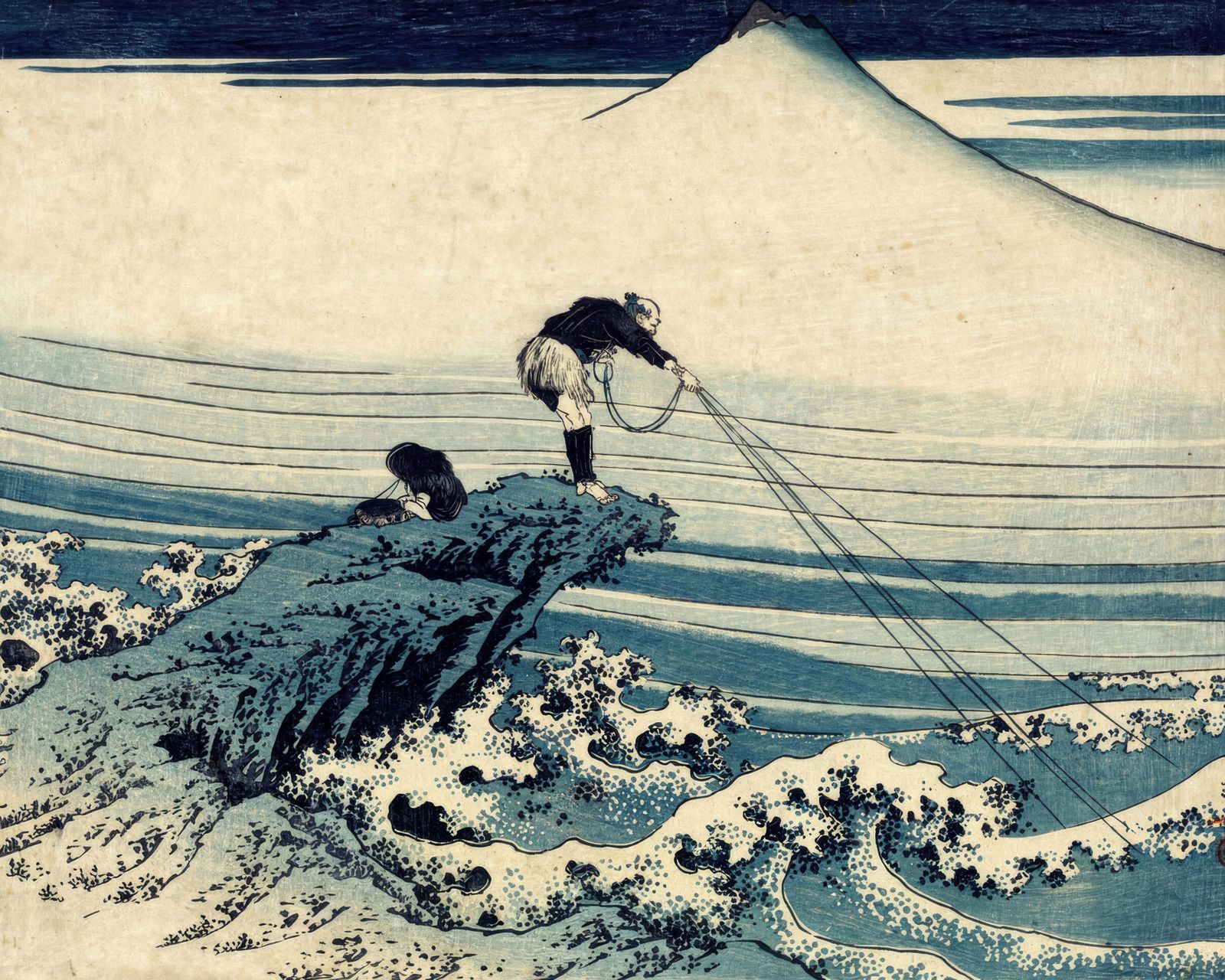
The Fisherman at Kajikazawa — Katsushika Hokusai 葛飾 北斎, c. 1830/33. Art Institute of Chicago. Restored by Surrealium at Vaxholm Fortress, Sweden.
Hokusai’s fisherman stands on a rocky ledge, with lines extending into the moving water below. The picture can suggest concentration and repeated effort without turning either quality into a moral lesson imposed on the recipient. Thank the teacher for one instance of patient guidance, such as helping a child try again, and let the winter greeting give them room to enjoy a break from teaching.
Explore Christmas cards · Explore this artwork
4. For a lesson in looking closely
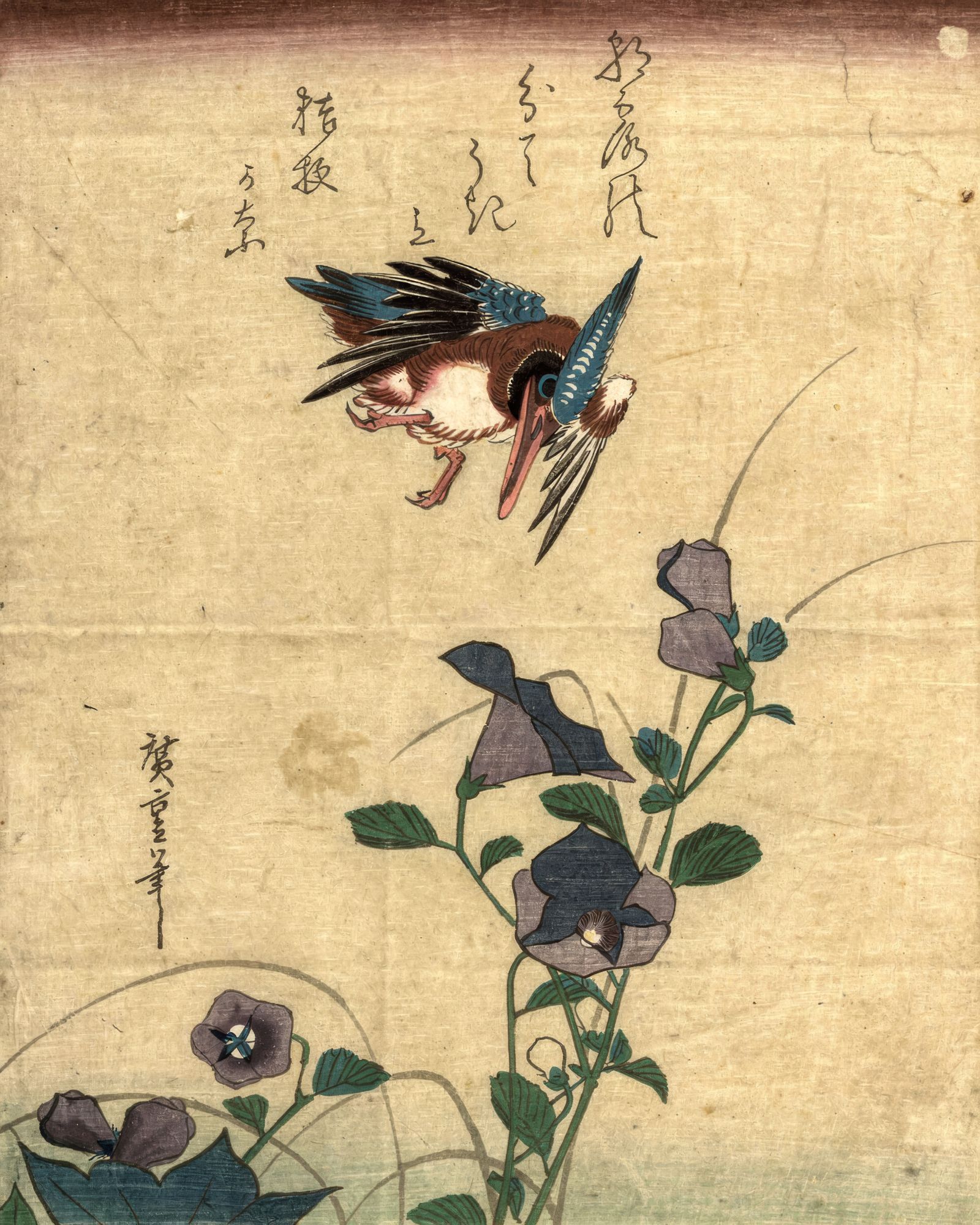
Kingfisher and Chinese Bellflowers — Utagawa Hiroshige, early or mid-1830s. Cleveland Museum of Art. Restored by Surrealium at Vaxholm Fortress, Sweden.
Hiroshige’s kingfisher and bellflowers place a bird, stems and blossoms in a small vertical world. This is a useful direction for a teacher who has encouraged observation in science, art or a walk outdoors. The note can mention the child now noticing something on the way home, making the thanks concrete without assuming that the pictured species belongs to your local landscape.
Explore Christmas cards · Explore this artwork
5. For a classroom full of different interests
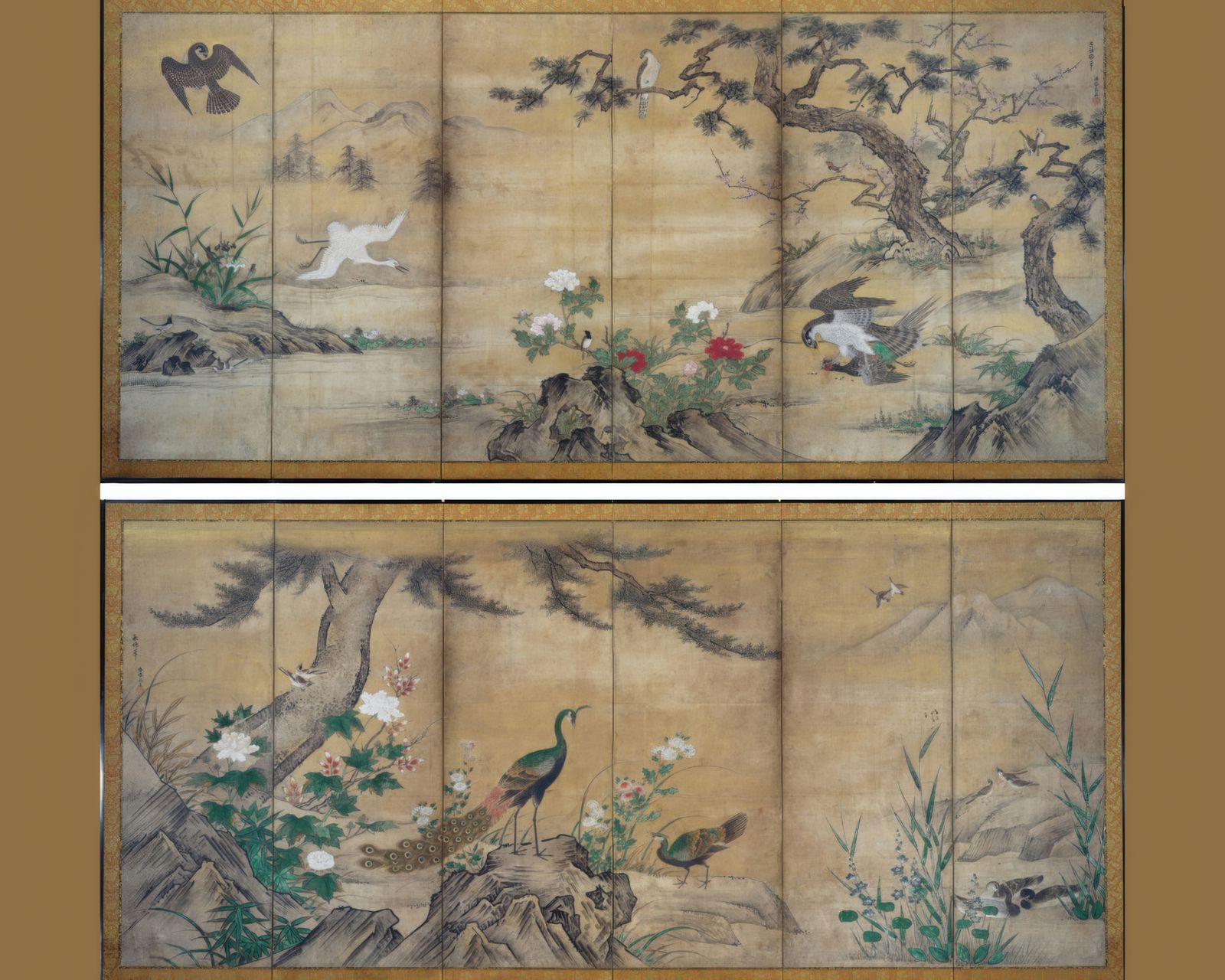
Birds and Flowers — Kano Mitsunobu (Japanese, 1565–1608), Kano Shōei, late 1500s. Cleveland Museum of Art. Restored by Surrealium at Vaxholm Fortress, Sweden.
The paired Birds and Flowers screens distribute life across a broad surface, with each part asking for attention. They can suggest a thank-you for a teacher who makes room for different pupils and interests. Avoid comparing children to the animals or assigning symbolic meanings to the plants; a straightforward note about a child feeling included will say more than an elaborate analogy.
Explore Christmas cards · Explore this artwork
6. For the small discoveries
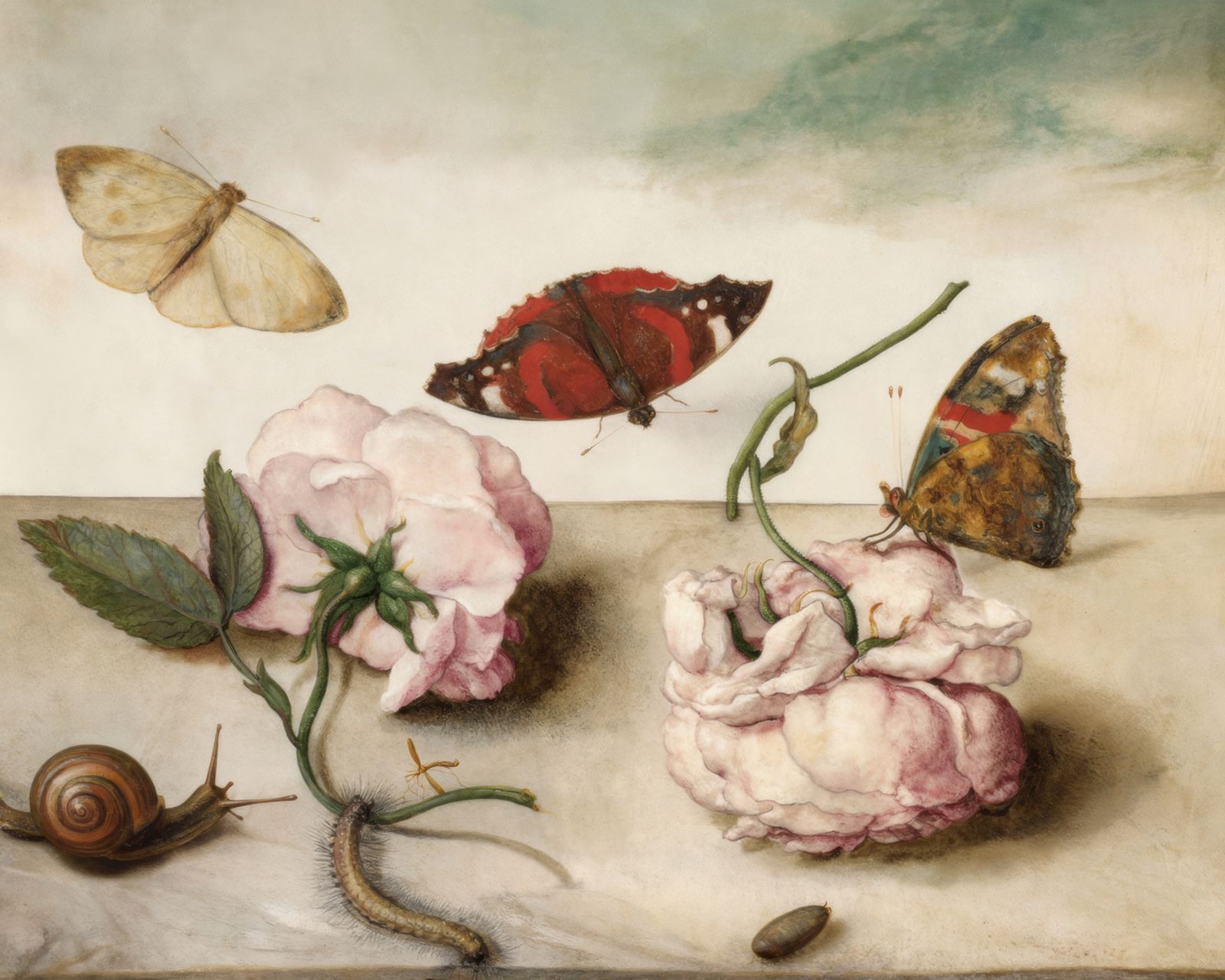
Still Life of Flowers and Small Animals on a Ledge — Margareta de Heer, 1642. Harvard Art Museums. Restored by Surrealium at Vaxholm Fortress, Sweden.
Margareta de Heer’s flowers and small animals bring butterflies, a snail and other details close to the viewer. The work rewards patient looking, making it a good reference for a card about curiosity. Ask the child what they learned to notice this term and use their answer, even if it sounds modest; the ordinary discovery is often more convincing than a polished adult tribute.
Explore Christmas cards · Explore this artwork
7. For drawing what is really there
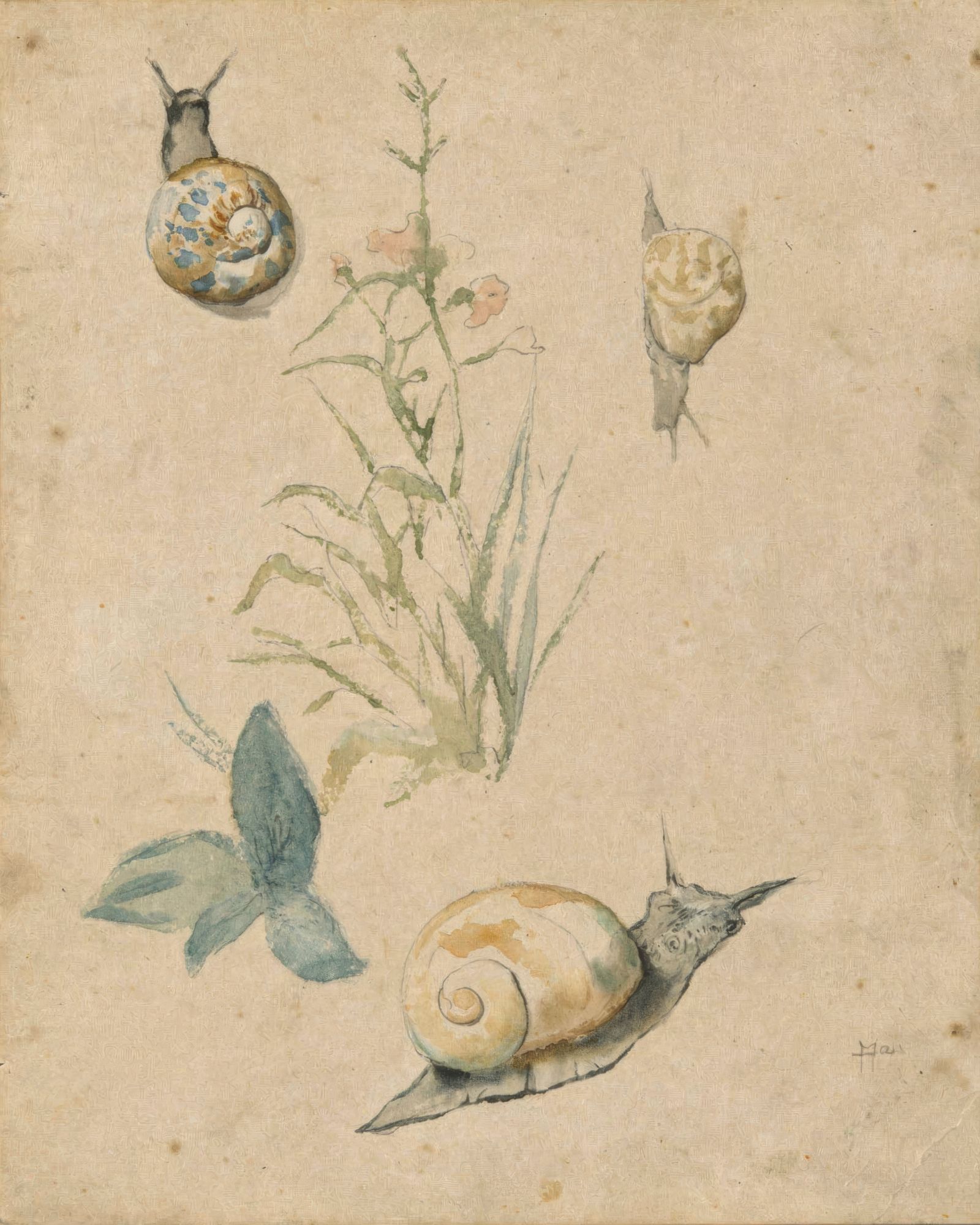
Sketches of Snails, Flowering Plant — Édouard Manet, 1864/68. Art Institute of Chicago. Restored by Surrealium at Vaxholm Fortress, Sweden.
Manet’s sketches leave plenty of paper around a plant and several snails, allowing the act of observation to remain visible. This direction suits a thank-you to an art teacher or someone who encouraged a child to draw without needing a perfect result. The child might add a small original drawing inside the card, provided it remains their own contribution rather than an adult’s replacement of it.
Explore Christmas cards · Explore this artwork
8. For seeing connections
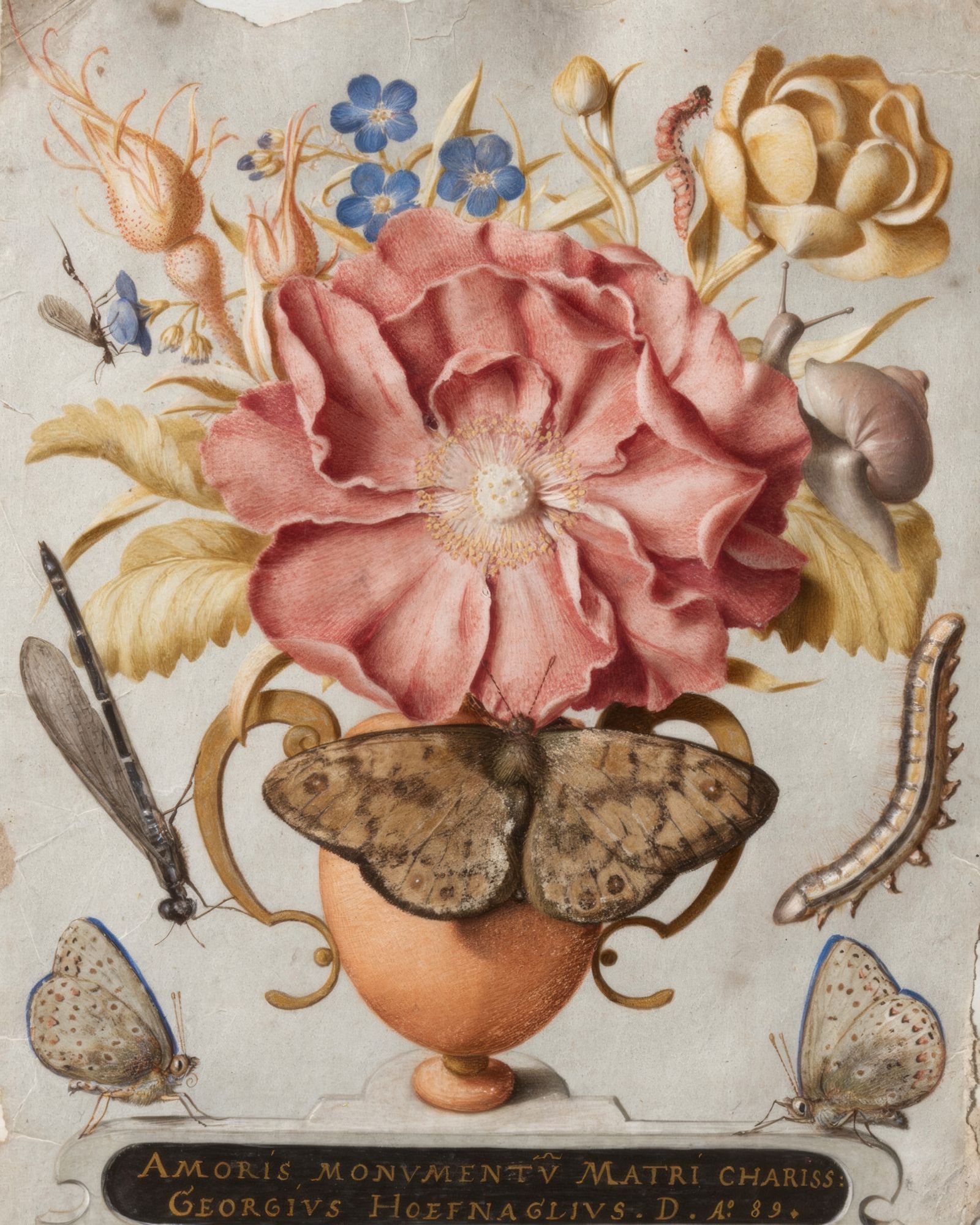
Still Life with Flowers, a Snail and Insects — Joris Hoefnagel, 1589. The Metropolitan Museum of Art, New York. Restored by Surrealium at Vaxholm Fortress, Sweden.
Hoefnagel arranges flowers, insects and a snail with the care of a miniature world. It can suggest a card for a teacher who links subjects together and encourages questions beyond the first answer. Choose one example the child remembers, and keep the note short enough to read easily; a thank-you does not have to catalogue every lesson in order to recognise thoughtful work.
Explore Christmas cards · Explore this artwork
9. For thoughtful conversation
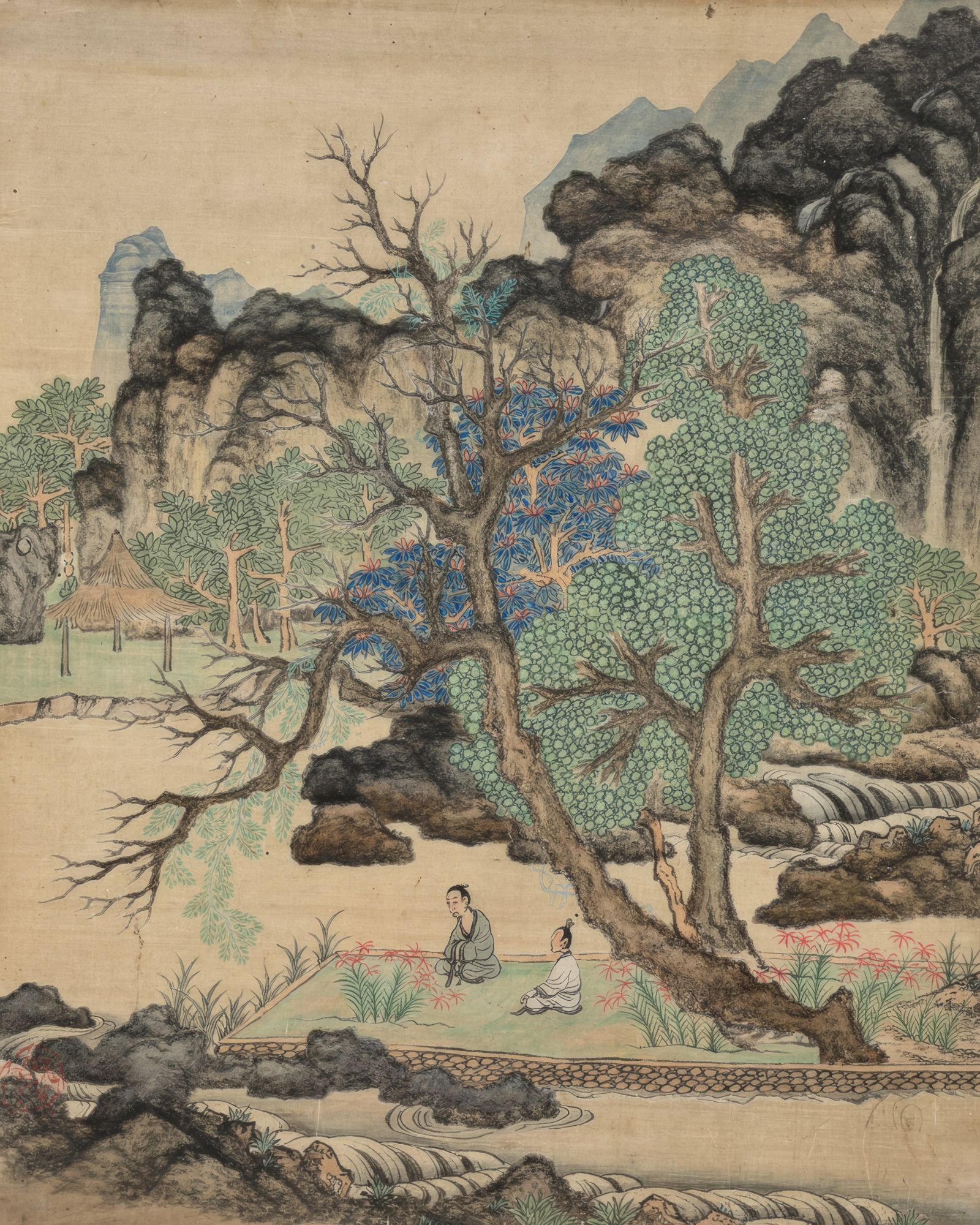
Paintings after Ancient Masters: Scholars in a Garden — Chen Hongshou, 1598–1652. Cleveland Museum of Art. Restored by Surrealium at Vaxholm Fortress, Sweden.
Chen Hongshou’s scholars occupy a garden beneath trees and rocks, making the setting a place for attention as much as display. The image can guide a card for a teacher who gives pupils time to think before speaking. Phrase the message as your own observation or the child’s experience, without assuming that the historic scene represents a modern classroom or a universal teaching method.
Explore Christmas cards · Explore this artwork
10. For words shared with others
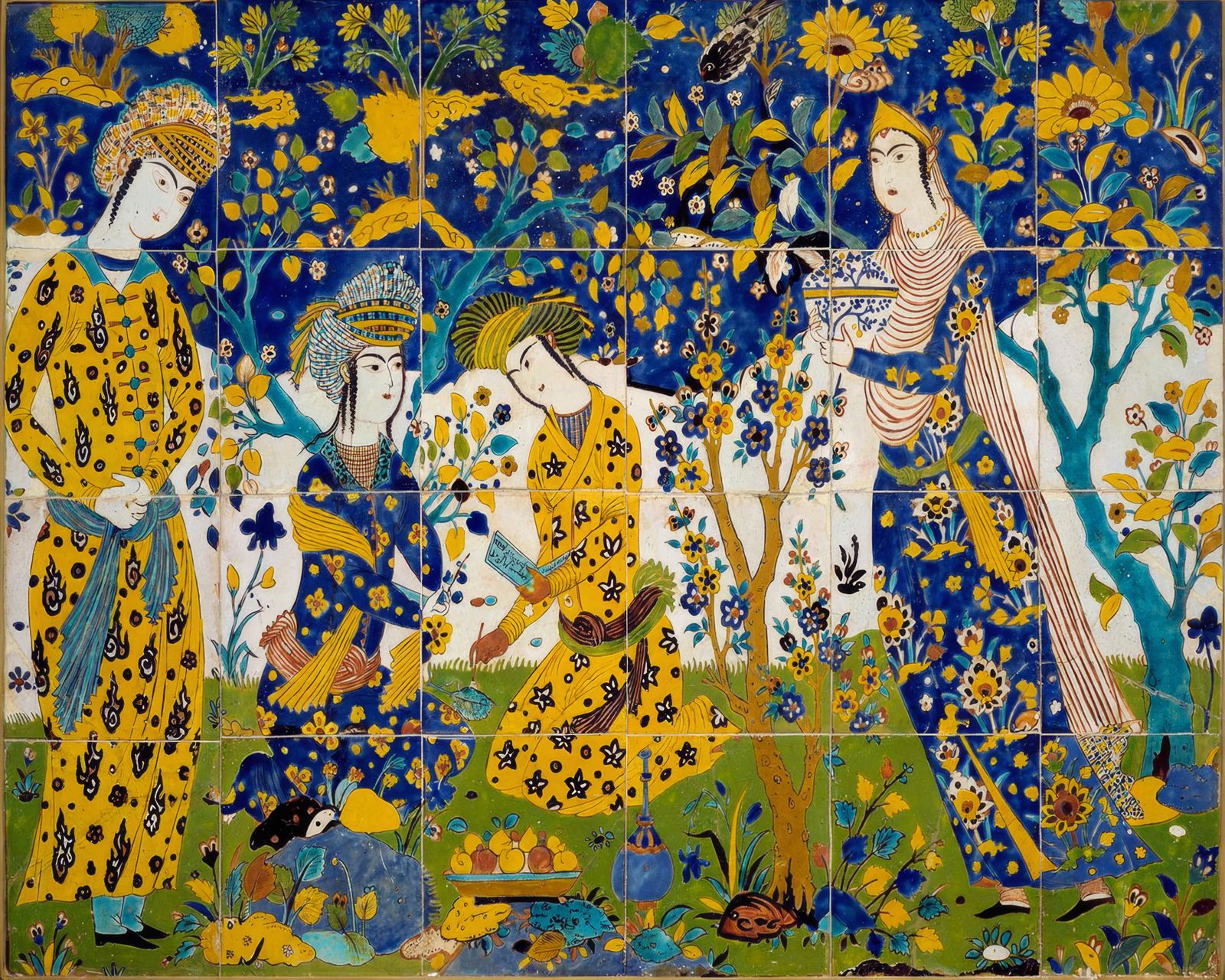
Reciting Poetry in a Garden — Unidentified Iranian artist, Isfahan, first quarter 17th century. The Metropolitan Museum of Art, New York. Restored by Surrealium at Vaxholm Fortress, Sweden.
The Iranian tile panel shows people gathered in a garden around writing and conversation, its brilliant colours making the surface part of the pleasure. It is a reference for a thank-you about poetry, language or discussion. Preserve the panel’s full shape in any preview, and let the note recognise a real contribution rather than using a cultural object as an unexplained decorative token.
Explore Christmas cards · Explore this artwork
A card from a child can be brief, unevenly lettered and entirely sufficient. Ask what they would like to thank the teacher for, help with spelling only as needed, and include a clear name so the recipient knows who wrote it. For a class card, make participation voluntary and leave room for different kinds of messages. The Christmas card collection provides a starting point for the design; the valuable part is the particular thanks you bring to it, without a suggested spending target or pressure to contribute.
Continue with family gift choices, Christmas card for teacher.
- What is an appropriate Christmas gift for a teacher?
- A modest thank-you card is often a comfortable choice. Check the school’s policy before buying a gift or collecting money, and do not assume a teacher wants classroom equipment or personalised home decoration.
- Should a teacher card come from the child or the parents?
- Either can work. Let the child contribute a thought in their own words, and add a separate family note if useful. Make clear who is speaking rather than polishing the child’s message until it sounds like an adult.
- What if the teacher does not celebrate Christmas?
- Choose a greeting that fits what you know, such as thanks for the term and good wishes for the break. An art-led card can carry that message without requiring a religious or explicitly Christmas-themed image.
- Is a group card better than individual presents?
- It can reduce pressure and give everyone a chance to contribute. Keep participation voluntary, avoid publishing who paid, and leave enough space for children who prefer a drawing or a short message rather than a long note.