Pet memorial ideas: ten gentle ways to keep a memory
Choose a photograph, a note or a portrait at your own pace, with no expectation to make grief visible.
Pet memorial ideas can be small, private and unfinished. You do not need to choose an object immediately, and a portrait is only one possible way to keep a memory. Saving a photograph, writing down a familiar habit or asking someone to share a story may be enough for now. The choice can change as your feelings change.
The historic animal paintings below offer gentle prompts for noticing what you want to remember: a resting place, a particular expression, a shared walk or the way a pet occupied a room. They are not images of your animal or promises that a purchase will ease grief. If you are choosing for someone else, ask whether a memorial gift would be welcome before selecting a photograph or making a display on their behalf.
1. Keep an ordinary resting moment
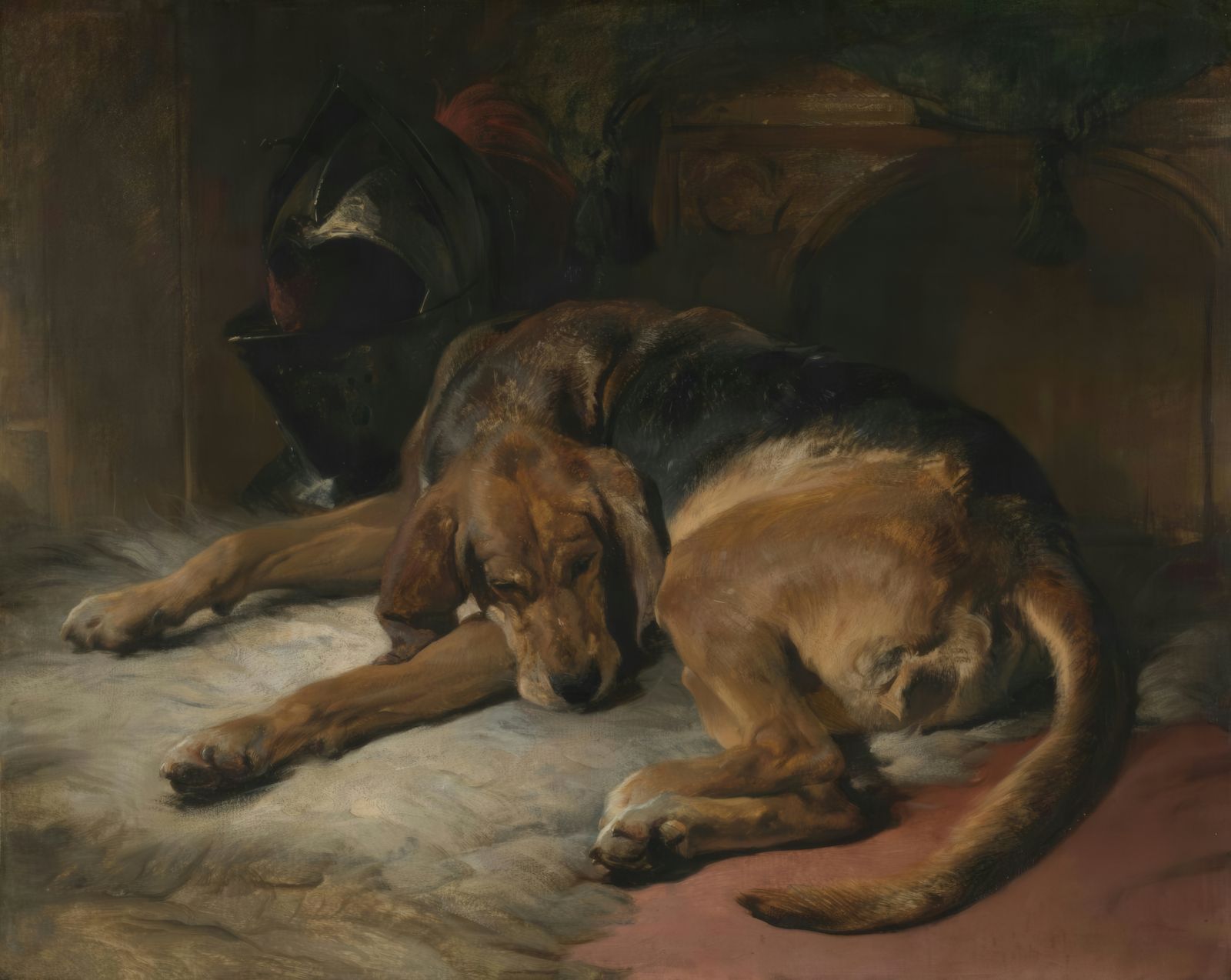
Sleeping Bloodhound · Edwin Landseer · 1835 · Tate, London. Prepared for print by Surrealium at Vaxholm Fortress, Sweden
The sleeping hound gathers itself into a familiar curve, with no ceremony around the animal. It can prompt you to choose a photograph of the resting position you knew best, rather than searching only for a formal portrait. Save the original file even if you are not ready to use it. A small private folder can hold the memory without requiring a decision about printing, display or a permanent place in the home.
2. Remember the room you shared
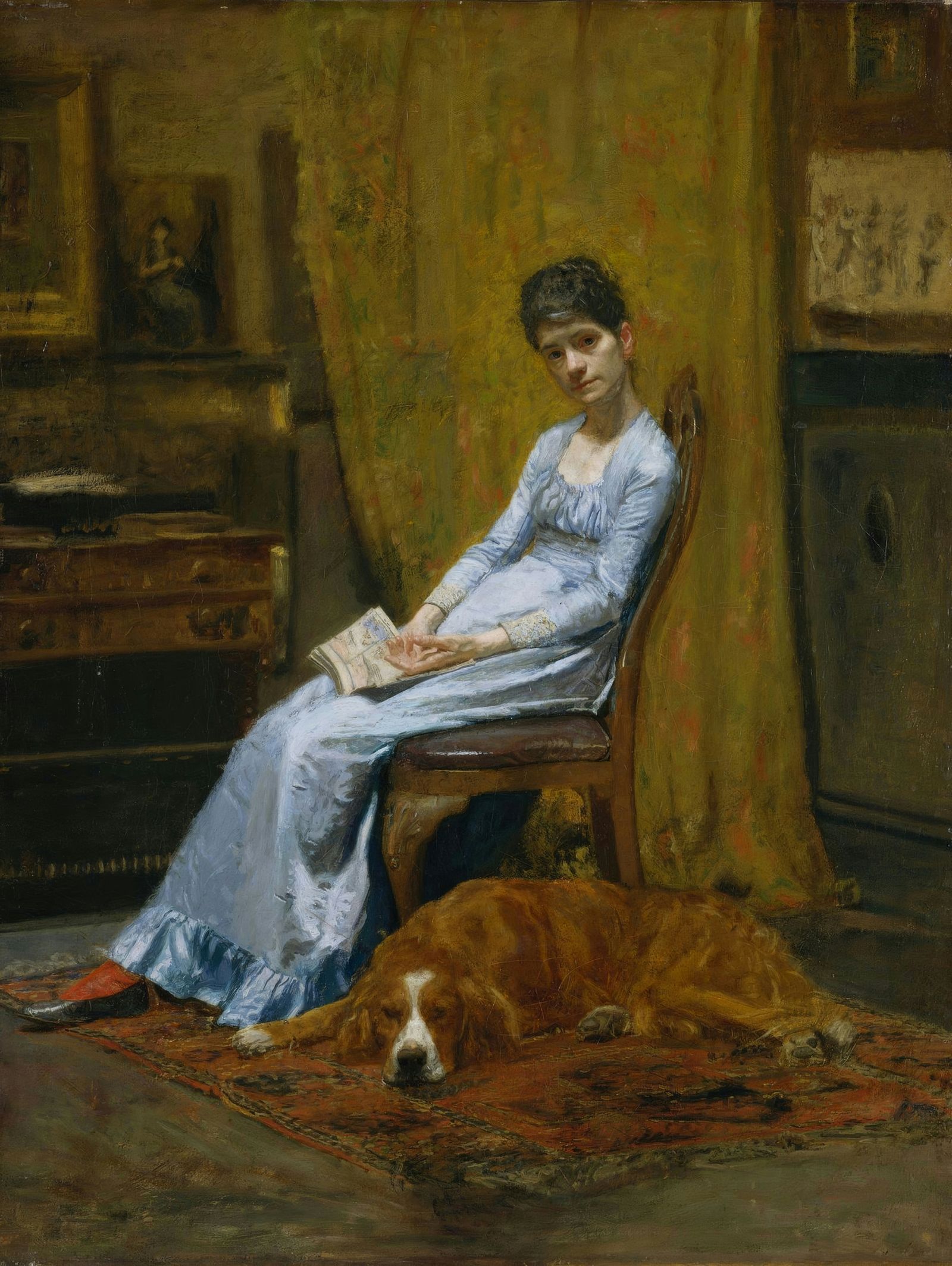
The Artist's Wife and His Setter Dog · Thomas Eakins · 1884 · Metropolitan Museum of Art, New York. Prepared for print by Surrealium at Vaxholm Fortress, Sweden
Eakins places his setter near the seated figure of his wife, making the animal part of a shared interior. You might choose a photograph that includes a familiar room, chair or person because the relationship matters as much as the pet's face. Keep that context if it feels useful, while preserving a clear view of the animal. A portrait is optional; simply keeping the photograph can be a complete choice for now.
3. Write down the way you held them
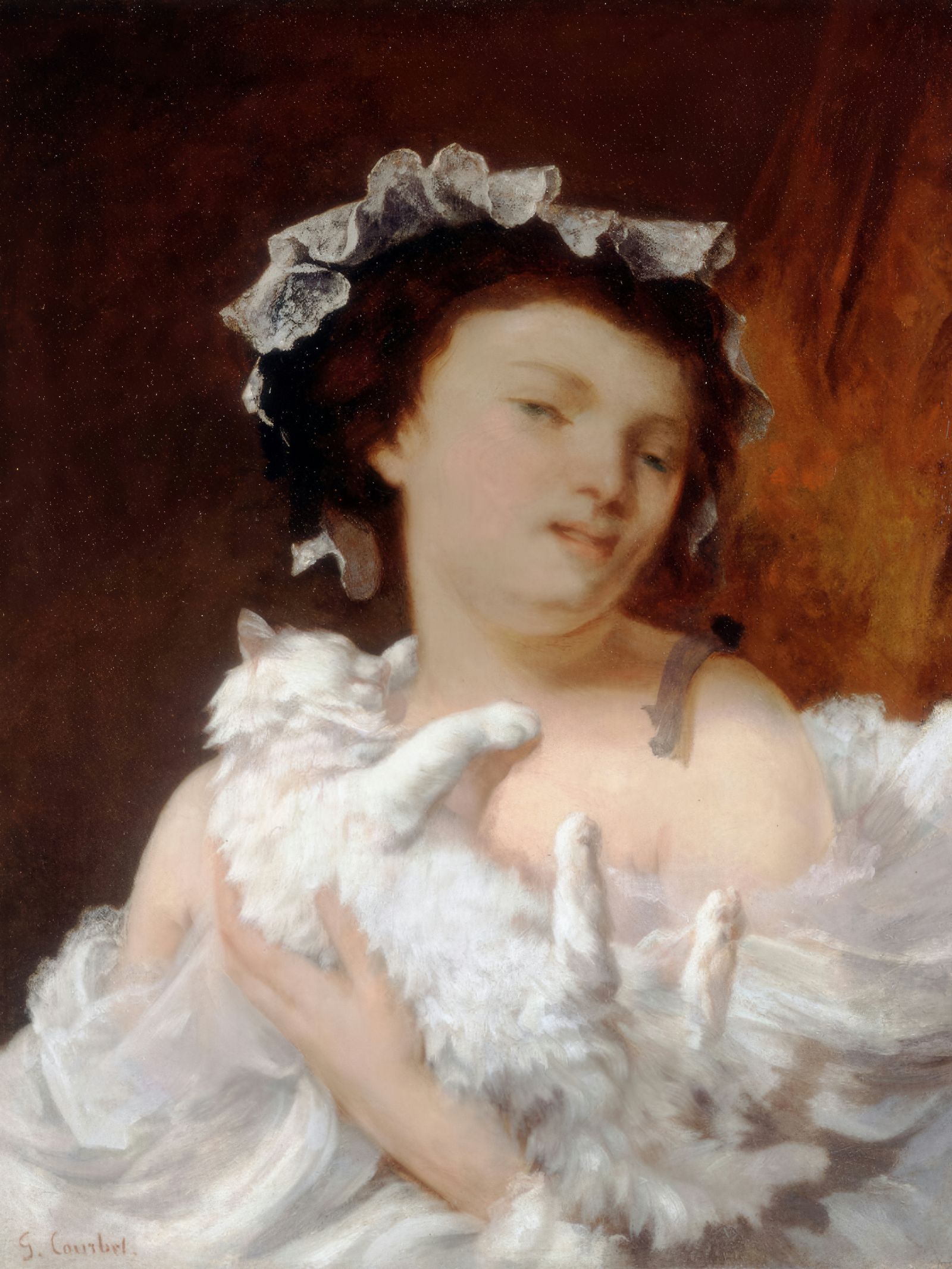
Woman with a Cat · Gustave Courbet · 1864 · Worcester Art Museum. Prepared for print by Surrealium at Vaxholm Fortress, Sweden
Courbet's woman with a cat brings the animal into close contact with a person. If that kind of memory feels important, write a few words about the weight, warmth or familiar position you remember, without trying to turn it into polished prose. You can keep the note with a photograph or leave it private. There is no need to share it, display it or make it sound like someone else's account of loss.
4. Keep more than one expression
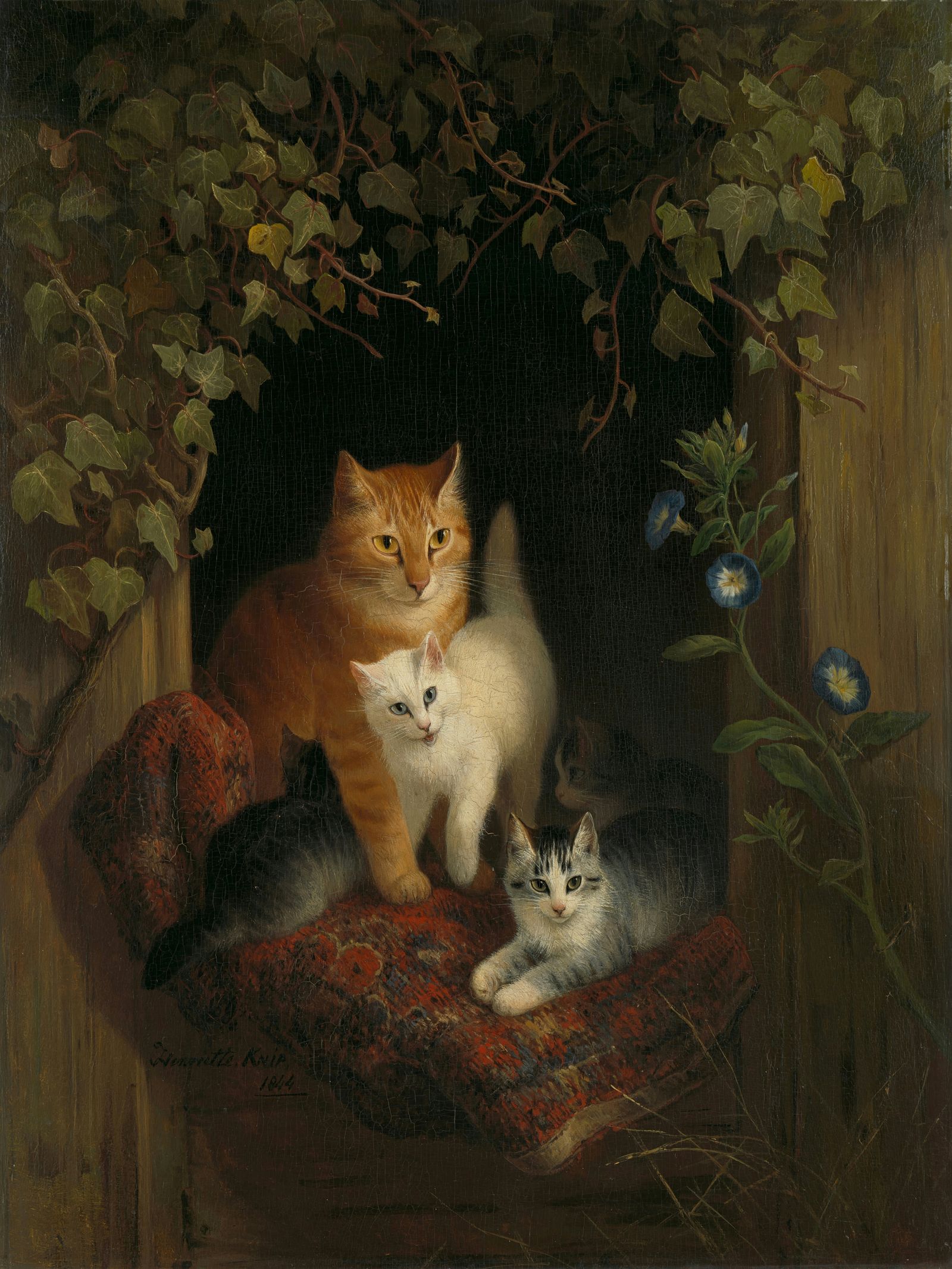
Cat with Kittens · Henriëtte Ronner-Knip · 1844 · Rijksmuseum, Amsterdam. Prepared for print by Surrealium at Vaxholm Fortress, Sweden
Ronner-Knip's cat and kittens occupy different positions within their setting, inviting attention to individual behaviour. A pet's life may be better represented by several photographs than by one image expected to hold everything. Choose a small group showing rest, attention and an ordinary activity if that feels right. You can postpone the decision about a portrait until you know which expression you most want to see, or decide not to make one.
5. Remember a favourite activity
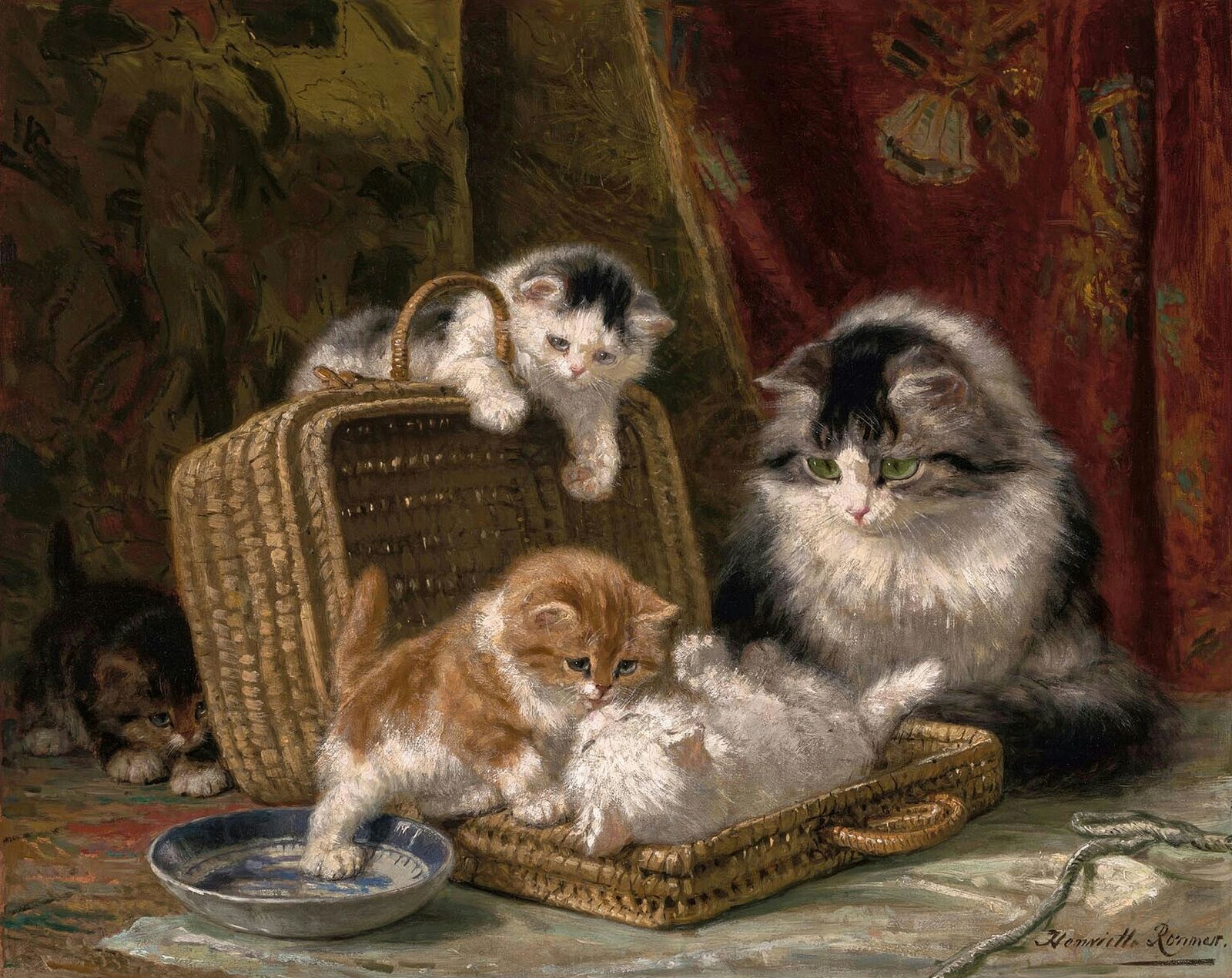
Kittens playing · Henriëtte Ronner-Knip · c. 1880 · Museum Boijmans Van Beuningen, Rotterdam. Prepared for print by Surrealium at Vaxholm Fortress, Sweden
The cats in Ronner-Knip's playful scene are occupied by their surroundings rather than posing for the viewer. A photograph of your pet doing something familiar may bring back more than a perfectly centred headshot. Keep the activity in the written memory even if the image itself is blurry or unsuitable for a portrait. Not every meaningful photograph needs to become a product; some are valuable because you know what happened around the frame.
6. Include a person only with their agreement
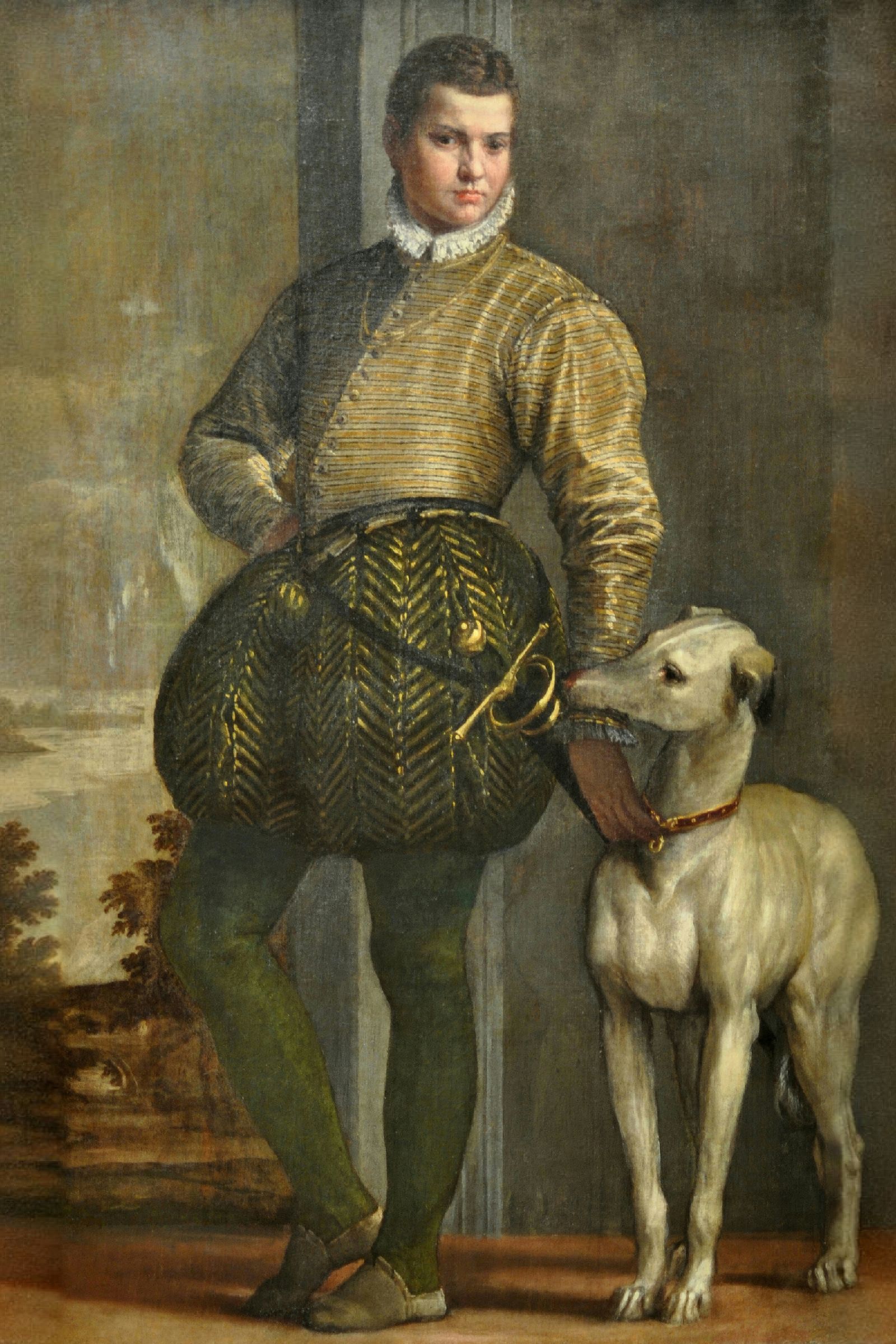
Boy with a Greyhound · Paolo Veronese · possibly 1570s · The Metropolitan Museum of Art. Prepared for print by Surrealium at Vaxholm Fortress, Sweden
Veronese's boy and greyhound make the relationship between person and animal part of the portrait. If you are preparing a memorial image that includes someone else, ask whether they want that photograph used and how they would feel about displaying it. People can want different things from the same loss. A private copy, a shared digital folder or no new object at all may be more welcome than a surprise presentation.
7. Keep the place they watched from
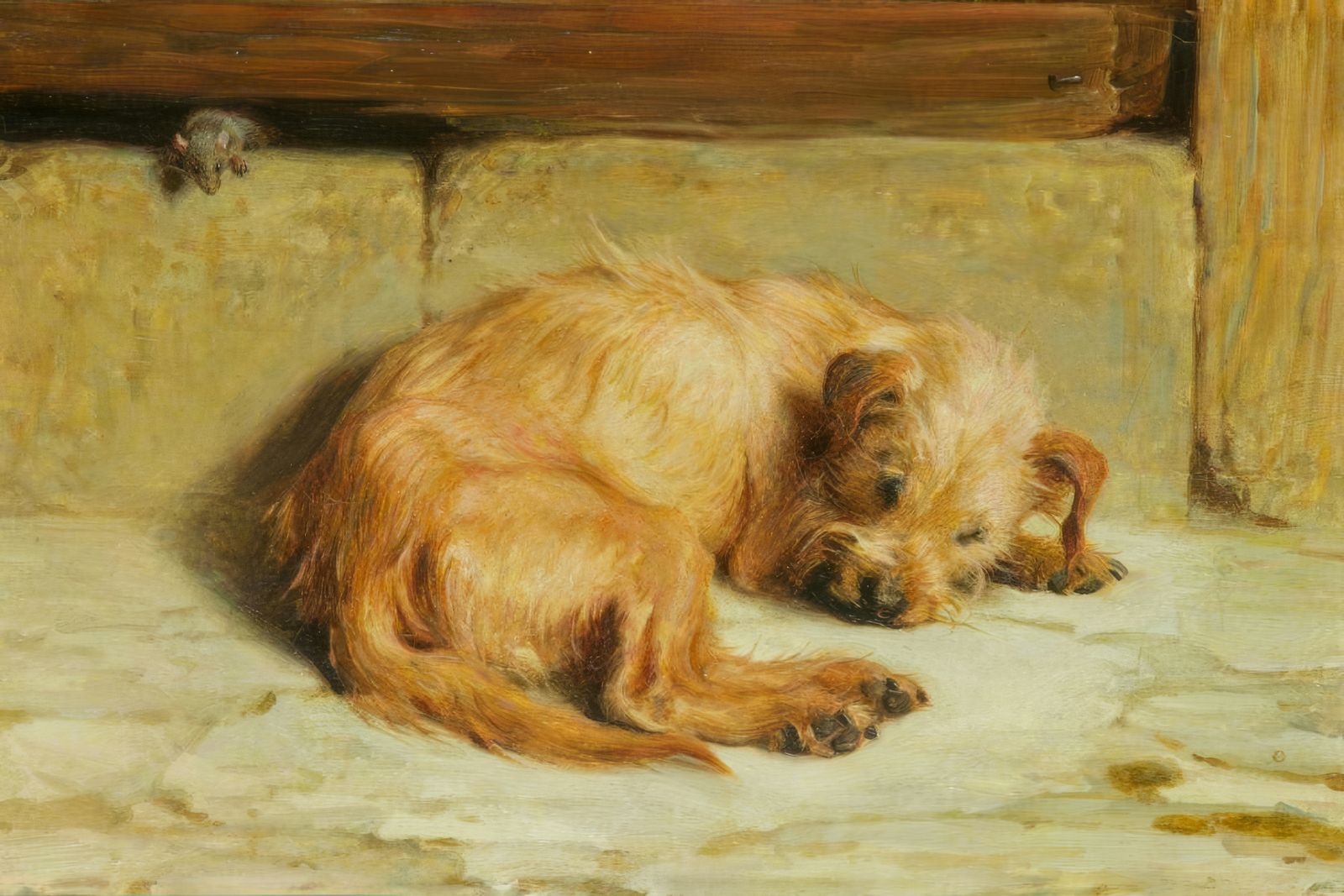
Watching Dog · Briton Rivière · 1875 · Sudley House, Liverpool. Prepared for print by Surrealium at Vaxholm Fortress, Sweden
The dog near the hearth occupies a small familiar territory within the picture. You might preserve a photograph of the corner, window or chair where your pet used to settle, with or without the animal in the image. Write down what made that place theirs if you want to. There is no requirement to keep the physical space unchanged; a photograph can hold a memory while the household continues to adapt.
8. Choose the face you recognise
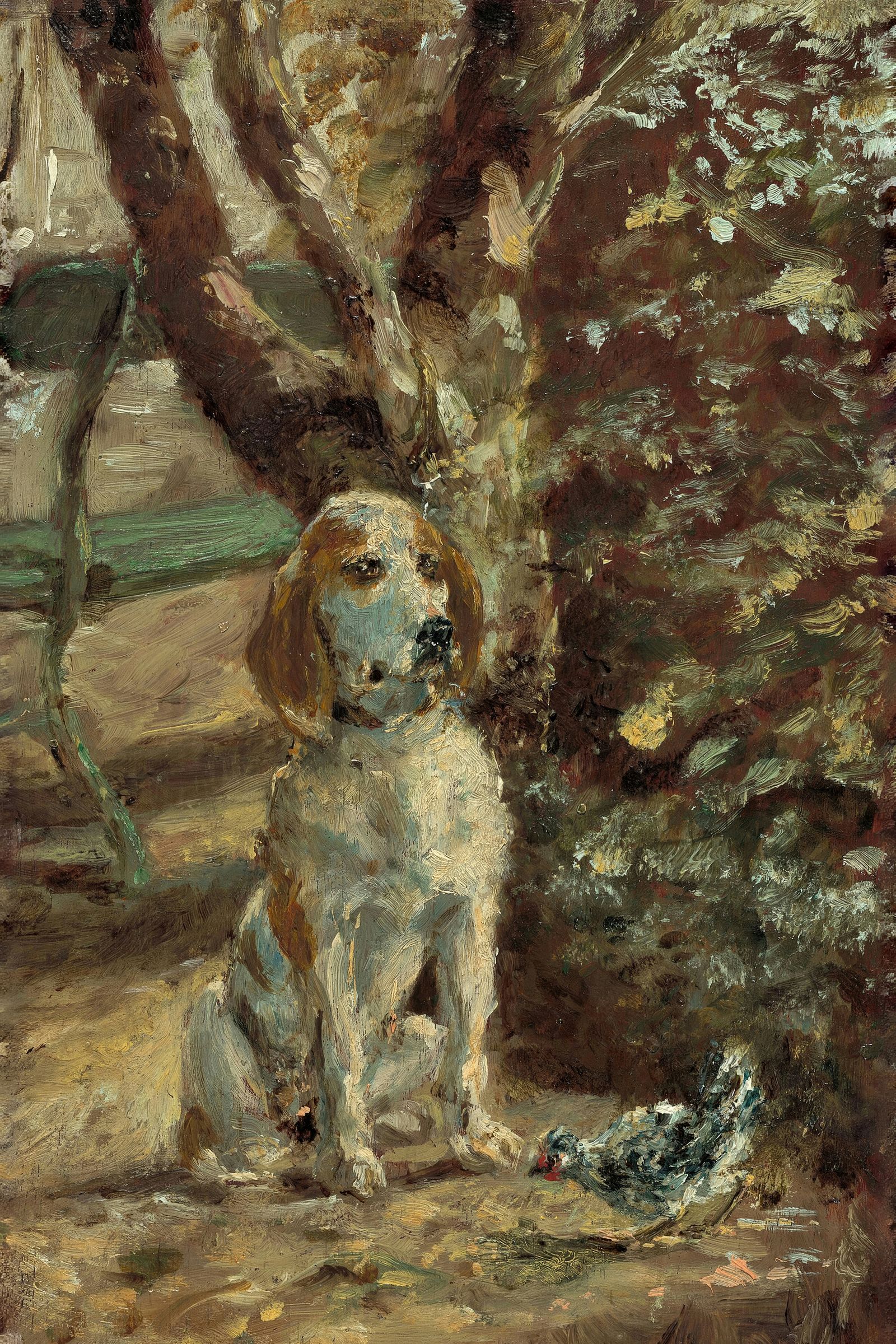
The Artist's Dog Flèche · Henri de Toulouse-Lautrec · c. 1881 · National Gallery of Art, Washington. Prepared for print by Surrealium at Vaxholm Fortress, Sweden
Flèche's seated pose gives the head a clear direction within the garden. If you decide to make a portrait, choose a source photograph with the eyes, muzzle and markings you associate with your own pet, rather than the image that looks most formally impressive. Compare several photographs gently and stop if the choice feels tiring. You can return later, ask someone you trust to help or decide that the existing photograph is enough.
9. Recall a shared route
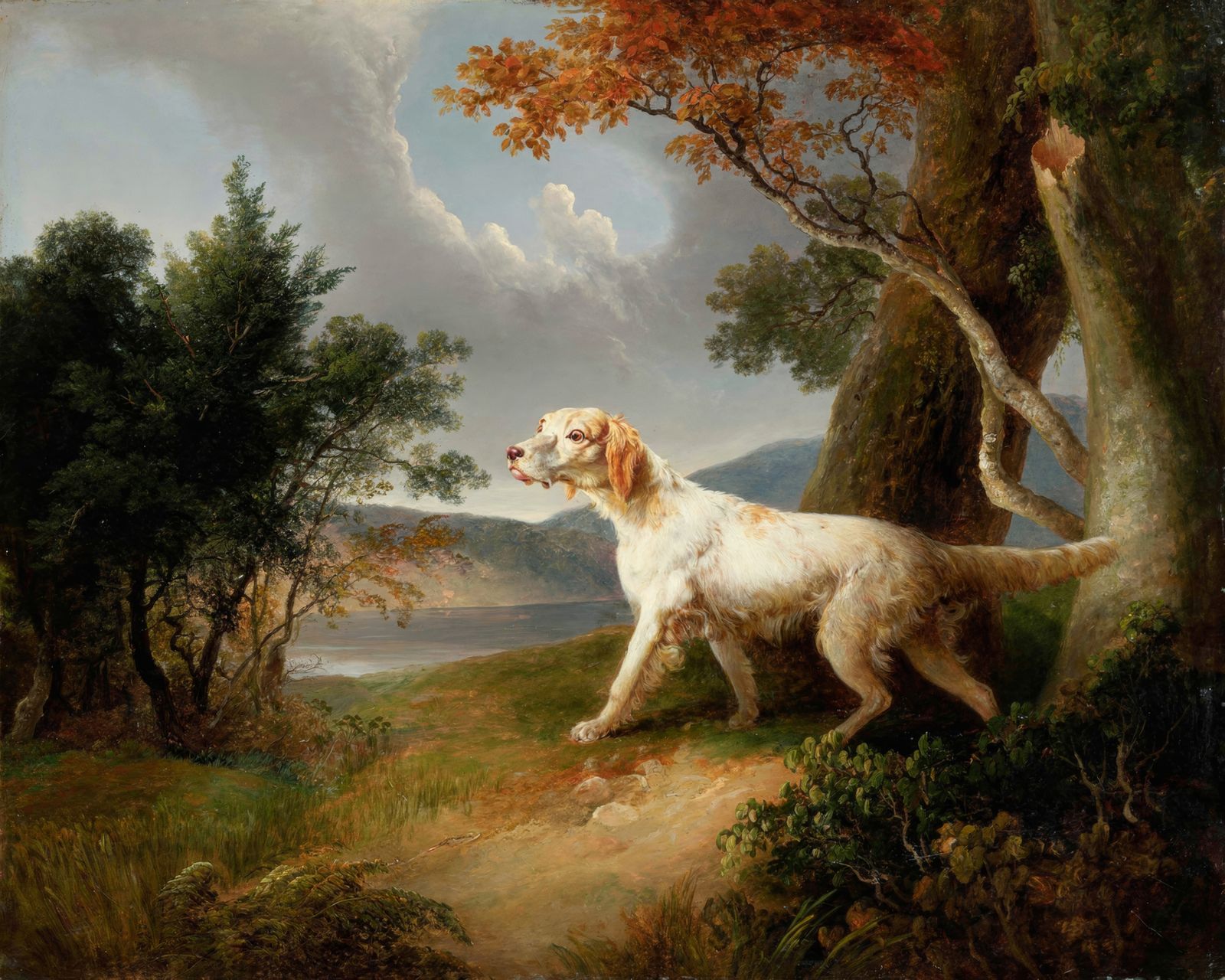
Landscape with Dog · Thomas Doughty · 1832 · Art Institute of Chicago. Restored by Surrealium at Vaxholm Fortress, Sweden
Doughty's dog stands within a wooded landscape, giving the animal a place beyond the portrait itself. A photograph from a familiar walk can prompt a short note about the route, a stopping place or a small routine you shared. Avoid making a difficult outing compulsory as a memorial gesture. Remembering the place through an image, telling someone about it or leaving the thought for another day are all reasonable choices.
10. Let the memory remain particular
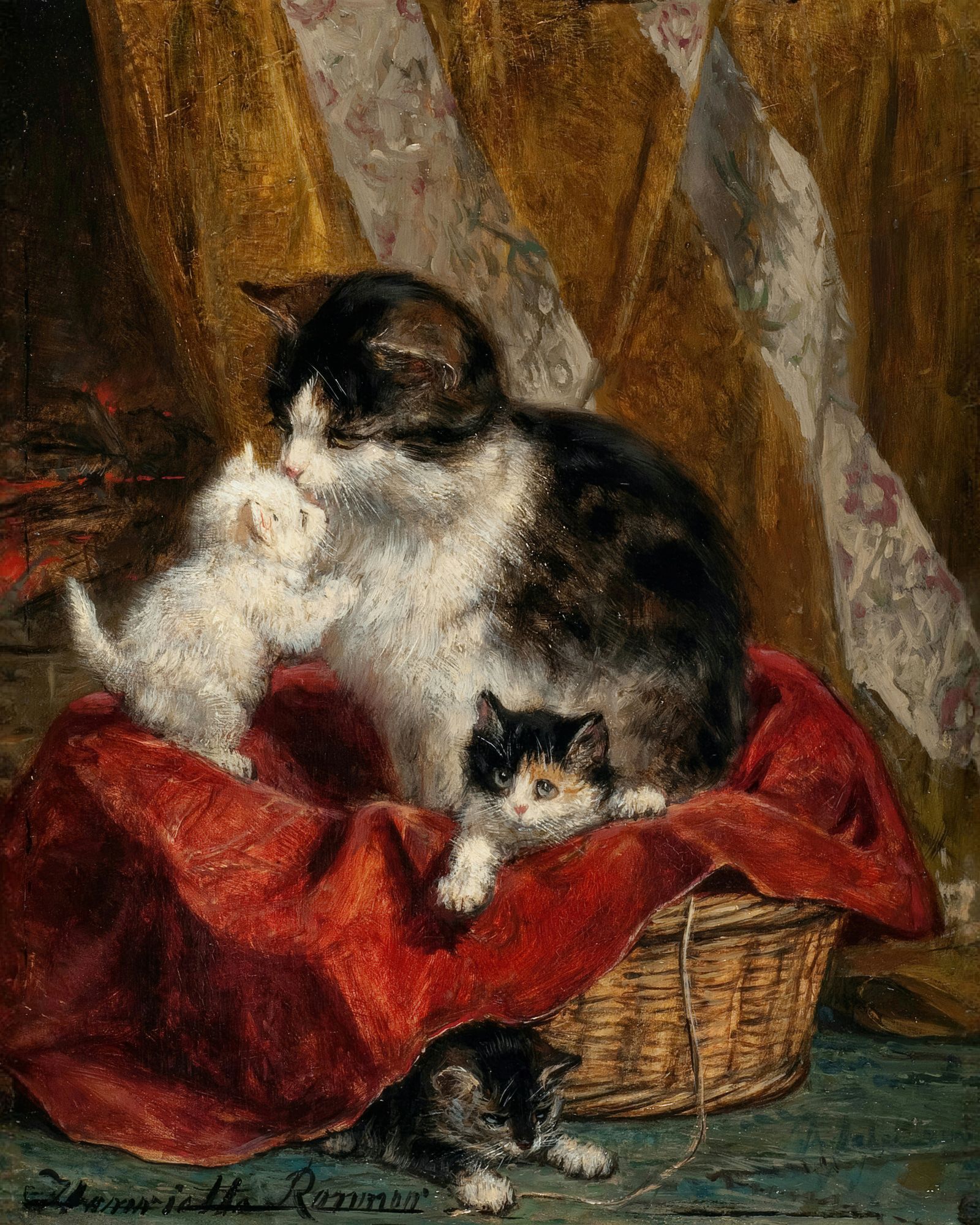
A Cat with Three Kittens · Henriëtte Ronner-Knip · 1889 · Cultural Heritage Agency of the Netherlands. Prepared for print by Surrealium at Vaxholm Fortress, Sweden
Ronner-Knip's cat and three kittens form a group of separate bodies and expressions around a basket. It suggests the value of remembering the individual animal rather than replacing it with a general symbol of pets. If a portrait becomes welcome, keep the brief focused on recognisable features and a natural pose. If it does not, a photograph and a few ordinary words can still preserve something specific about the companion you knew.
Continue with giving a pet memorial portrait: choose the photo, timing and words gently, a pet memorial gallery wall, one portrait at a time, a pet memorial pillow, chosen slowly and from one familiar photograph, pet portraits: 15 styles to choose from, from royal hounds to Impressionist cats, black cat painting: finding the detail in dark fur, and the full catalogue record for Sleeping Bloodhound.
If a portrait feels right, the pet portrait route is available when you want it. Choose a clear photograph and a natural expression, with no pressure to decide quickly. A memory does not need a new object to matter, and a memorial gift should always leave room for the recipient's own pace.
- Do I need to make a pet memorial straight away?
- No. You can save photographs and notes without deciding how to use them. There is no required timetable for choosing an object or displaying a memory, and you can return to the idea later or leave it private.
- Is a pet portrait a suitable sympathy gift?
- It may be welcome, but ask first. The recipient may want to choose the photograph, style and timing, or may prefer no new object. Do not assume that a surprise memorial image will feel comforting to everyone.
- Which photograph should I choose for a memorial portrait?
- Choose a clear image with a familiar expression and visible identifying features. Emotional significance matters too. You can keep several photographs and take time before selecting one; not every meaningful image needs to be suitable for a portrait.
- What can I do without buying anything?
- Save original photographs, write down a familiar habit or ask someone to share a memory. A private folder or a short note can be enough. These suggestions are options, not tasks you need to complete or ways to measure your grief.