When to send Christmas cards: a plan without a guessed deadline
Build a manageable card list, check the current delivery information and choose a thoughtful moment for printed or digital greetings.
When to send Christmas cards depends on more than a date on a calendar. You need time to choose the image, write the message, check the recipient details and, for a physical card, account for the current production and postal information. A digital greeting removes the envelope, but it still deserves a deliberate moment and the right recipient.
Begin with a manageable sequence: settle the recipients, choose the image, write and check the message, then allow time for the route you have chosen. Use current checkout information and the relevant postal service to check production and delivery estimates. The winter artworks offer different moods for the greeting, from early snow to the stillness of a landscape after a storm.
Compare digital and printed Christmas cards before planning, then use the lettering and print checklist for the final review.
Start with the people, not the stationery
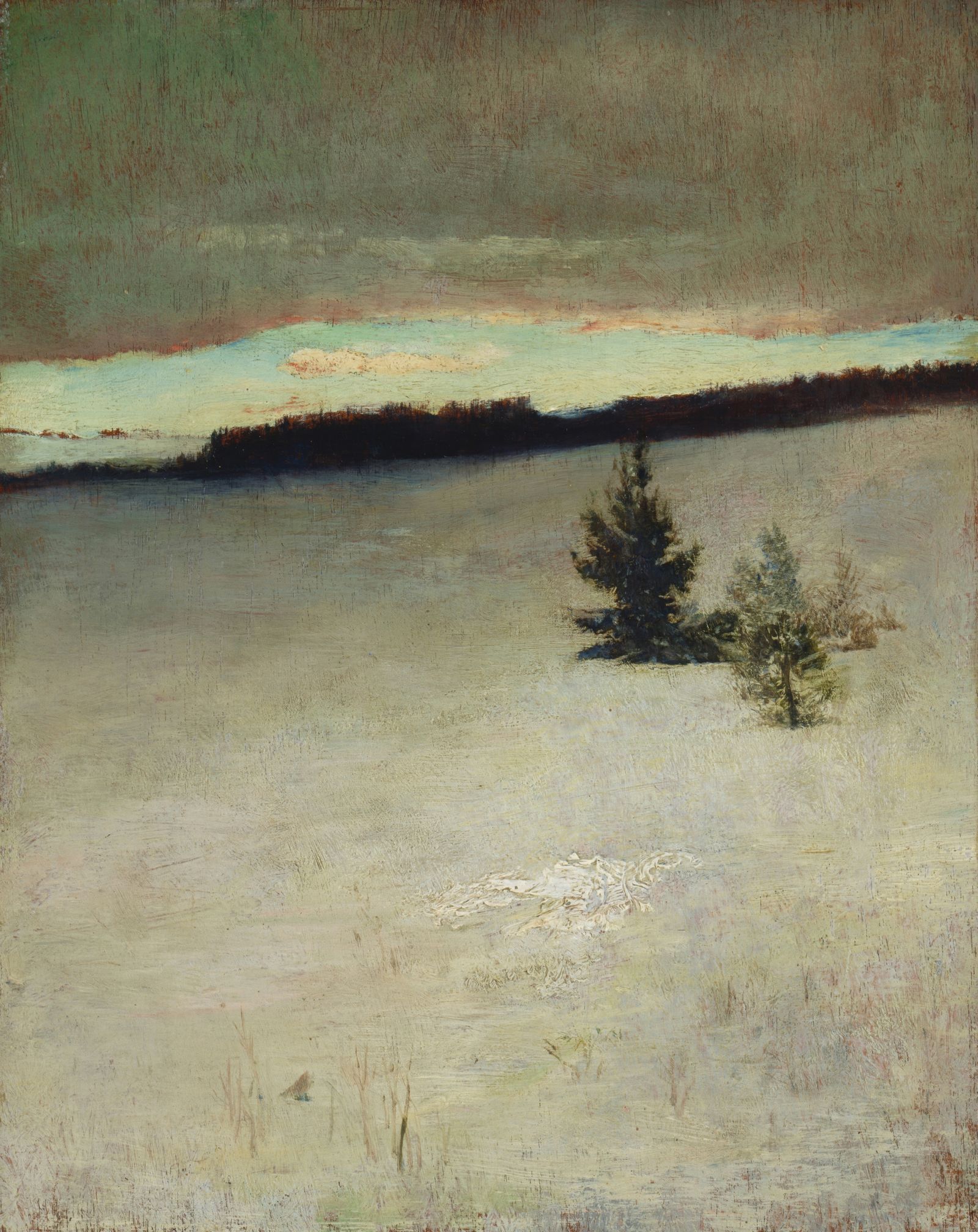
Snow Field, Morning, Roxbury — John La Farge, 1864. Art Institute of Chicago. Prepared for print by Surrealium at Vaxholm Fortress, Sweden.
John La Farge’s Snow Field, Morning, Roxbury offers a quiet winter beginning: ground, trees and light rather than a crowded celebration. Let that sense of space guide the first task. Make a manageable list of people you actually want to greet before deciding how many cards to make or how elaborate they should be.
Group the list in a way that helps you act: people receiving a physical card, people who prefer a link, and anyone whose address needs checking. A small list completed thoughtfully is more useful than an ambitious one that turns into an obligation. Do not assume last year’s household names or addresses are still correct. Moves, separations and bereavements can change what feels appropriate on an envelope or in a salutation.
Separate making, ordering and sending
These are three different moments. Making includes choosing the picture, writing and proofreading. Ordering applies when you purchase a digital or physical product. Sending is the act of sharing the link or placing the physical greeting into the delivery route. Confusing the stages makes it easy to leave less time than you intended.
Work backwards from the point when you would like the person to receive the greeting, then check the current information for the actual product and destination. Do not substitute a general article’s seasonal suggestion for a checkout estimate or a carrier’s service guidance. International and domestic routes may differ, and circumstances can change. This plan deliberately supplies no fixed Christmas delivery date; it helps you identify which current information you need before committing.
Leave room for a careful message

A Winter Sky — George Inness, 1866. Cleveland Museum of Art. Restored by Surrealium at Vaxholm Fortress, Sweden.
George Inness’s A Winter Sky draws attention to the atmosphere above the land. It is a reminder that a seasonal image does not need to be full of festive objects. Choose the picture early enough that you can write a message which belongs with it, rather than filling the space with whatever phrase first comes to mind.
For each person, note one detail you might mention: a shared visit, a kindness, a new chapter or a hope to meet. Keep sensitive news out of a card that may be displayed or forwarded. If you are writing to someone after a difficult year, a gentle acknowledgement can be more appropriate than an insistence that the season must be joyful. Give yourself time to read that wording with the recipient in mind.
Check the practical details together
Before ordering or sending, review the names, message, signature and selected format in one pass. For physical cards, check the current product’s dimensions and what is included rather than assuming the size of a historical artwork matches the finished card. Confirm whether the option uses an envelope or a postcard format, and follow the actual product instructions.
If you are preparing envelopes yourself, verify the address format with the relevant postal service and write clearly. Keep private contact details in a place you can manage responsibly; an unnecessary shared spreadsheet is not required for a small personal list. A digital card needs a similar check of the intended conversation or email address. The simplest preventable mistake is often sending a correctly made greeting to the wrong place.
Treat distance as a practical question
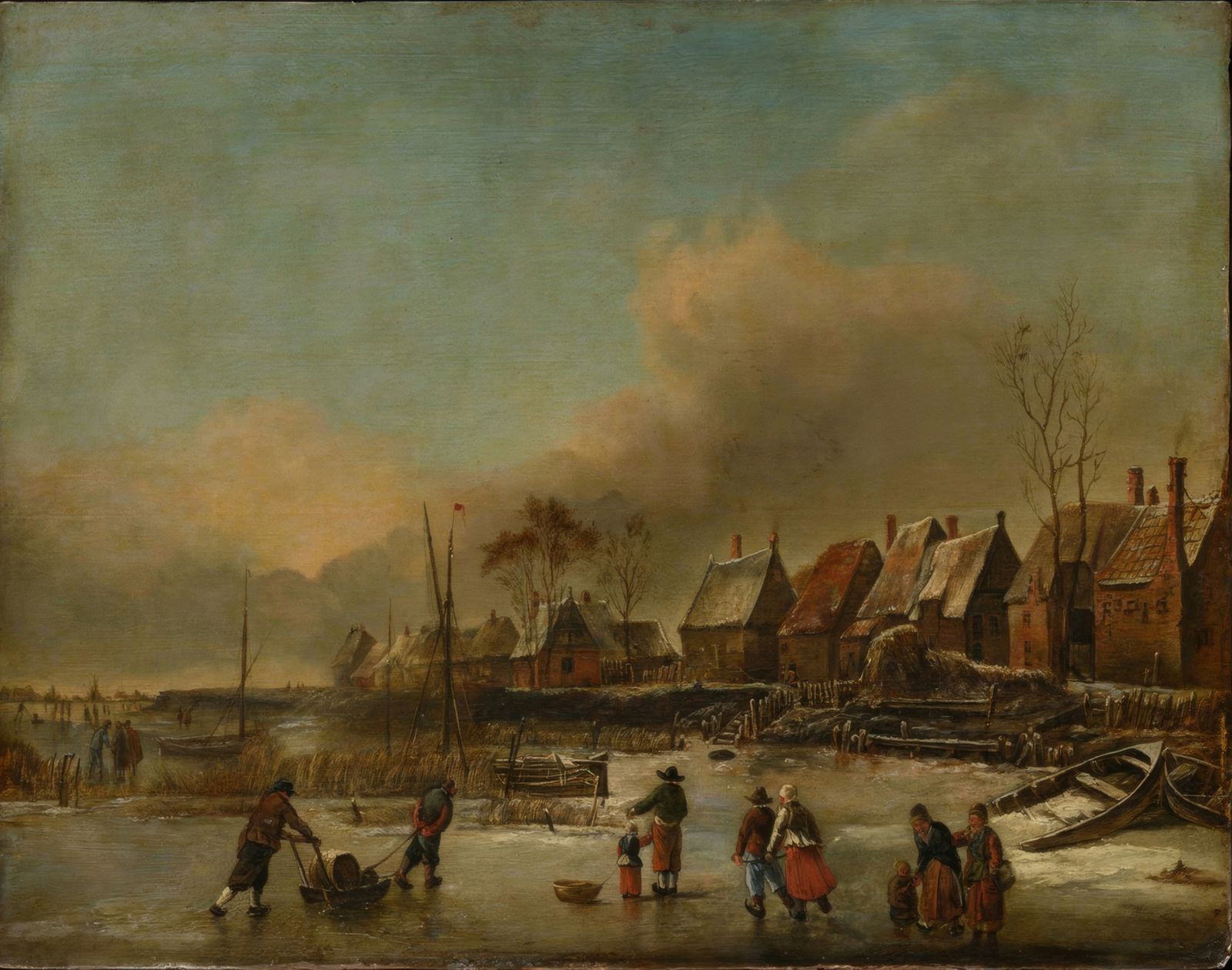
Winter Scene — Jan van de Cappelle, 17th century. The Metropolitan Museum of Art, New York. Restored by Surrealium at Vaxholm Fortress, Sweden.
Jan van de Cappelle’s Winter Scene belongs to a seventeenth-century world, not to a modern postal timetable. Its winter setting can accompany a greeting across distance, but an artwork cannot tell you how a current delivery route is operating. Keep the emotional choice of image separate from the practical choice of format and service.
For someone far away, check the available physical delivery information before making a promise. If timing is uncertain, a personal digital greeting may be an appropriate choice, especially when the recipient is comfortable opening links. It can also accompany a later physical gift without pretending that the two will arrive together. Tell the person what you mean to send in ordinary language; there is no need to disguise an uncertain schedule with a precise date you cannot support.
Choose a considerate moment for digital cards
Digital sharing does not require a postal journey, but it still enters someone’s day. Think about the recipient’s routine and time zone if that information is already known to you. A greeting does not become more personal merely because it arrives at midnight. Choose a moment when it is likely to be welcome, and avoid repeated follow-ups asking whether the person has opened it.
Test the recipient view before sending. Check that the link belongs to the current card and that the accompanying message explains what it is. If you are sending several greetings, keep a simple record so you do not accidentally repeat one or omit someone. A link, a downloadable digital product and a printed card are distinct options; use the current flow to confirm which one you have chosen.
A late greeting can still be specific
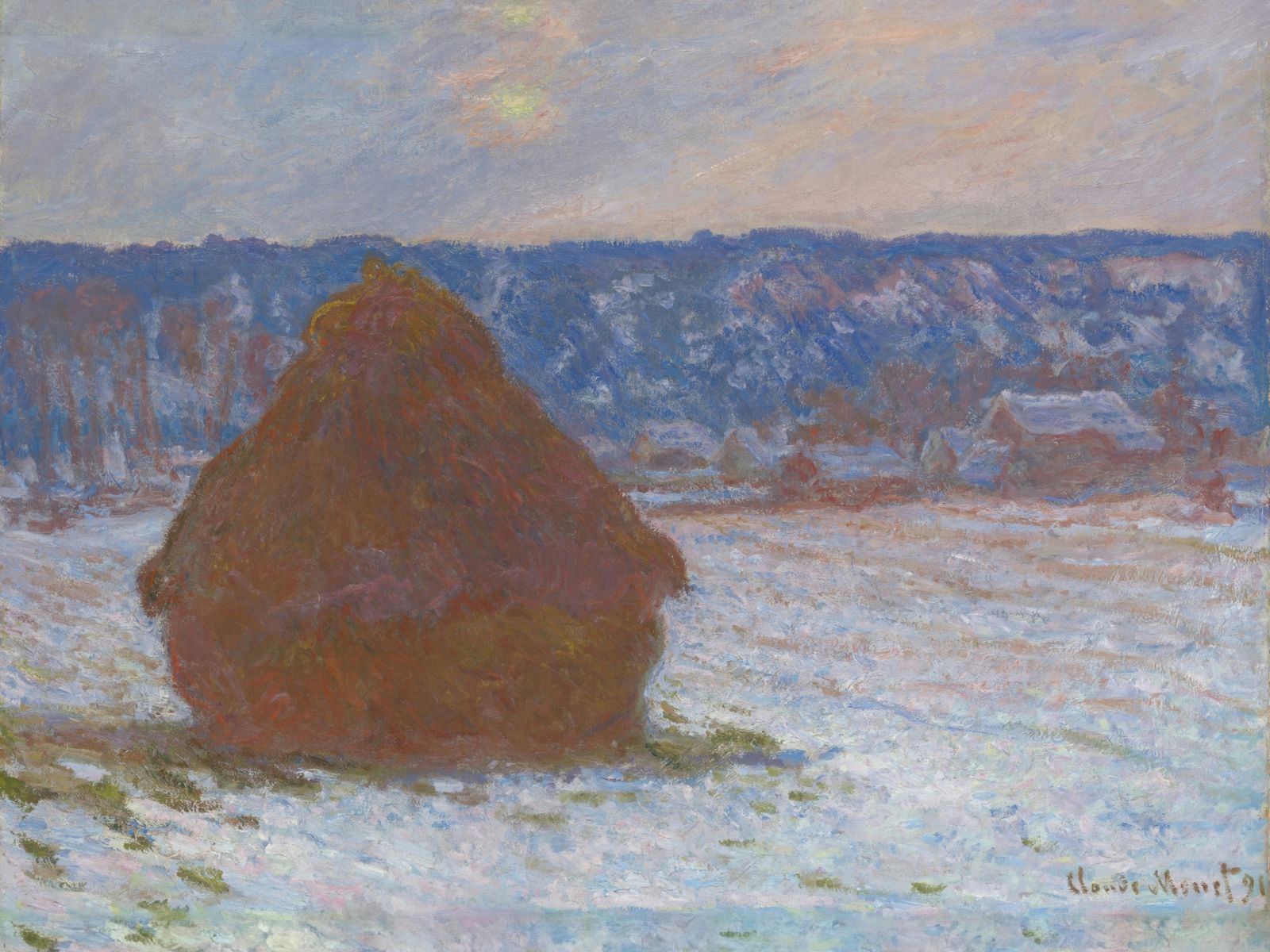
Stack of Wheat (Snow Effect, Overcast Day) — Claude Monet, 1890–91. Art Institute of Chicago. Prepared for print by Surrealium at Vaxholm Fortress, Sweden.
Monet’s Stack of Wheat (Snow Effect, Overcast Day) gives an ordinary rural subject a winter atmosphere without turning it into a Christmas emblem. It is a useful picture for a greeting that reaches beyond one day: a wish for rest, a quiet winter or time together in the coming year can remain meaningful after the busiest part of the season.
If you are late, acknowledge it briefly if needed and then write the real message. A long apology can make the recipient responsible for reassuring you. Try an original line such as, “This comes a little later than I planned, with warm thoughts of you and hopes for a good year ahead.” The point is continued contact, not proving that you have completed a seasonal duty on the correct date.
Keep next year’s list useful rather than perfect
After sending, record only what will help later: who received which format and any address correction the person has given you. Remove information you no longer need. A card list should support relationships, not become an expanding archive of private details collected without purpose. Review it afresh next time rather than treating it as a permanent obligation.
Notice which parts of the process took longer than expected. Perhaps choosing an image was easy but gathering signatures was slow, or perhaps a short personal note mattered more than a complicated layout. Use that knowledge to simplify the next round. The right schedule is one that leaves time for attention while relying on current product and delivery information when the practical decision is made.
Begin with the people, settle the image and wording, check the format, then confirm the current information for your delivery route. That sequence is more dependable than borrowing an unsupported deadline from another shop or another year. Choose a Christmas card when you know what you want to say; send it in a way that suits the recipient, with a promise no more precise than the information you actually have.
Continue with the Christmas card picture guide, choosing a digital greeting.
- Is there one correct day to send Christmas cards?
- No single day suits every recipient and delivery route. Plan the making and checking early, then use current product and postal information for physical cards. Choose a considerate moment for digital sharing.
- What is Fable’s Christmas mailing deadline?
- This guide gives no approved order-by date or arrival guarantee. Check the current checkout details and the relevant delivery service before ordering, especially for international destinations or time-sensitive plans.
- Can I send a Christmas greeting after Christmas?
- Yes. A brief acknowledgement and a personal wish for the coming year can be thoughtful. Keep the focus on the recipient rather than writing a long apology for your own timing.
- Should I send a card to everyone who sends me one?
- You can respond warmly without treating every card as a permanent exchange contract. Choose a manageable list based on your relationships, and use a format that feels appropriate to the person.