Impressionist paintings: 20 works full of light
Monet’s poppies, Renoir’s riverside lunch, Morisot’s dining room and Pissarro’s village: twenty impressionist works, what makes each one sing, and how to bring them home.
In 1874 a group of painters who had been refused by the official Salon put on their own show in Paris. A critic mocked one of Claude Monet’s pictures, Impression, Sunrise, and called the whole group impressionists. The name stuck, and so did their way of seeing: paint outdoors, paint fast, and paint the light rather than the outline.
The twenty works below come from museum collections in Chicago, New York, Cleveland, Paris and Washington. Each one can be ordered as a print prepared from the museum’s own scan, and where a painting is the masterwork behind one of Fable’s portrait styles, you can also send a photo and see yourself or your family painted in that manner.
1. Poppy Field (Giverny)
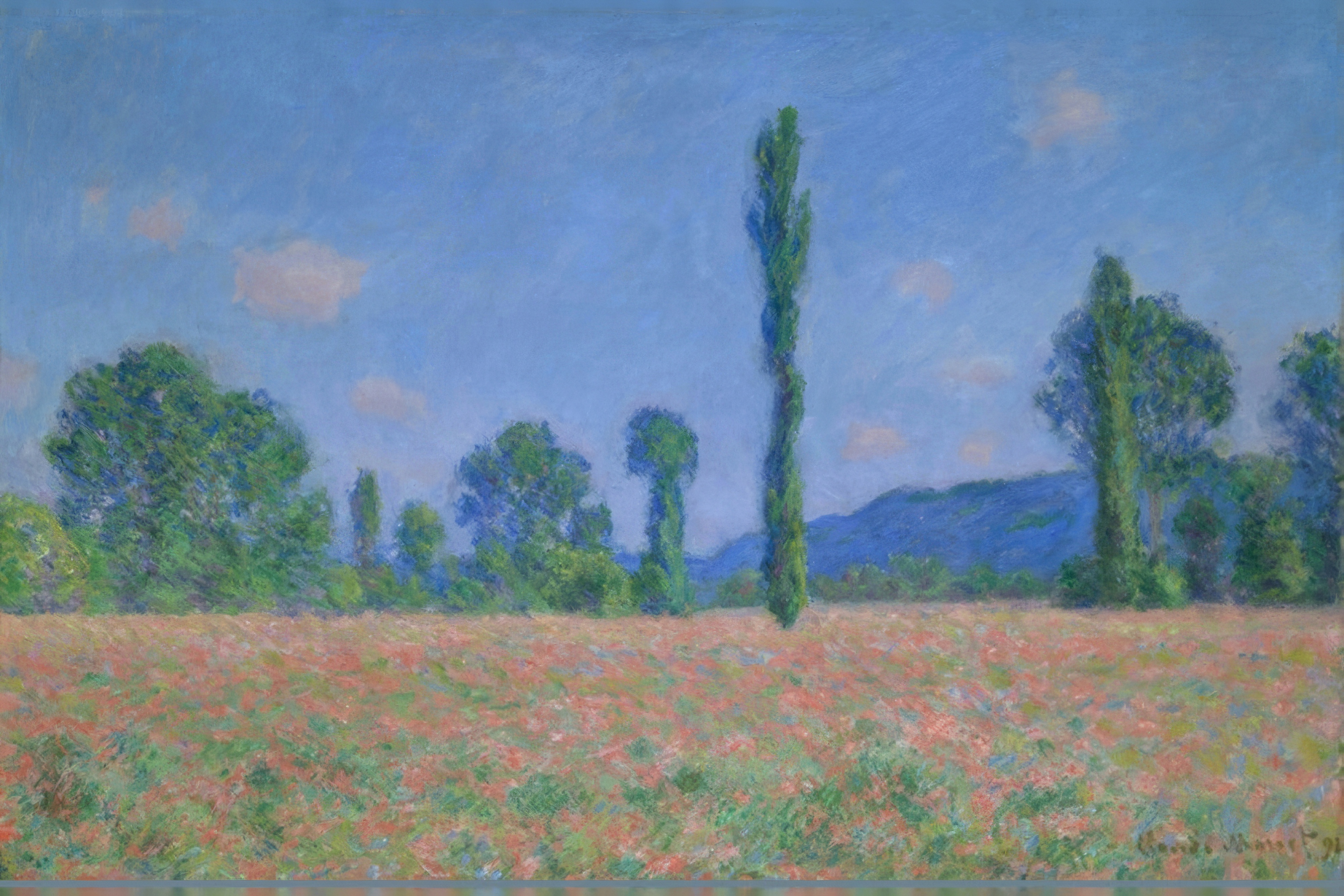
Claude Monet, Poppy Field (Giverny), 1890–91. Oil on canvas. Art Institute of Chicago.
Monet painted poppy fields again and again around his house at Giverny, and this one is pure summer: a wash of red across the foreground, a line of poplars, and hills melting into haze. Up close it is nothing but dabs of paint; from across the room the field moves in the wind.
Hang it where you see it from a distance, at the end of a hallway or across a living room, so the dabs can turn back into a field.
2. Étretat: The Beach and the Falaise d'Amont
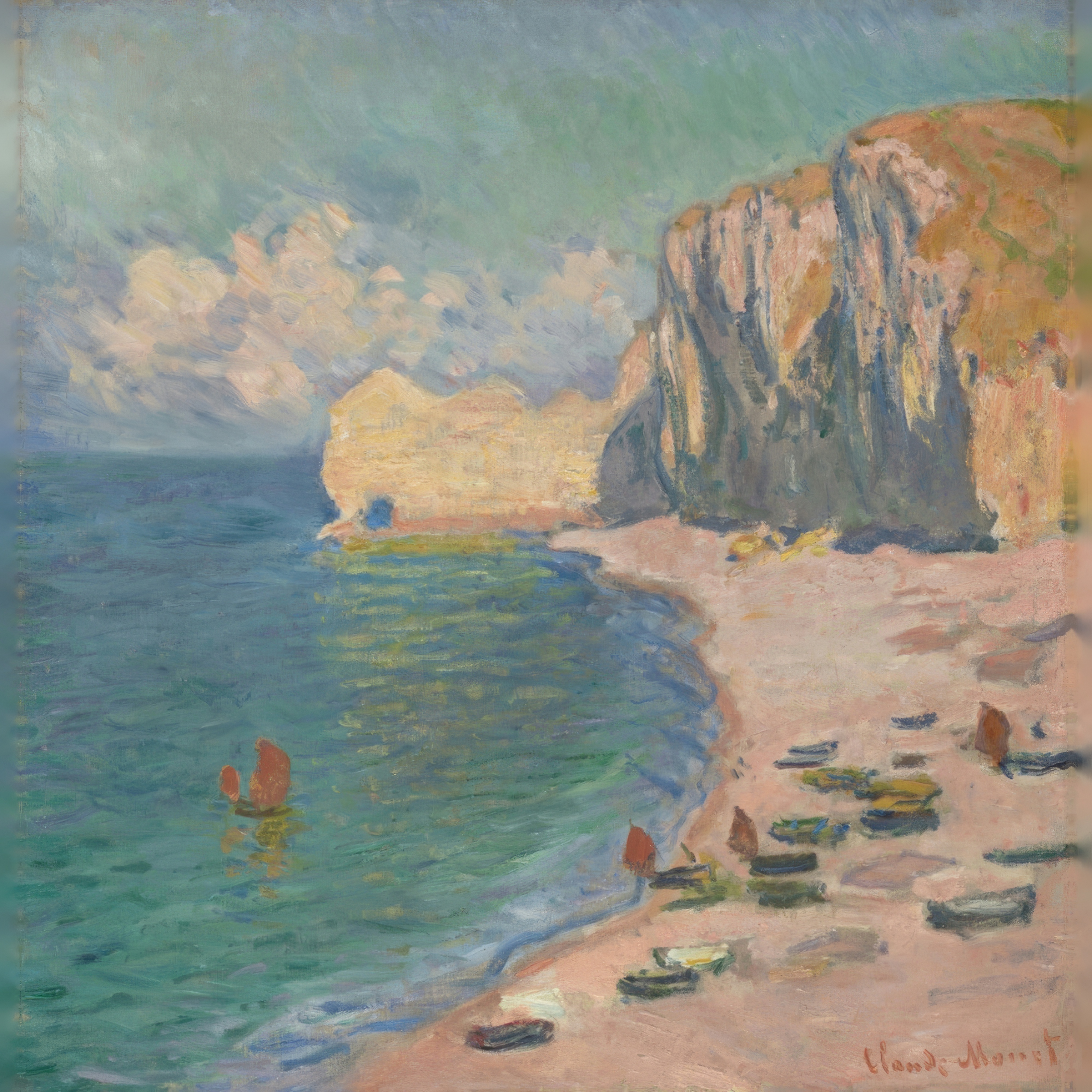
Claude Monet, Étretat: The Beach and the Falaise d'Amont, 1885. Oil on canvas. Art Institute of Chicago.
Monet spent the autumn of 1885 at Étretat on the Normandy coast, painting its famous cliffs in every weather. Here the boats of the local fishermen rest on the shingle, their dark hulls anchoring a picture made almost entirely of sea, chalk and air.
3. Bordighera
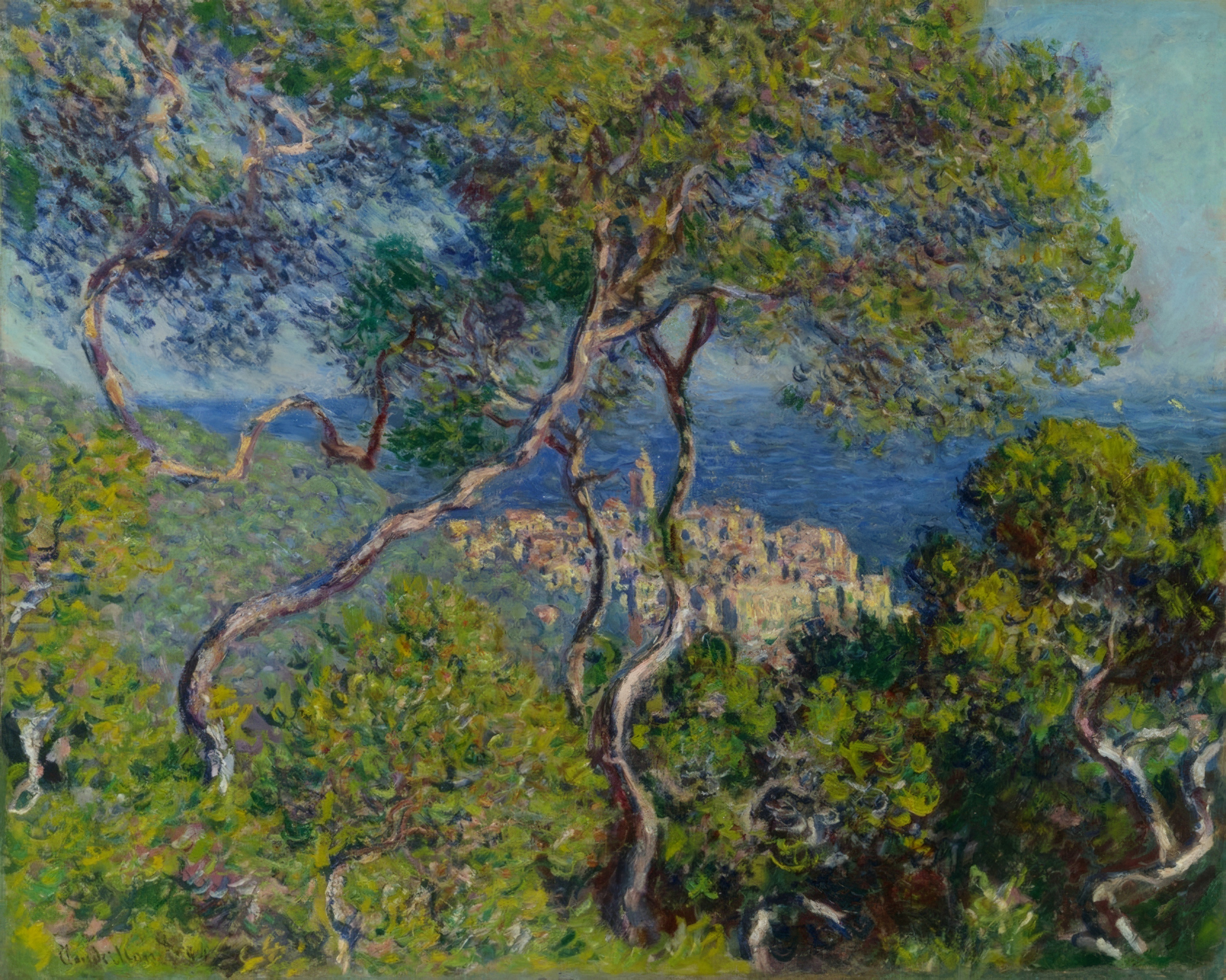
Claude Monet, Bordighera, 1884. Oil on canvas. Art Institute of Chicago.
In 1884 Monet left the grey north for the Italian Riviera and was almost overwhelmed by the colour. Bordighera is a tangle of olive trunks and palms with the sea glittering behind, painted with a deep, saturated green he had never used before.
4. Stack of Wheat (Snow Effect, Overcast Day)
Claude Monet, Stack of Wheat (Snow Effect, Overcast Day), 1890–91. Oil on canvas. Art Institute of Chicago.
The wheatstacks were Monet’s great experiment: one ordinary subject painted dozens of times, in every season and hour, to show that light is the real subject of a picture. This snowy version, on an overcast day, is the quietest of the series, all lilac shadow and muffled white.
A winter picture that never feels cold. It works beautifully in a bedroom or a calm study.
5. The Petite Creuse River
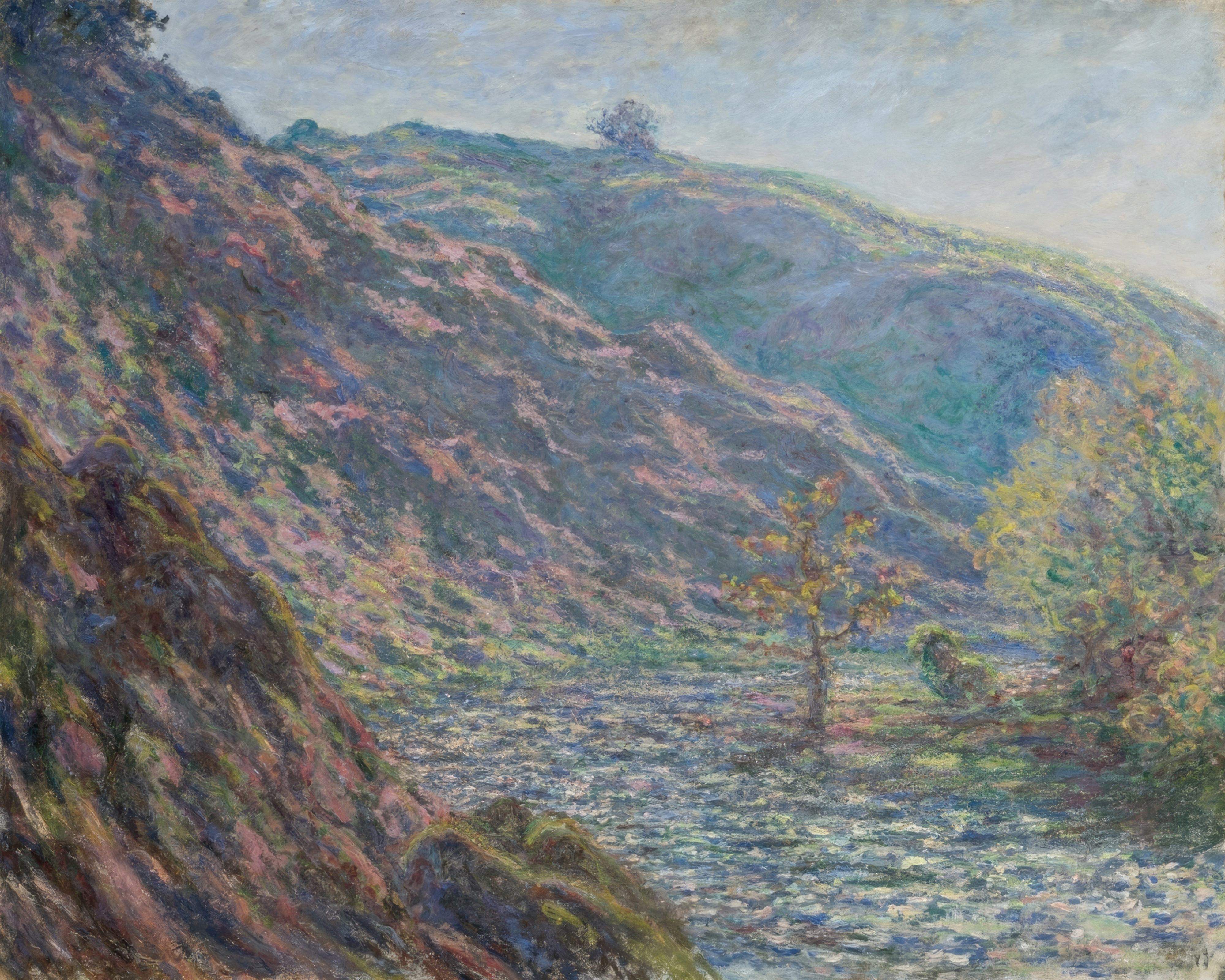
Claude Monet, The Petite Creuse River, 1889. Oil on canvas. Art Institute of Chicago.
In 1889 Monet travelled to the Creuse valley in central France, a rugged gorge far from his gardens. He painted the little river at the bottom of the valley as the light changed, turning rock and water into one soft, glowing surface.
6. Gardener's House at Antibes
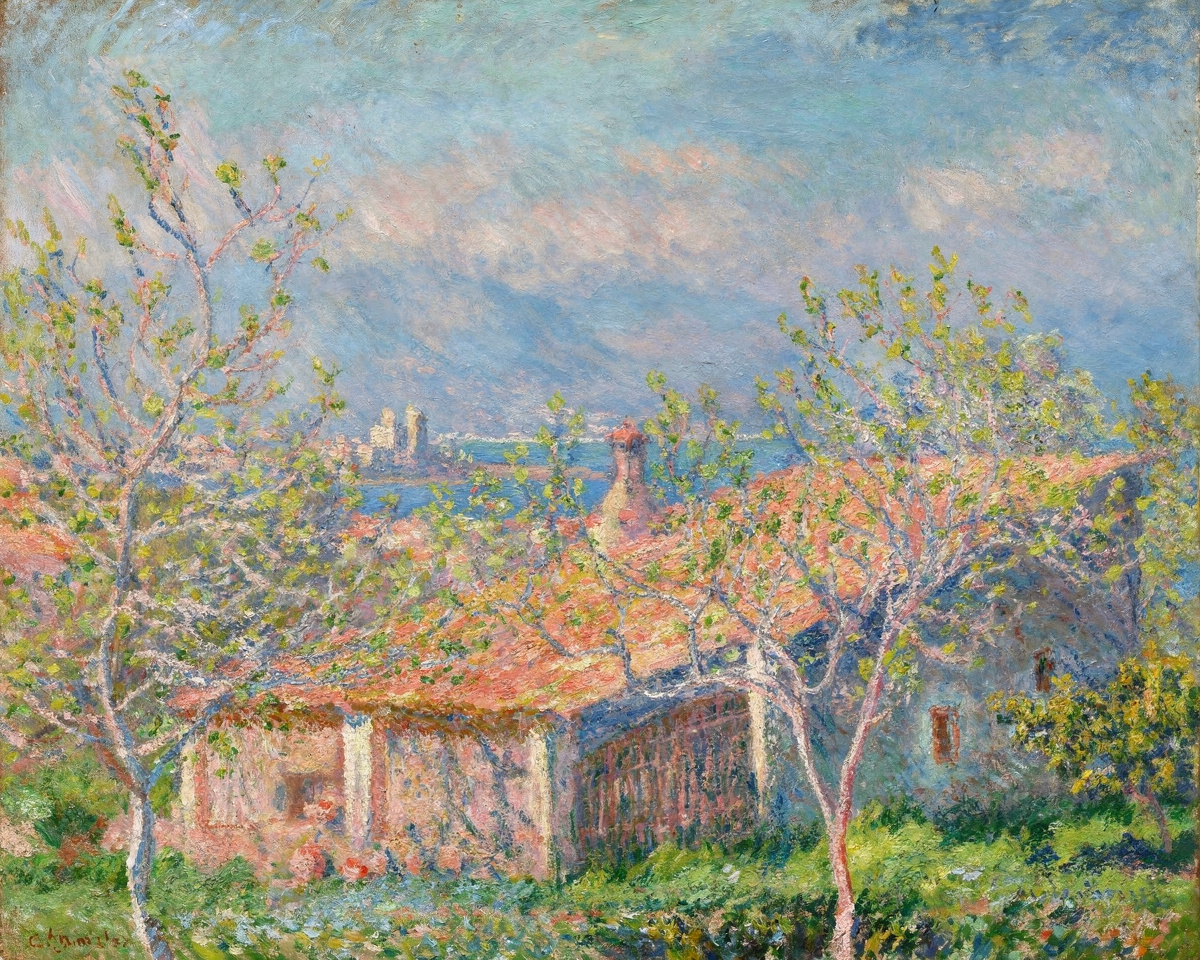
Claude Monet, Gardener's House at Antibes, 1888. Oil on canvas. Cleveland Museum of Art.
On the Riviera at Antibes in 1888, Monet looked through a screen of leaves at a gardener’s cottage and painted the whole scene in sunlight. The blues and pinks of the south give it a freshness that suits a kitchen or a breakfast room.
7. Lunch at the Restaurant Fournaise (The Rowers' Lunch)
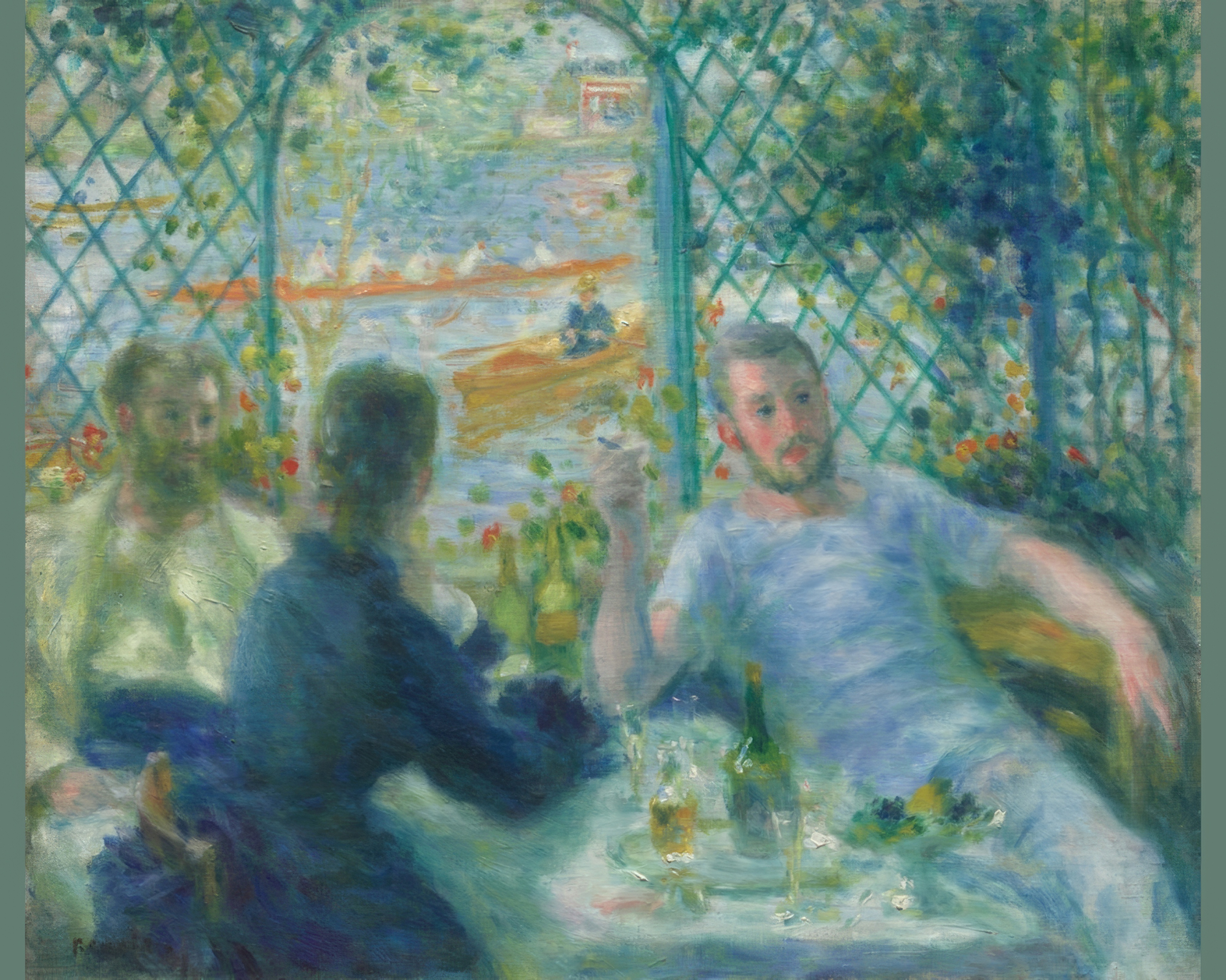
Pierre-Auguste Renoir, Lunch at the Restaurant Fournaise (The Rowers' Lunch), 1875. Oil on canvas. Art Institute of Chicago.
The Restaurant Fournaise sat on an island in the Seine where Parisians went to row and eat. Renoir painted his friends there after lunch, in dappled shade with the river shining behind them. It is the same terrace that later became the setting for his famous Luncheon of the Boating Party.
8. Madame Charpentier and Her Children
Auguste Renoir, Madame Charpentier and Her Children, 1878. Oil on canvas. The Metropolitan Museum of Art, New York.
This was the picture that made Renoir’s name. Madame Charpentier, wife of a rich publisher, sits in her fashionable Japanese-style salon with her son and daughter; little Georgette perches on the family Newfoundland. Shown at the Salon of 1879, it proved an impressionist could paint society portraits as grand as anyone’s.
This is the masterwork behind Fable’s Madame Charpentier family style: send a photo of your family and see them painted in the same warm drawing room.
Create your portrait in this style
9. Julie Manet
Pierre-Auguste Renoir, Julie Manet, 1887. Oil on canvas. Musée d'Orsay, Paris.
Julie Manet was the only daughter of Berthe Morisot and the niece of Édouard Manet, and Renoir painted her at eight with her cat curled in her lap. The background dissolves into soft colour so that nothing distracts from the child and the animal.
This is the masterwork behind Fable’s Julie Manet style for a person with a pet. A photo of you or your child holding the family cat or a small dog suits it best.
Create your portrait in this style
10. Chrysanthemums
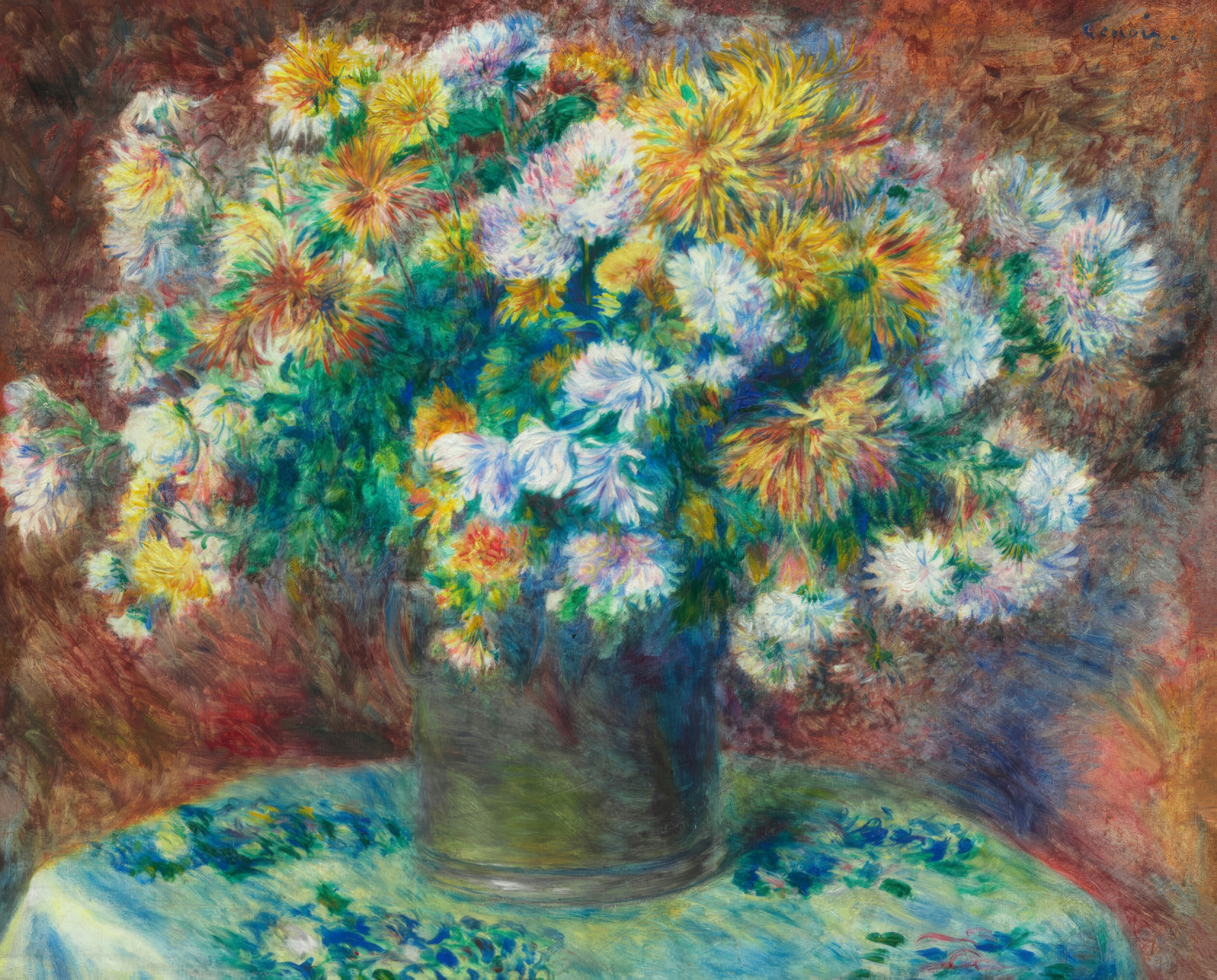
Pierre-Auguste Renoir, Chrysanthemums, 1881–82. Oil on canvas. Art Institute of Chicago.
Renoir said he painted flowers to rest his mind between portraits, and you can feel the freedom in this bouquet: thick, quick strokes of red, white and gold against a cool green ground. It is a still life with the energy of a landscape.
11. Peasant House at Éragny
Camille Pissarro, Peasant House at Éragny, 1884. Oil on canvas.
Pissarro settled in the village of Éragny in 1884 and painted it for the rest of his life. This cottage, with its weathered roof and tall chimneys, is the kind of everyday building he made beautiful just by looking at it closely.
It shows how a country landscape opens up a plain wall.
12. Church and Farm at Éragny
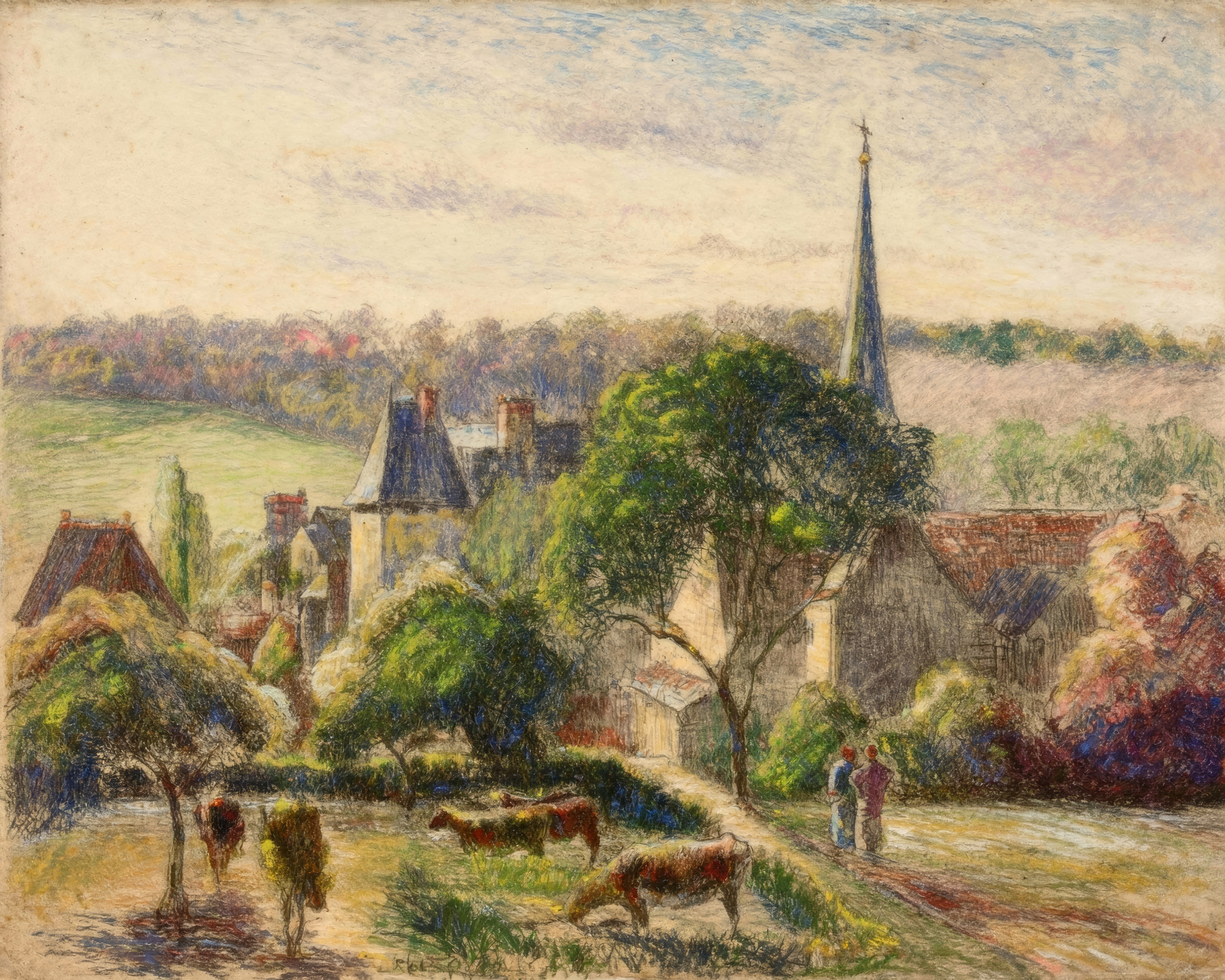
Camille Pissarro, Church and Farm at Éragny, 1895. Etching and drypoint in black, with pastel, on buff laid paper. Art Institute of Chicago.
Here Pissarro drew his village in etching and drypoint and then brushed pastel colour over the print by hand, so no two impressions are quite alike. The church tower and the farm sit among blossoming trees in spring.
13. In the Dining Room
Berthe Morisot, In the Dining Room, 1886. Oil on canvas. National Gallery of Art, Washington.
Berthe Morisot was a founding member of the impressionists and showed in almost all their exhibitions. Here the young maid of her household pauses in the dining room, a little dog at her feet. The brushwork is so free it almost flickers.
A domestic scene like this is made for a kitchen or dining room.
14. Woman in a Garden
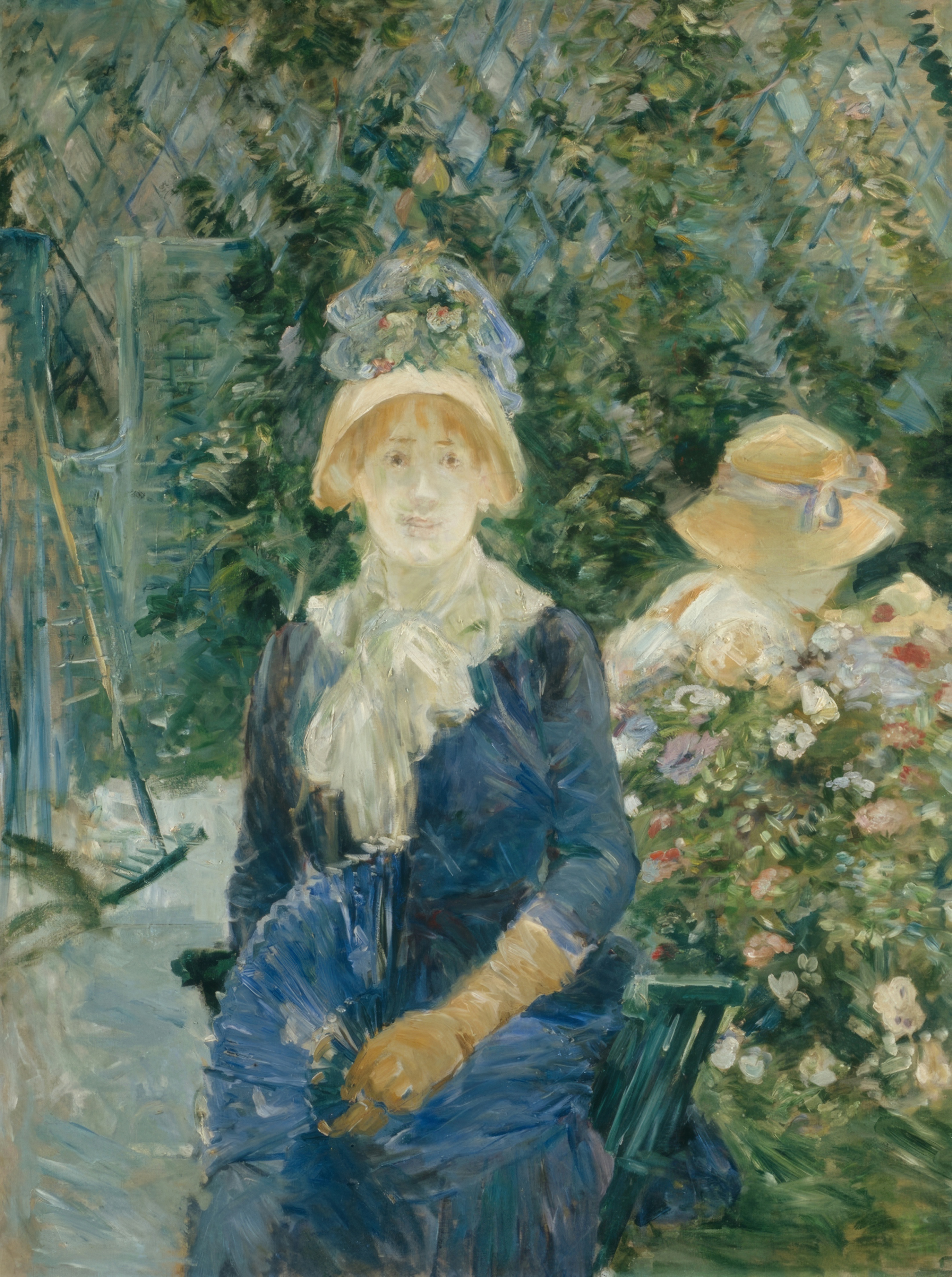
Berthe Morisot, Woman in a Garden, 1882–83. Oil on canvas. Art Institute of Chicago.
Morisot painted her own world, the women and gardens around her, and she painted it with a lightness no one else matched. Here a woman sits half lost in the greenery of a summer garden, her dress made of the same loose strokes as the flowers.
15. The Rehearsal of the Ballet Onstage
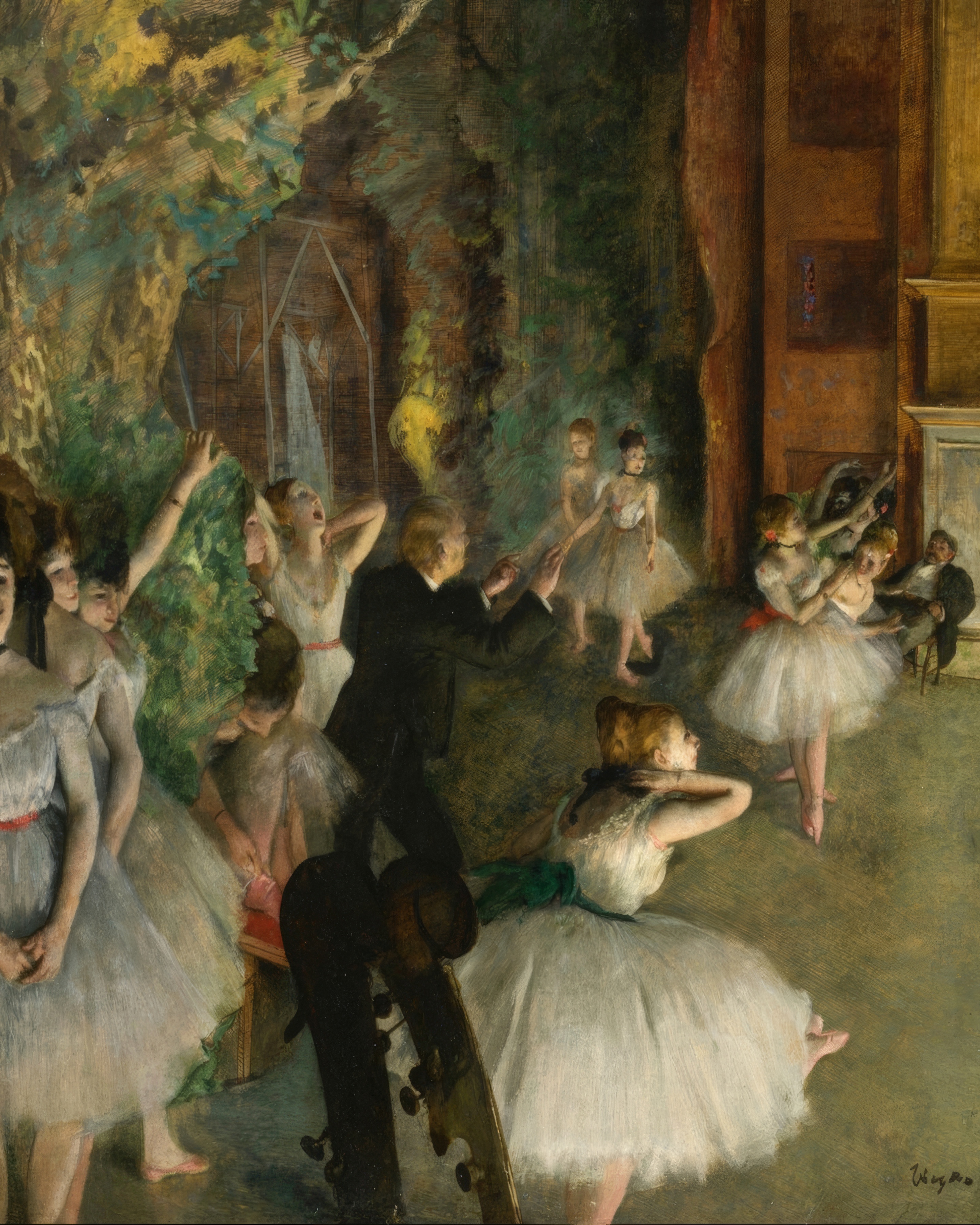
Edgar Degas, The Rehearsal of the Ballet Onstage, ca. 1874. Oil colors freely mixed with turpentine, with traces of watercolor and pastel over pen-and-ink drawing on cream-colored wove paper, laid down on bristol board and mounted on canvas. The Metropolitan Museum of Art, New York.
Degas spent years backstage at the Paris Opéra, and he loved the rehearsals more than the performances. Dancers stretch, wait and yawn while the ballet master directs and two gentlemen lounge in the wings. It is glamour seen from behind the scenes.
Create your portrait in this style
16. Chrysanthemums in the Garden at Petit-Gennevilliers
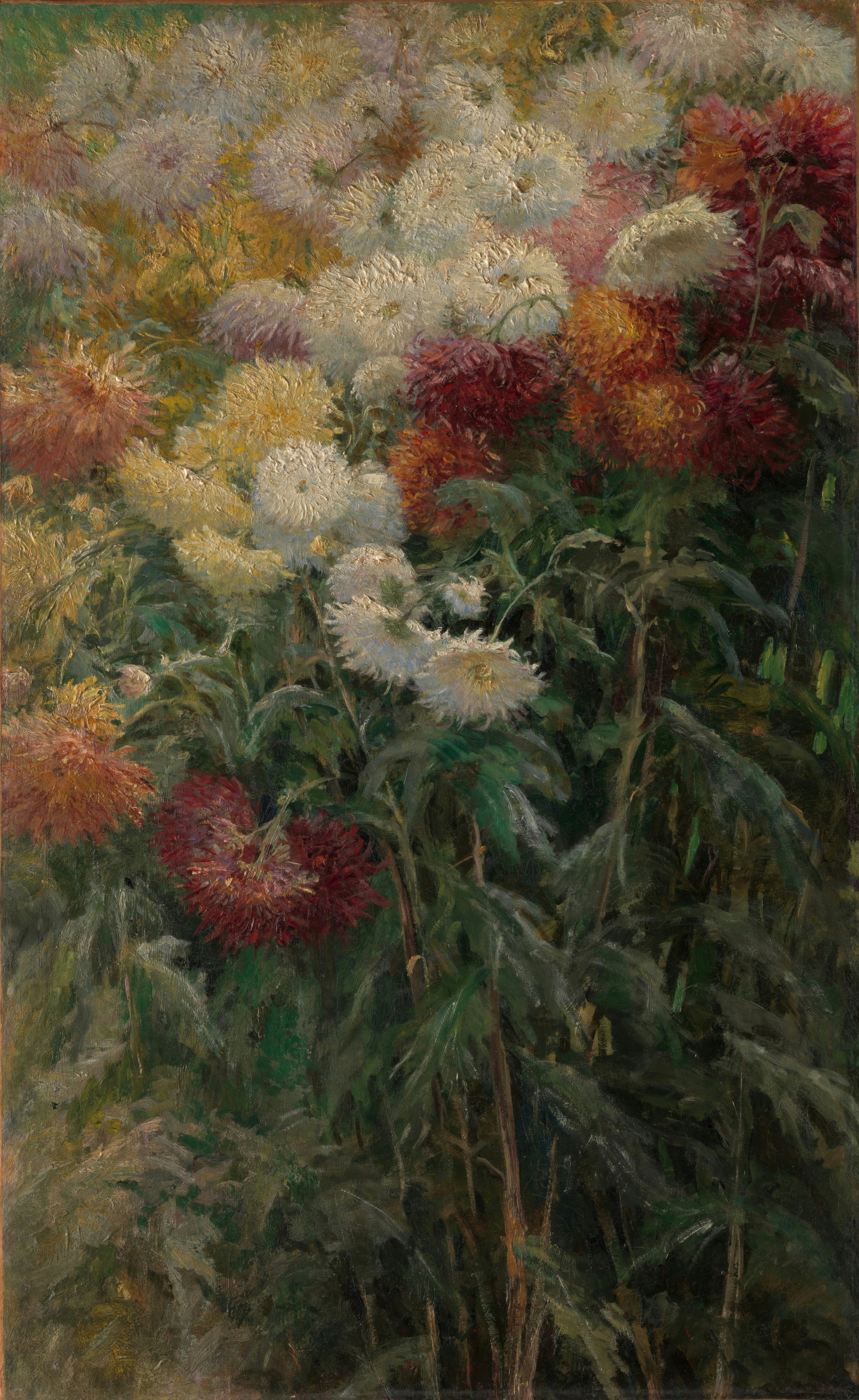
Gustave Caillebotte, Chrysanthemums in the Garden at Petit-Gennevilliers, 1893. Oil on canvas. The Metropolitan Museum of Art, New York.
Gustave Caillebotte was a rich man who bought his friends’ paintings and kept a famous garden at Petit-Gennevilliers. In this late picture he leans so close to his chrysanthemums that the bed fills the canvas from edge to edge, like a wallpaper of flowers.
17. Peasant Mother and Child
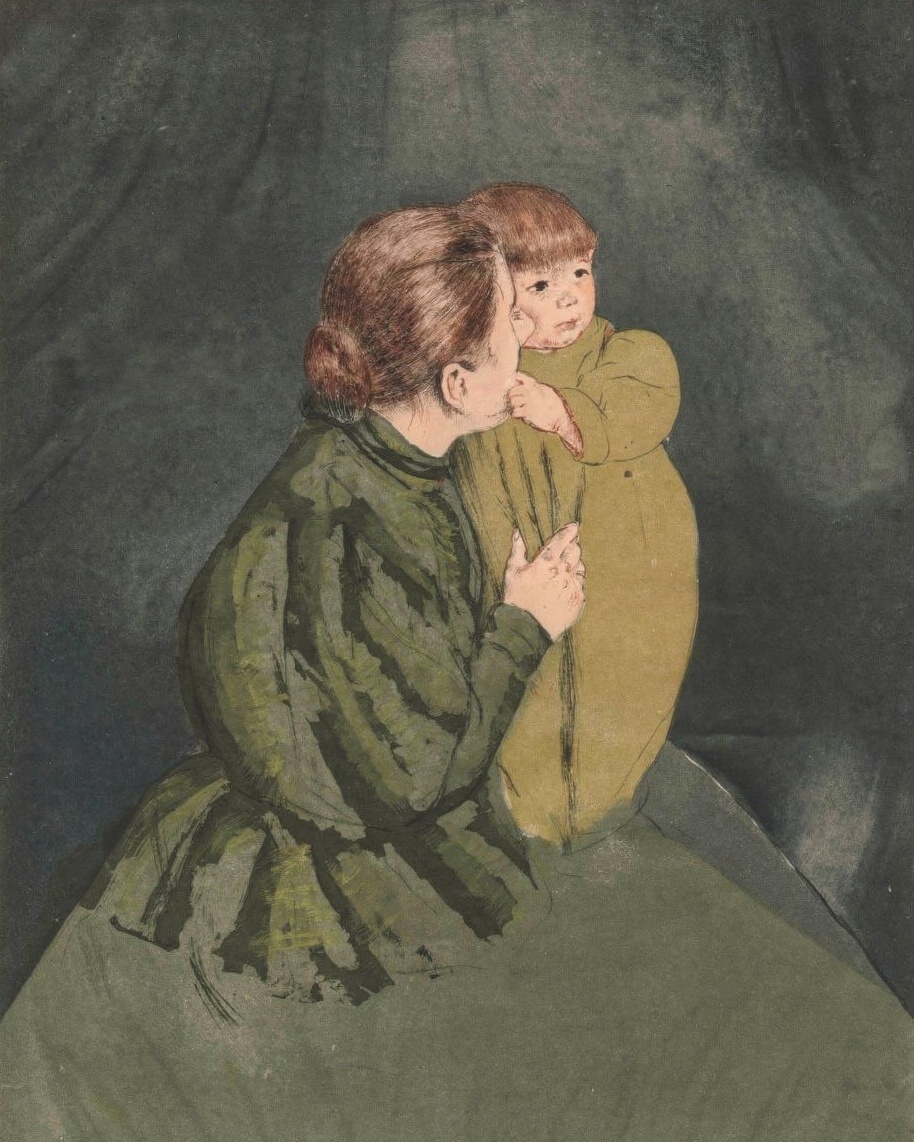
Mary Cassatt, Peasant Mother and Child, c. 1894. Color drypoint and aquatint, with additions in yellow, on white laid paper. Art Institute of Chicago.
Mary Cassatt, an American in Paris, joined the impressionists at Degas’ invitation and made mothers and children her great subject. This print, coloured with drypoint and aquatint and touched by hand, shows the closeness between them with complete simplicity.
It is one of the most loved pictures for a nursery or a new mother.
18. Skating
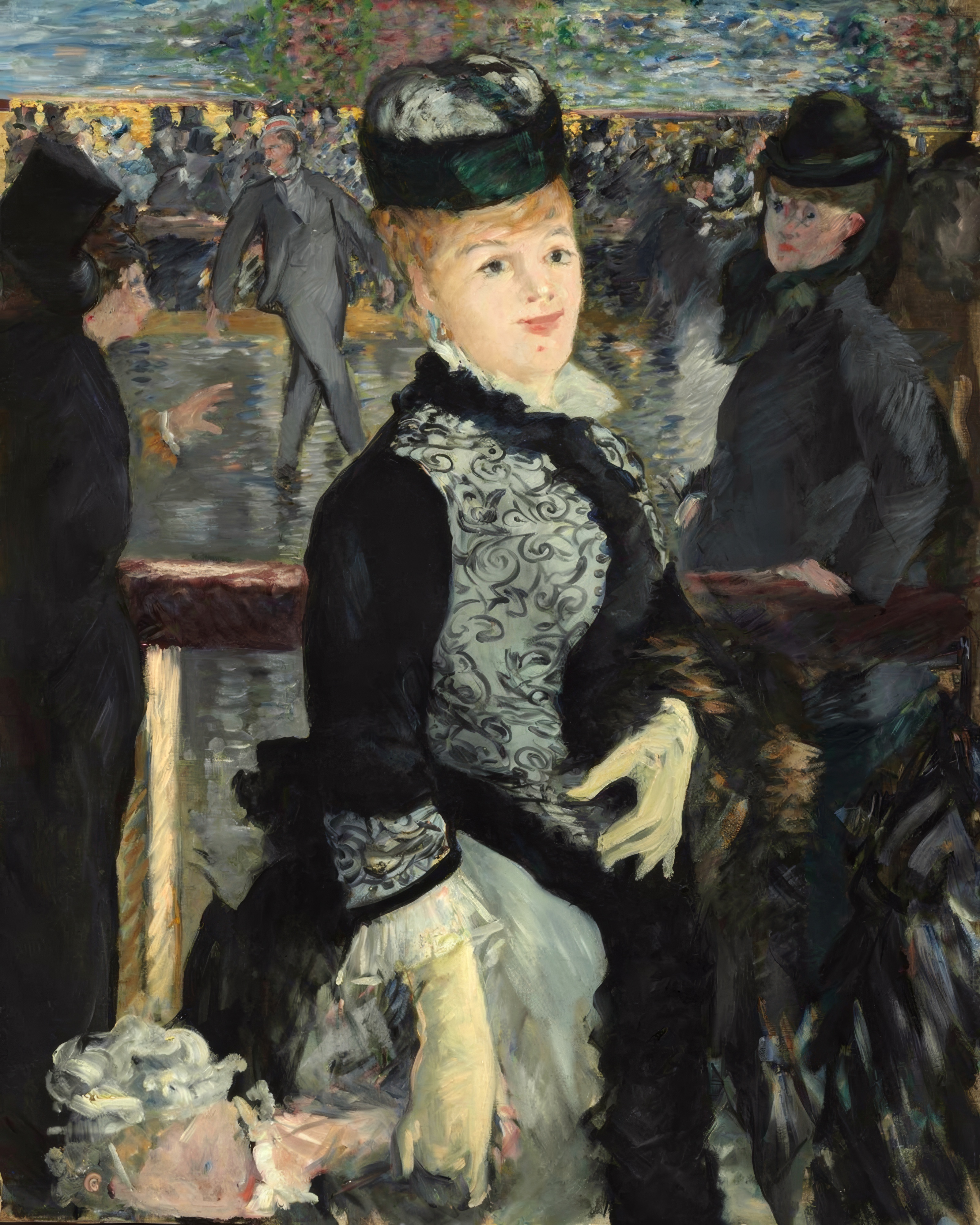
Edouard Manet, Skating, 1877. Oil on canvas. Harvard Art Museums.
Manet never showed with the impressionists, but he was their hero and friend. In Skating he catches a Parisienne at the fashionable rink on the rue Blanche, the crowd a blur of strokes behind her. It is modern life, painted at the speed it was lived.
19. Landscape at Chailly
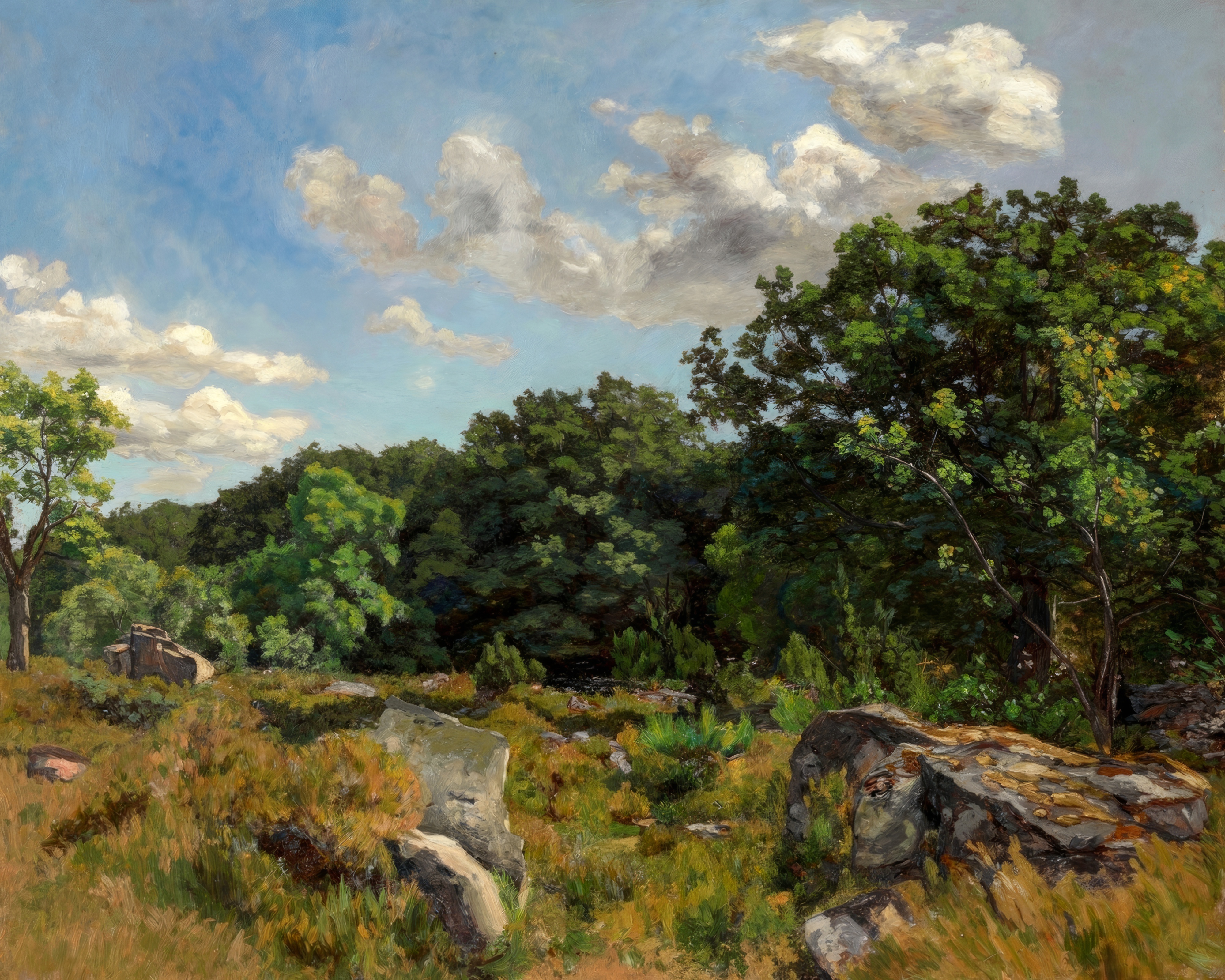
Frédéric Bazille, Landscape at Chailly, 1865. Oil on canvas. Art Institute of Chicago.
Frédéric Bazille was one of the youngest of the group and painted this clearing in the forest of Fontainebleau beside Monet in 1865, years before the first impressionist show. He was killed in the Franco-Prussian War at twenty-nine, and pictures like this one show what was lost.
20. Oil Sketch for "A Sunday on La Grande Jatte — 1884"
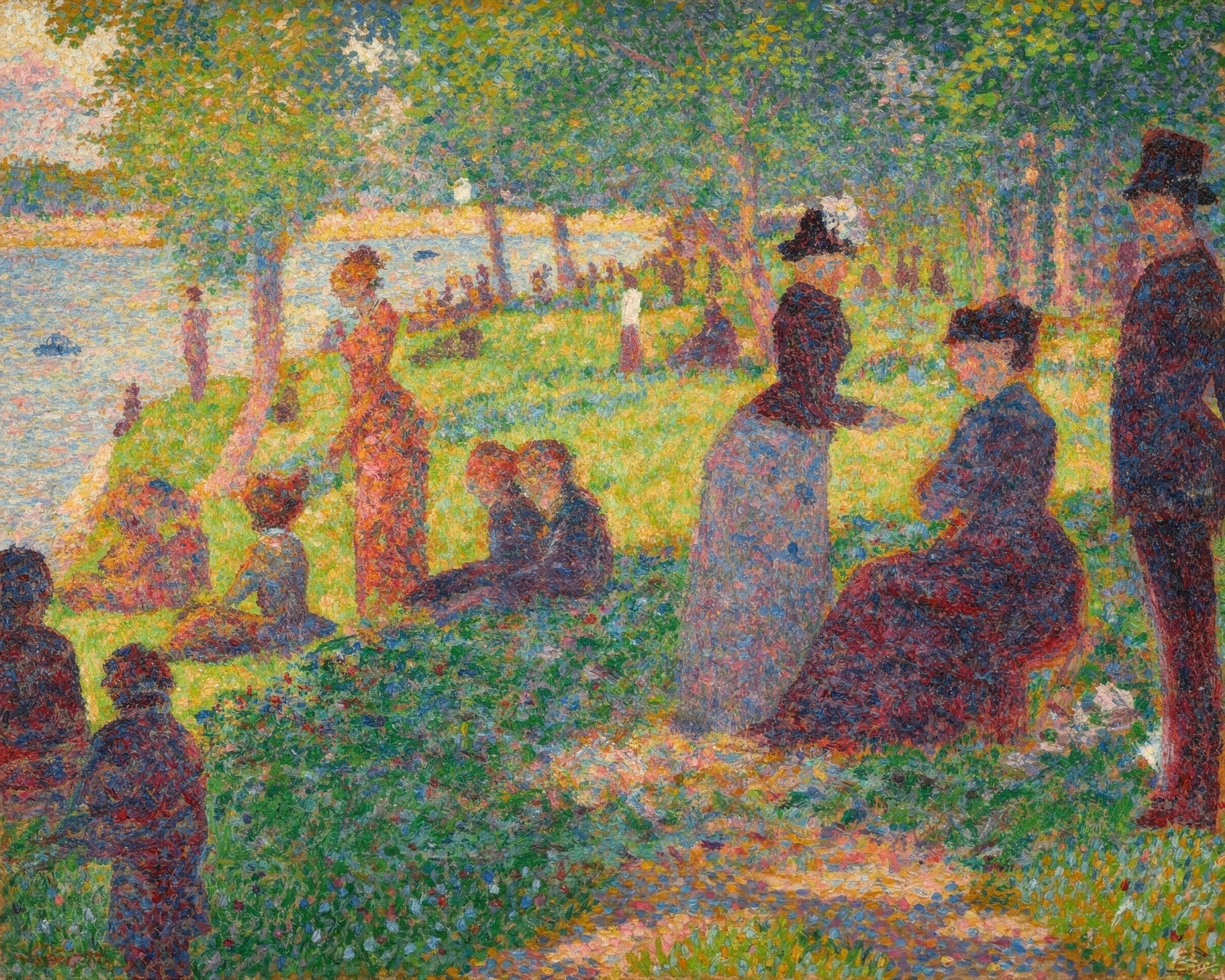
Georges Seurat, Oil Sketch for "A Sunday on La Grande Jatte — 1884", 1884. Oil on panel. Art Institute of Chicago.
Georges Seurat took impressionism’s broken colour and turned it into a system of tiny dots. This small oil sketch, painted on the spot, is one of dozens he made for his huge Sunday on La Grande Jatte, now in Chicago. It shows the riverbank, the trees and the shadows before he froze them into his famous dots.
Impressionism is the easiest art in the world to live with. It is bright without being loud, and it changes with the light in your room the way it changed in the painter’s field. A single Monet landscape lifts a hallway; a pair of Renoir or Caillebotte flowers suits a dining room; a Morisot or Cassatt interior belongs in a bedroom. If you want to go further, read our guide to Van Gogh paintings you can hang at home or famous flower paintings.
Questions
What is impressionism in art?
Impressionism is the movement that began in Paris in the 1870s, when Monet, Renoir, Pissarro, Morisot, Degas and their friends painted modern life and landscape in quick, visible strokes, often outdoors, to catch light and weather as they changed.
Who are the most famous impressionist painters?
Claude Monet, Pierre-Auguste Renoir, Camille Pissarro, Edgar Degas, Berthe Morisot, Alfred Sisley, Mary Cassatt and Gustave Caillebotte. Édouard Manet was their older ally, and Seurat, Cézanne and Van Gogh grew out of the movement.
Which impressionist painting suits a living room?
A large landscape with a clear horizon, such as Monet’s Poppy Field or Bordighera, holds a living room wall well. Interiors and portraits by Morisot or Renoir feel more personal and suit bedrooms and dining rooms.
Can I have a portrait made in an impressionist style?
Yes. Renoir’s Madame Charpentier and Her Children and Julie Manet are both the masterworks behind Fable portrait styles. Send a photo and you will see a free preview before you order anything.