Van Gogh paintings: 8 you can hang at home
Irises, Roses, Oleanders, L’Arlésienne and four more: eight works by Vincent van Gogh from the Met and the Art Institute of Chicago, with the story behind each one and where it looks best.
Vincent van Gogh painted for only ten years, from 1880 until his death in 1890, and sold almost nothing in his lifetime. In those ten years he made more than two thousand works, and the last two and a half, in Arles and Saint-Rémy in the south of France, produced most of the paintings the world knows today.
The eight below come from the Metropolitan Museum of Art in New York and the Art Institute of Chicago. They include two drawings from his early years in The Hague and Arles, so you can see how he learned to draw before he learned to blaze with colour. Each one can be ordered as a print prepared from the museum’s scan, and Irises and Roses are also the masterworks behind Fable art styles.
1. Irises
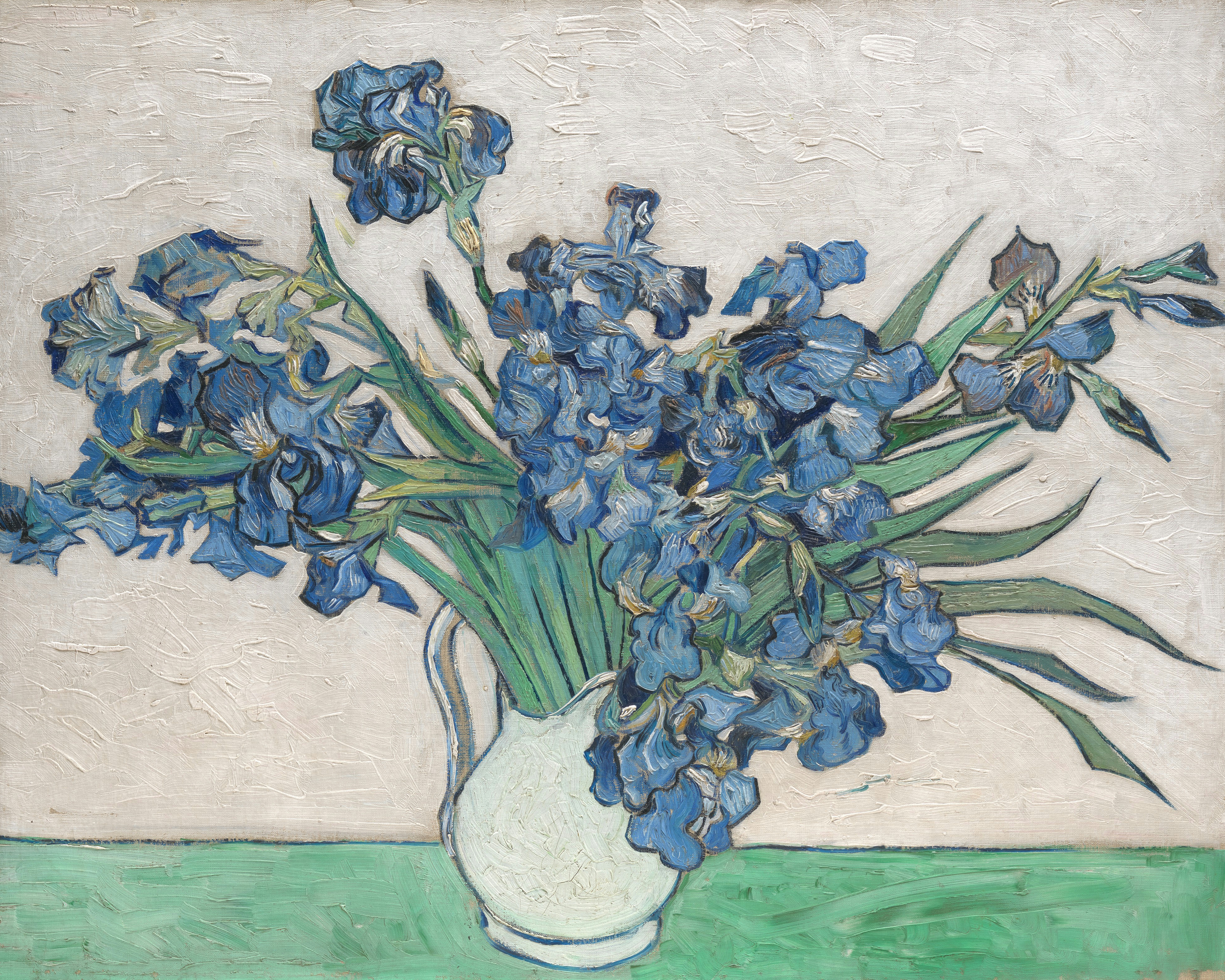
Vincent van Gogh, Irises, 1890. Oil on canvas. The Metropolitan Museum of Art, New York.
In May 1890, just before he left the asylum at Saint-Rémy, Van Gogh painted two great bouquets of irises. This one, on a pale ground, is in the Met. The flowers twist and spill out of the vase as if they were still growing. He was well again, and you can see his joy in every stroke.
This is the masterwork behind Fable’s Irises art style, and one of the easiest Van Goghs to live with.
Create your portrait in this style
2. Roses
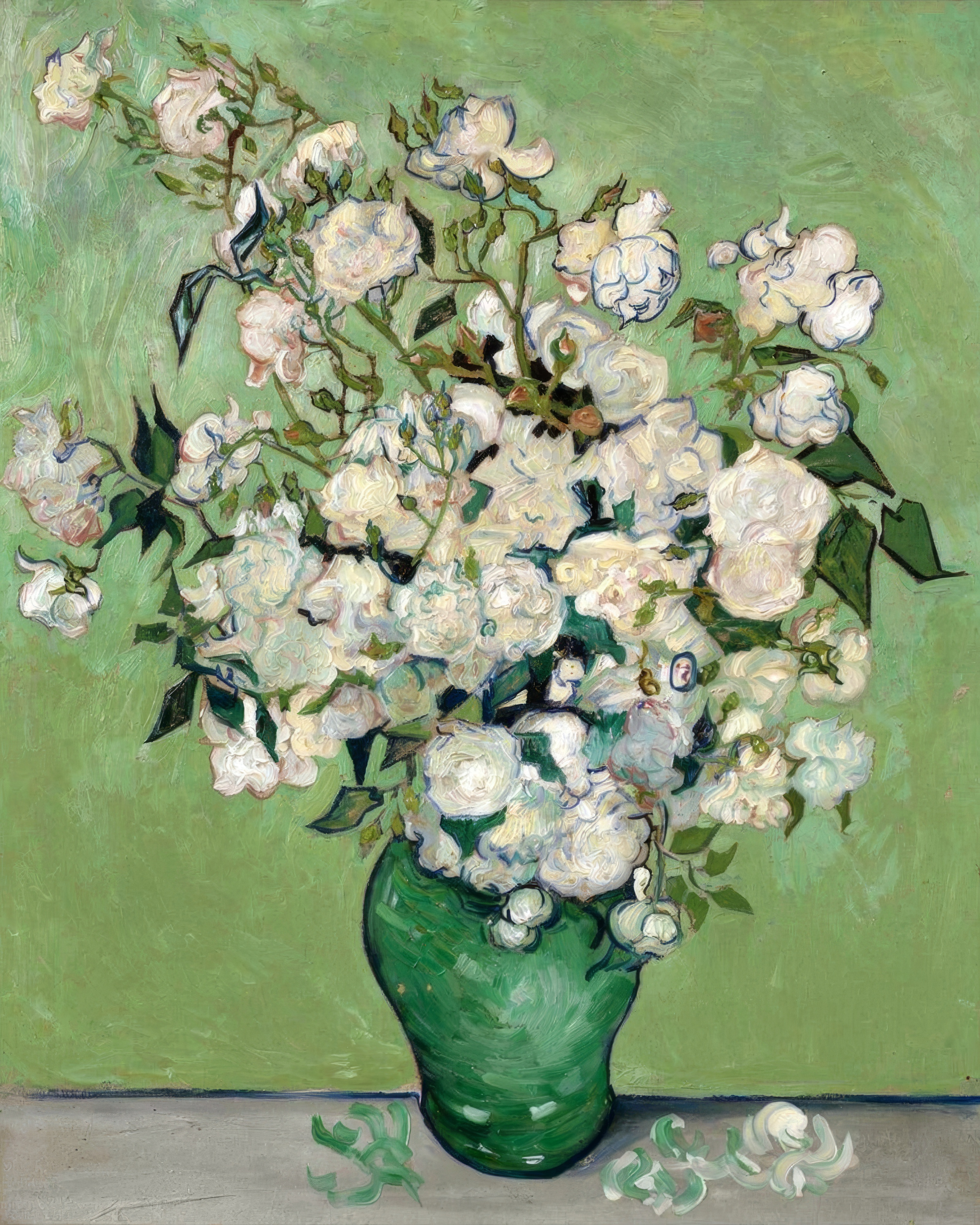
Vincent van Gogh, Roses, 1890. Oil on canvas. The Metropolitan Museum of Art, New York.
Painted in the same last weeks at Saint-Rémy as Irises, this bouquet of roses was once pink. The red pigment has faded with time, so they are now almost white against the bright green. Even so, it is one of the most generous flower paintings ever made.
This is the masterwork behind Fable’s Roses art style. Pale and soft, it suits a bedroom beautifully.
Create your portrait in this style
3. Oleanders
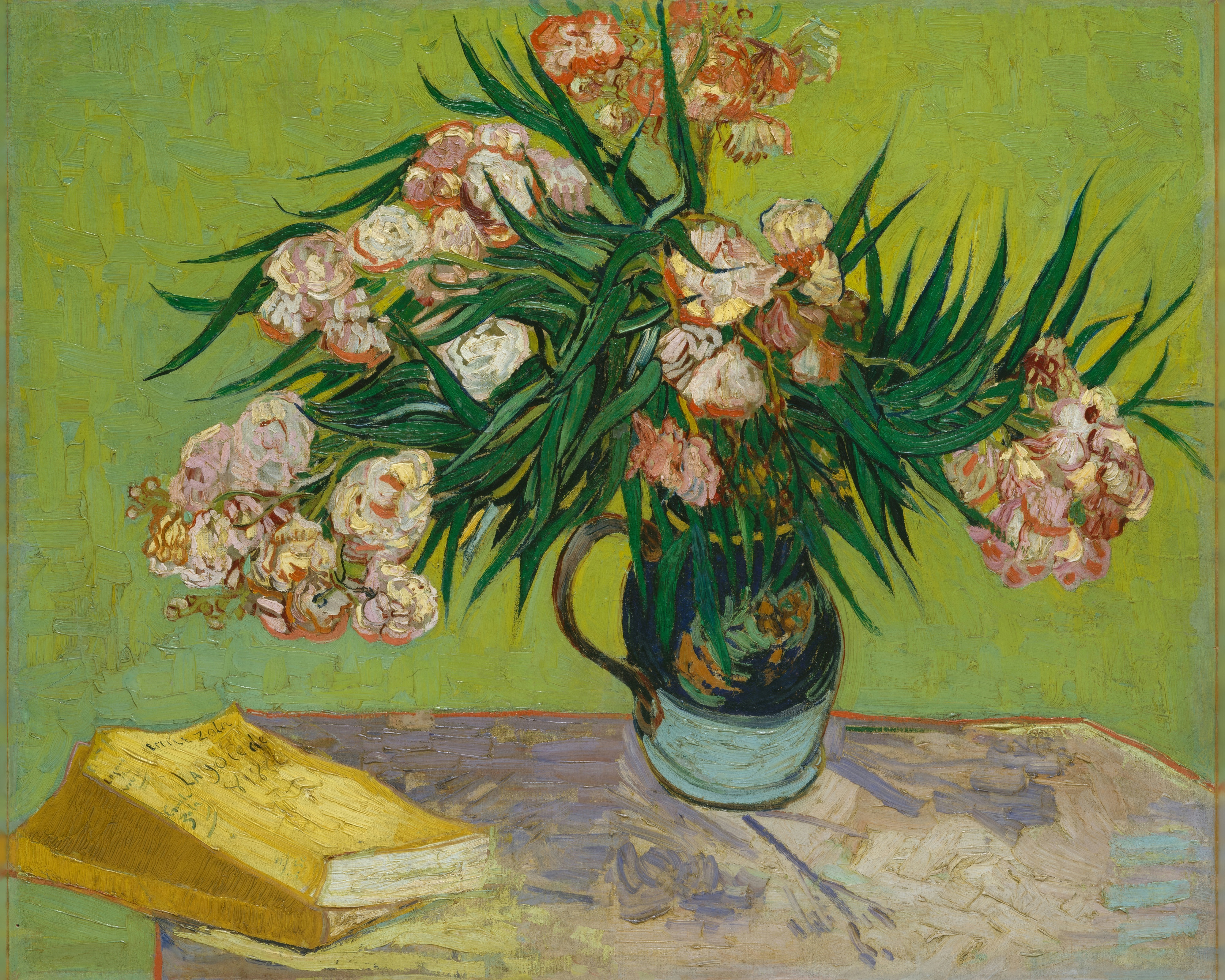
Vincent van Gogh, Oleanders, 1888. Oil on canvas. The Metropolitan Museum of Art, New York.
Van Gogh loved oleanders, which bloomed everywhere in Arles in the summer of 1888. He crammed them into a majolica jug and put a novel by Émile Zola beside it, La Joie de vivre, the joy of living. The title is no accident.
4. L'Arlésienne
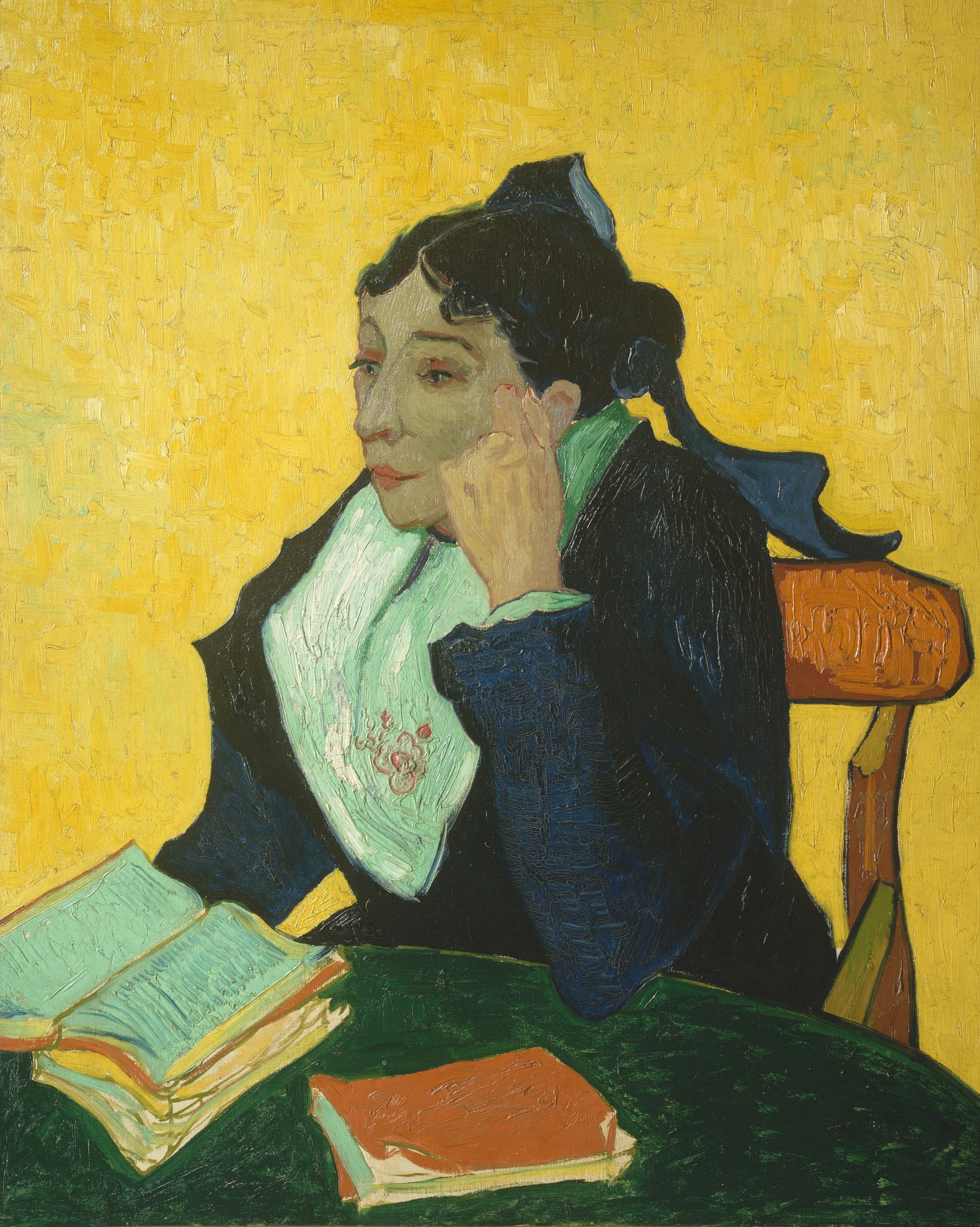
Vincent van Gogh, L'Arlésienne, 1888–89. Oil on canvas. The Metropolitan Museum of Art, New York.
Marie Ginoux ran the Café de la Gare in Arles, where Van Gogh lodged. He and Gauguin both painted her in November 1888, and Van Gogh said he did his in an hour. She leans on her hand beside a pile of books, in black against a blazing yellow wall.
Create your portrait in this style
5. The Poet's Garden
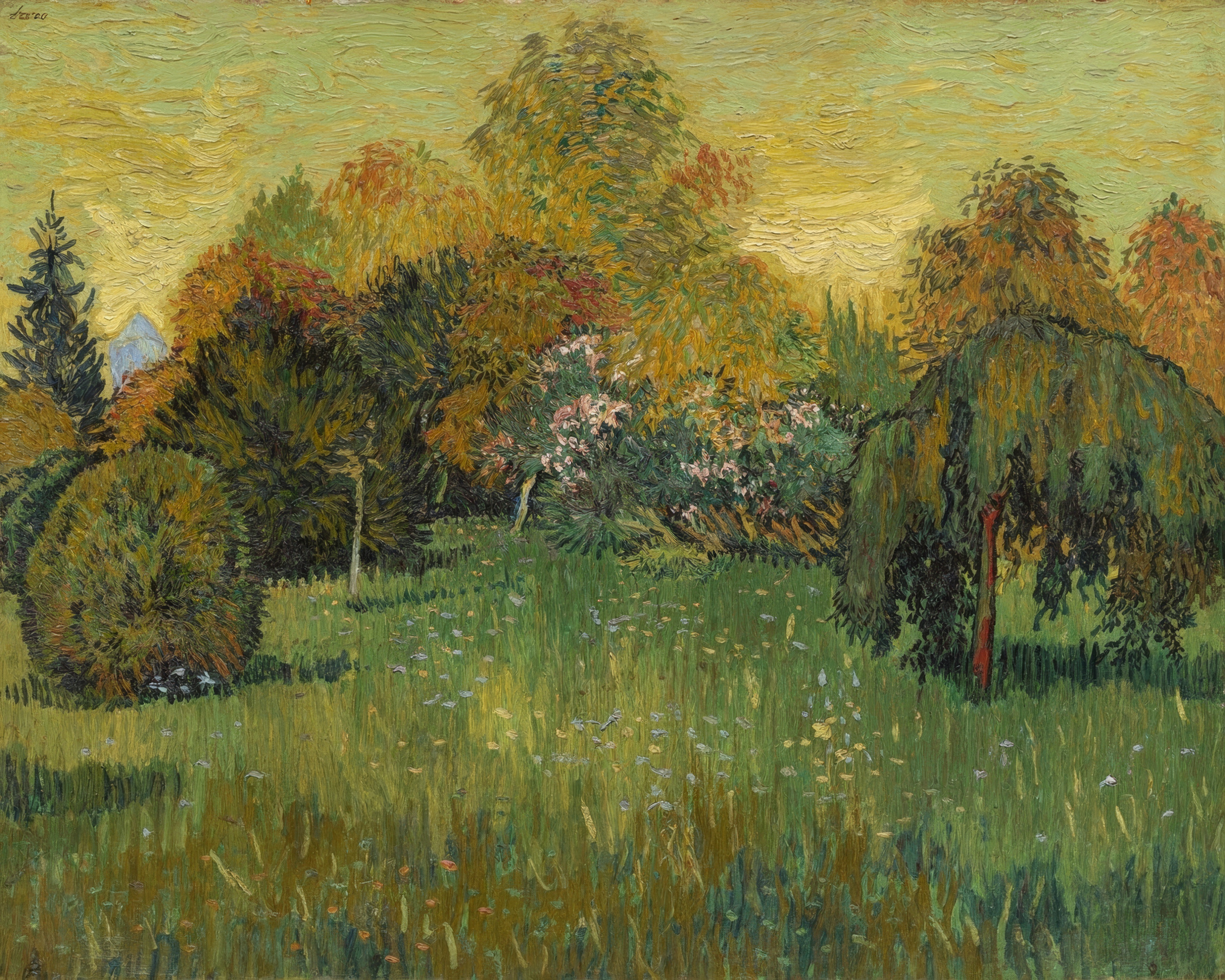
Vincent van Gogh, The Poet's Garden, 1888. Oil on canvas. Art Institute of Chicago.
In the autumn of 1888 Van Gogh painted the public garden opposite his Yellow House in Arles four times, to decorate the room where he hoped Gauguin would stay. He called it the poet’s garden, imagining the Italian poets who might once have walked there.
6. The Drinkers
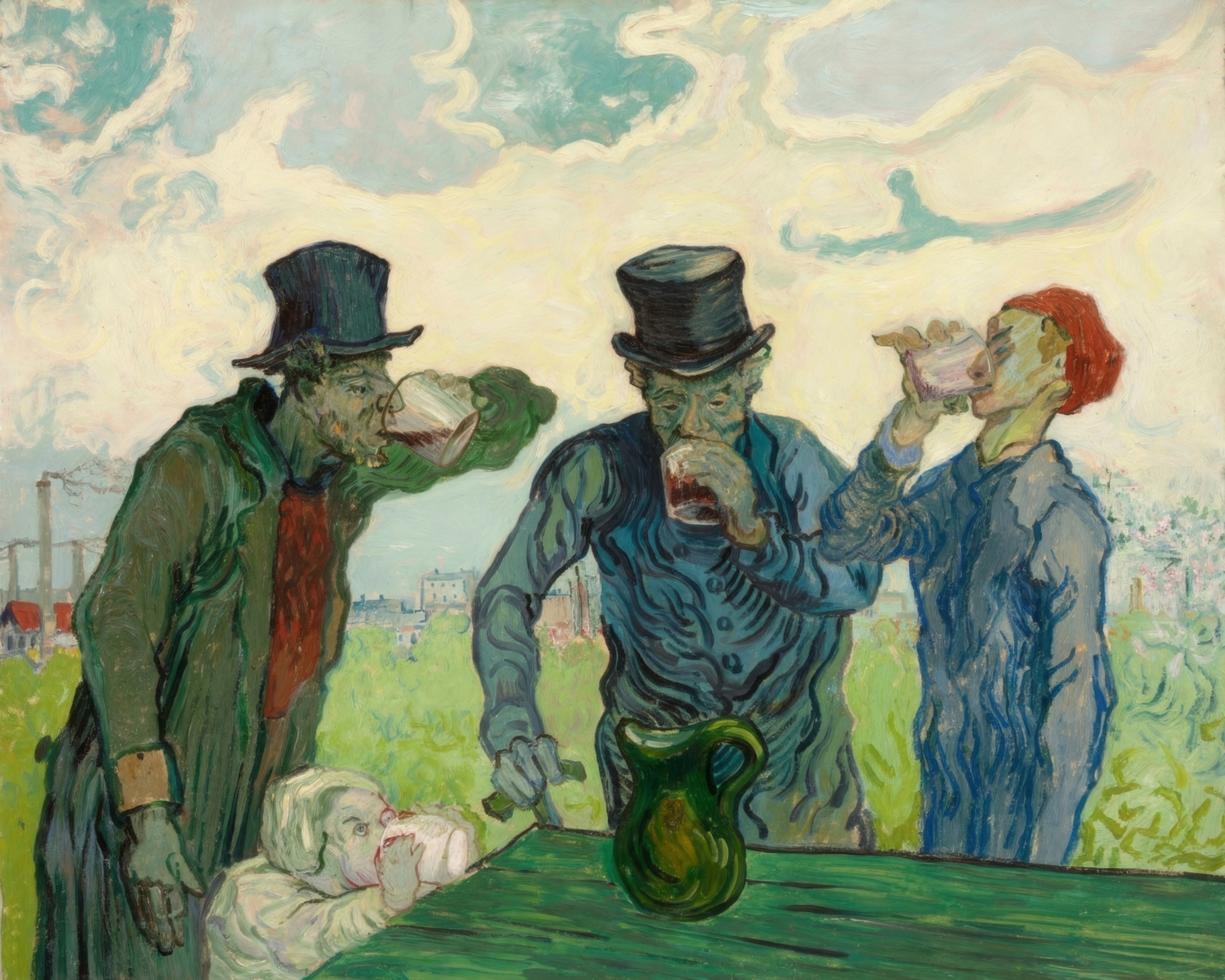
Vincent van Gogh, The Drinkers, 1890. Oil on canvas. Art Institute of Chicago.
In his last year Van Gogh made copies of the artists he admired, putting their black and white prints into his own colour. The Drinkers is after a print by Honoré Daumier: three men and a boy raise their glasses at a table, painted in the blues and greens of the south.
7. Nursery on Schenkweg
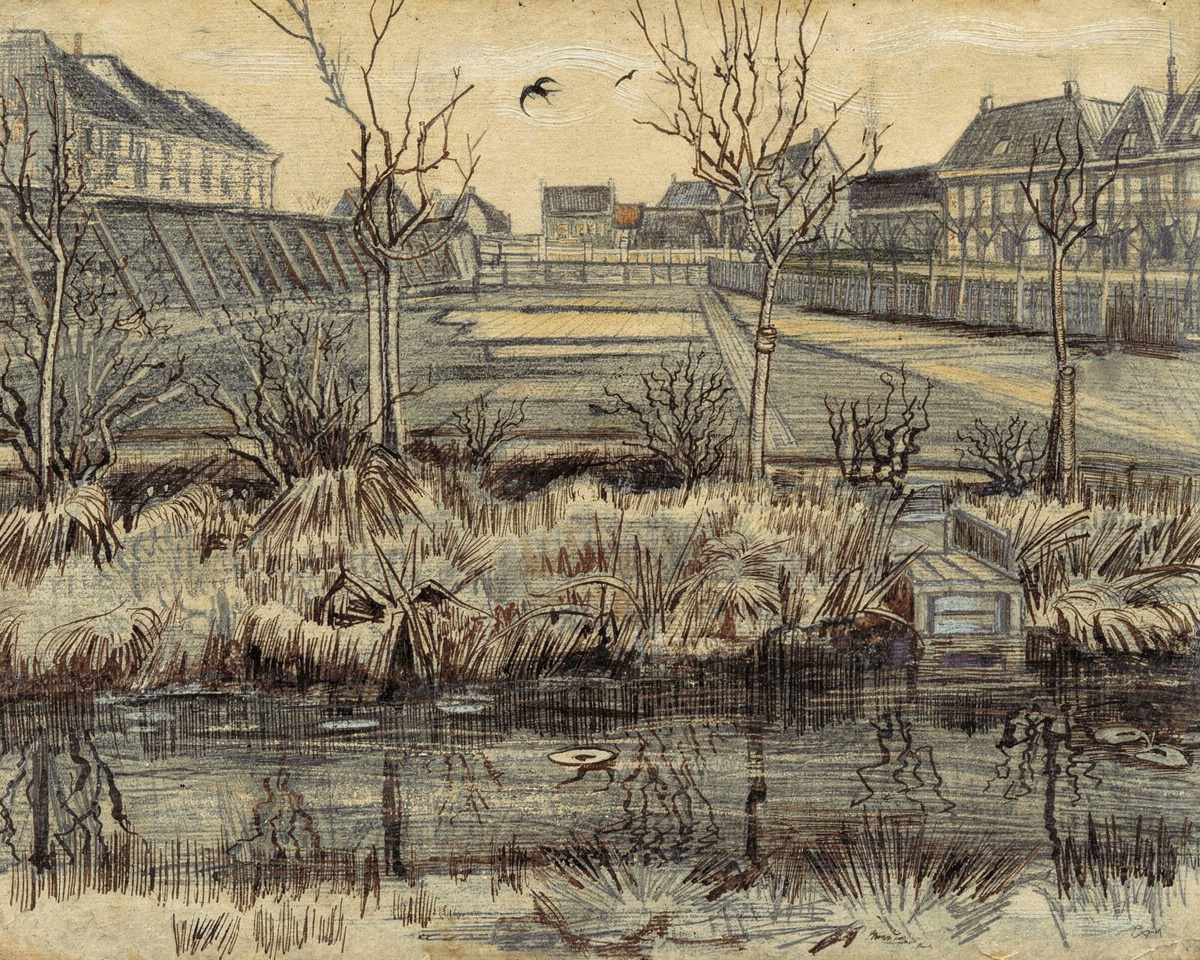
Vincent van Gogh, Nursery on Schenkweg, March–May 1882. Black chalk, graphite, pen, brush, and ink, heightened with white body color on laid paper watermarked ED & CIE (in a cartouche). The Metropolitan Museum of Art, New York.
Before he ever went south, Van Gogh taught himself to draw in The Hague. In the spring of 1882 he drew the market garden behind his lodgings again and again, in black chalk, pen and ink. You can already feel how much he cared about the shape of the ground.
A drawing like this is restful in a study or a hallway, and lovely next to a colourful work.
8. The Zouave
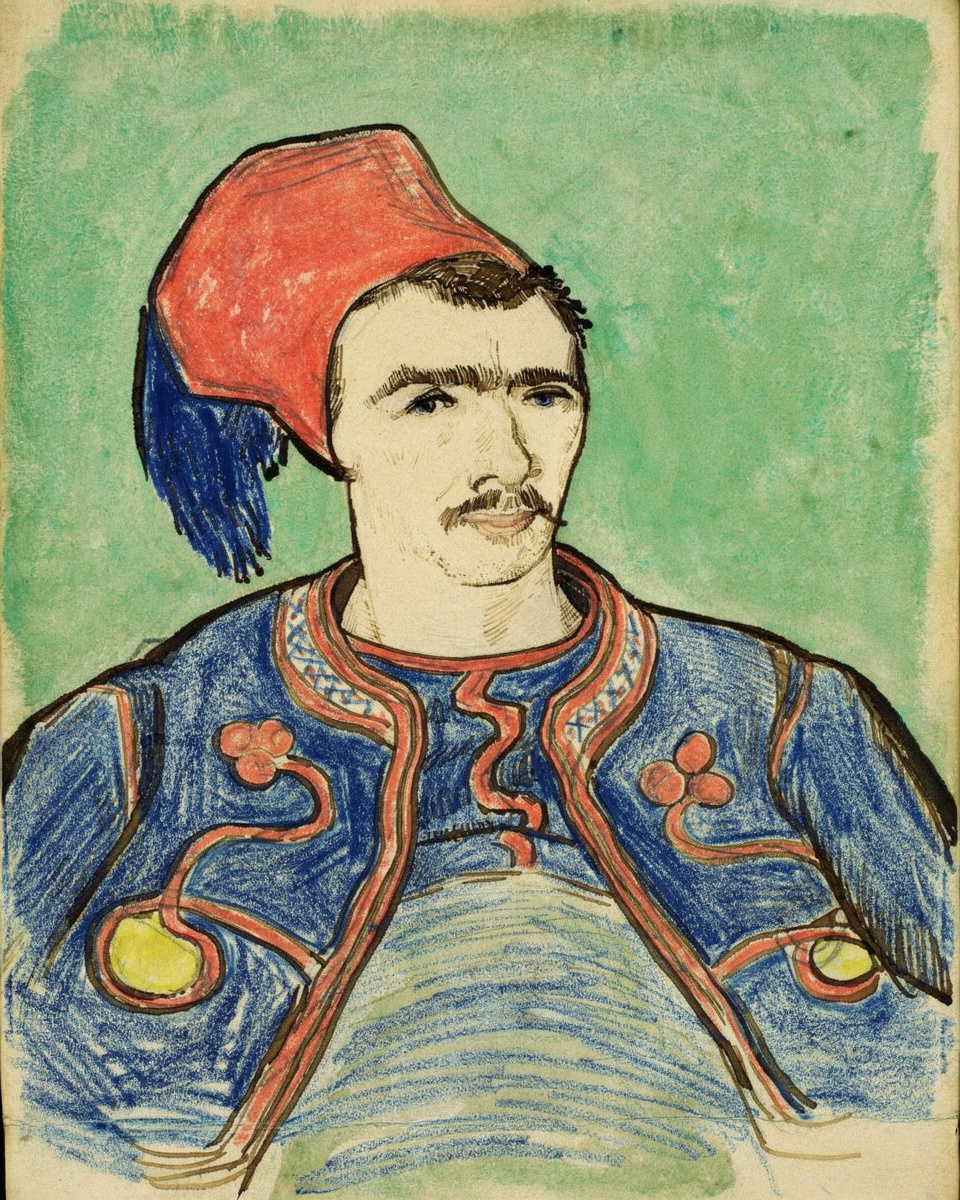
Vincent van Gogh, The Zouave, ca. June 20, 1888. Reed pen and brown ink, wax crayon and watercolor, over graphite on wove paper. The Metropolitan Museum of Art, New York.
A Zouave was a French infantryman in a North African uniform. In June 1888 Van Gogh painted one of them in Arles and then drew him again in reed pen, ink and wax crayon, to send to his friend Émile Bernard. The bold strokes are like a key to how he built his paintings.
Van Gogh’s colour is strong, so give his pictures room. A single large Irises or Roses holds a living room wall on its own; Oleanders suits a kitchen or a sunny breakfast room; L’Arlésienne is a portrait to hang where you sit. The two drawings are quieter and work beautifully in a study. For the movement he grew out of, read our guide to impressionist paintings, and for more bouquets see famous flower paintings.
Questions
What are Van Gogh’s most famous paintings?
The Starry Night, Sunflowers, Irises, Café Terrace at Night, The Bedroom, Wheatfield with Crows and his self-portraits. Irises and Roses, both in this list, were painted in his last spring, in 1890.
Where can I see Van Gogh paintings in the US?
The Metropolitan Museum of Art in New York has Irises, Roses, Oleanders and L’Arlésienne. The Art Institute of Chicago has The Poet’s Garden, The Drinkers and The Bedroom. MoMA has The Starry Night.
Which Van Gogh painting is best for a living room?
A flower painting such as Irises or Roses, because the colour is joyful and the subject sits easily in any room. Hang it large, at eye level, and keep the wall around it plain.
Can I order a Van Gogh print from Fable?
Yes. Each work in this list can be ordered as a print, on paper or canvas, prepared from the museum’s own high-resolution scan.