Museum christmas cards: choose a work, then make the message yours
Museum christmas cards begin with real art and a personal message. Compare ten historical references, then choose an available design.
Museum christmas cards can carry a real work of art into a small, personal exchange. The picture gives the card a mood; your words explain why it has travelled to this particular person. Choosing art thoughtfully matters more than finding the busiest festive scene.
The ten references here come from Fable's historical catalogue. They are not cards issued or endorsed by the holding museums, and the illustrations shown are the works themselves rather than previews of finished stationery. Open the Christmas masterworks card collection to see which works and layouts are currently offered. The references below help you decide what sort of image belongs with your message.
For fine art christmas cards in 2026, begin with your recipients. A music lover, a family with children and someone facing a quiet December may welcome different pictures. There is no need to send everyone the same emotional version of Christmas.
1. A Cart on the Snowy Road at Honfleur: winter without a declaration
A Cart on the Snowy Road at Honfleur · Claude Monet · c. 1867 · Musée d’Orsay, Paris
Monet's work in the Musée d'Orsay offers a winter reference that does not require the greeting to make a religious statement. Think of someone who would enjoy a seasonal landscape and a personal note about the year. The work itself is shown here; the live Christmas masterworks collection is the place to check which pictures and layouts can currently become cards.
Choose a winter art card · Explore this artwork
2. Between Christmas and New Year: the days in between
Between Christmas and New Year (A Home) · Carl Larsson · 1899 · Nationalmuseum, Stockholm
Larsson's work in Nationalmuseum gives the quieter interval after Christmas its own title. It can prompt a greeting to someone who enjoys home and ordinary routines more than a large celebration. Write about a particular visit or kindness rather than describing the whole year as wonderful. A seasonal card can make room for mixed experiences as well as festive wishes.
Explore Christmas card designs · Explore this artwork
3. Christmas Party: a sociable reference
Christmas Party · Lars Jorde · 1895–96 · Nasjonalmuseet, Oslo (NG.M.00475)
Jorde's work in Nasjonalmuseet offers a starting point for people who love a gathering. You might thank a host, remember an annual meal or say that you look forward to seeing friends. Keep confirmed plans distinct from a general wish. A cheerful card does not need to promise an event that has not been arranged, or turn the image into a crowded invitation.
Choose your card design · Explore this artwork
4. Christmas Time, the Blodgett Family: a household greeting
Christmas-Time, The Blodgett Family · Eastman Johnson · 1864 · The Metropolitan Museum of Art
Eastman Johnson's work in the Metropolitan Museum offers a named family subject. It can prompt a greeting from your own household without making the historical family stand in for yours. Keep the catalogue identity clear and let your message supply the personal connection. If several people contribute to the card, check the names and the complete wording together before proceeding.
Explore family Christmas cards · Explore this artwork
5. Grandmamma’s Christmas Visitors: remember an actual visit
Grandmamma's Christmas Visitors · George Adolphus Storey · 1873 · Sheffield Museums (VIS.1432)
Storey's work in Sheffield's collection gives family visits a place in the historical picture. Use that connection thoughtfully: not everyone has the same family arrangements or feelings about December. A card to a grandparent might recall a real visit or tradition. The best message recognises the recipient's life rather than treating a historical household as a universal model for Christmas.
Create a personal Christmas greeting · Explore this artwork
6. Old Father Christmas: choose the storybook register
Old Father Christmas · William Ewart Lockhart · before 1900 · The Hunterian, University of Glasgow (GLAHA 43929)
Lockhart's work in the Hunterian offers a more explicitly festive direction. Consider whether that tradition suits the recipient before choosing it for a whole address book. A card for children can use different words from one sent to colleagues. Read every name and the greeting in the final proof; accurate personal details are part of making a beautiful card feel considered.
Explore festive card designs · Explore this artwork
7. The Christmas Fair: a greeting with a place in it
The Christmas Fair · Georg von Rosen · 1872 · Nationalmuseum, Stockholm (NM 24400)
Georg von Rosen's Nationalmuseum work can prompt a memory of a market, a town or a seasonal outing. Let the historical title retain its own identity rather than pretending it depicts your visit. Your note can explain the personal association. A recognisable shared memory often gives a card more warmth than an elaborate greeting that could be sent unchanged to everyone.
Choose a masterwork greeting · Explore this artwork
8. Roasting the Christmas Beef in a Cavalry Camp: a different history
Roasting the Christmas Beef in a Cavalry Camp · Frederic Remington · c. 1892 · Yale University Art Gallery (1972.55)
Frederic Remington's Yale work offers a seasonal subject outside the familiar domestic room. It may suit a recipient interested in historical pictures, but consider the context before choosing it as a general festive image. The title is part of what the work shows. A thoughtful card can acknowledge that specificity without turning a historical scene into a claim about anyone's present-day celebration.
Explore historical Christmas cards · Explore this artwork
9. Stack of Wheat, snow effect: a quieter winter picture
Stack of Wheat (Snow Effect, Overcast Day) · Claude Monet · 1890–91 · Art Institute of Chicago
Monet's work in the Art Institute of Chicago offers another winter reference. Compare it with the snowy road before deciding what mood you want to send. A landscape can accompany a restrained greeting to someone facing a quiet December. You do not have to insist on a cheerful year in every message; a simple wish and a truthful personal sentence can be enough.
Find a quiet winter card · Explore this artwork
10. Winter Scene: let the message remain personal
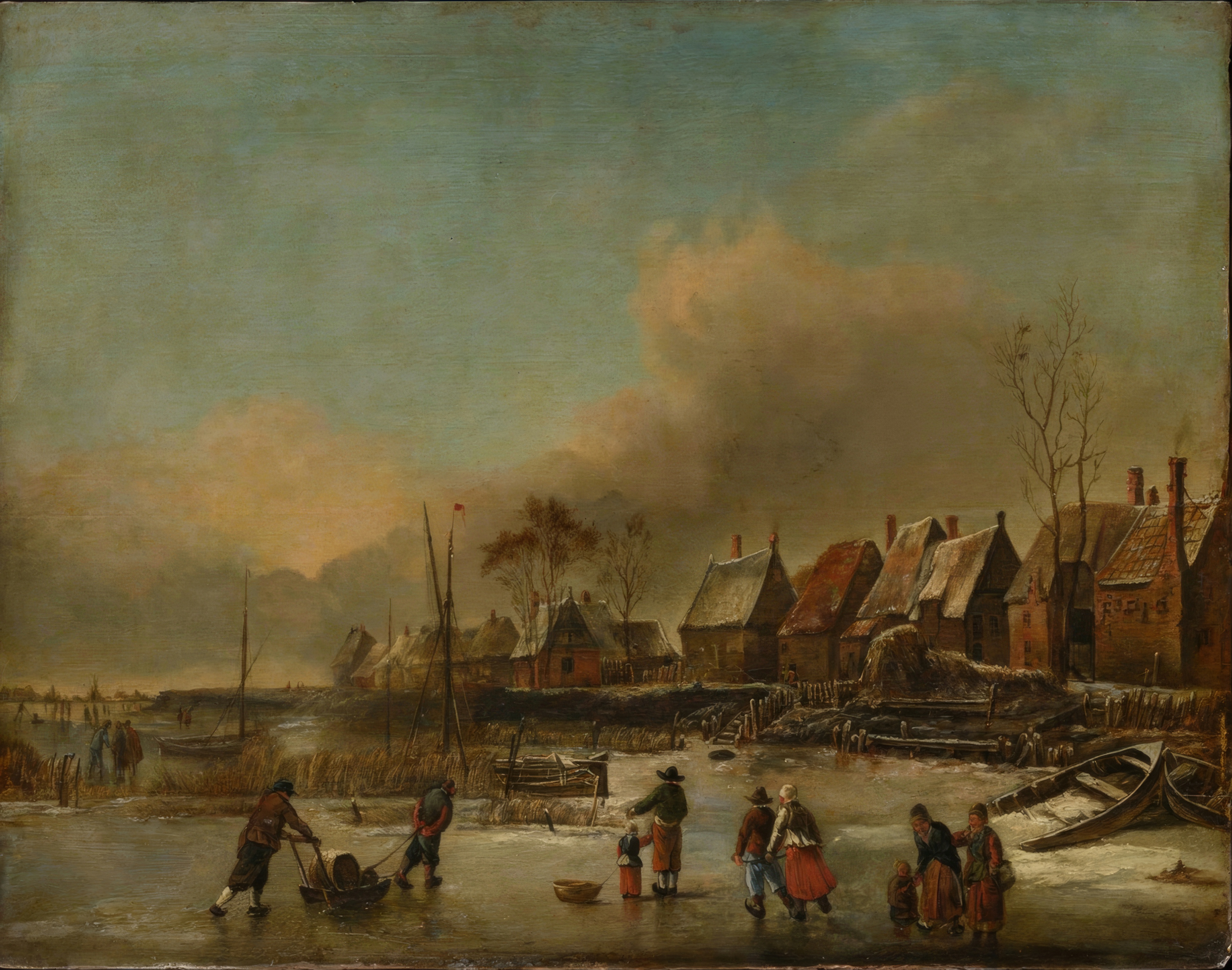
Winter Scene · Style of Jan van de Cappelle · 18th or 19th century · The Metropolitan Museum of Art
The Metropolitan Museum's winter work offers a seasonal starting point without requiring your note to describe a particular Christmas ritual. Choose it for a recipient who enjoys landscape art, then write about something you actually share. Before ordering, review the available design and complete proof. The illustration here is the historical work, while the studio determines the image and layout currently offered.
Choose art for your card · Explore this artwork
To move from reference to finished card, open the Christmas masterworks collection and choose an available design. Add your greeting, check the spelling of names and review the complete proof. Keep important words clear of the image, and choose a presentation that preserves the painting rather than squeezing it into an incompatible shape.
A museum-style card does not have to sound like a gallery label inside. Write one sentence about why you thought of the recipient, then your wish for the season. If the year has been difficult, a quiet greeting is enough. You do not need to insist that everyone has had a wonderful year.
Current product information provides the available card formats, order details and delivery information. Check those before purchasing. The art can begin the exchange, but the part that makes the card yours is the attention you give the person receiving it.