The Rainbow Bridge poem: a metaphor for remembering
The Rainbow Bridge poem offers one image of reunion. Its authorship history and other ways to remember a pet deserve equal care.
The Rainbow Bridge poem imagines a place where animals who have died are well again and eventually reunited with the people who loved them. Many readers find that picture comforting. Others prefer to remember a pet without an account of an afterlife. Neither response needs correcting, and a message to someone grieving should not assume which one they share.
The poem is not reproduced here. Its circulation has involved uncertain attribution and competing claims, and the current presentation discussed below names Edna Clyne-Rekhy. A short account of the history can help you understand the reference without turning a copied poem into the only acceptable language of remembrance. The historical animal pictures on this page provide a different kind of company: dogs and cats in ordinary, particular relations to the world.
What people mean by the bridge
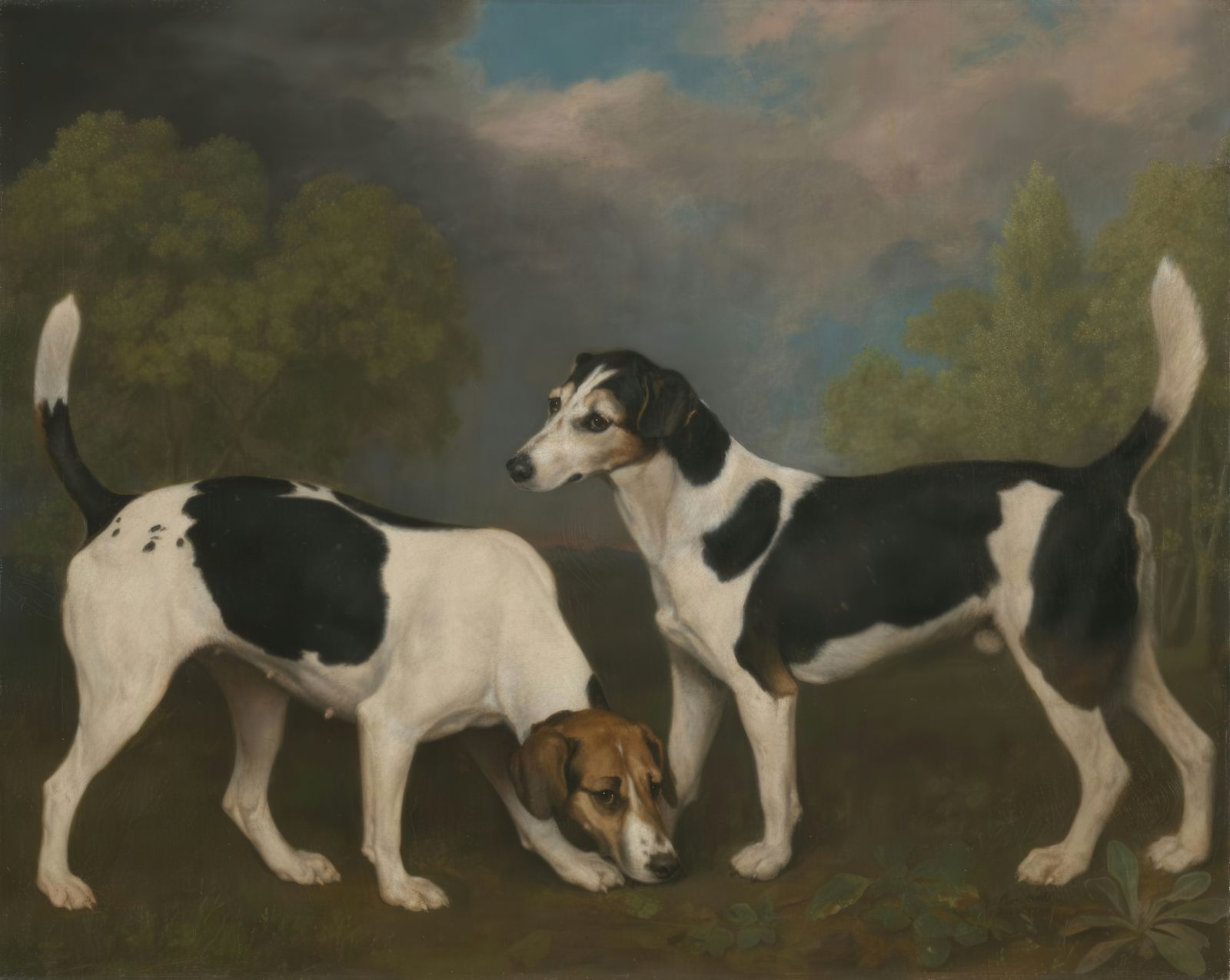
A Couple of Foxhounds · George Stubbs, 1792 · Tate, London. Prepared for print by Surrealium at Vaxholm Fortress, Sweden.
The phrase usually refers to an imagined reunion after death, with the animal free of suffering while waiting for the person it knew. That is the emotional shape of the story, rather than evidence about what happens after an animal dies. For a reader who welcomes the metaphor, it can give separation a form that includes the possibility of meeting again.
The distinction between comfort and fact is worth preserving. You can say that the poem helps you imagine a reunion without telling another person that they must believe it. You can also recognise why the phrase has become a familiar shorthand while deciding not to use it yourself. A shared expression is useful only when it gives the people involved language they actually want.
The attribution deserves more than “anonymous”
A current Rainbow Bridge presentation credits Edna Clyne-Rekhy and dates her original writing to 1959, describing its connection with the death of her dog Major. It also recounts Paul Koudounaris's later research into the author. This is a more specific account than the anonymous label attached to many circulating copies, but the wider history of variants and competing attributions should not be flattened into a claim that every version has one settled text.
If you want to read that presentation, use the credited poem and account of its history. Linking lets the reader encounter the source in its own context. This article summarises the central metaphor and the attribution claim rather than copying the poem, changing its wording slightly or attaching an unsupported author name to a familiar passage.
A pair of foxhounds, without a promised elsewhere
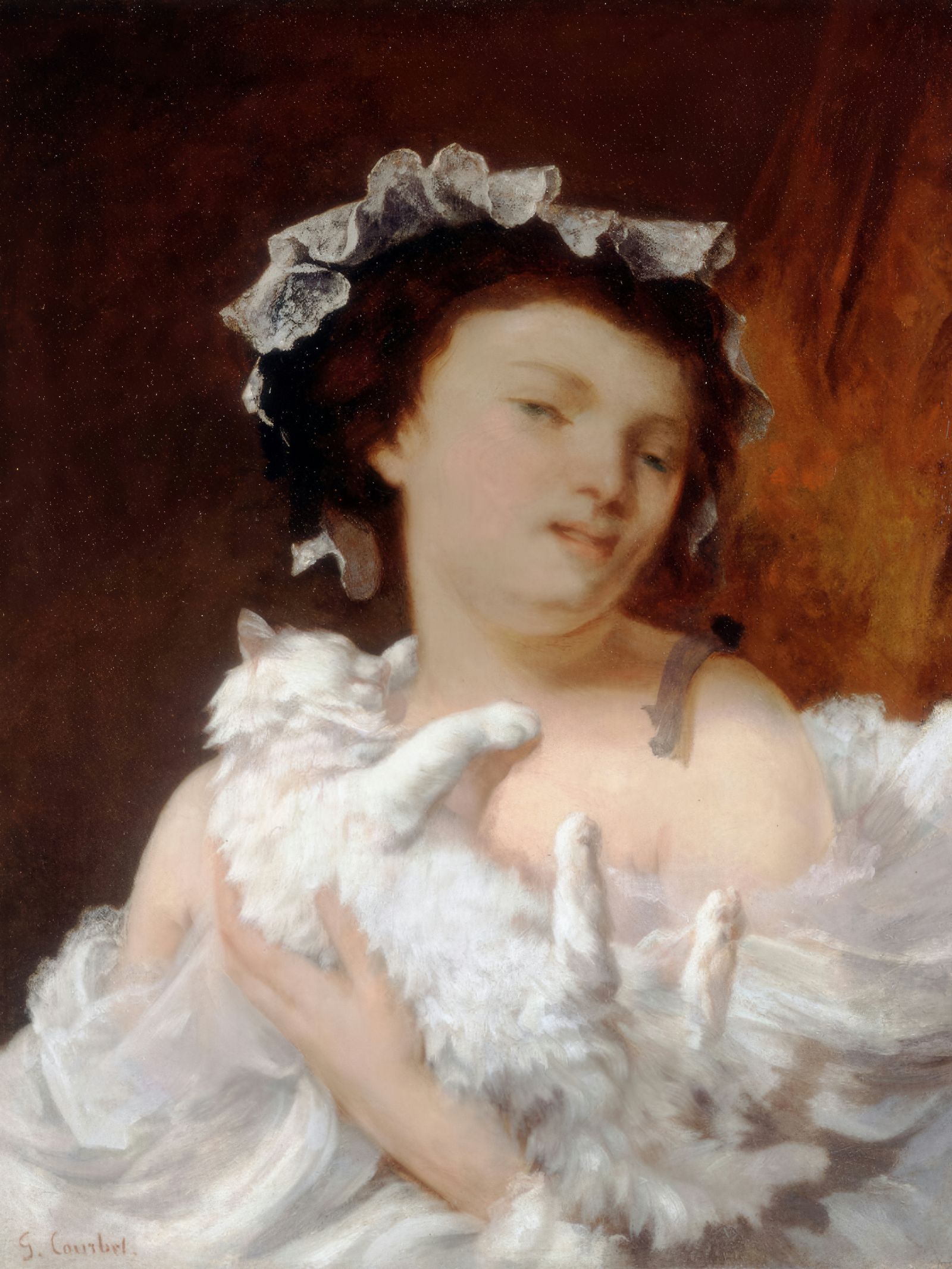
Woman with a Cat · Gustave Courbet, 1864 · Worcester Art Museum. Prepared for print by Surrealium at Vaxholm Fortress, Sweden.
Stubbs's A Couple of Foxhounds shows two animals within a landscape, one with its nose lowered and the other with its head raised. Their different kinds of attention make the picture particular. Nothing in the painting requires a memorial interpretation, and that is part of its usefulness here. An animal can be remembered through the way it occupied the world while alive.
If you have lost a dog, you may recognise a posture or the habit of stopping at a scent without needing the historical hounds to represent your own companion. The picture can prompt a memory and remain a separate artwork. It does not prove that grief will become easier or supply a symbolic destination. It simply gives the eye two animals behaving as animals.
Writing to someone who uses the phrase
If a friend has already spoken about the Rainbow Bridge, you can acknowledge that language without expanding it into a sermon. A short response might say that you are thinking of them and remembering the animal by name. Add a real memory if you have one. The useful part is your attention to the relationship, not your ability to produce the most elaborate image of reunion.
If you do not know their beliefs, begin more plainly. “I am sorry you are missing her” leaves room for their own account. Avoid telling them the animal is in a better place if that is not language they have chosen, and do not ask them to reassure you that your message was helpful. A thoughtful note can be received quietly without requiring an immediate answer.
A cat held close: remembering a physical habit
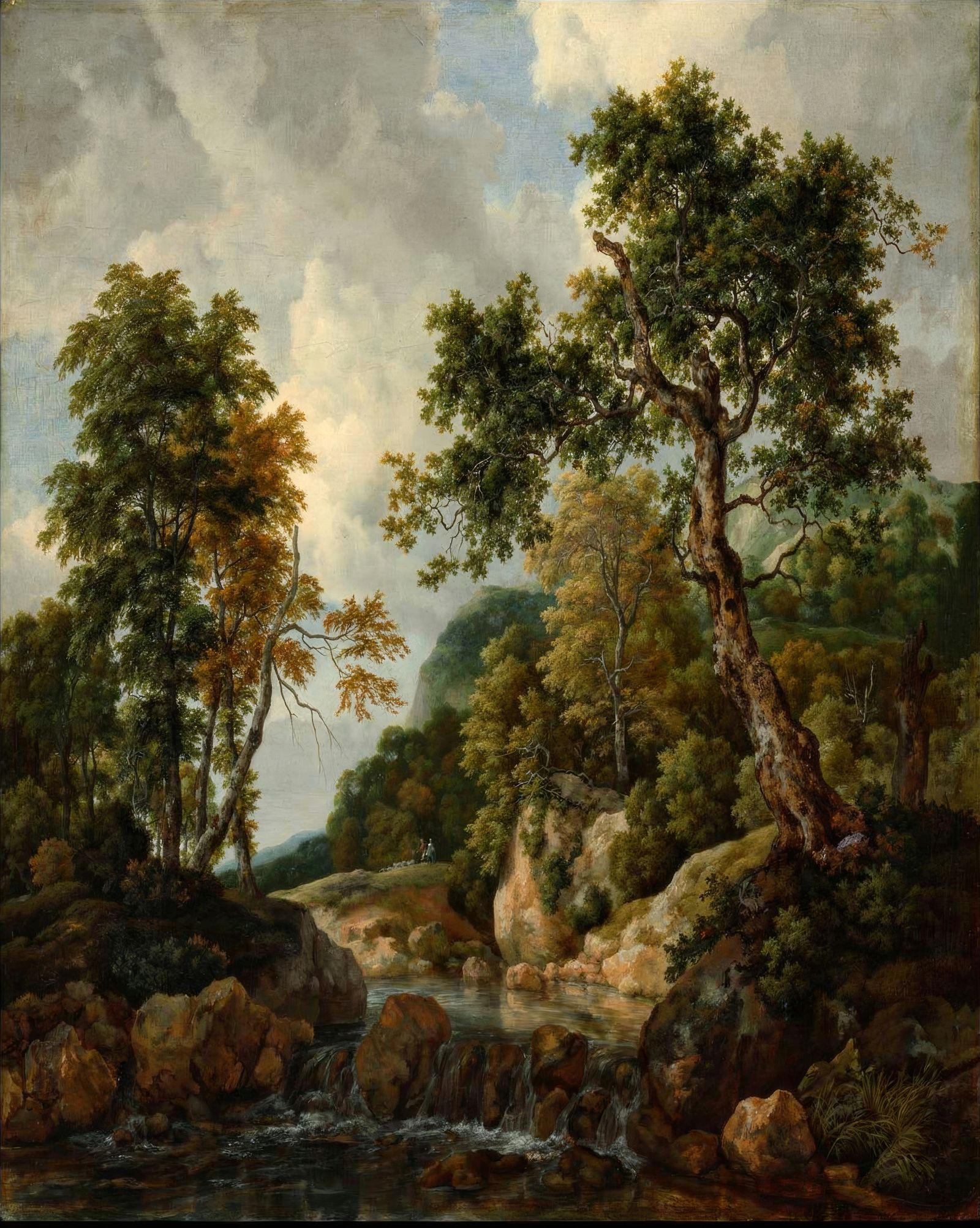
The Forest Stream · Jacob van Ruisdael, ca. 1660 · The Metropolitan Museum of Art. Restored by Surrealium at Vaxholm Fortress, Sweden.
Courbet's Woman with a Cat brings the pale animal against the woman's upper body, with hands, fur and fabric gathered into a close arrangement. The picture offers a physical kind of intimacy, not a general statement about all cats. Its softness may prompt a memory of weight, warmth or the particular way an animal settled beside someone.
That can be a useful beginning for your own writing. Describe the small habit before trying to give it a larger meaning. Perhaps the cat arrived when you opened a book, or the dog chose the same patch of floor every evening. Such details do not need to become lessons about love in order to matter. Their value is that they belong to the animal you actually knew.
When a metaphor does not help
A person may dislike the Rainbow Bridge image because it does not fit their beliefs, because the language feels too sentimental or simply because they cannot bear it at this moment. There is no need to argue them into comfort. A poem can be meaningful to many readers without being right for every recipient or every day.
The guide to pet loss quotes offers original lines that can be adapted without an afterlife claim. Pet sympathy cards considers how to write to someone else. If words feel impossible, a short note that names the animal and offers company can be enough. Silence shared willingly is different from silence that leaves a person unsure whether their loss has been noticed.
A landscape can hold attention without explaining loss
A Couple of Foxhounds · George Stubbs, 1792 · Tate, London. Prepared for print by Surrealium at Vaxholm Fortress, Sweden.
Ruisdael's Forest Stream gives water a route between rocks and trees, with darker masses opening towards patches of light. It is not a picture of the Rainbow Bridge, and it should not be captioned or sold as though it illustrates the poem. Its role here is quieter: a landscape can offer something to look at while thought moves at its own pace.
You might choose a real place associated with your pet instead, using a photograph, a written memory or simply a visit when you want one. Do not feel obliged to convert a place into a formal memorial. The connection may remain private. A tree passed on a daily walk can matter without a plaque, and a photograph can stay in a drawer until displaying it feels welcome.
Choosing a keepsake without a timetable
A portrait can become one way of remembering, but it is not a task that grief requires you to complete. If you want one, choose a photograph because the expression and markings look right to you. If the portrait is a gift, ask first rather than planning a surprise around the recipient's most painful moment. Their readiness matters more than the sender's wish to do something visible.
The guides to dog memorial gifts and pet portrait styles can help when that decision is useful. You can also spend time with Stubbs's two foxhounds as a historical work in its own right. Remembering does not have one format, and keeping the animal's particular life in view is more important than selecting the most familiar symbol.
The Rainbow Bridge can remain one available metaphor among many. A true detail about an animal, a name spoken with care or a photograph chosen in your own time can do different work. Keep the language that helps you remember, and allow other people the same freedom.
- Who wrote the Rainbow Bridge poem?
- A current credited account identifies Edna Clyne-Rekhy and dates her writing to 1959. The poem circulated with uncertain attribution and in variants, so that history should be acknowledged rather than treating every circulating text as identical.
- Is the Rainbow Bridge a religious teaching?
- It is a popular image of reunion after death, received differently by different readers. It should not be presented as a fact or assumed to match someone else’s beliefs.
- What can I write instead of a Rainbow Bridge message?
- Use the animal’s name and one memory, or simply acknowledge that the person is missing a loved companion. You do not need a poem, quotation or explanation of the afterlife to express care.