Pet loss quotes: ten original lines for remembrance
Original pet loss quotes for a card, a caption or a private note, paired with historic pictures of dogs and cats as themselves.
Pet loss quotes can help when you know what you feel but cannot find the first sentence. The lines below are written for this guide, so there is no borrowed quotation with an uncertain famous name attached. Use them as beginnings, change them to sound like you, or leave them behind if a plain sentence about the animal feels more truthful.
The historical pictures are companions to the words, not illustrations of the pets you are remembering. Some are playful, some quiet, and none tells you how grief should look. If you are writing to someone else, the guide to pet sympathy cards helps keep the message centred on the recipient. A portrait is an optional way to remember; the pet portrait styles guide can wait until choosing an image feels welcome.
1. For the quiet place they occupied
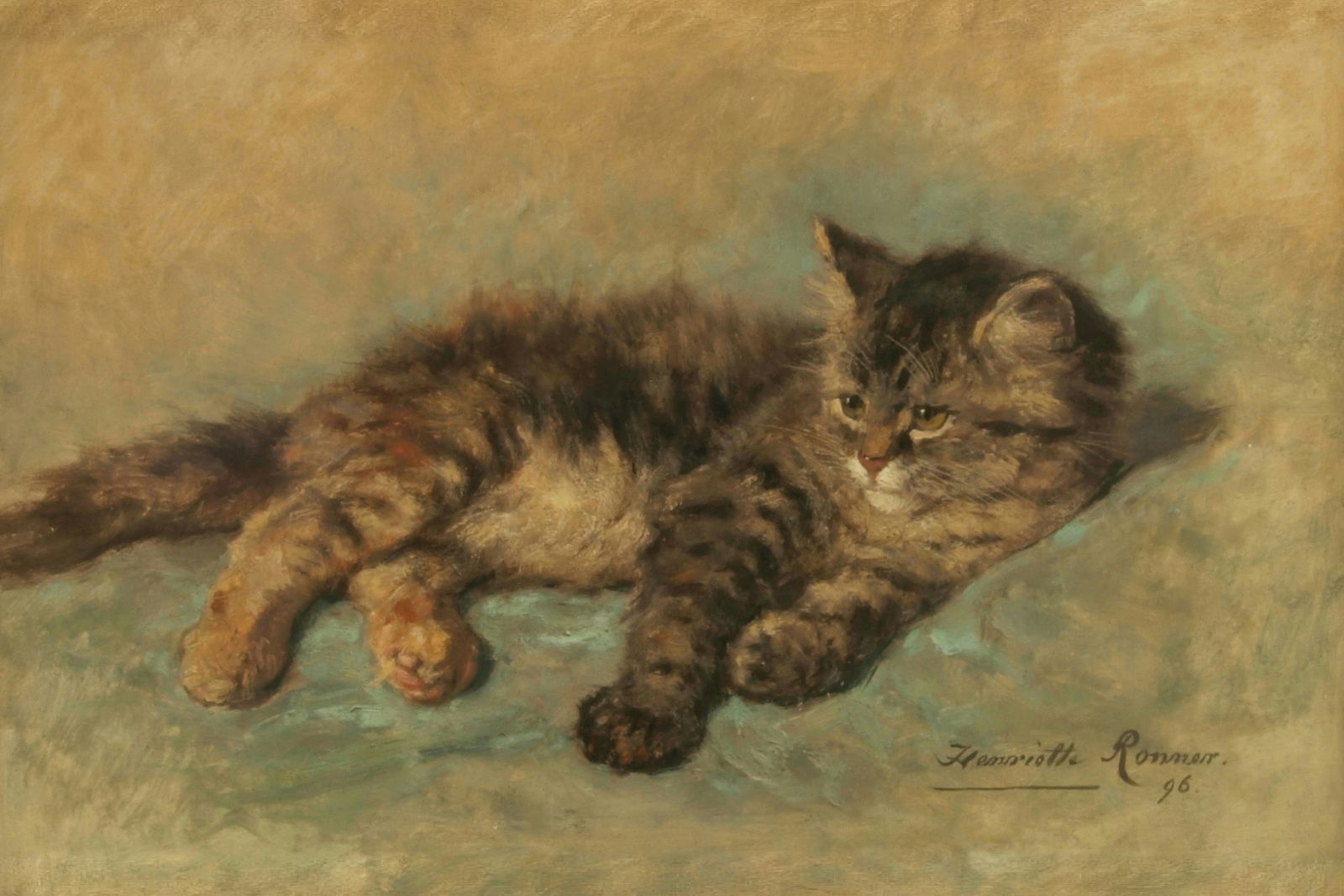
Kitten Lying Down · Henriëtte Ronner-Knip, 1896 · Teylers Museum, Haarlem. Prepared for print by Surrealium at Vaxholm Fortress, Sweden.
“The room is different without your small, familiar weight in it” can begin a private note about the ordinary physical presence you miss. Ronner-Knip's resting kitten gives that idea a quiet companion, with the body settled across a pale surface and the head still alert. Add the place that belonged to your own animal, whether a chair, a patch of sunlight or the end of the bed, rather than asking the historical picture to stand in for a likeness.
2. For the closeness of a cat
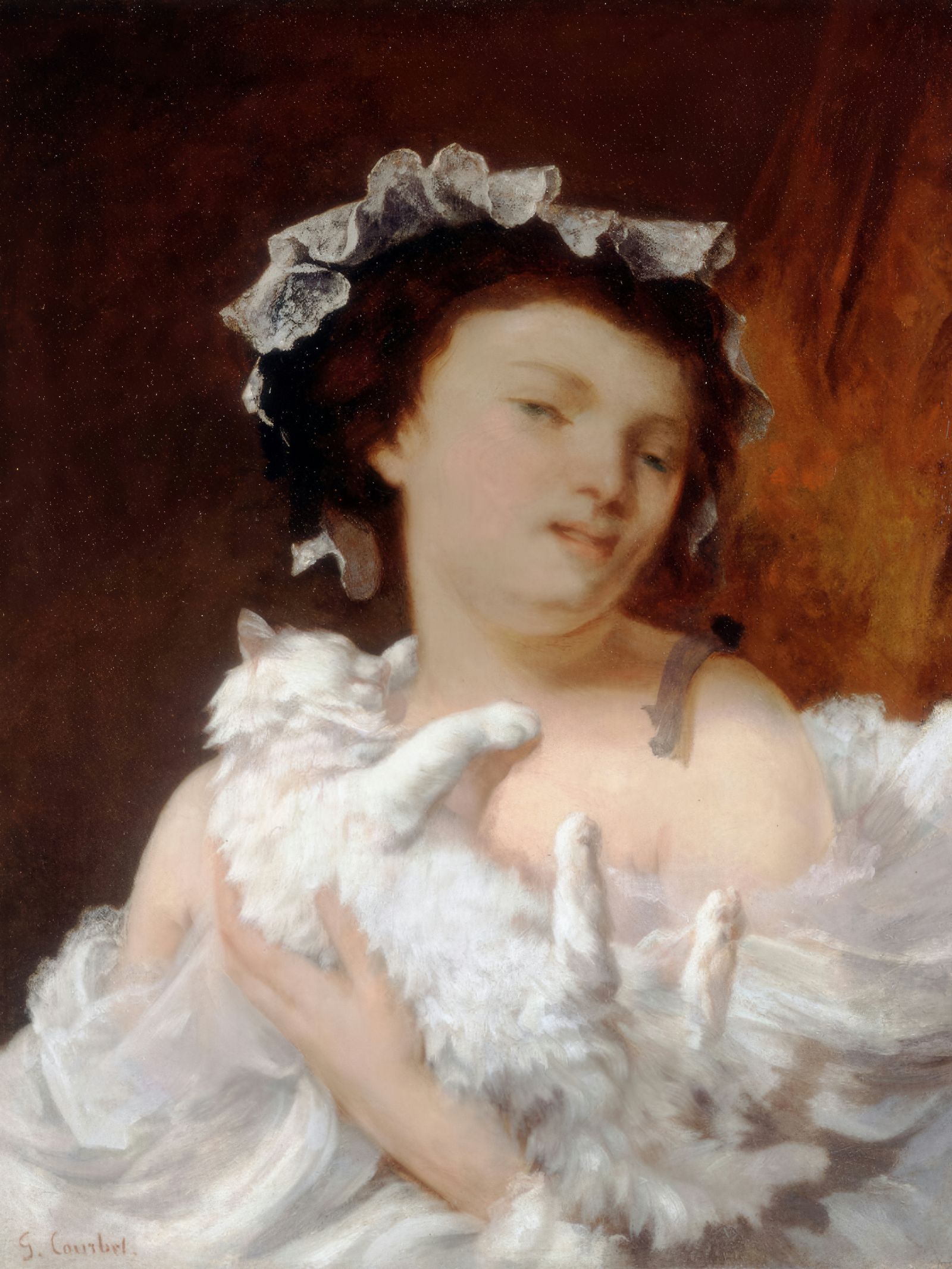
Woman with a Cat · Gustave Courbet, 1864 · Worcester Art Museum. Prepared for print by Surrealium at Vaxholm Fortress, Sweden.
“I miss the way you chose to be near me” leaves room for the particular affection of an animal whose company was never quite on command. Courbet's woman holds a pale cat close against her body, bringing fur, fabric and hands into one soft arrangement. The line can stay as it is for a caption, or you can follow it with the tiny ritual you remember, such as a cat arriving beside you when the house had finally become quiet.
3. For a dog remembered outdoors
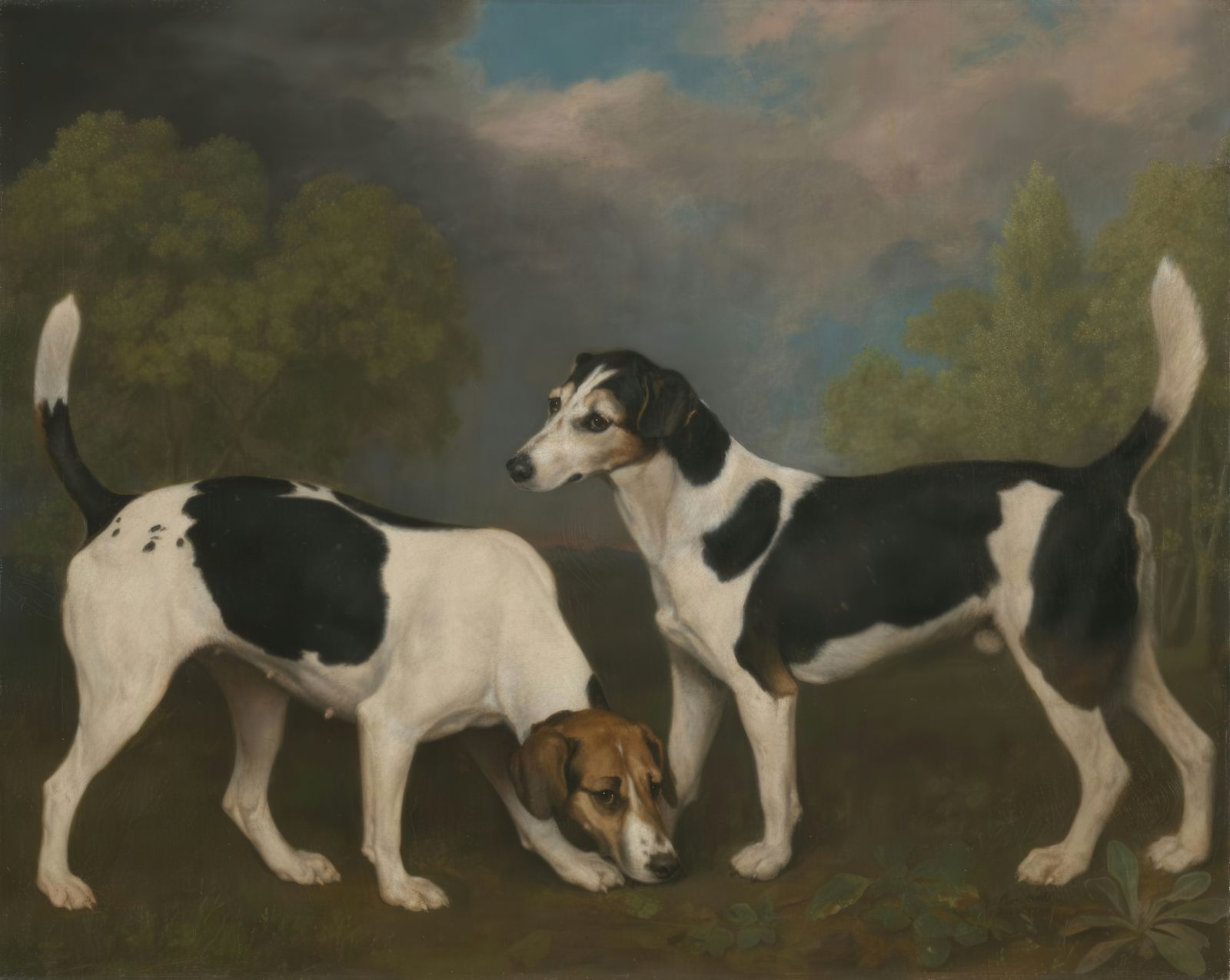
A Couple of Foxhounds · George Stubbs, 1792 · Tate, London. Prepared for print by Surrealium at Vaxholm Fortress, Sweden.
“Every familiar path still has a little of you in it” names a shared place without promising that walking there will feel easy. Stubbs's two foxhounds occupy the landscape differently, one nose lowered and the other head raised, which makes their canine attention the centre of the picture. If you are writing about your own dog, add a real detail from a regular route, but do not feel obliged to revisit the place before you want to.
4. For a household with more than one animal
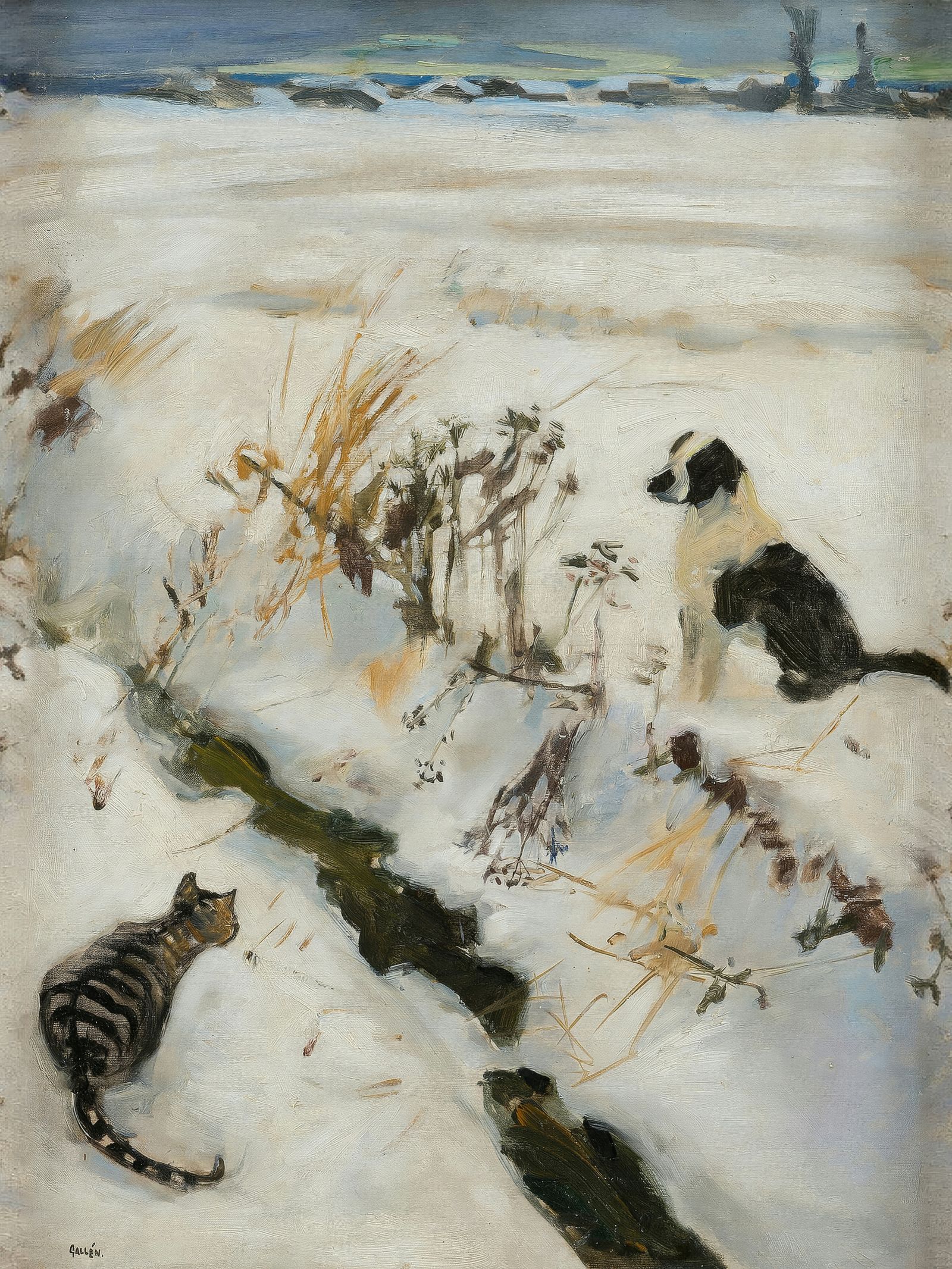
Cat and Dog · Akseli Gallen-Kallela, 1890 · Private collection. Prepared for print by Surrealium at Vaxholm Fortress, Sweden.
“You had your own way of belonging here, and no one else can take your place” recognises one pet without diminishing the animals still at home. Gallen-Kallela's cat and dog remain separate figures in a snowy landscape, each with its own position and attention. That separation is a useful reminder when writing: use the animal's name and one distinguishing habit, rather than treating several pets as interchangeable members of the same affectionate story.
5. For the routines that remain
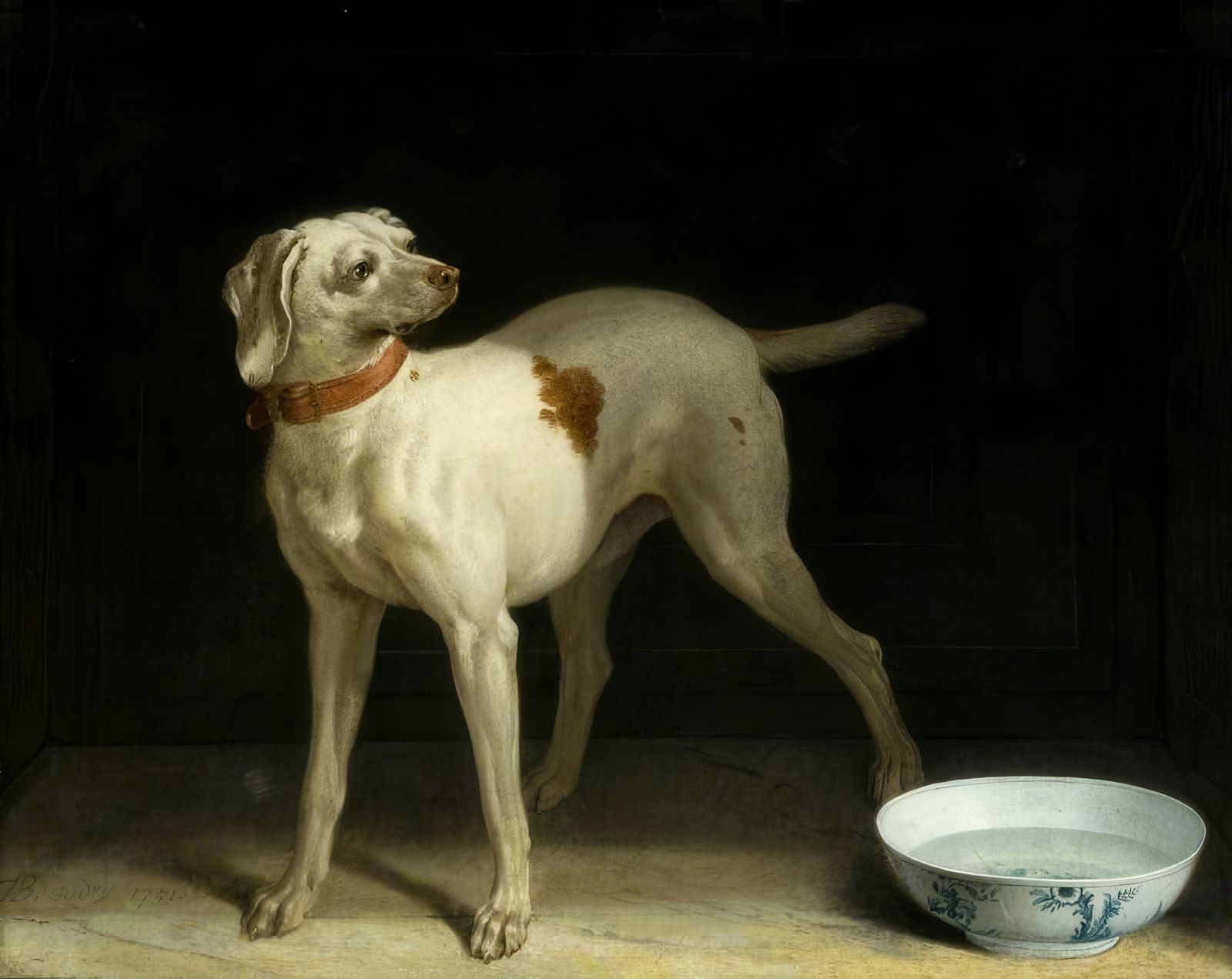
The Dog · Jean-Baptiste Oudry, 1751 · Burrell Collection, Glasgow. Prepared for print by Surrealium at Vaxholm Fortress, Sweden.
“I still notice the hour when you used to ask for something” can hold the strange persistence of a daily routine after a pet has died. Oudry's dog stands beside a bowl, with a dark background giving the animal and the ordinary object unusual clarity. You might name the sound of a bowl, a lead taken from its hook or a familiar look at the door, keeping the memory concrete instead of trying to turn every small action into a grand lesson.
6. For a gentle message to a friend
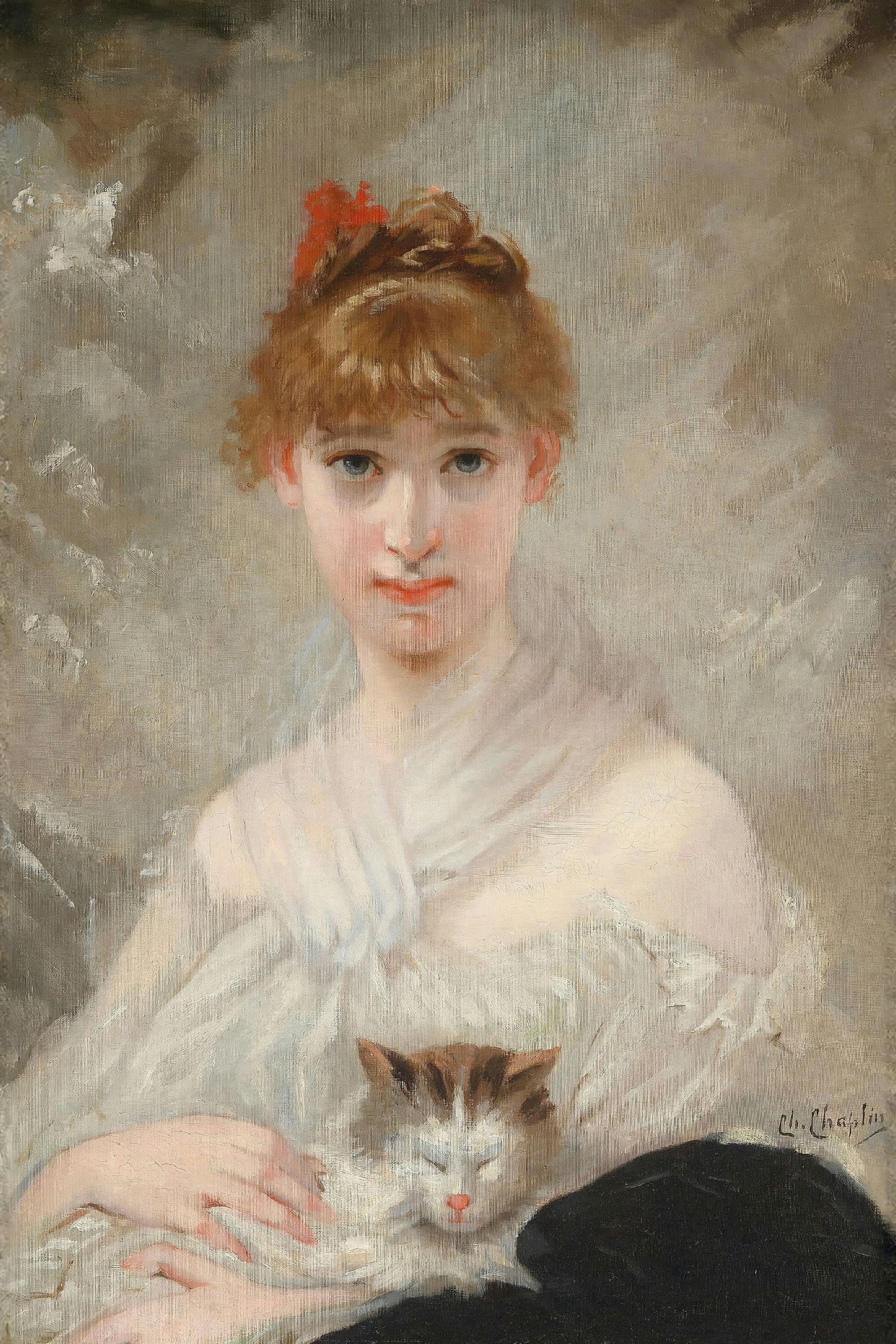
Girl with a White Shawl and a Cat · Charles Joshua Chaplin, by 1891 · Private collection. Prepared for print by Surrealium at Vaxholm Fortress, Sweden.
“I remember how at ease they were beside you” offers a specific kindness if you actually witnessed that relationship. Chaplin's girl rests her hand near a cat within a pale, quiet portrait, but the words should refer to the friend's own animal rather than to a sentiment inferred from this painting. Follow the line with a memory you can stand behind, and leave space for the recipient to reply later or not at all.
7. For a small dog with a large presence
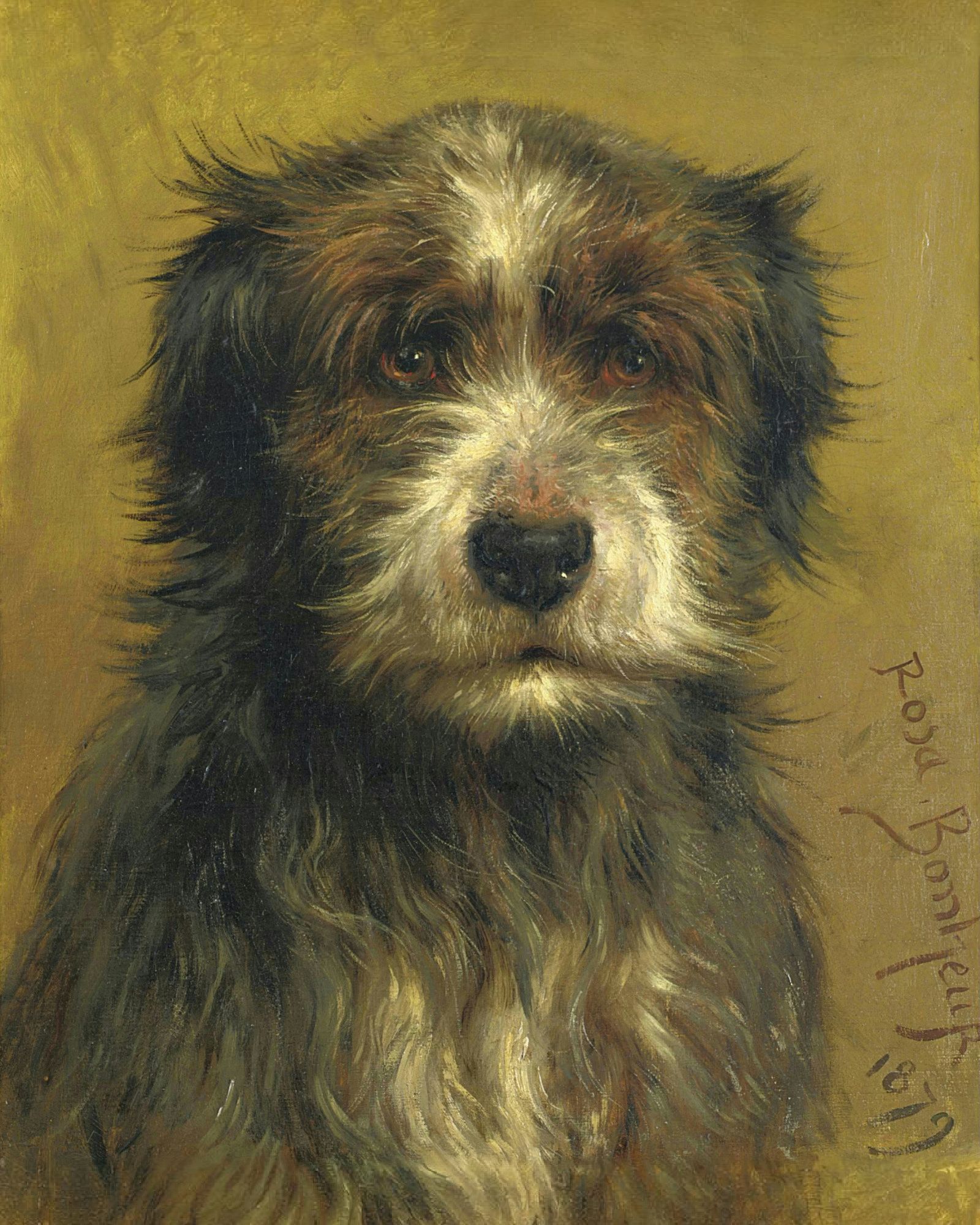
Martin, a terrier · Rosa Bonheur, 1879 · Private collection. Prepared for print by Surrealium at Vaxholm Fortress, Sweden.
“You never needed much space to become part of every day” can suit an animal whose size was small but whose routines filled a household. Bonheur's Martin faces the viewer closely, his wiry coat and alert eyes giving the small head a strong presence within the frame. Add a detail that belongs to the particular dog, such as the place it waited or the sound of its steps, rather than assuming that every small breed has the same character.
8. For the pet whose mischief is still funny
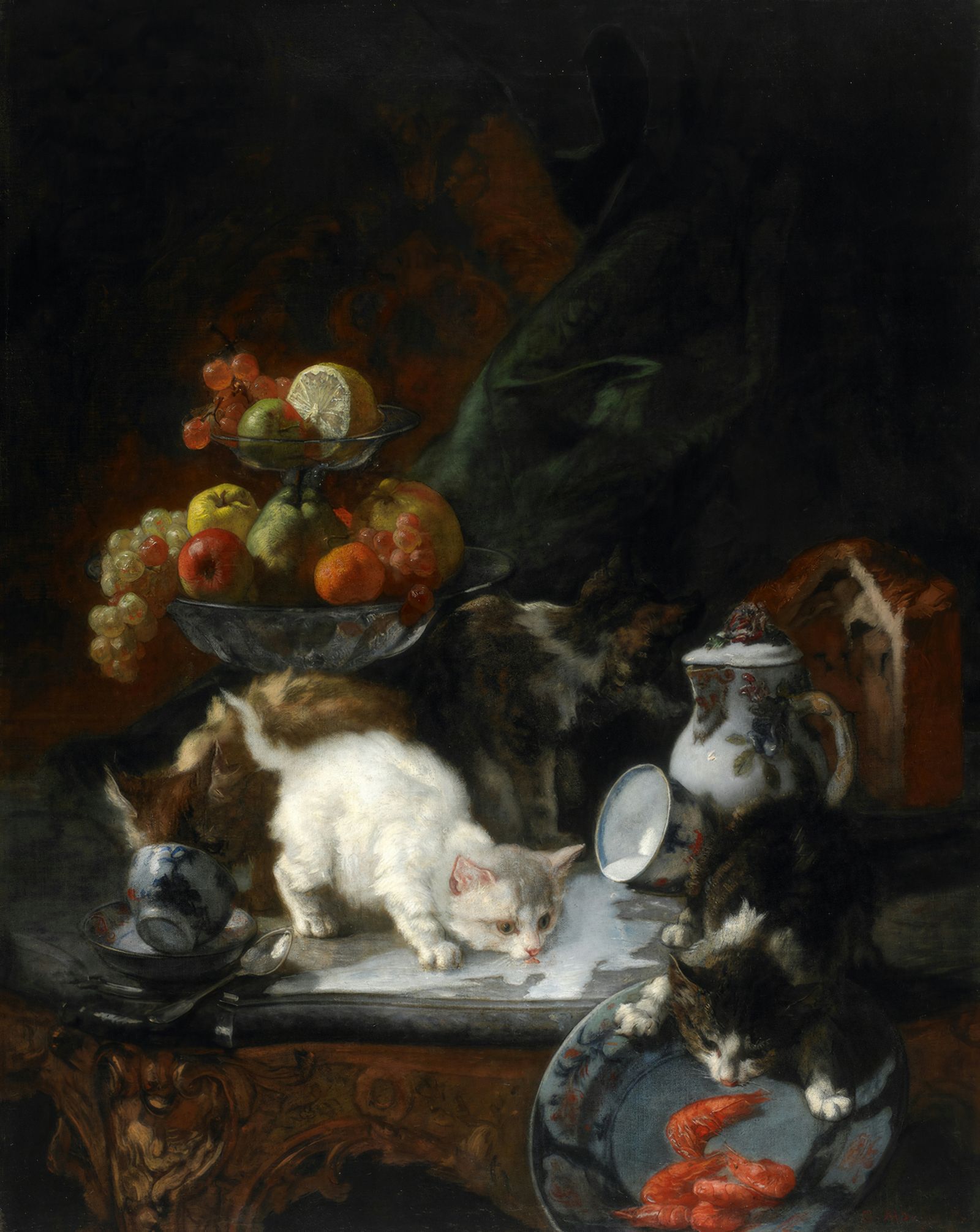
Cats on a Console · Charles Monginot, 1859 · Centre national des arts plastiques, Paris. Prepared for print by Surrealium at Vaxholm Fortress, Sweden.
“I can miss you and still laugh at what you did” allows affection and amusement to occupy the same sentence. Cats on a Console gives the viewer an elaborate arrangement of animals, fruit, vessels and surfaces, a fitting companion to a memory of investigation or disruption. Choose a story that makes the recipient smile without asking them to feel cheerful, and avoid using humour to hurry someone away from a sadness they are still trying to express.
9. For a child remembering an animal
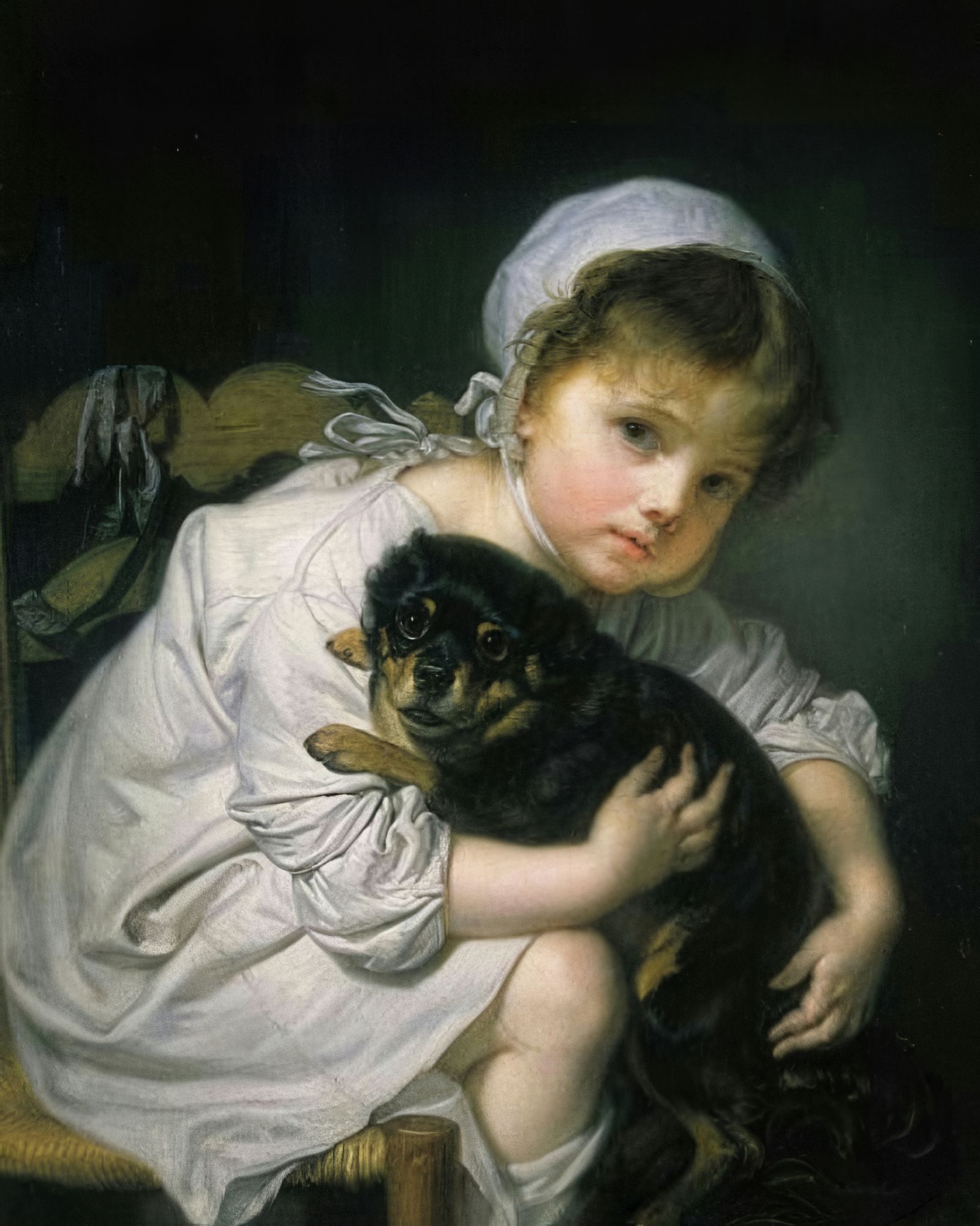
Young girl with a dog · Jean-Baptiste Greuze, 1767 · Private collection. Prepared for print by Surrealium at Vaxholm Fortress, Sweden.
“We can keep telling the stories we remember about you” is a simple invitation that does not require a child to understand an adult metaphor. Greuze's young girl holds her dog closely, making the relationship visible through the position of arms and body. Let the child choose a memory or draw a picture in their own way, and keep the language clear and familiar rather than using a poem to introduce beliefs the family has not discussed.
10. For a memory kept in a letter
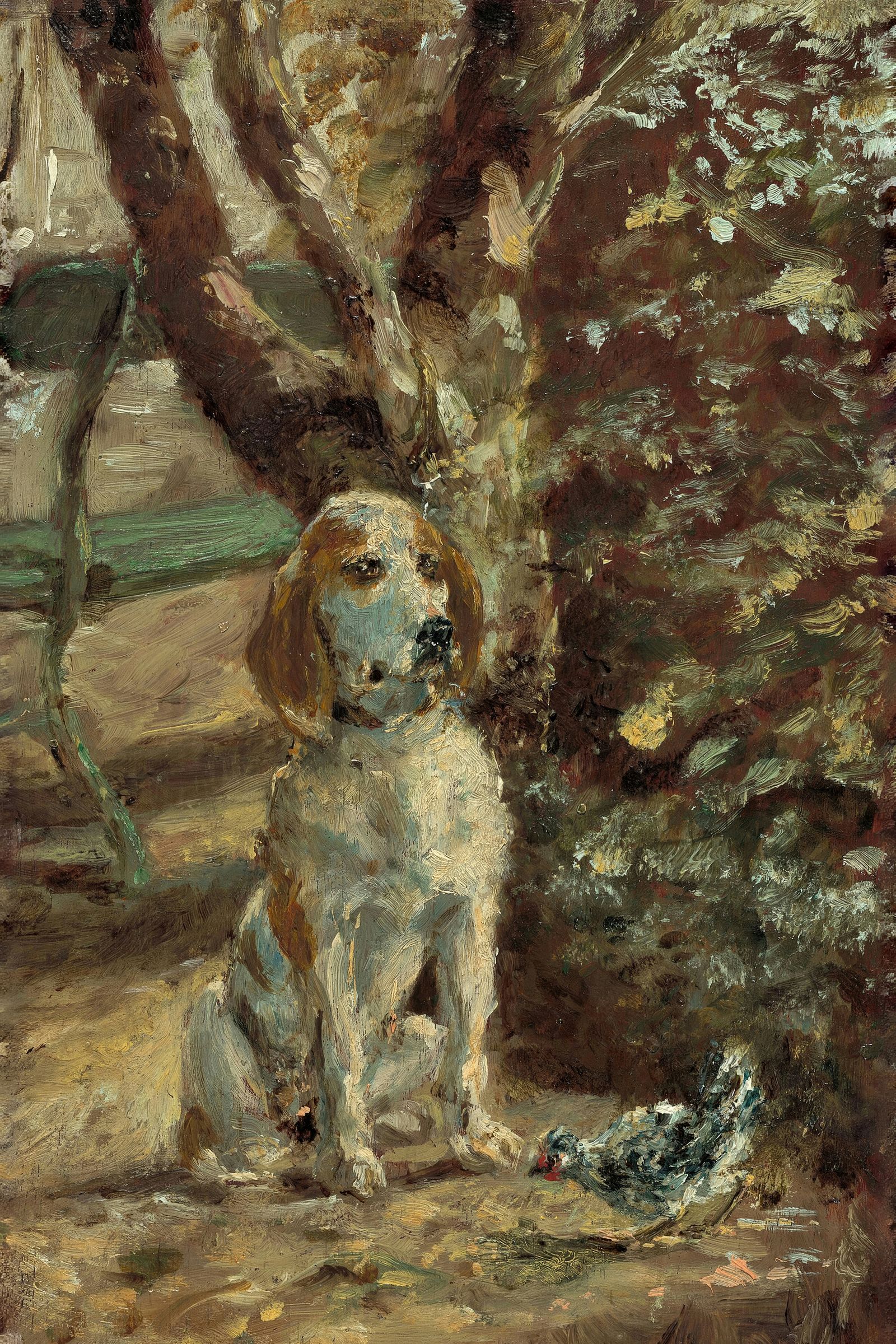
The Artist's Dog Flèche · Henri de Toulouse-Lautrec, c. 1881 · National Gallery of Art, Washington. Prepared for print by Surrealium at Vaxholm Fortress, Sweden.
“This is one small thing I do not want to forget about you” works as the first line of a longer note to yourself. The dog Flèche sits beneath a tree, an ordinary moment of canine presence that can prompt a memory without prescribing its meaning. Write the detail before trying to polish it, then save the note somewhere you can find again; an unfinished account of a real habit can matter more than a perfectly shaped tribute.
A message does not have to explain loss, promise an afterlife or make the reader feel better immediately. It can simply remember the animal by name and acknowledge the space they occupied. For a longer discussion of a familiar metaphor, read the Rainbow Bridge poem and its history; for a later keepsake, see dog memorial gifts. The resting kitten offers one quiet picture to sit beside your own words. If a portrait feels right, choose a photograph because it looks like the animal you remember, not because anyone says it is time to make a memorial.
- Can I use these pet loss quotes in a card?
- Yes. These are original lines written for this guide, and you can adapt them to the animal and the relationship. A name and one real memory will make the message more personal.
- What should I avoid saying after someone loses a pet?
- Avoid minimising the loss, suggesting a replacement or assuming the person shares your beliefs about an afterlife. Acknowledge the animal by name and offer specific company or help only if you can follow through.
- Does a remembrance message need a quotation?
- No. A plain sentence such as “I remember how much you loved her” may be enough if it is true. Borrowed eloquence is less useful than words the recipient recognises as yours.