Scandinavian wall art: ten rooms, gardens and skies
Scandinavian wall art can be colourful, crowded and personal. Ten historic works show the range beyond the neutral room.
Scandinavian wall art does not have to mean an empty room in beige. Carl Larsson's interiors are full of painted doors, patterned textiles, family belongings and emphatic colour. Krøyer finds a different kind of stillness in a room or beside the sea, while Hammershøi can make a courtyard feel almost abstract through windows and walls. Together, these works offer a more particular starting point than a single decorating label.
Choose first by the kind of space you enjoy looking into. A painted room can extend the feeling of your own room, while a garden or shoreline offers a view out of it. The guide to Carl Larsson's Scandinavian art introduces the home at the centre of many of these pictures. Here the emphasis is on ten individual compositions and the practical differences between living with a quiet rectangle of windows and a lively scene of family life.
1. The Yard and Washhouse: colour in winter
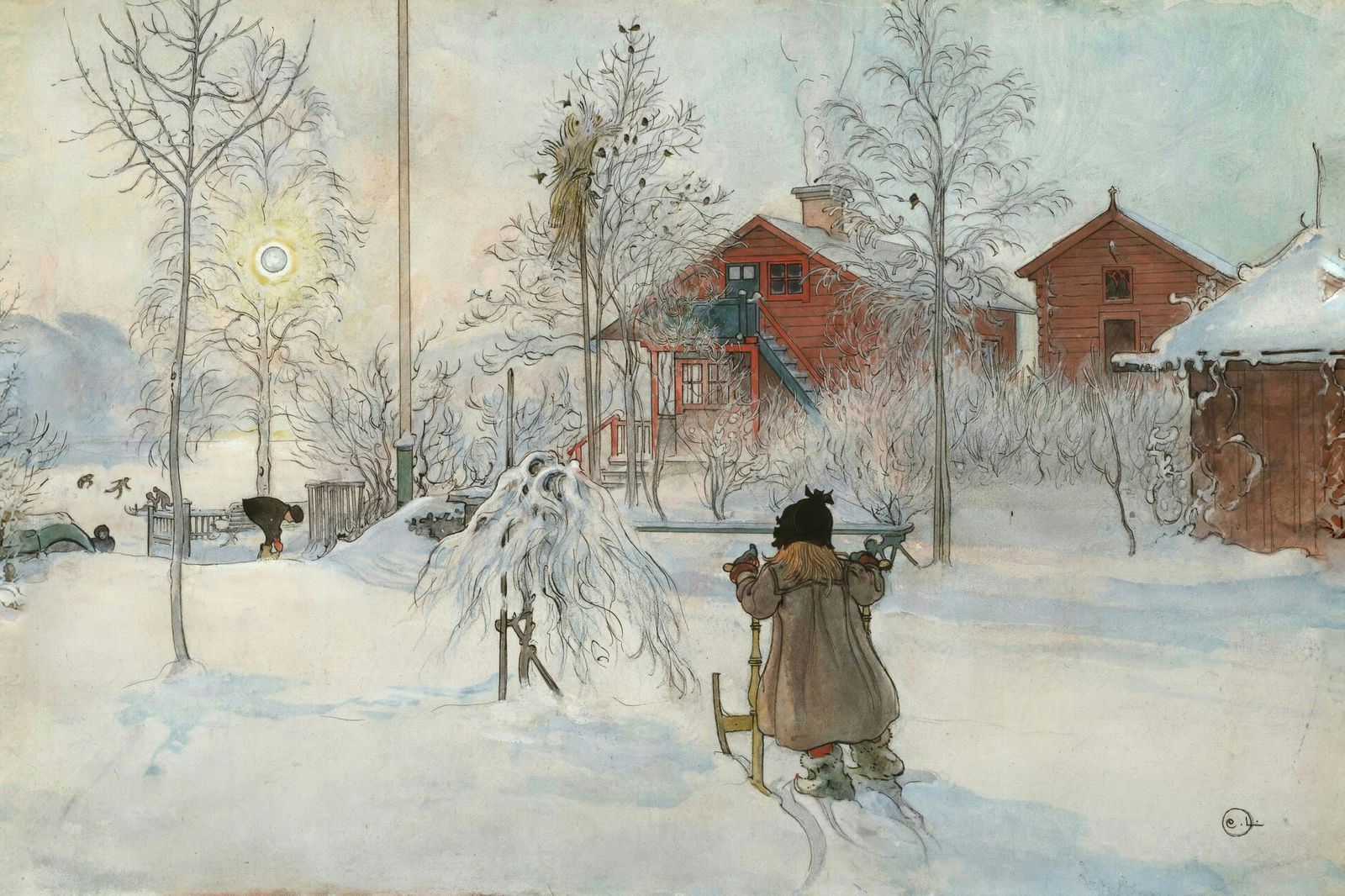
The Yard and Washhouse. From A Home · Carl Larsson, 1899 · Nationalmuseum, Stockholm. Prepared for print by Surrealium at Vaxholm Fortress, Sweden.
Larsson sets red buildings against a pale snowy yard, with a small figure moving through the foreground and bare trees marking the season. The strong red does not overwhelm the image because so much of the sheet is given to snow and winter light. For a room that already contains colour, this is a useful example of how a picture can echo one strong note while leaving enough pale space for the eye to rest.
2. Larsson’s breakfast: a gathering under a tree
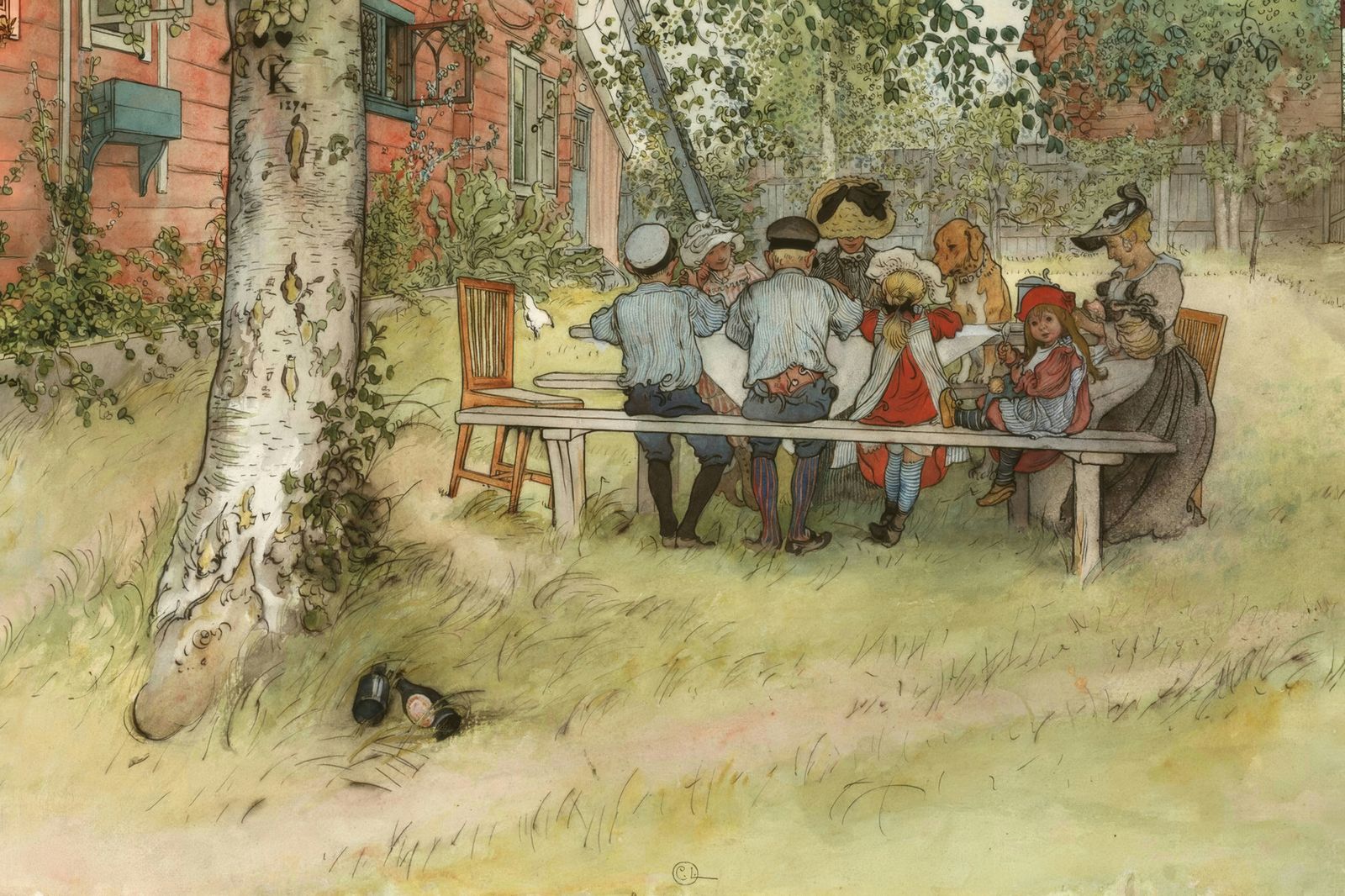
Breakfast under the Big Birch. From A Home · Carl Larsson, 1896 · Nationalmuseum, Stockholm. Prepared for print by Surrealium at Vaxholm Fortress, Sweden.
Breakfast Under the Big Birch moves the household outdoors, spreading a long table beneath a leafy canopy with people seated at different angles. The garden becomes a room through the arrangement of chairs, dishes and shade, without losing the openness beyond the table. Choose this work for its sociable breadth if you enjoy pictures that hold several small encounters at once, and preserve the wide composition so the tree and gathering remain part of one complete space.
3. The Dining Room: the door is part of the picture
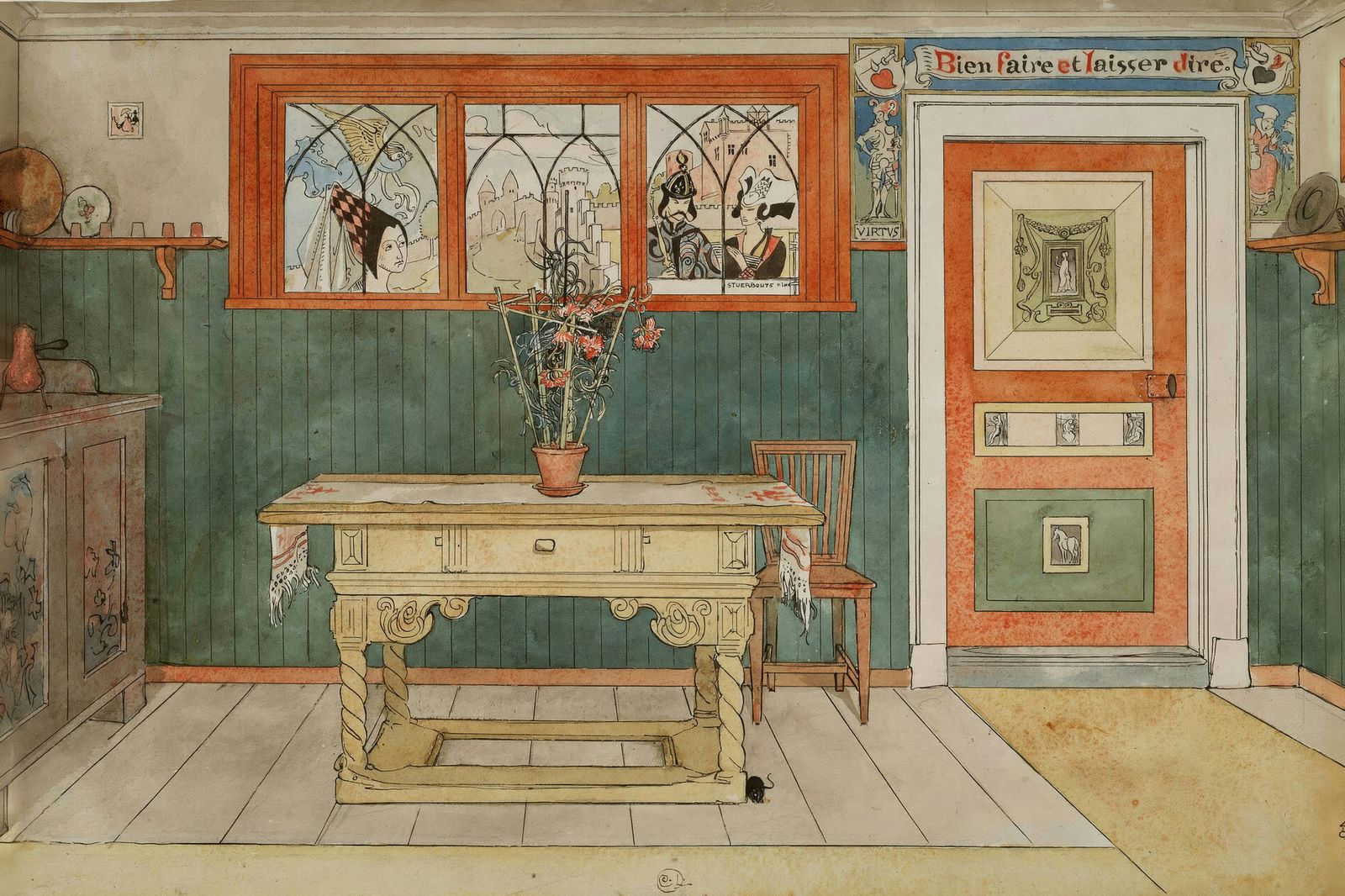
The Dining Room. From A Home · Carl Larsson, 1899 · Nationalmuseum, Stockholm. Prepared for print by Surrealium at Vaxholm Fortress, Sweden.
Larsson's dining room gives a painted door and wall panels as much importance as the table in front of them. Red, green and cream repeat across the surface, making the room feel designed through small decisions rather than one expensive object. This is a useful work for someone drawn to colour relationships: compare the door's border with the neighbouring wall before choosing a frame, so the frame supports the picture instead of competing with its own painted architecture.
4. The Veranda: the threshold has a life
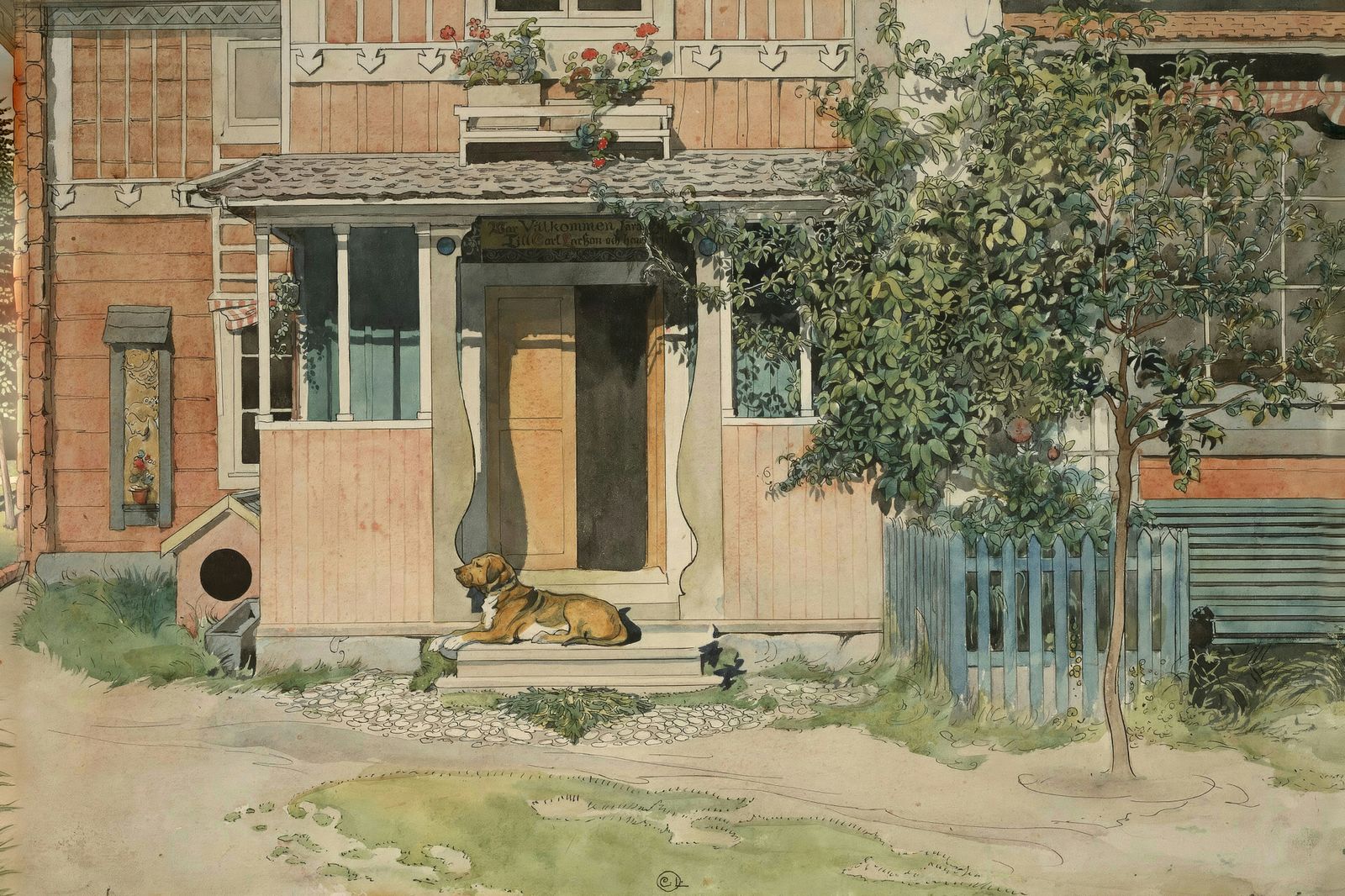
The Veranda. From A Home · Carl Larsson, 1899 · Nationalmuseum, Stockholm. Prepared for print by Surrealium at Vaxholm Fortress, Sweden.
The open doorway, low fence, plants and resting dog in The Veranda make the edge between house and garden feel inhabited. It offers a gentler version of a landscape view, with the building holding the scene close to everyday life. A print like this may suit a place where people pause, but choose it because you enjoy its particular threshold rather than assuming that a Scandinavian subject automatically belongs beside light wood or white walls.
5. Brita’s Forty Winks: pattern around a resting figure
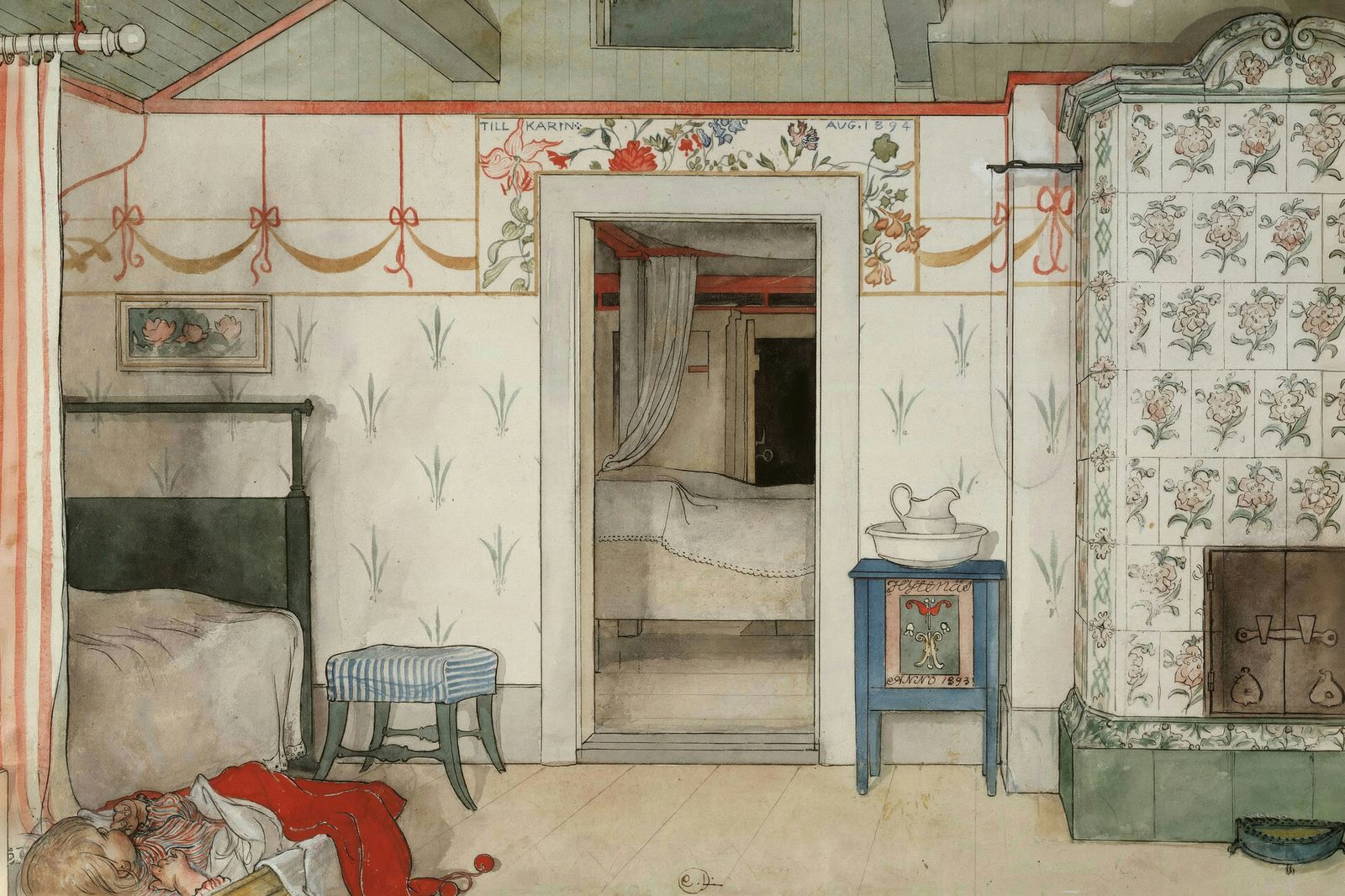
Brita's Forty Winks. From A Home · Carl Larsson, 1899 · Nationalmuseum, Stockholm. Prepared for print by Surrealium at Vaxholm Fortress, Sweden.
The small resting figure at the lower edge is surrounded by a room of patterned surfaces, doors and a stove. Larsson allows the decorative life of the home to continue around the child, so the picture is as much about the room's enclosing shapes as the sleeping subject. Look at it from both near and far: the patterns reward close attention, while the pale walls keep the whole composition from becoming visually heavy.
6. In the Corner: a room is not always an ideal
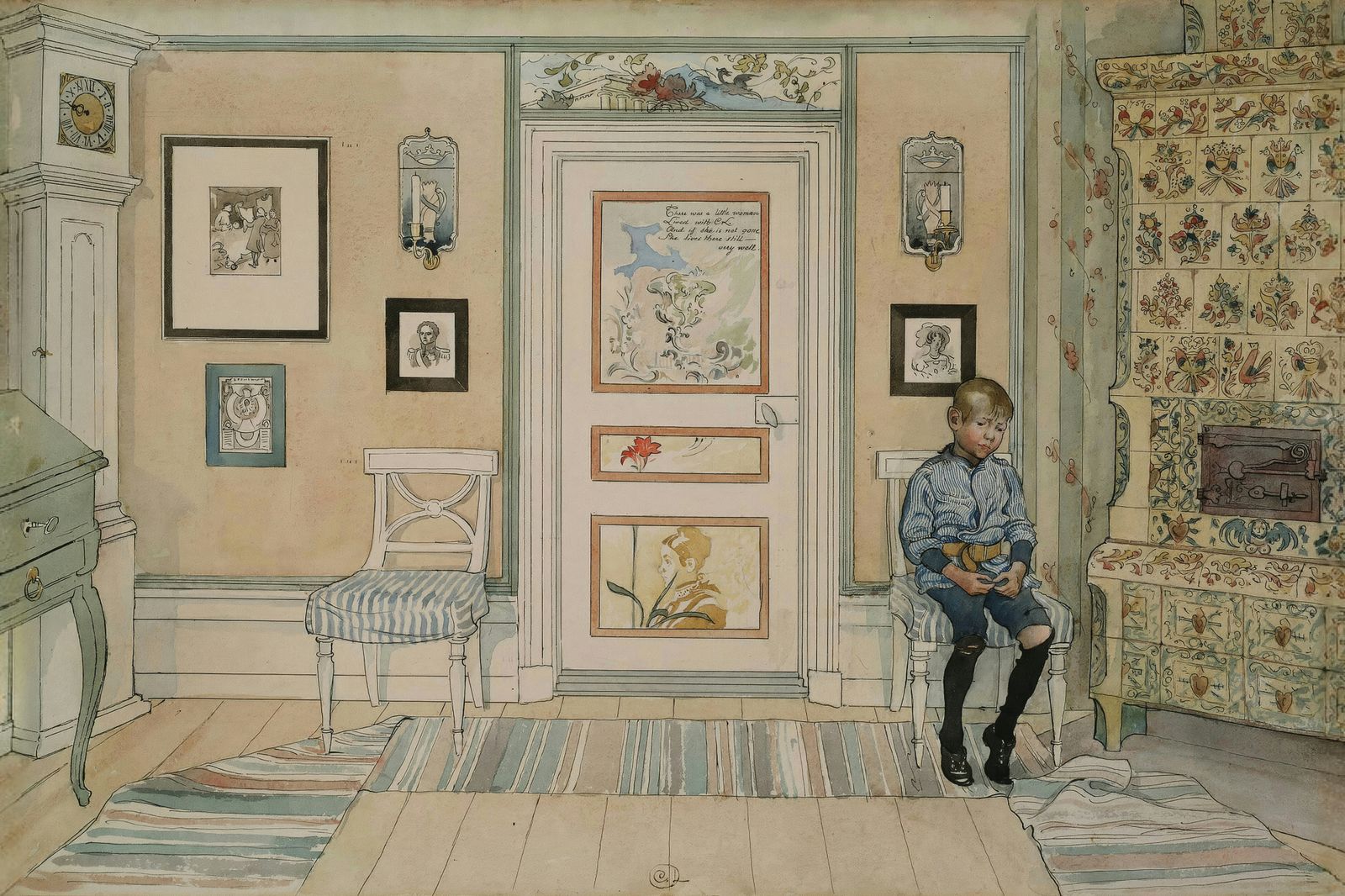
In the Corner. From A Home · Carl Larsson, 1895 · Nationalmuseum, Stockholm. Prepared for print by Surrealium at Vaxholm Fortress, Sweden.
A seated child occupies one side of this carefully described interior, while the door, chair and wall pictures establish a strong order around him. The scene complicates the idea that domestic art must show continuous happiness or effortless harmony. You can admire the arrangement of colours and objects while leaving the child's exact feelings open; the picture is more interesting when the viewer does not force it into a cheerful slogan about home.
7. Hammershøi’s courtyard: windows instead of a view
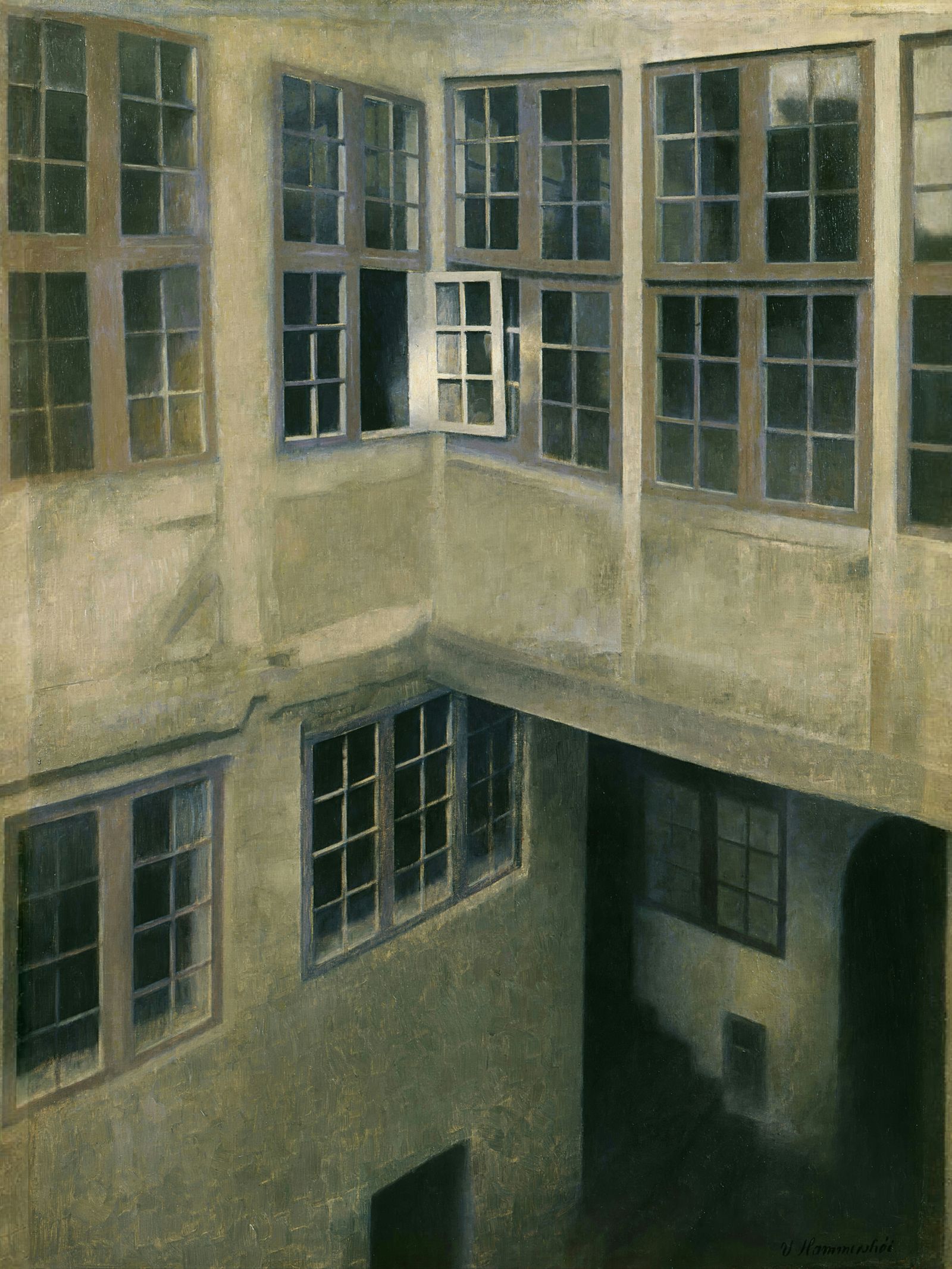
Interior of Courtyard, Strandgade 30 · Vilhelm Hammershøi, 1899 · Toledo Museum of Art. Prepared for print by Surrealium at Vaxholm Fortress, Sweden.
Interior of Courtyard, Strandgade 30 gives the viewer walls, dark window panes and oblique architectural lines within a narrow space. There is no picturesque horizon to escape towards, which makes the subtle changes of tone and the angles of the building carry the experience. Choose this kind of image if you enjoy sustained quiet and geometry, and keep its full boundaries visible so the courtyard's enclosing structure is not lost to a decorative crop.
8. Summer Evening at Skagen: blue with a human scale
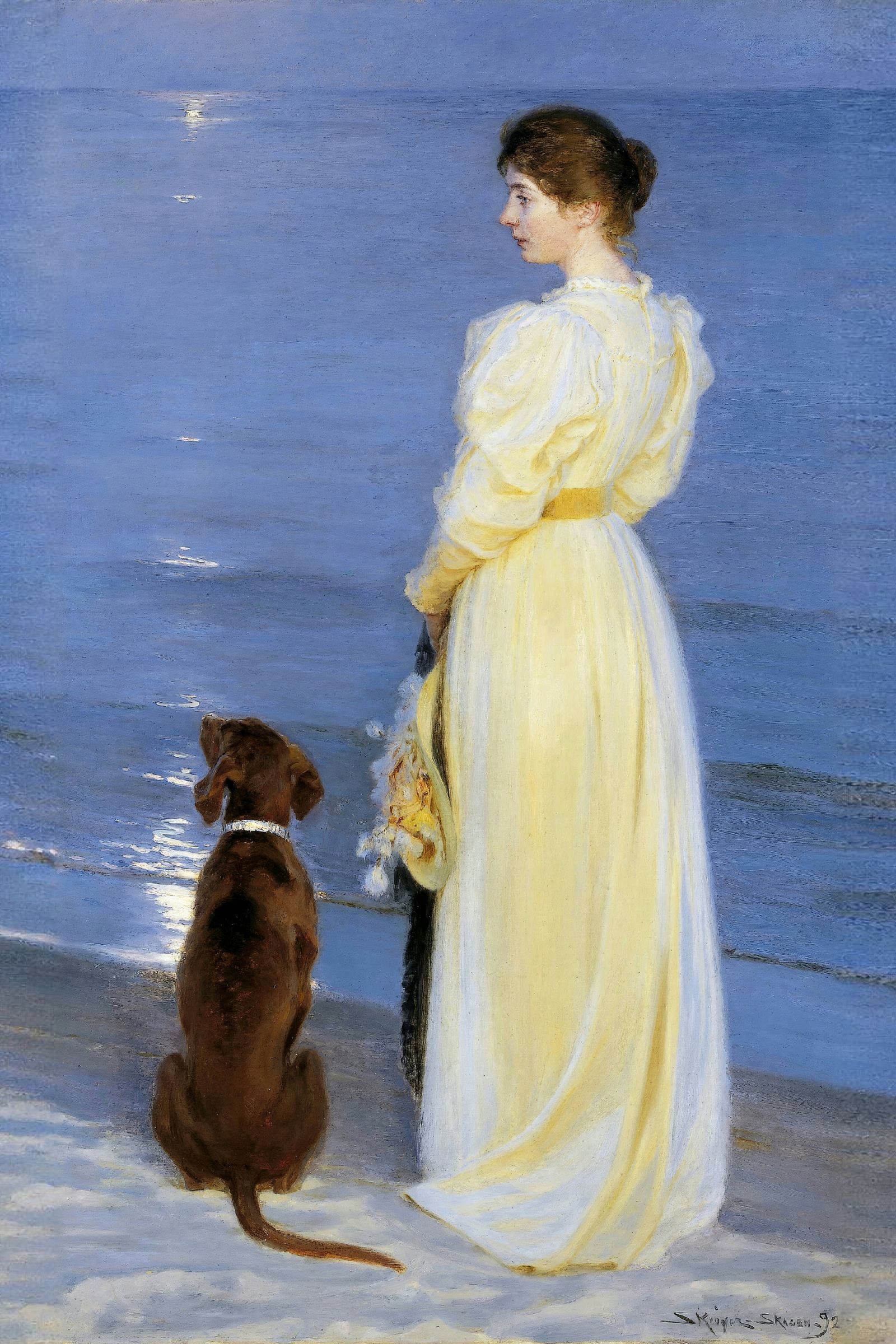
Summer Evening at Skagen · Peder Severin Krøyer, 1892 · Skagens Museum. Prepared for print by Surrealium at Vaxholm Fortress, Sweden.
Krøyer places a woman in pale yellow beside a dog, with the sea opening behind them in long bands of blue. The figures give that expanse a scale and a point of attention without filling it with activity. For a room where you want a cooler image, compare the quiet water with the bright dress rather than matching only the dominant blue; the small warm note is part of what keeps the painting alive.
9. The Bridge: movement through a familiar place
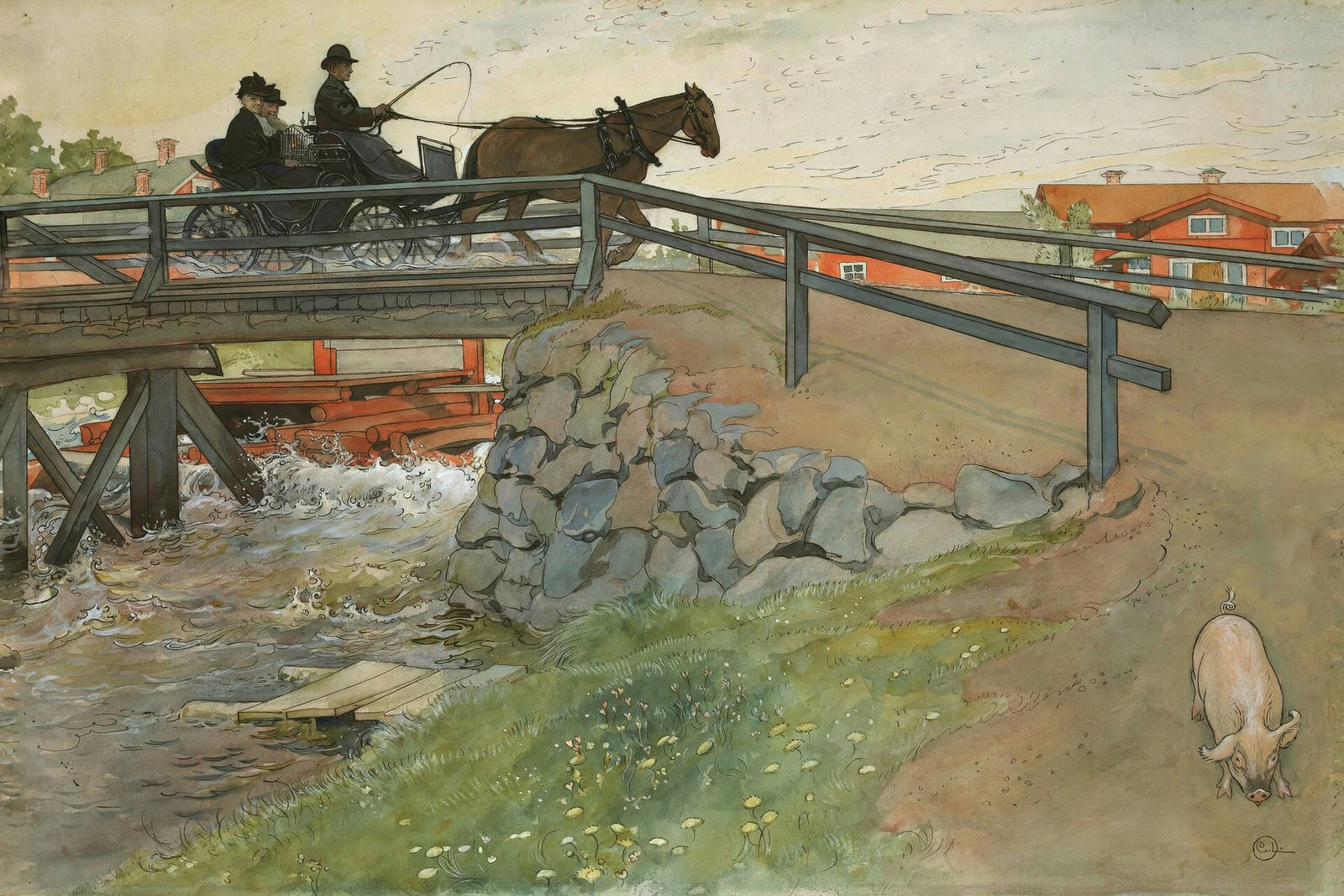
The Bridge. From A Home · Carl Larsson, 1899 · Nationalmuseum, Stockholm. Prepared for print by Surrealium at Vaxholm Fortress, Sweden.
Larsson lets a horse-drawn vehicle cross the bridge while water, stone and buildings spread around it. The scene has a practical route through it, and that sense of everyday passage distinguishes it from a view arranged solely for admiration. If you like pictures with something to discover, notice the small animal in the foreground and the difference between the straight bridge rails and the irregular bank; those details reward a little room around the print.
10. Old Sundborn Church: a building in its landscape
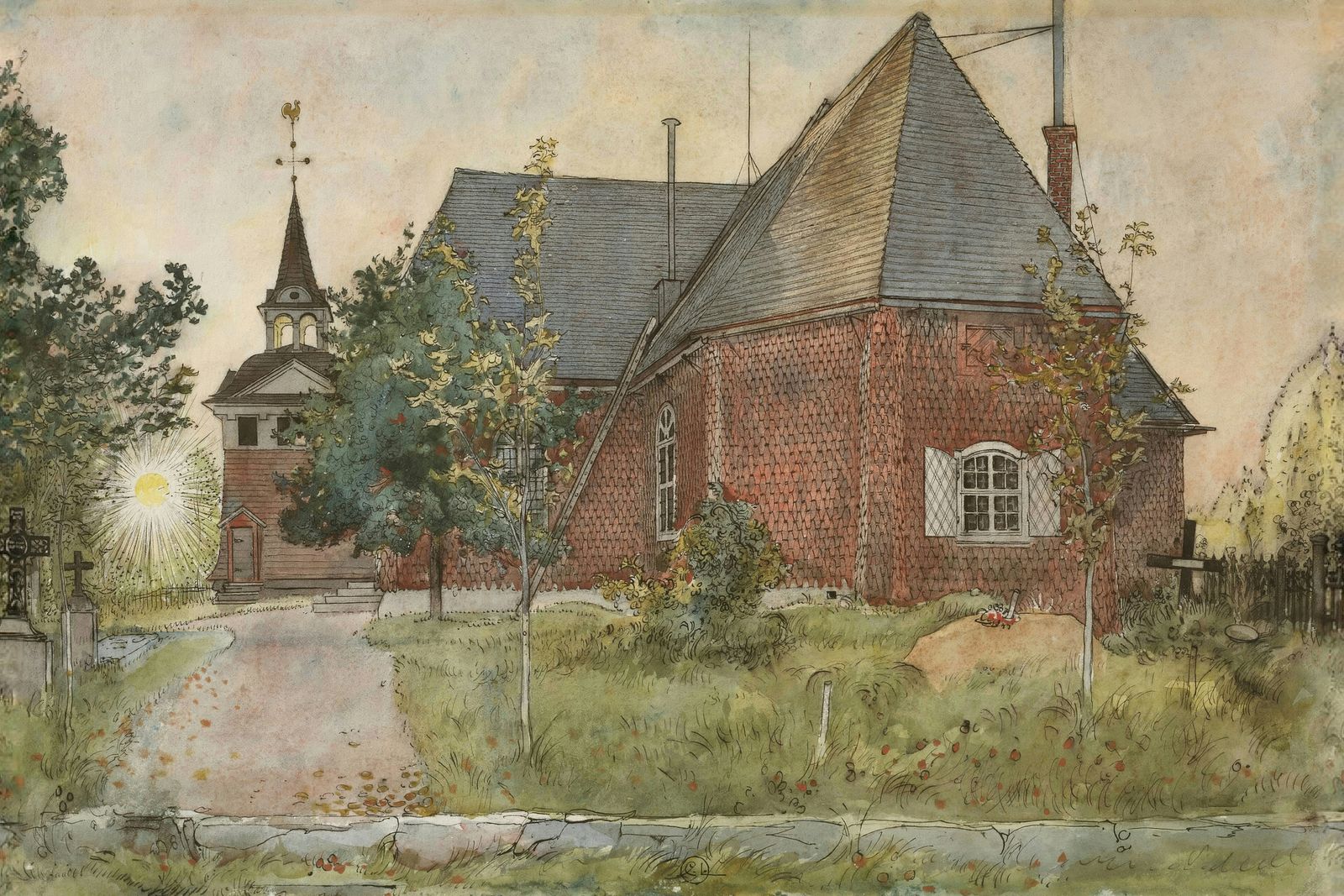
Old Sundborn Church. From A Home · Carl Larsson, 1899 · Nationalmuseum, Stockholm. Prepared for print by Surrealium at Vaxholm Fortress, Sweden.
The church's steep roof and red walls rise beside trees, with a low boundary drawing a line across the foreground. Larsson makes the building part of a particular place rather than a generic emblem of northern life. A viewer may respond to its architecture, its setting or its religious association, and those are different reasons to choose it; when giving the picture, make sure the recipient welcomes the subject as well as the colour.
Try choosing by contrast within the picture: pale snow against red timber, blue water against a light dress, or a dark window against a quiet wall. That is more useful than asking whether an image is sufficiently “Nordic”. The Impressionist collection offers neighbouring approaches to light, while landscape paintings and coastal wall art open the subject beyond interiors. Begin with the snowy yard if you want colour and stillness together, then compare the actual works at their complete proportions.
- Is Scandinavian wall art always minimalist?
- No. Historic Nordic art includes richly furnished interiors, patterned surfaces, family scenes and vivid colour. A quiet atmosphere can come from composition and light even when a room contains many things.
- Which colours work with Nordic art prints?
- Start with colours already present in the individual work. A small repeated red or yellow can matter as much as a large pale area. There is no single palette required by the subject’s geography.
- Can I mix Larsson and Hammershøi?
- Yes, if you enjoy the contrast. Compare the works’ proportions, density and light, and leave enough space for each to remain distinct. A shared subject such as a doorway can connect very different moods.