Pet loss gifts that leave the choice with the owner
Ten historic pet pictures help you consider a remembrance portrait, a familiar photograph and the right time to offer one.
Pet loss gifts are most considerate when they leave the bereaved owner in control of the photograph, the timing and the form of the memory. A portrait may be welcome, but it can also feel too immediate or too public. Offer the possibility in plain words and allow a quiet refusal or a later decision without requiring an explanation.
The paintings here show animals resting, watching and sharing ordinary space with people. They are not all memorial pictures, and we do not need to invent bereavement stories for their sitters. Their usefulness lies in the small ways they preserve a companion's presence: a resting head, a familiar patch of fur, a dog beside a chair. Those details can help you discuss which photograph, if any, an owner would like to keep as a portrait.
1. The place beside a person
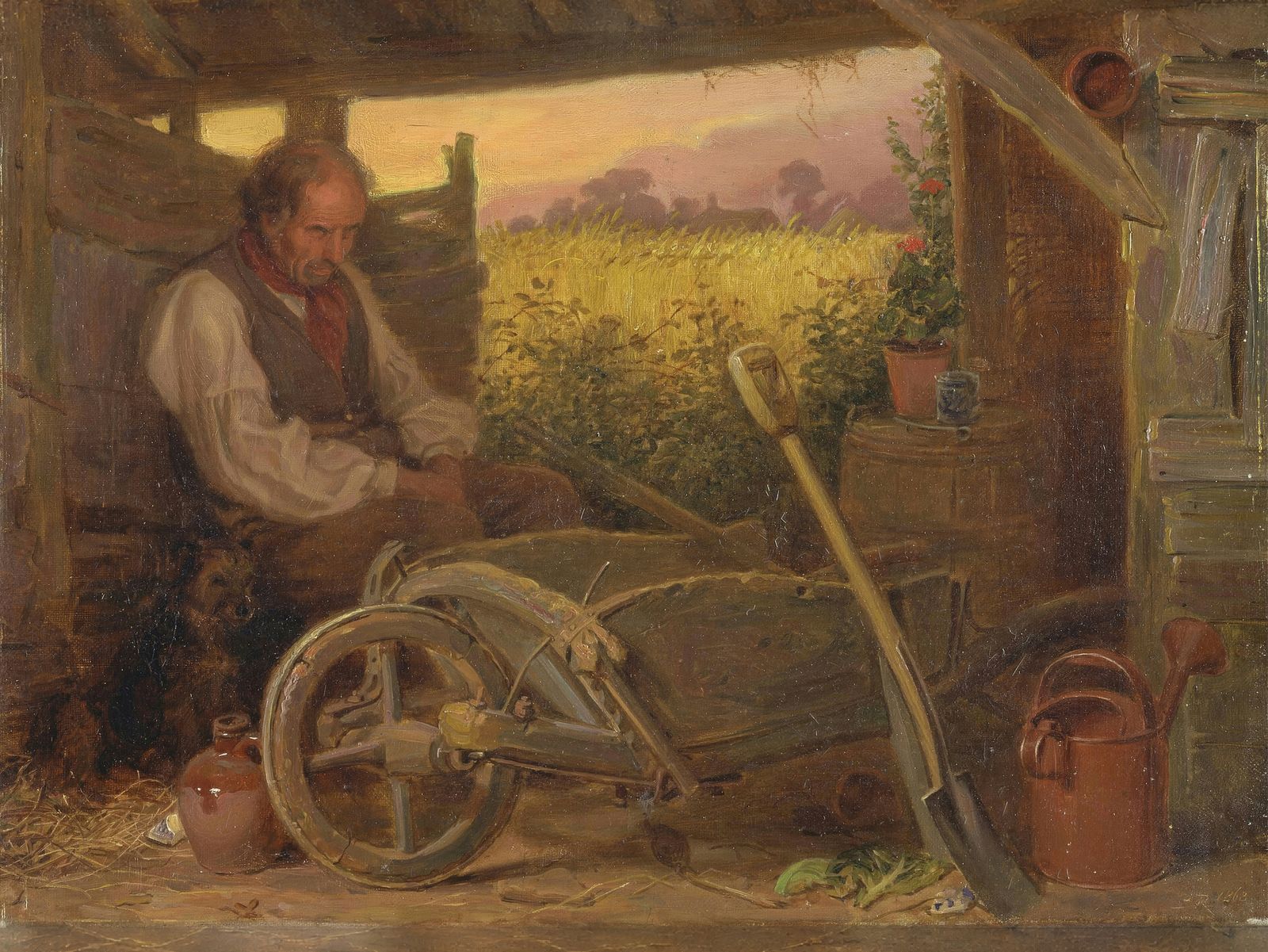
The Old Gardener · Briton Rivière · 1863 · Yale Center for British Art, New Haven. Prepared for print by Surrealium at Vaxholm Fortress, Sweden.
Riviere's The Old Gardener places a dog near a seated man among the tools and objects of his daily work. The picture's companionship is visible without our needing to invent a loss behind it. For a remembrance gift, a photograph of the pet in its usual place may hold more recognition than a newly imagined setting, especially when the owner remembers the routines they shared.
2. A small act of attention
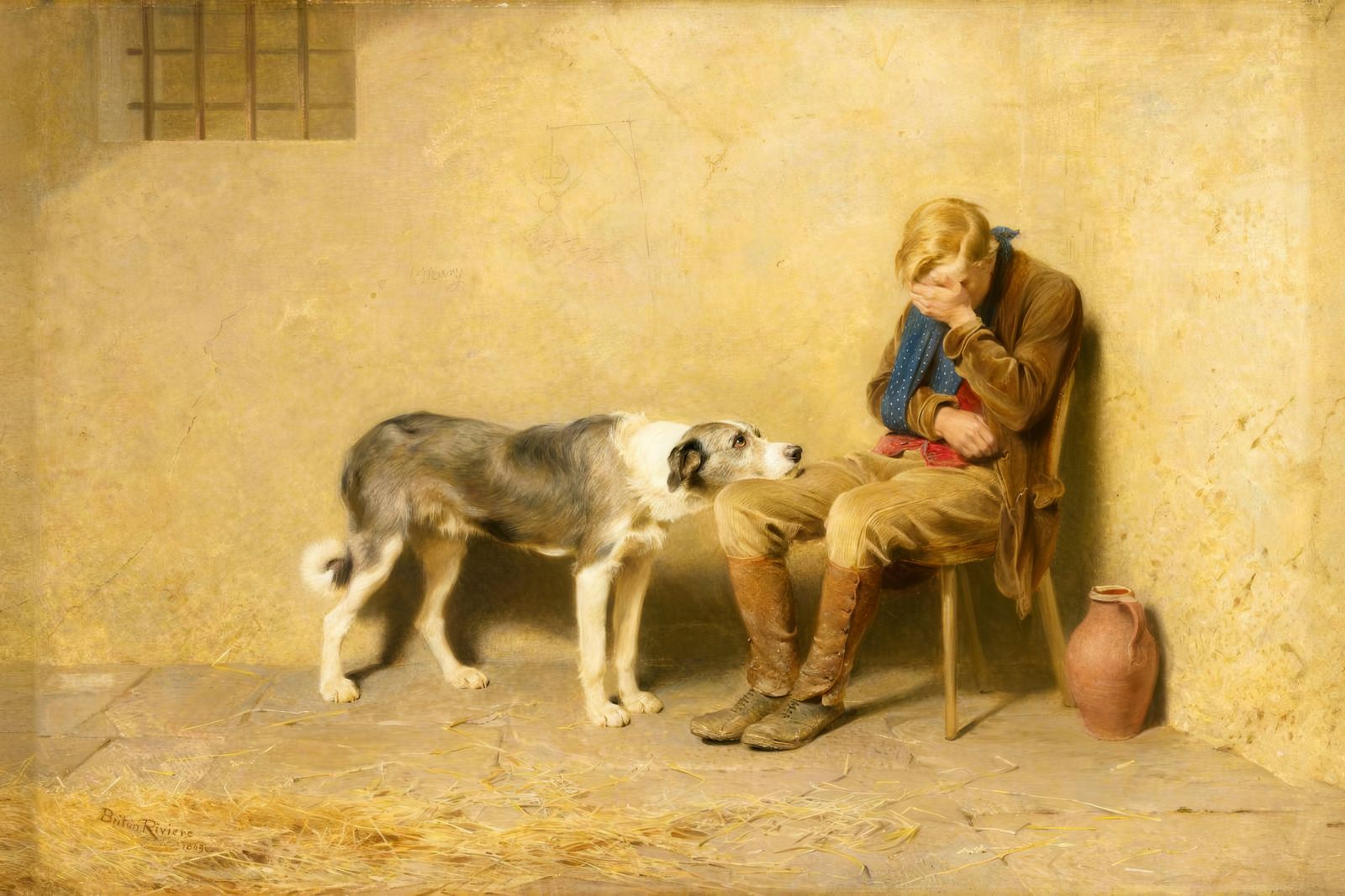
Fidelity · Briton Rivière · 1869 · Lady Lever Art Gallery, Port Sunlight. Prepared for print by Surrealium at Vaxholm Fortress, Sweden.
In Fidelity, the dog approaches a seated man, bringing the animal's attention into the space around the human figure. The historic painting has its own narrative, but a gift need not promise that an animal or an image can remove sadness. Let a remembered gesture stand on its own, and avoid adding a message that tells the recipient how they should feel about the loss.
3. The resting head
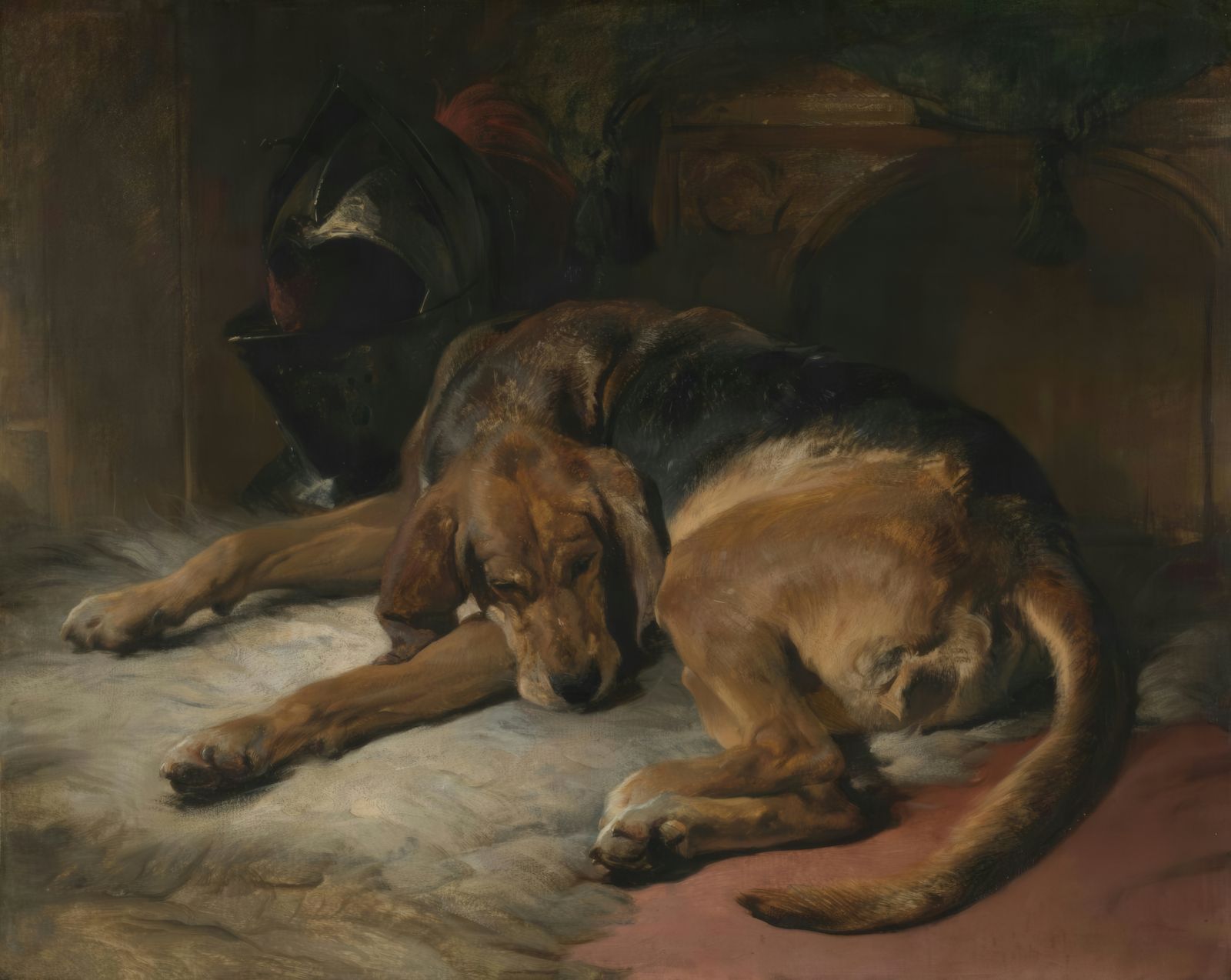
Sleeping Bloodhound · Edwin Landseer · 1835 · Tate, London. Prepared for print by Surrealium at Vaxholm Fortress, Sweden.
Landseer's Sleeping Bloodhound concentrates on weight, folds and the stillness of a lowered head. A sleeping photograph can be a deeply familiar image of a pet, but it should be the owner's choice. Ask whether they prefer an alert expression or a resting pose, since a picture that feels peaceful to one person may be uncomfortable for another in the period after a death.
4. A companion held close
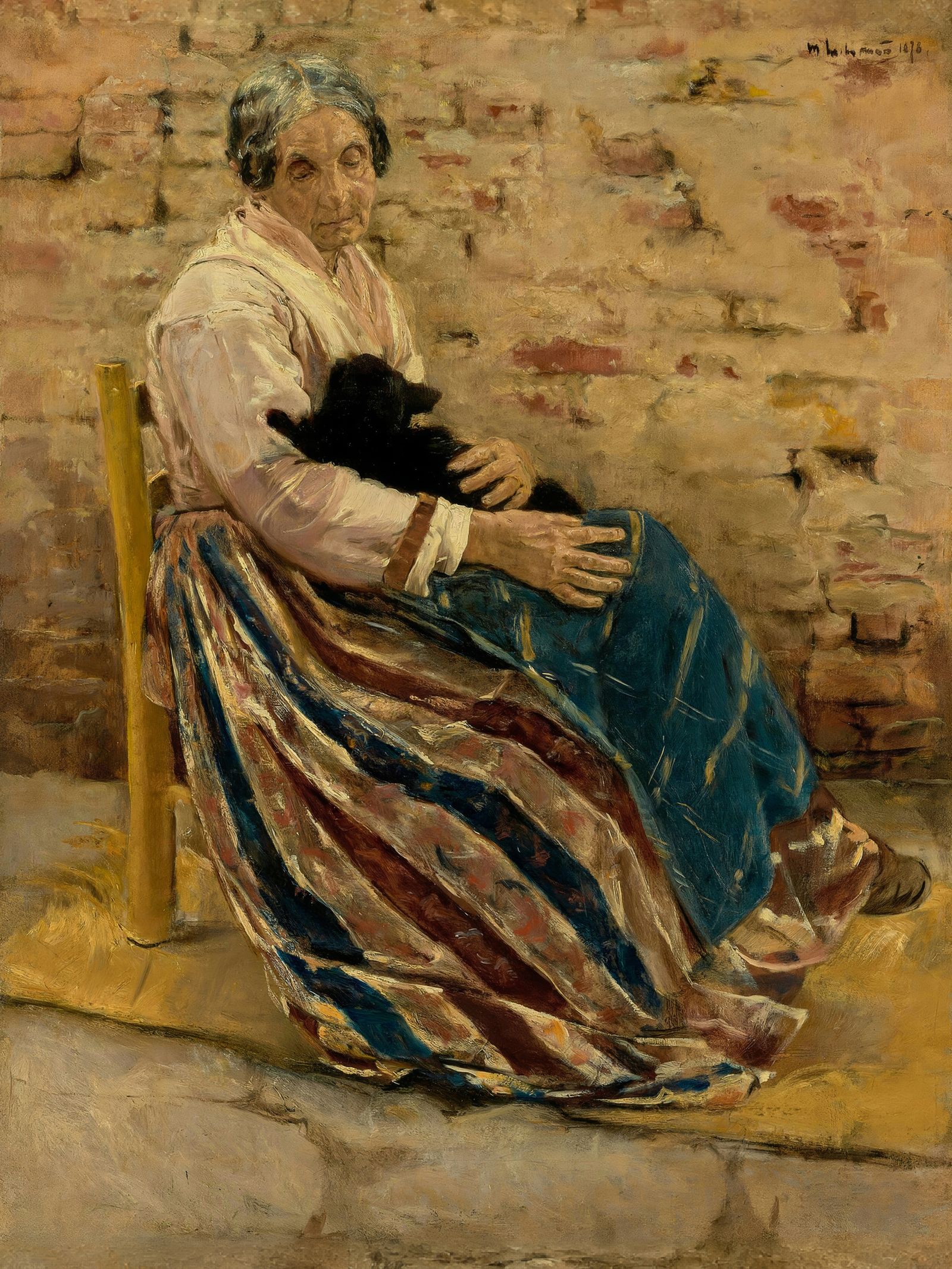
An Old Woman with Cat · Max Liebermann · 1878 · J. Paul Getty Museum, Los Angeles. Prepared for print by Surrealium at Vaxholm Fortress, Sweden.
An Old Woman with Cat gives the animal a place within a close human portrait. If the owner wants to appear with the pet, choose a photograph in which both subjects are visible and the hold looks natural. Do not assume that a memorial gift must isolate the animal from the person who loved it; the relationship itself may be what the recipient wants to remember.
5. The familiar lap
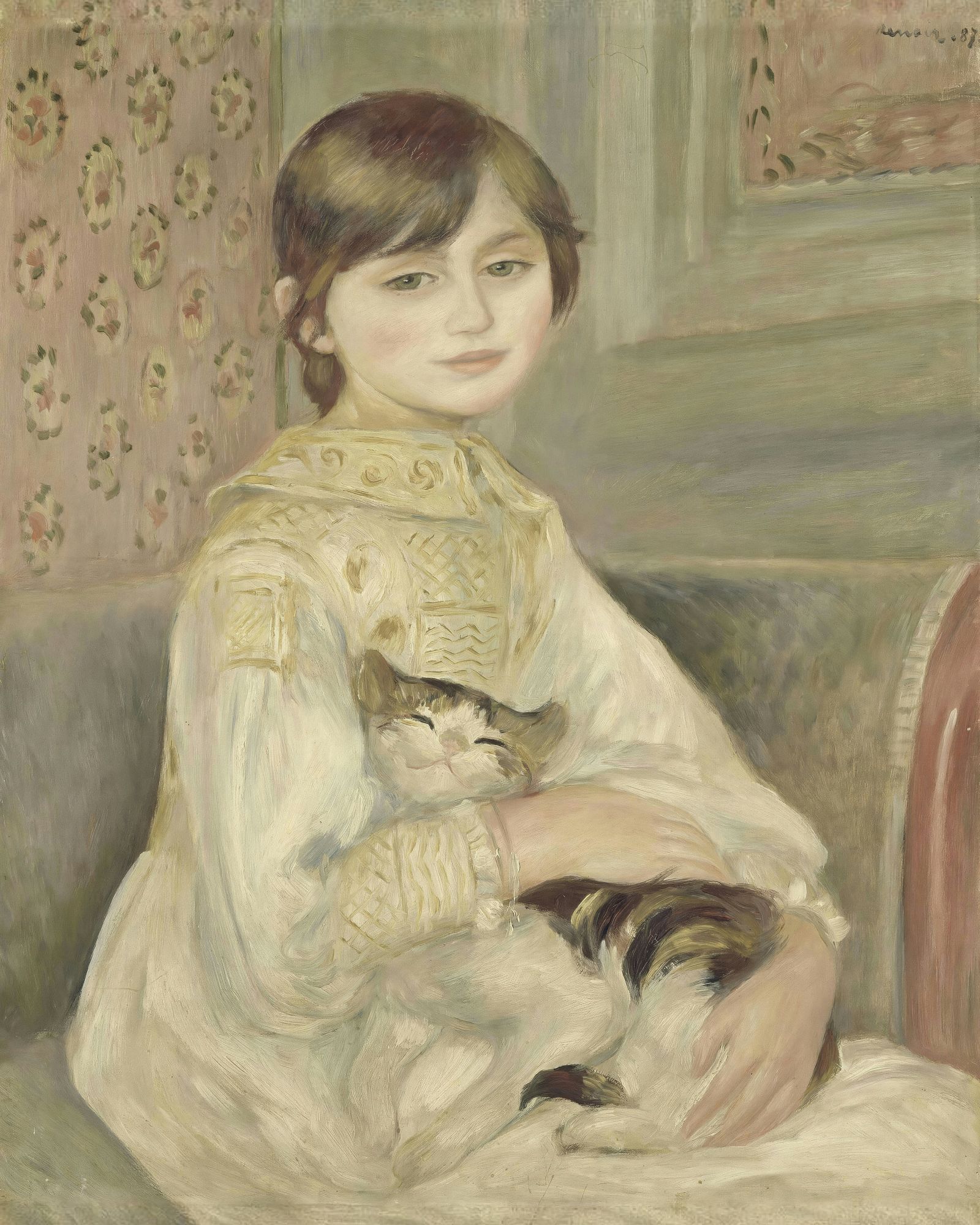
Julie Manet · Pierre-Auguste Renoir · 1887 · Musée d'Orsay, Paris. Prepared for print by Surrealium at Vaxholm Fortress, Sweden.
Renoir's Julie Manet shows the cat settled in the child's arms, with the small face still distinct within the larger portrait. A lap, chair or shared sofa can be an important part of a pet's remembered world. Keep that context when it matters, rather than replacing it with an unrelated background simply to make the resulting portrait look more formal or grand.
6. A full body and a remembered posture
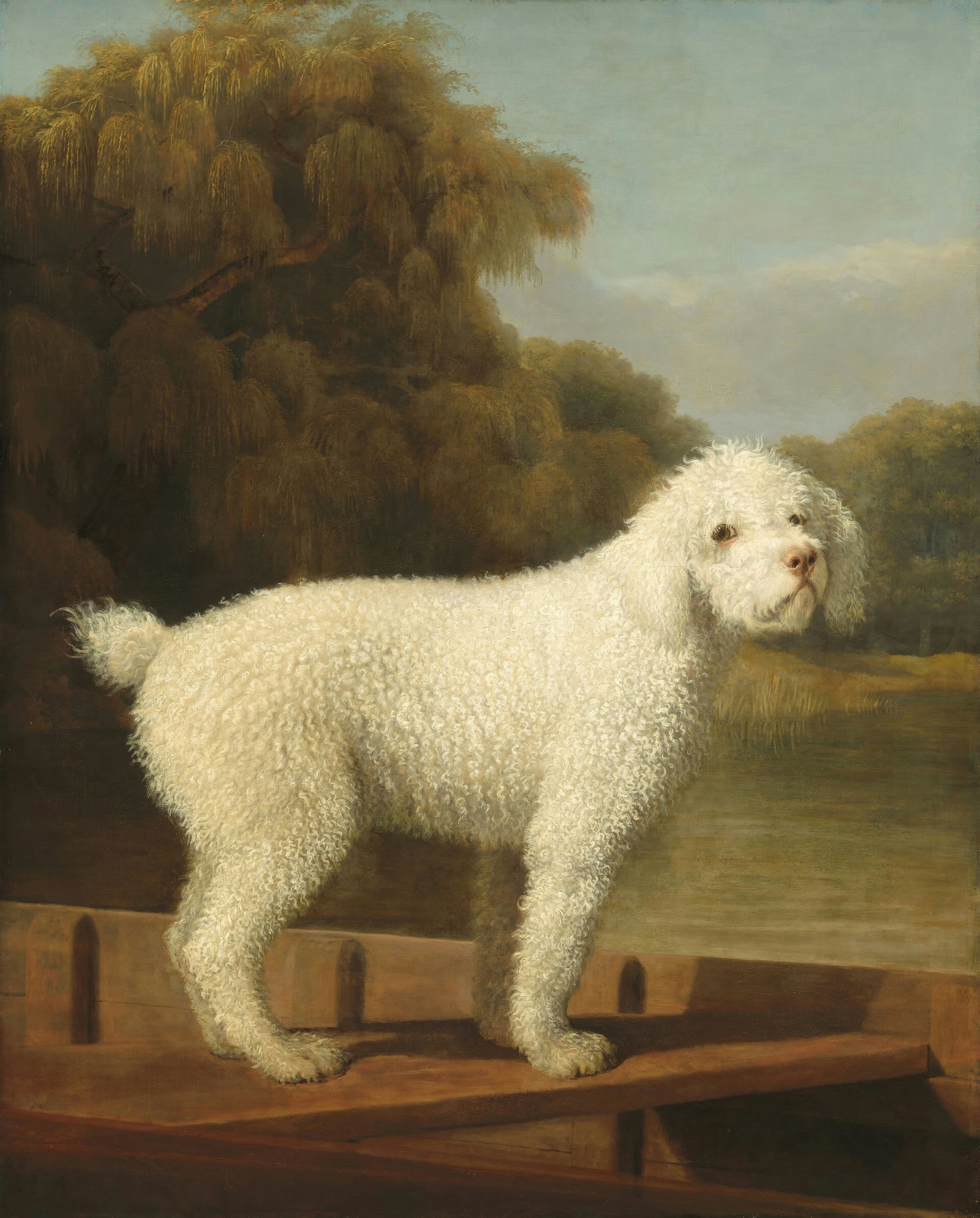
White Poodle in a Punt · George Stubbs · c. 1780 · National Gallery of Art, Washington (Paul Mellon Collection). Prepared for print by Surrealium at Vaxholm Fortress, Sweden.
Stubbs's White Poodle in a Punt presents the animal in a clear side view, with its legs and body supported by the boat. The complete posture can be as recognisable as the face. If the owner remembers the way a pet stood, stretched or sat, consider a photograph that preserves that shape instead of automatically choosing the closest headshot in the album.
7. The dog within the garden
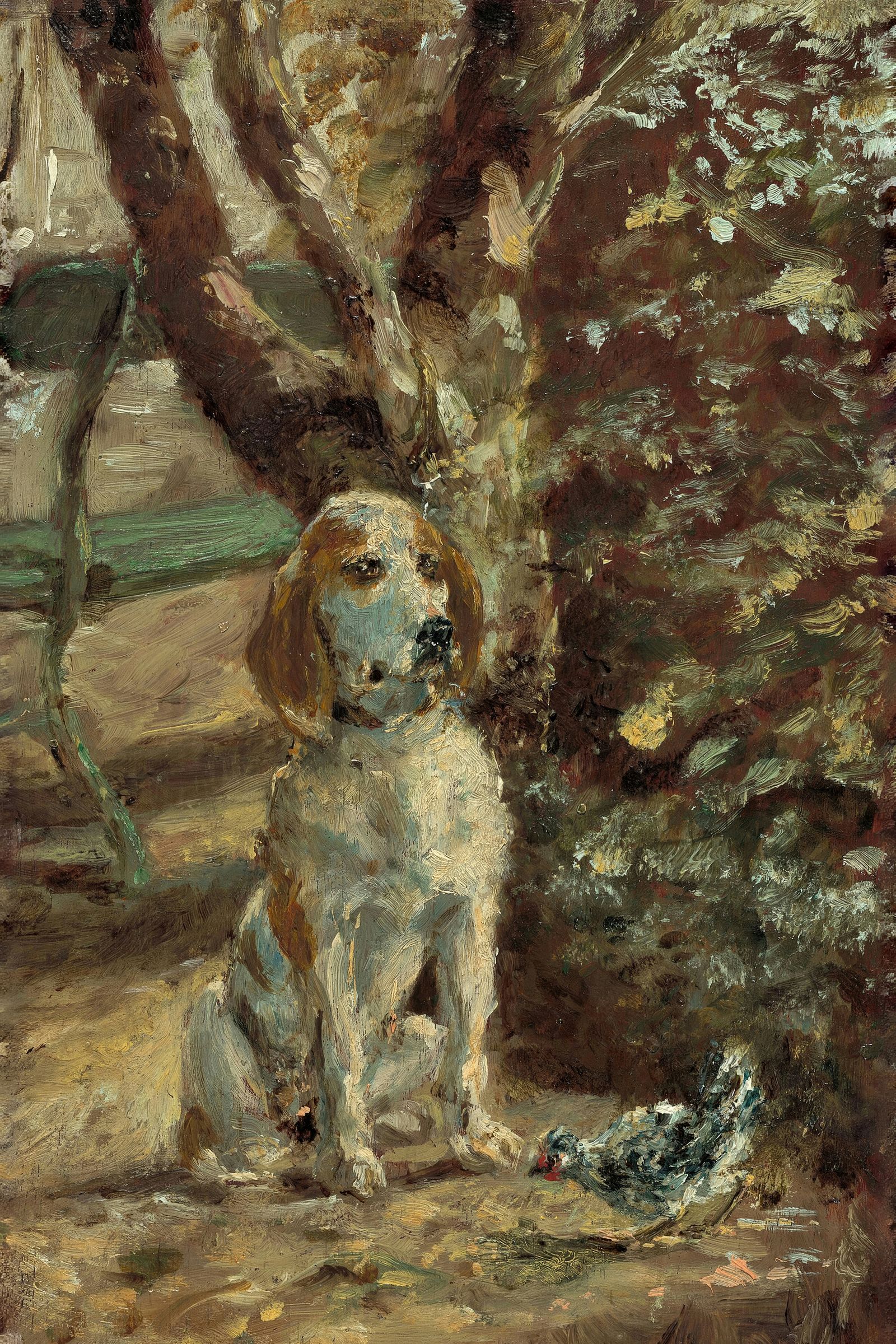
The Artist's Dog Flèche · Henri de Toulouse-Lautrec · c. 1881 · National Gallery of Art, Washington. Prepared for print by Surrealium at Vaxholm Fortress, Sweden.
Toulouse-Lautrec's Flèche sits among loose marks of foliage and ground, the animal belonging to the outdoor setting rather than floating against it. A remembered garden or walking place may give a portrait a specific connection to a pet's life. Use a photograph from that place when possible, and let the owner decide how much of the setting should remain part of the picture.
8. Two companions looking outward
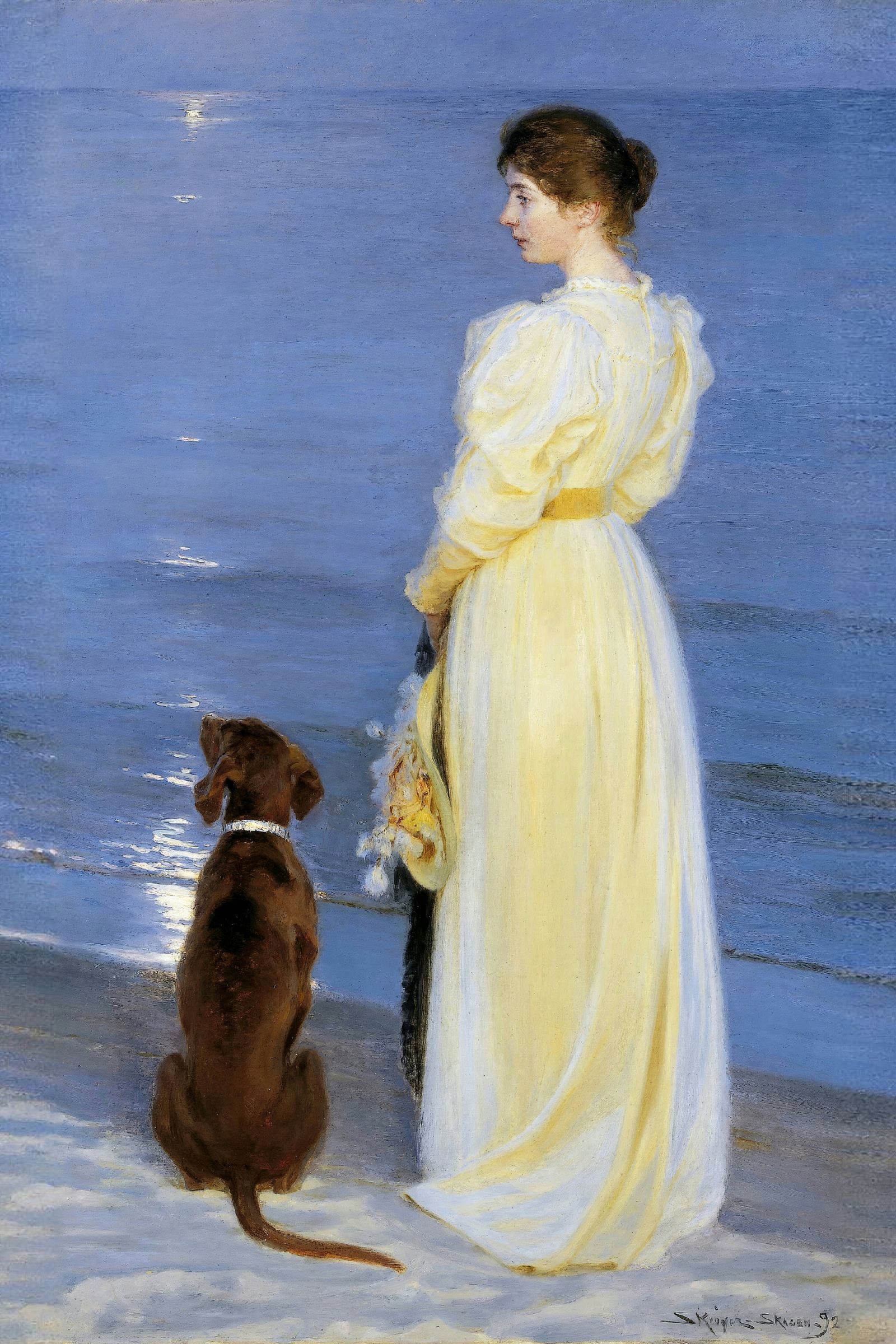
Summer Evening at Skagen · Peder Severin Krøyer · 1892 · Skagens Museum. Prepared for print by Surrealium at Vaxholm Fortress, Sweden.
Krøyer's summer evening picture places his wife and a dog beside the shore, both turned towards the wider scene. It shows how companionship can be represented without a direct embrace or a gaze at the viewer. A photograph of a shared walk may therefore be a meaningful option, provided the owner wants a picture of that experience rather than a conventional close likeness.
9. A small face, carefully observed
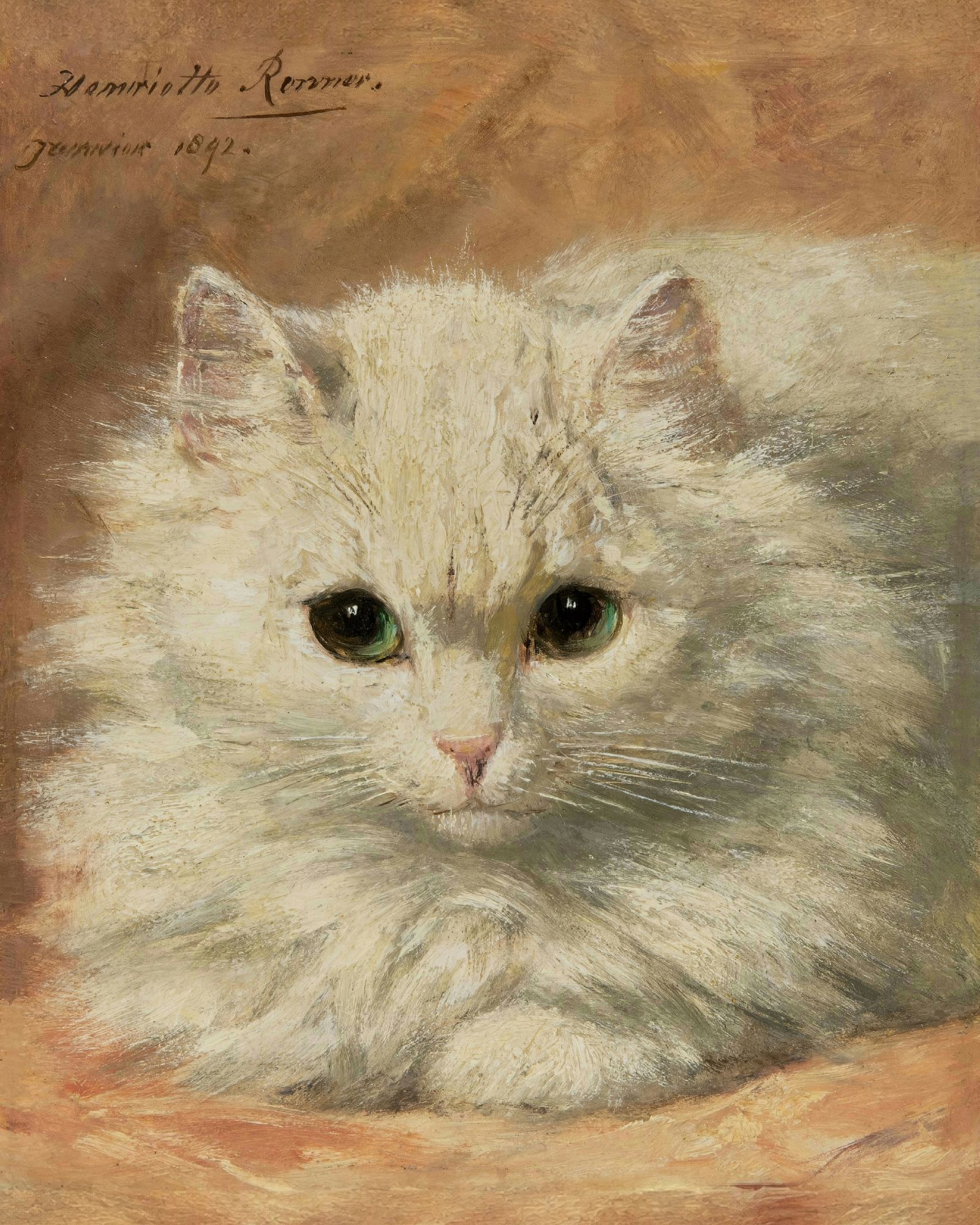
Head of a White Angora Kitten · Henriëtte Ronner-Knip · 1892 · Holding collection unrecorded; Wikimedia Commons source. Prepared for print by Surrealium at Vaxholm Fortress, Sweden.
Ronner-Knip's white kitten gives the face room within the surrounding fur, making a slight expression worth attention. For a cat remembrance portrait, the shape of the eyes and muzzle may matter more than a dramatic pose. Choose the photograph in which those features look most familiar to the owner, and do not substitute an idealised breed image for the individual animal.
10. The companion and its object
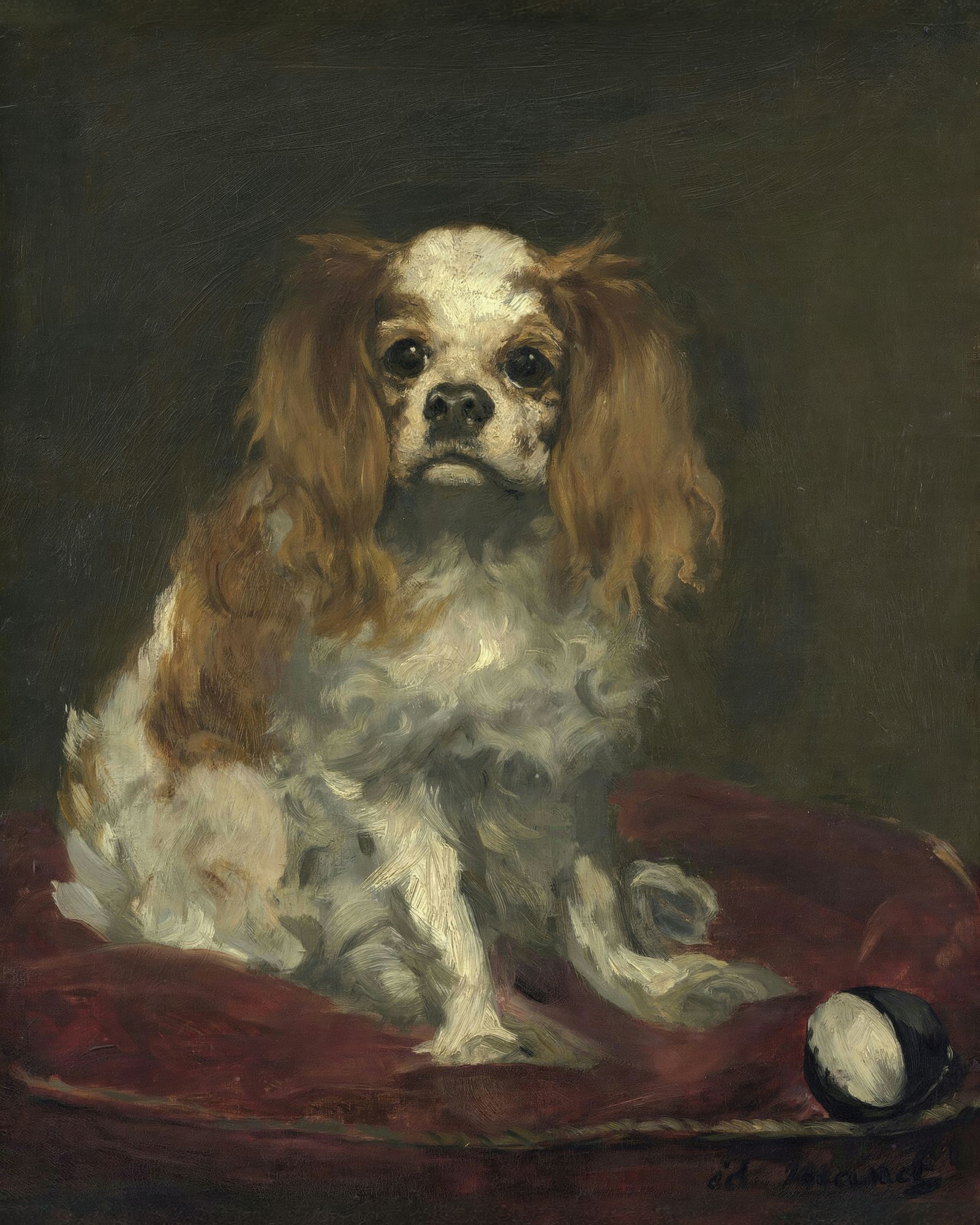
A King Charles Spaniel · Édouard Manet · c. 1866 · National Gallery of Art, Washington. Prepared for print by Surrealium at Vaxholm Fortress, Sweden.
Manet's King Charles spaniel sits with a small ball nearby, the object suggesting an ordinary part of the dog's world. A favourite toy can be a useful detail when it is actually present in the chosen photograph. Ask whether the owner wants it included; an object can carry a strong memory, but the person receiving the gift should decide which memories belong in the portrait.
A simple offer is enough: you have a photograph, you would be glad to help make a portrait if they would like one, and there is no deadline to answer. If the owner accepts, let them choose the image and whether the result will be displayed or kept privately. The Fable pet portrait route is a next step for that agreed choice, not a substitute for listening to what the recipient wants.
For species-specific choices, see dog memorial gifts and cat memorial gifts. The pet sympathy card guide considers accompanying words. Compare sympathy gifts and the wider pet portrait styles guide, or look at the whole Old Gardener.
- When should I give a pet memorial portrait?
- There is no single right time. Ask before arranging it and make it easy for the owner to decide later. A birthday, anniversary or other date may matter to them, but it should not become a deadline that obliges them to revisit photographs before they want to.
- Should I include the pet’s name and dates?
- Only with the owner’s agreement and careful checking. Some people prefer a portrait that looks like an ordinary picture of the animal, without a memorial inscription. Keep any proposed wording separate until the recipient has decided whether it belongs with the gift.
- What if the owner does not want a portrait?
- Accept that answer without trying to persuade them. A short note with a specific memory, practical help or simply making space to talk may be more welcome. The care behind the offer matters more than completing a particular object.