Victorian Christmas: what changed, and what came before
Cards, trees and winter pictures reveal a century of changing customs, with earlier roots and many different household experiences.
Victorian Christmas is often pictured as a complete package: a decorated tree, a genial visitor, gifts, cards and snow. The real history is less tidy. Some customs became more visible or commercially available during Victoria’s reign; others already had long histories. A royal household, a prosperous drawing room and a working family did not celebrate in the same way.
The four artworks here help separate a seasonal image from a universal historical claim. They include British Christmas subjects and a French winter landscape, so they should not all be treated as documentary views of Victorian Britain. Look at what each picture actually shows, then use the history of cards and trees to understand how familiar visual traditions took shape.
For a related starting point, read history of the Christmas card, Christmas paintings through the centuries.
Father Christmas is an image with a history
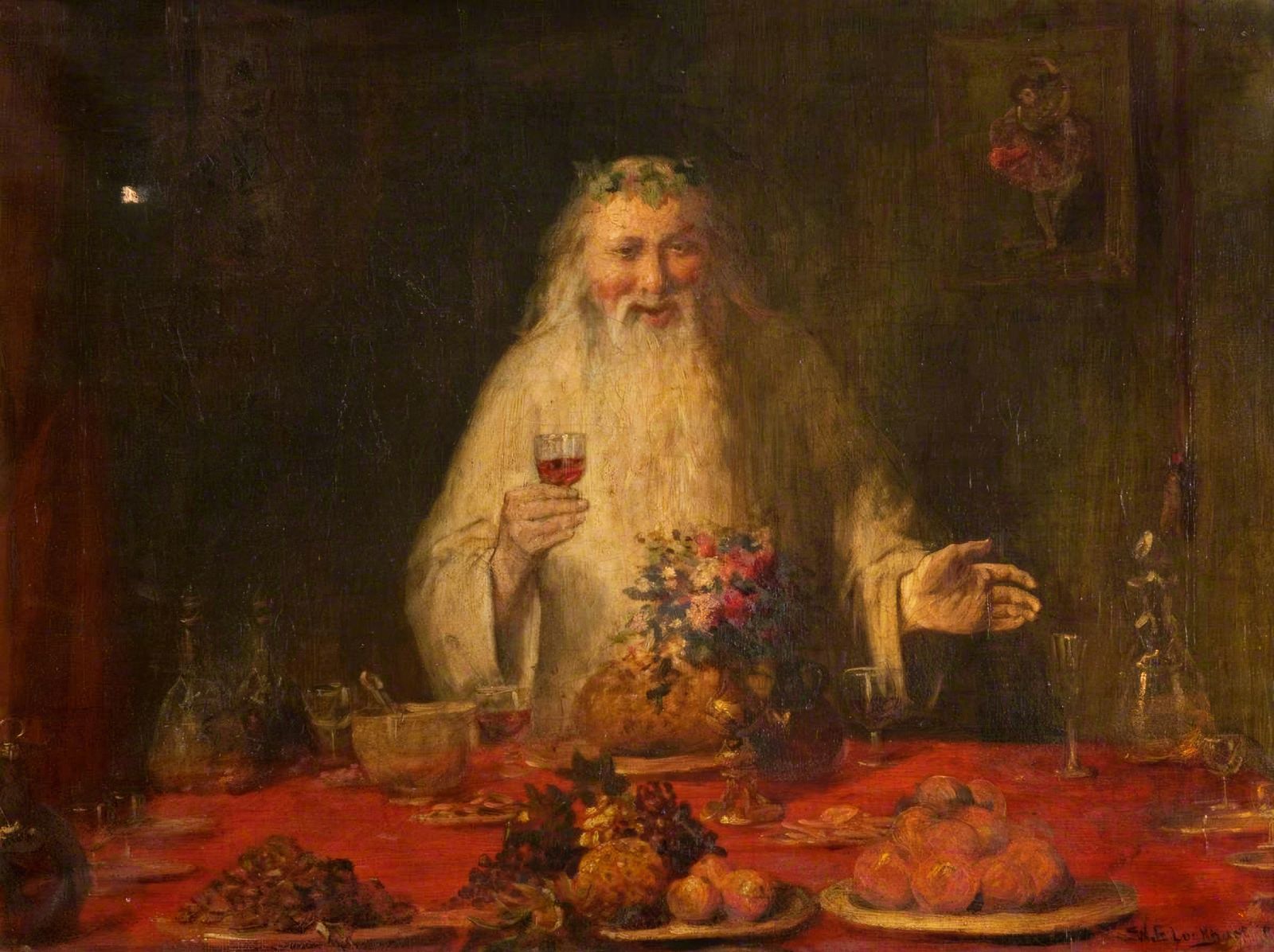
Old Father Christmas — William Ewart Lockhart, before 1900. The Hunterian, University of Glasgow (GLAHA 43929). Prepared for print by Surrealium at Vaxholm Fortress, Sweden.
William Ewart Lockhart’s Old Father Christmas gives the seasonal figure a vivid presence. It is a historical artwork, not a photograph of an ordinary visitor or proof that every Victorian household imagined Christmas in precisely this form. The title tells us who the artist represents; the costume and setting invite a closer look at how that character is made visible.
When choosing a card inspired by such a picture, preserve its particularity. A historical Father Christmas does not have to be flattened into a generic modern festive mascot. Notice the colours, posture and surrounding detail, and let them influence the tone of the greeting. The artwork can introduce a conversation about changing seasonal imagery without requiring you to claim a single origin for every feature of the figure.
The early commercial card did not invent greetings
The Victoria and Albert Museum dates Henry Cole’s commission of a Christmas card designed by John Callcott Horsley to 1843. A run of a thousand was printed, with spare copies offered for sale. That is a useful landmark in the history of the commercial Christmas card, rather than the beginning of people exchanging seasonal wishes.
The distinction matters because a familiar origin story can become larger than its evidence. A dated printed object tells us something specific about design and circulation; it does not prove that an entire population immediately adopted it. For a modern card, the interesting continuity is the combination of picture and personal greeting. The medium can change while the sender still faces the same small task: choosing an image and finding words that suit the person receiving it. The V&A’s account gives the card’s context.
A royal tree is not every household’s tree
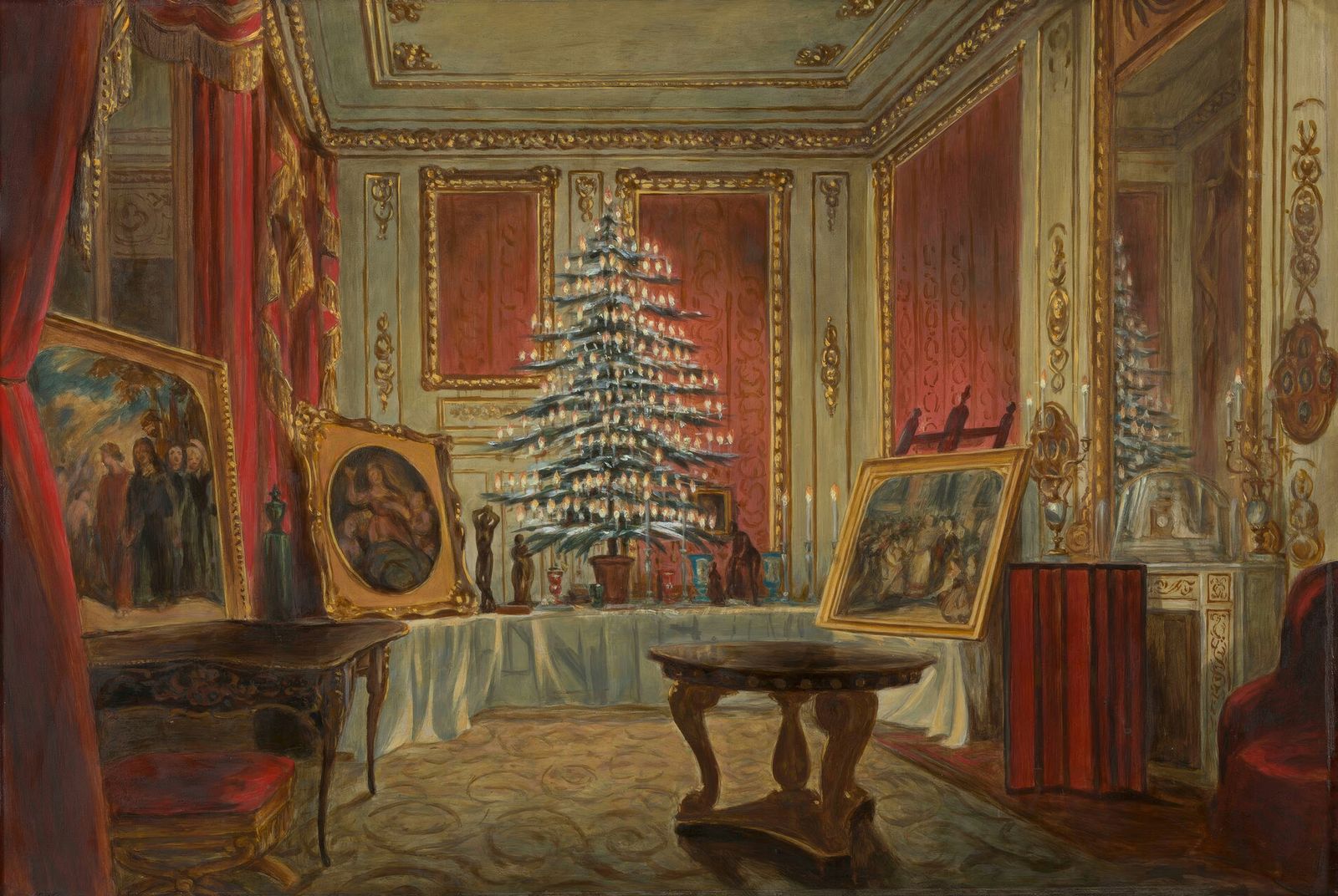
Queen Victoria's Christmas Tree — William Corden the Younger, 1850–51. Royal Collection (RCIN 402566). Prepared for print by Surrealium at Vaxholm Fortress, Sweden.
William Corden the Younger’s Queen Victoria’s Christmas Tree shows a richly furnished interior around the decorated tree. The empty chairs, framed pictures and spacious room are part of the subject. This is a royal setting, and its elegance should not stand in for the resources or customs of every family living during the same reign.
English Heritage distinguishes Prince Albert’s role in popularising Christmas trees from their earlier presence in Britain: Queen Charlotte had a decorated tree at Windsor in 1800. That earlier example makes “the Victorians invented the Christmas tree” a misleading shortcut. Corden’s painting remains valuable as a particular royal image. Its usefulness comes from looking closely at that setting, not from asking it to prove a universal beginning for a custom with a longer story.
Popularity and invention are different claims
A custom can become fashionable without being newly invented. It can spread through pictures, shops and imitation while continuing to mean different things in different homes. Keep those possibilities separate when reading a seasonal history. Words such as “first”, “everyone” and “always” need stronger evidence than a recognisable painting or a repeated anecdote.
Gift-giving, for example, did not begin with the Victorians. English Heritage’s account describes different royal practices and the unequal means of households. That is a better starting point than imagining one standard Christmas list for an entire century. When writing your own card, there is no need to turn the image into a sweeping historical statement. You can simply say that its room, tree or gesture caught your attention and reminded you of the recipient. English Heritage’s history distinguishes earlier roots from later popularity.
Snow can be seasonal without being Christmas
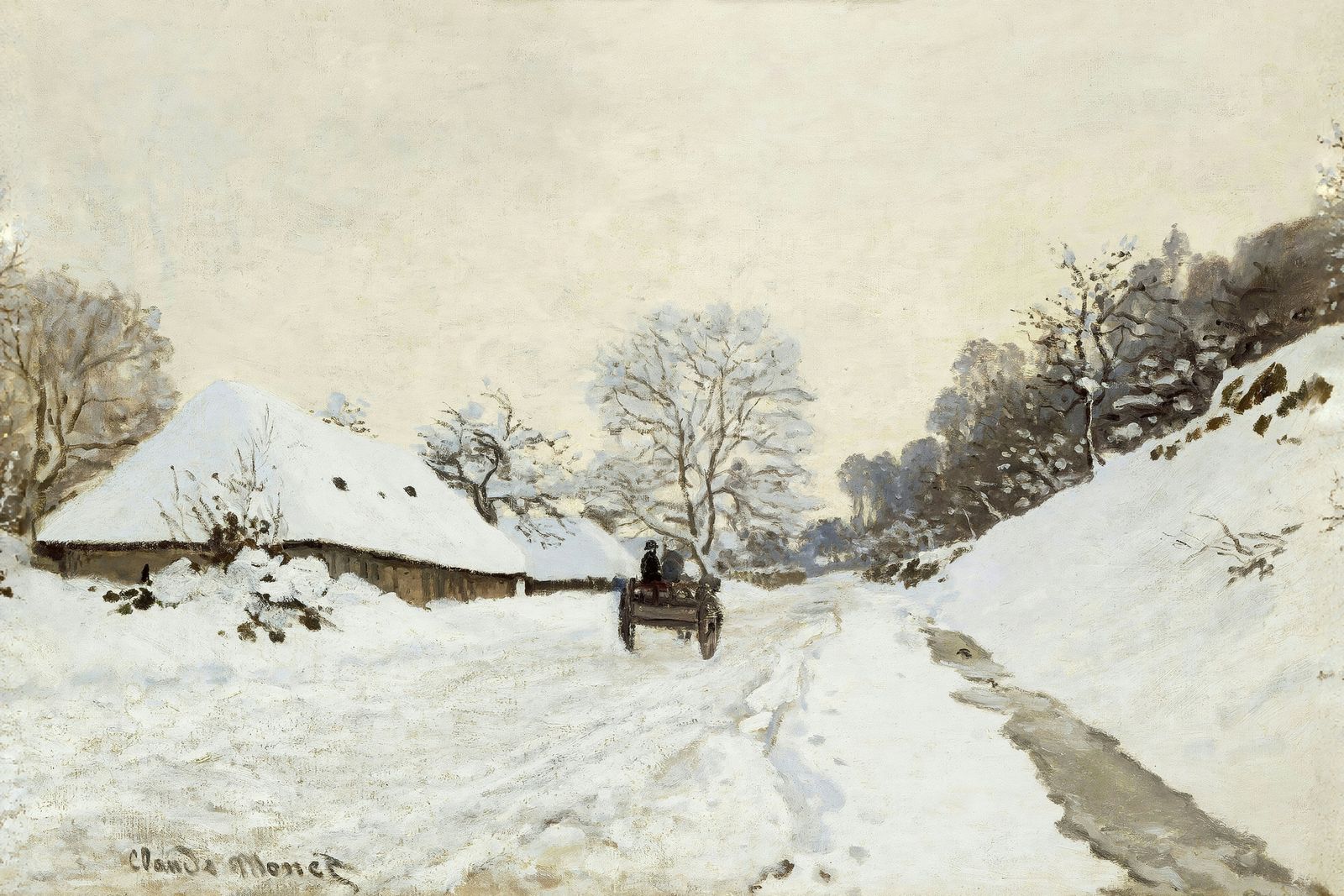
A Cart on the Snowy Road at Honfleur — Claude Monet, c. 1867. Musée d'Orsay, Paris. Prepared for print by Surrealium at Vaxholm Fortress, Sweden.
Monet’s A Cart on the Snowy Road at Honfleur was painted in France around 1867, according to the current Musée d’Orsay record. It belongs to the same broad period as Victoria’s reign, but it is neither a British domestic scene nor evidence of a Christmas celebration. Its road, cottage and snow offer a winter atmosphere that can be used in a greeting without changing the subject of the artwork.
This is an especially useful distinction for historical card choices. Not every snowy picture contains a hidden Christmas narrative, and an artist’s date does not make the work “Victorian” in the same sense as a British social document. Name the artist and place accurately, then explain your own association as an association. A winter journey may remind you of going home even when the original painting makes no such personal claim.
Printed colour changed what a card could look like
The V&A describes the later role of colour printing in making decorated cards more affordable and widely available. That development helps explain why a history of Christmas cards is also a history of objects, production and design. It is not only a sequence of messages: paper, colour and the arrangement of a picture all affect what the sender can choose.
Do not assume that every old-looking design is a surviving nineteenth-century card. A modern design can borrow an antique palette or lettering without being an archive object. Equally, a historical painting used on a new card remains a painting reproduced in a new format. Check the description and preview of the actual card you choose. The distinction between an original object and a contemporary use of its image should remain clear.
A named Christmas picture can still resist a formula
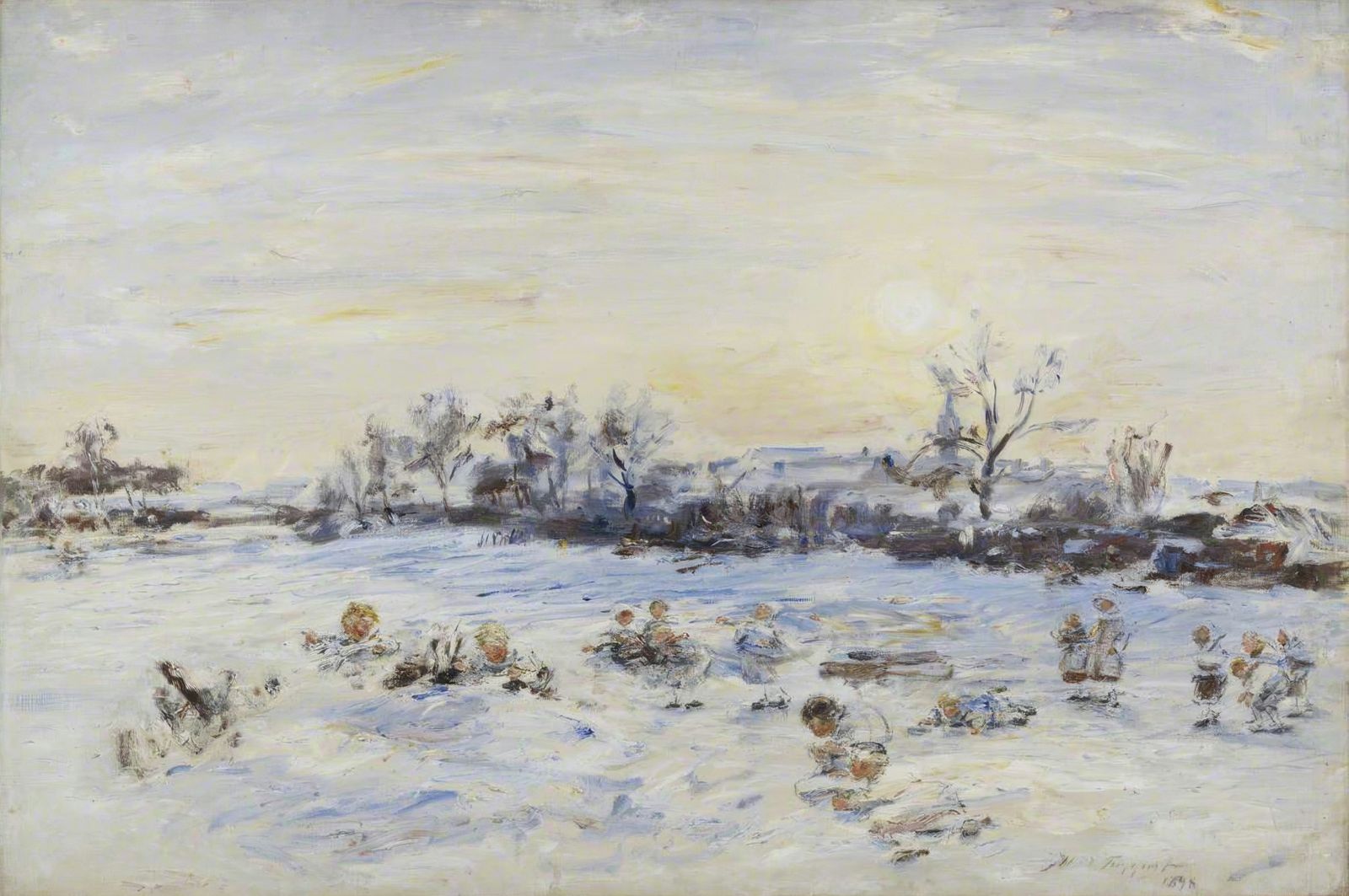
Christmas Day — William McTaggart, 1898. Kirkcaldy Galleries (KIRMG-274). Prepared for print by Surrealium at Vaxholm Fortress, Sweden.
William McTaggart’s Christmas Day, dated 1898, gives the season a landscape rather than a conventional indoor celebration. The picture asks us to look at weather, trees and space. Its title supplies a Christmas connection, but the image does not need a crowded room or a decorated table to hold that association.
Set it beside Corden’s royal interior and the range becomes apparent. Both can speak to the season, yet their subjects and social settings are very different. That variety is more interesting than reducing Victorian Christmas to one ideal scene. For a recipient who enjoys quiet landscapes, McTaggart may suggest a more fitting greeting than an elaborate festive interior. Choose for the person and the picture, rather than for the most recognisable collection of seasonal symbols.
Use historical imagery without borrowing its assumptions
A historical Christmas picture may reflect wealth, faith or family roles that do not match your own household. You can appreciate its composition without treating its world as a model everyone should follow. Ask what part of the image you actually want to share: warmth, an invitation, humour, winter light or the pleasure of looking at a carefully made object.
Then write a message that belongs to the present relationship. A short personal note can make an old image feel immediate without pretending that the past was simpler or uniformly happier. If you choose a card described as archival, read its provenance; if you choose a masterwork design, check the artist and title. The current Christmas card collection provides the next practical step, while the history gives you a more attentive way to choose.
The useful story of Victorian Christmas is one of adaptation, visibility and different experiences, not a claim that one reign invented everything we recognise. Cards and trees have particular histories; paintings show particular people, places and imagined figures. Let those distinctions enrich the greeting. A historical image becomes personal when you choose it thoughtfully and add words that belong to the person receiving it.
Continue with the Christmas card picture guide, the medieval season and its sacred imagery.
- Did the Victorians invent the Christmas tree in Britain?
- No. English Heritage records Queen Charlotte’s decorated tree at Windsor in 1800, before Victoria’s reign. Prince Albert helped popularise the custom, which is different from introducing its first British example.
- When was Henry Cole’s Christmas card made?
- The V&A dates Cole’s commission of a design by John Callcott Horsley to 1843. It is an important early commercial card, not the origin of all seasonal greetings or personal Christmas correspondence.
- Is every nineteenth-century snowy painting Victorian Christmas art?
- No. Date, place and subject matter are separate questions. Monet’s Honfleur snow scene is French and depicts winter; using it for a Christmas greeting does not make it a documentary view of a British celebration.
- How can I choose an old-fashioned card without a generic message?
- Choose one feature of the image that connects with the recipient, then write about that connection in your own voice. Check whether the design uses an archive card, a historical painting or a new composition.