Public domain art: 20 museum masterpieces you can print
Memling, Sargent, Dürer, Rembrandt, Piranesi, Goya and Hilma af Klint: twenty works the great museums have opened to everyone, and how to bring them home.
When an artist has been dead long enough, their work passes into the public domain: it belongs to everyone. In most of the world that happens seventy years after the artist’s death, so everything by Rembrandt, Van Gogh or Monet is free to share. Over the last decade the great museums have gone further and published their scans openly. The Metropolitan Museum, the Art Institute of Chicago, the Cleveland Museum of Art, the Rijksmuseum and many others now let anyone download hundreds of thousands of high-resolution images.
That is where the pictures in Fable’s Masterworks collection come from. The first part of this list shows paintings from those open collections, from a fifteenth-century Annunciation to a Hilma af Klint of 1922. The second shows famous black and white prints in Fable’s atelier colour editions: modern colour interpretations of the original engravings and woodcuts, always labelled as editions, never as the original.
Paintings from open collections
These are photographs of the paintings themselves, shared by the museums that own them.
1. The Annunciation
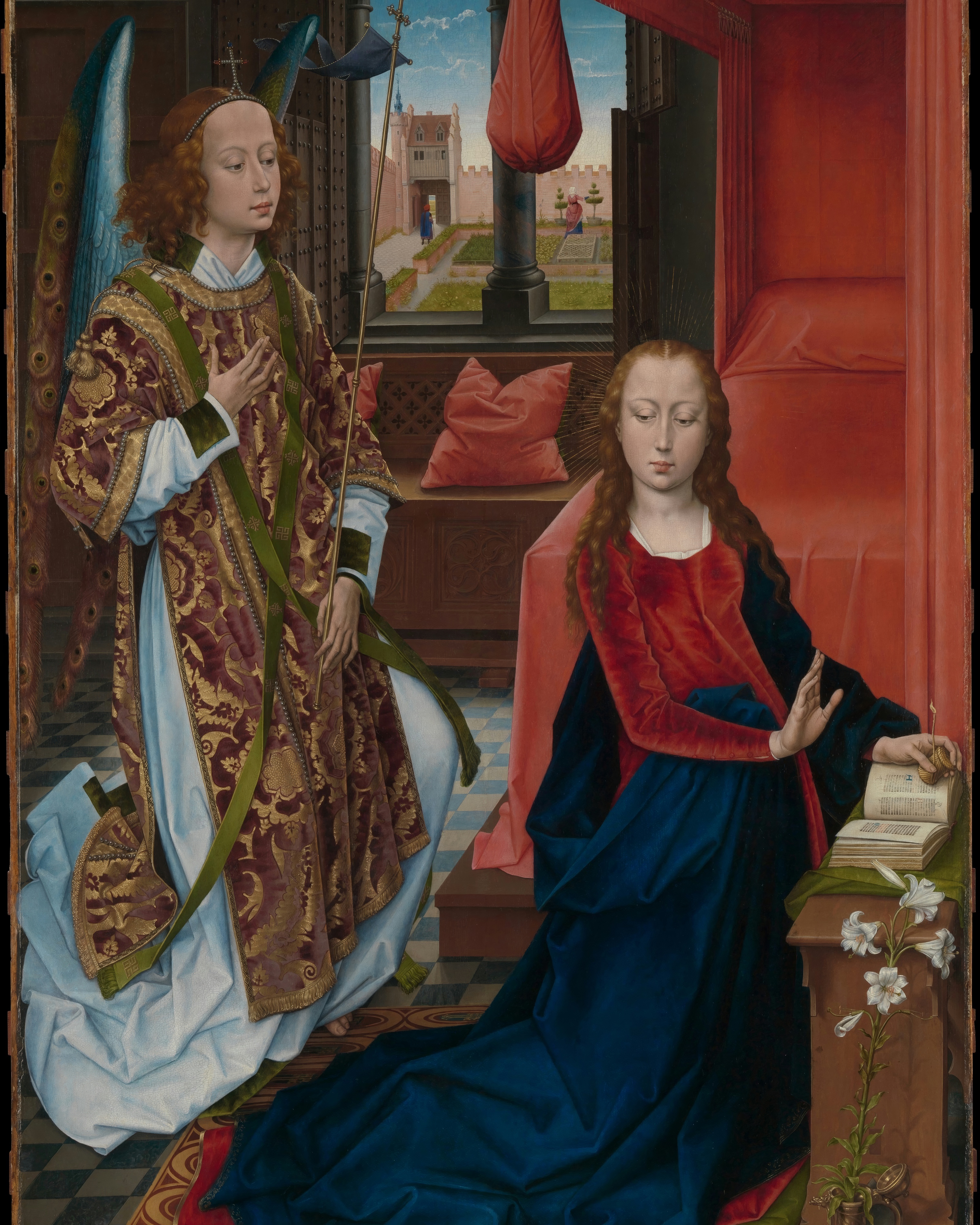
Hans Memling, The Annunciation, ca. 1465–70. Oil on wood. The Metropolitan Museum of Art, New York.
Hans Memling was the most sought-after painter in Bruges, and this small Annunciation of about 1465 to 1470 shows why. The angel kneels, the Virgin turns from her book, and every fold of red and blue cloth is painted with jewel-like care. The Met shares it with the world as open access.
A luminous small picture for a bedroom or a quiet corner.
2. Reapers Resting in a Wheat Field
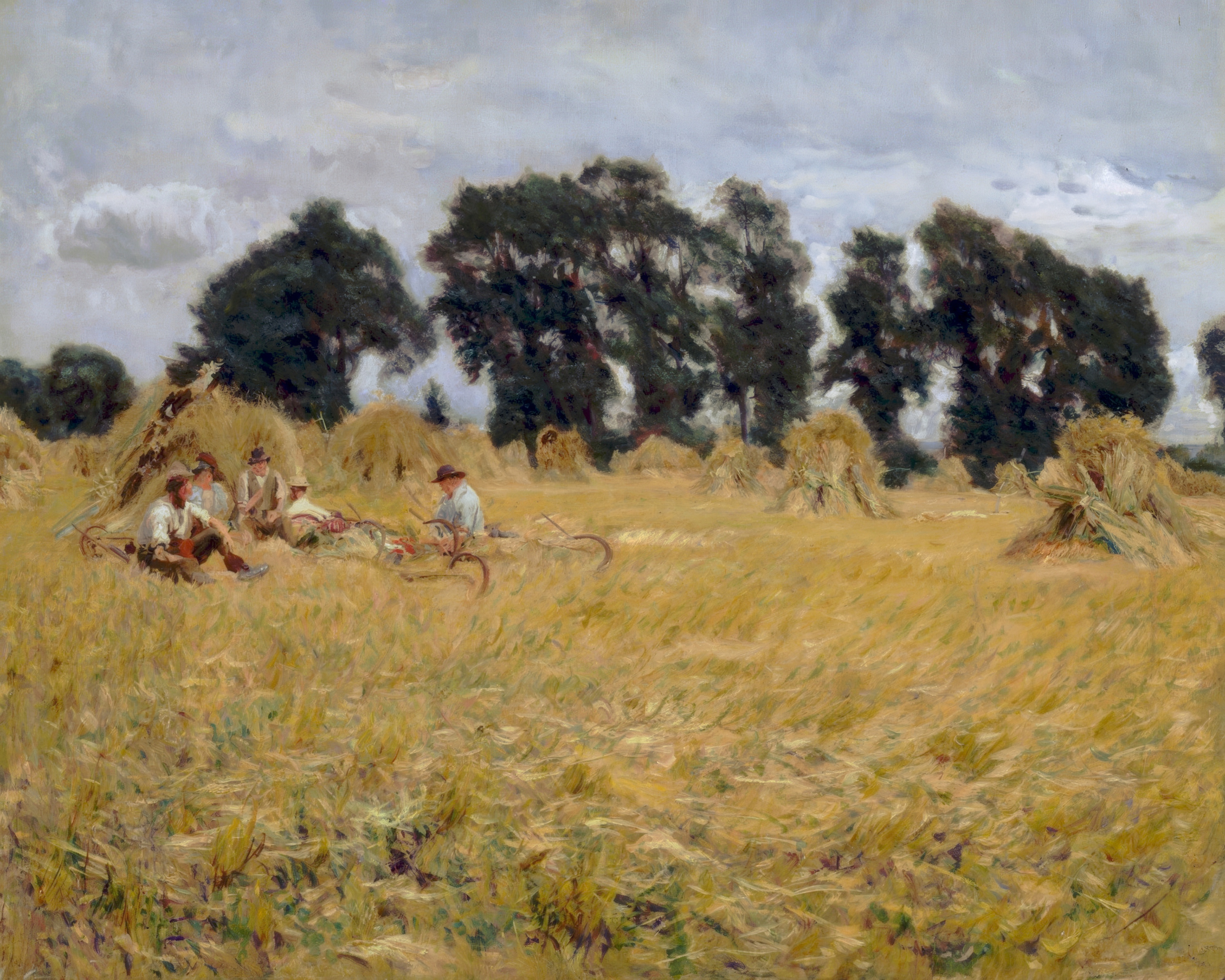
John Singer Sargent, Reapers Resting in a Wheat Field, 1885. Oil on canvas. The Metropolitan Museum of Art, New York.
John Singer Sargent was the most fashionable portrait painter of his day, but in the summer of 1885 he painted reapers resting in the English countryside, in the loose, sunny style he had learned from Monet.
A warm, golden picture for a living room or a country kitchen.
3. A Young Girl with Daisies
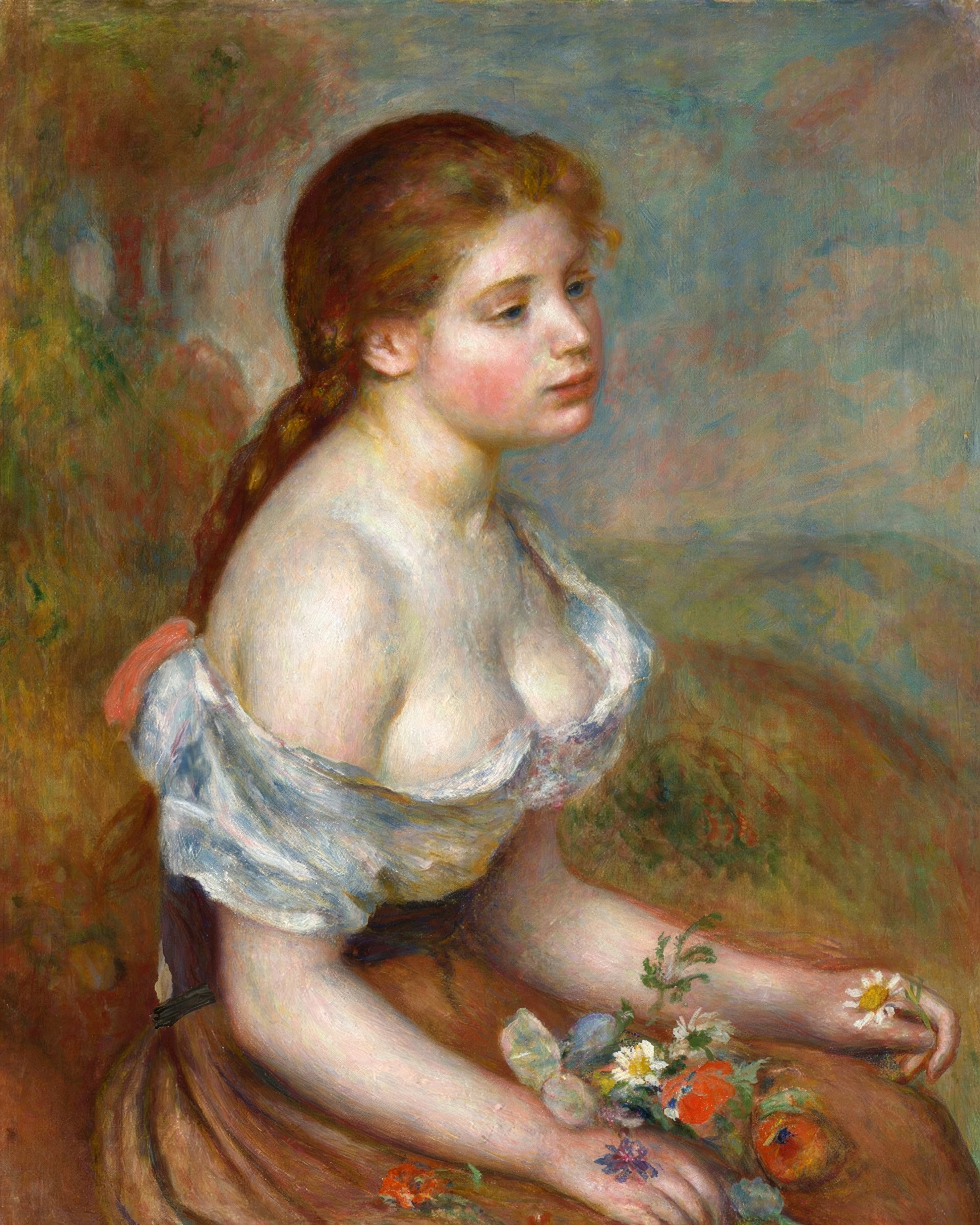
Auguste Renoir, A Young Girl with Daisies, 1889. Oil on canvas. The Metropolitan Museum of Art, New York.
Renoir painted this girl with her daisies in 1889, in the soft, feathery style of his later years. It is the kind of picture he loved most: youth, sunshine and flowers.
A tender picture for a child’s room or a bedroom.
4. Tiger Resting
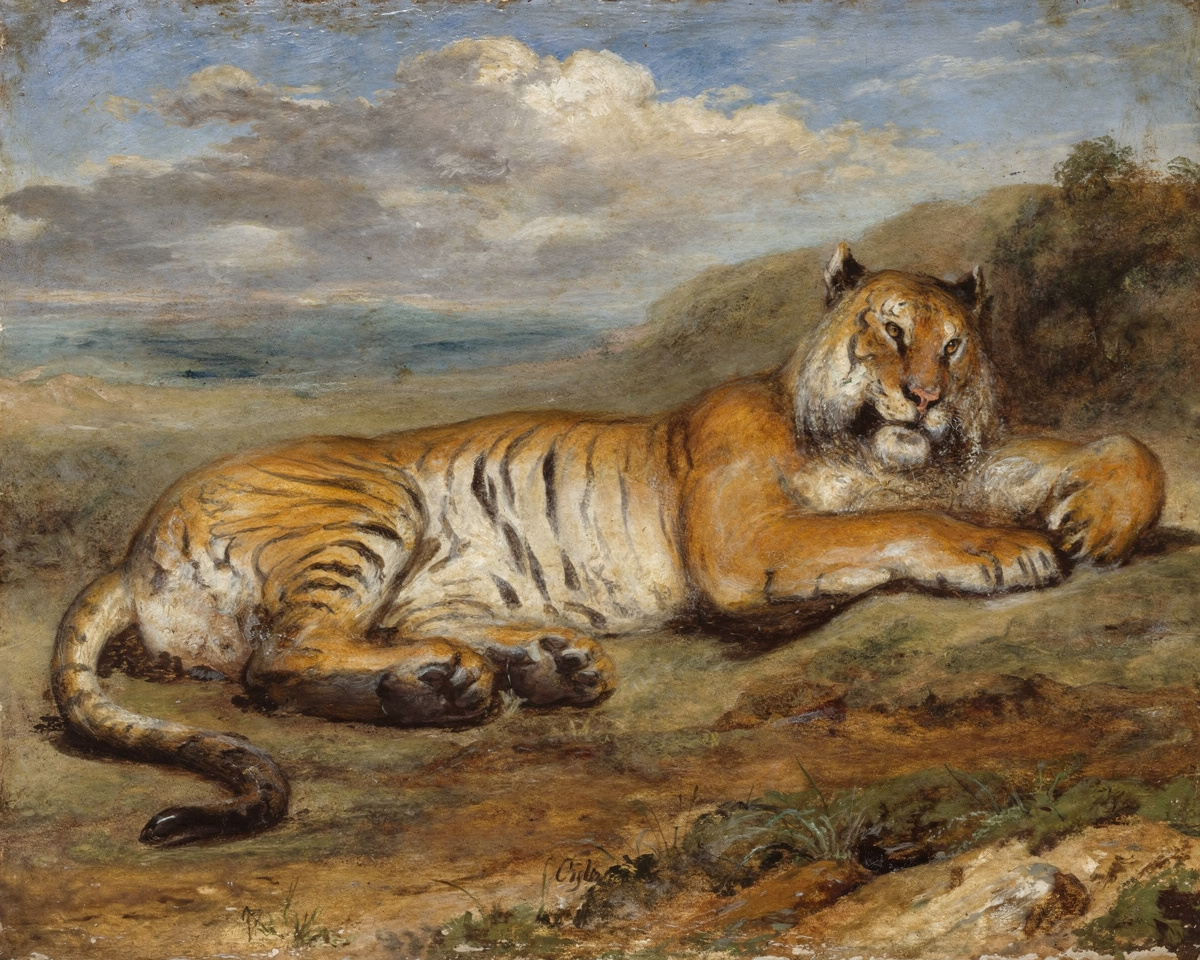
Pierre Andrieu, Tiger Resting, c. 1845. Oil on canvas. Art Institute of Chicago.
Pierre Andrieu was Delacroix’s assistant and learned his love of big cats from him. This tiger of about 1845 lies at rest, powerful and calm, its coat glowing in warm light.
A bold, warm picture for a study or a living room.
5. Peacocks
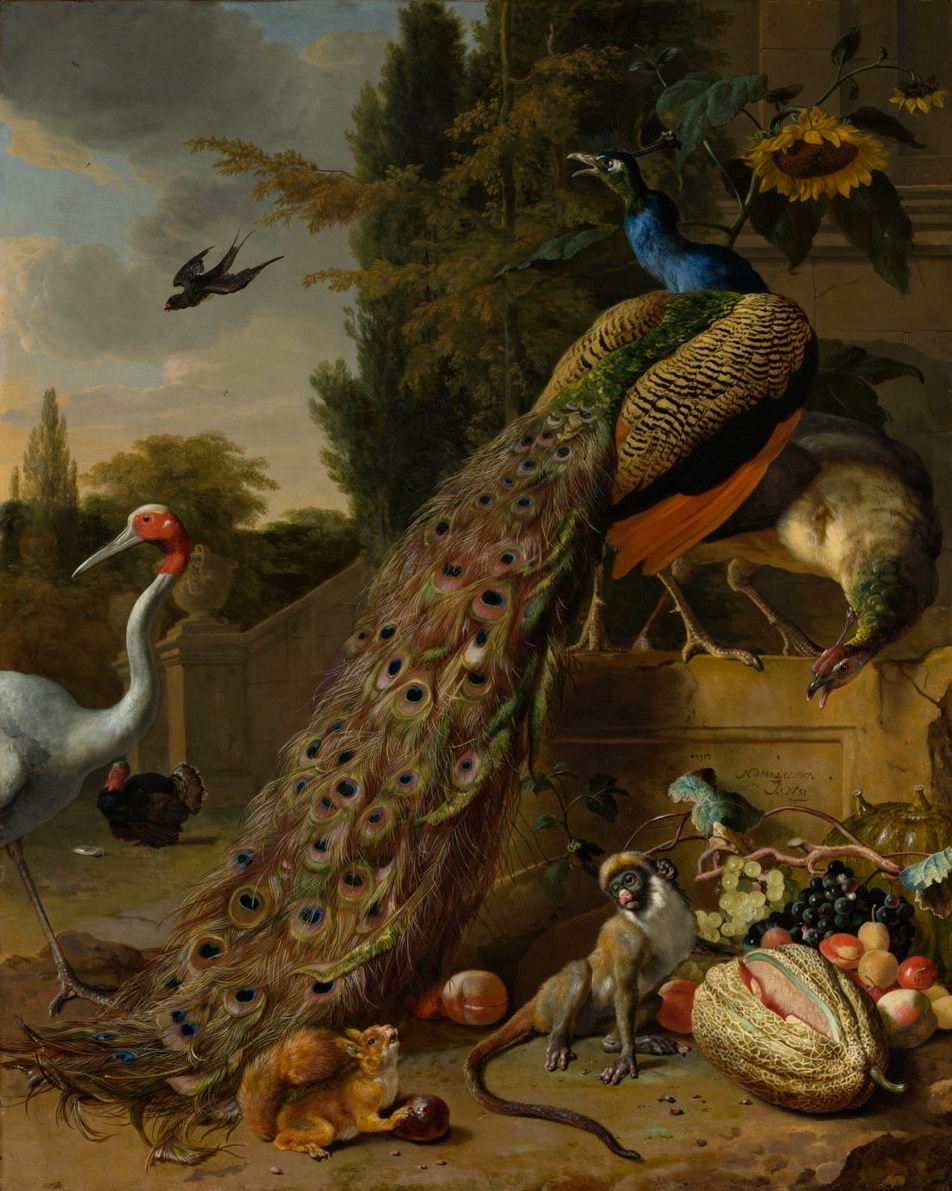
Melchior d' Hondecoeter, Peacocks, 1683. Oil on canvas. The Metropolitan Museum of Art, New York.
Melchior d’Hondecoeter painted birds for the country houses of Dutch patricians. In 1683 he set a white peacock on a pedestal above a blue one, against a dark, moody sky.
A grand, decorative picture for a dining room or a hall.
6. Young Girl with a Dog
Jean-Baptiste Greuze, Young Girl with a Dog, 1767. Oil on canvas.
Greuze was famous for sentimental pictures of children, and this girl hugging her little black dog of 1767 is one of his sweetest. It is also the masterwork behind Fable’s Young girl with a dog style, for a portrait of a child with a pet.
A gentle picture for a child’s room, and a style made for a child and a dog.
Create your portrait in this style
7. Girl with a White Shawl and a Cat
Charles Joshua Chaplin, Girl with a White Shawl and a Cat, 1891. Oil on canvas.
Charles Chaplin painted pretty, pearly portraits for Paris society. This young woman of 1891 holds a sleeping cat in her lap, wrapped in a white shawl. It is the masterwork behind Fable’s Girl with a white shawl and a cat style.
A soft, pale picture for a bedroom, and a lovely style for a portrait with your cat.
Create your portrait in this style
8. Wheat and Wormwood
Hilma af Klint, Wheat and Wormwood, 1922.
Hilma af Klint painted abstract pictures years before Kandinsky, but kept them hidden and asked that they not be shown until long after her death. She died in 1944, so her work is now in the public domain in most countries. This study of wheat and wormwood is from 1922.
A modern, colourful picture for a contemporary living room or a creative studio.
9. Boating on Edo Bay
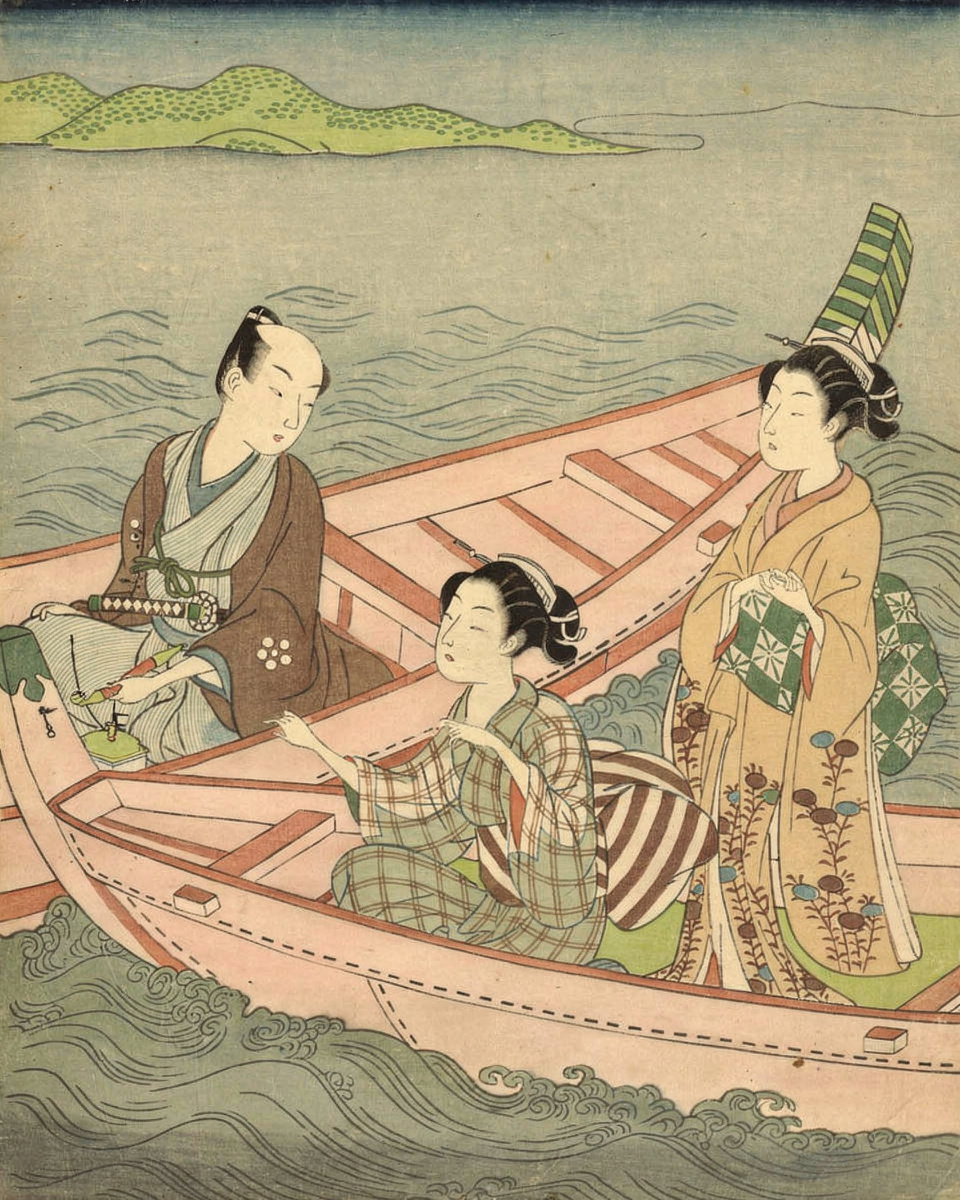
Suzuki Harunobu, Boating on Edo Bay, about 1765–1770. Colour woodblock print. Harvard Art Museums.
Harunobu made the first full colour woodblock prints in the 1760s. This pleasure boat on Edo Bay, with two graceful figures and calm blue water, has the delicacy that made him famous.
A calm, elegant print for a bedroom or a bathroom.
Great prints in atelier colour
These famous engravings and woodcuts were made in black and white. Fable’s atelier colour editions add colour to the original lines, and each caption names the original print.
10. The Rhinoceros
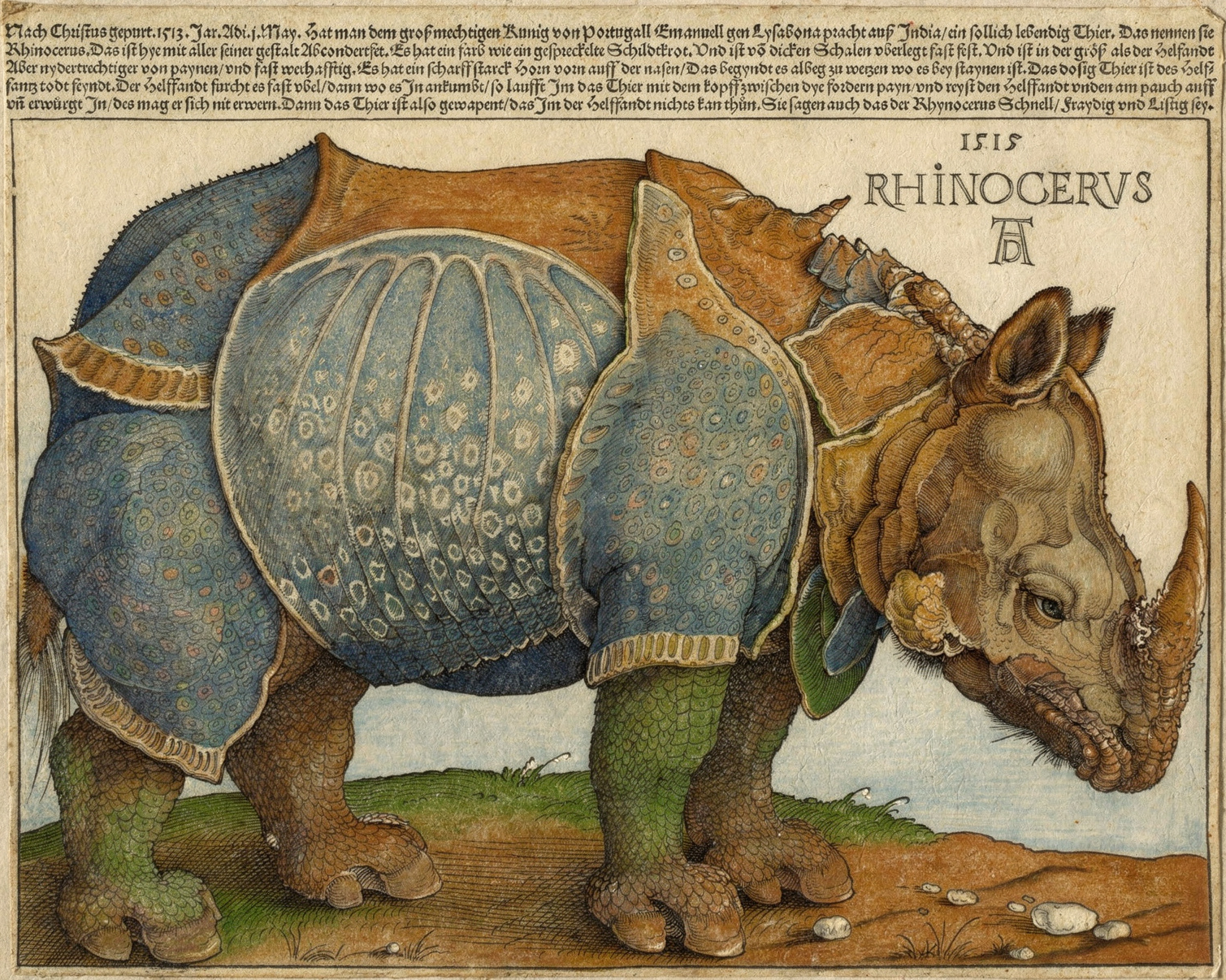
Albrecht Dürer, The Rhinoceros, 1515. Atelier colour edition of the woodcut. Cleveland Museum of Art.
In 1515 a live rhinoceros arrived in Lisbon, the first seen in Europe since Roman times. Dürer never saw it: he worked from a letter and a sketch, and gave the animal plates of armour and a little extra horn. His woodcut became the picture of a rhinoceros for nearly three hundred years.
A witty, graphic picture for a study, a hallway or a child’s room.
11. Knight, Death, and the Devil
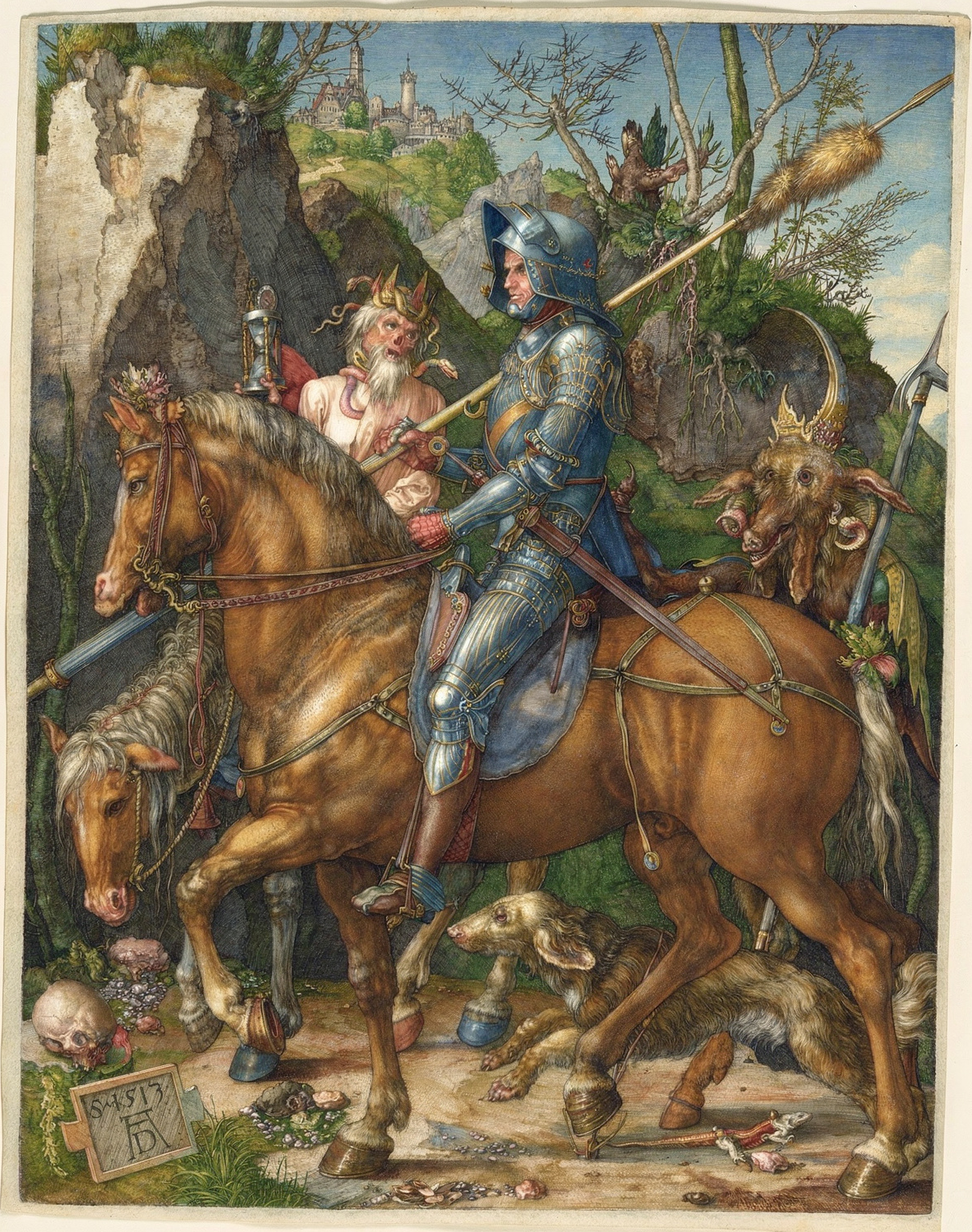
Albrecht Dürer, Knight, Death, and the Devil, 1513. Atelier colour edition of the engraving. The Metropolitan Museum of Art, New York.
Dürer’s knight rides calmly on through a dark gorge while Death holds up an hourglass and a devil follows behind. Made in 1513, it is one of his three master engravings, and one of the most studied prints in history.
A dramatic, storytelling picture for a study or a library.
12. The Four Horsemen
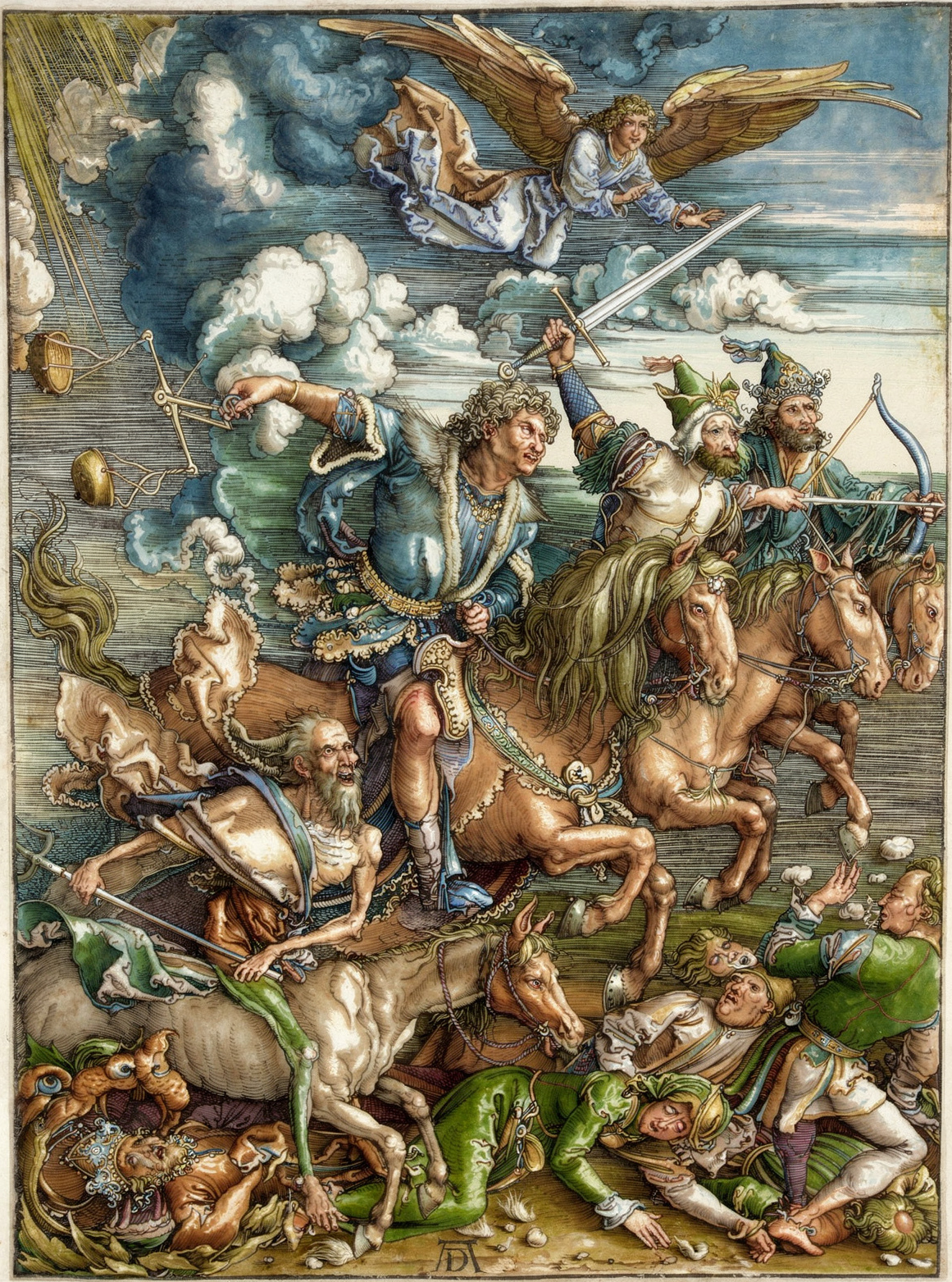
Albrecht Dürer, The Four Horsemen, 1498. Atelier colour edition of the woodcut. The Metropolitan Museum of Art, New York.
Dürer published his Apocalypse in 1498, when he was twenty-seven, and it made him famous across Europe. The Four Horsemen thunder across the sky, trampling everyone below.
A powerful picture for a large wall in a study or a hall.
13. Saint Jerome in His Study
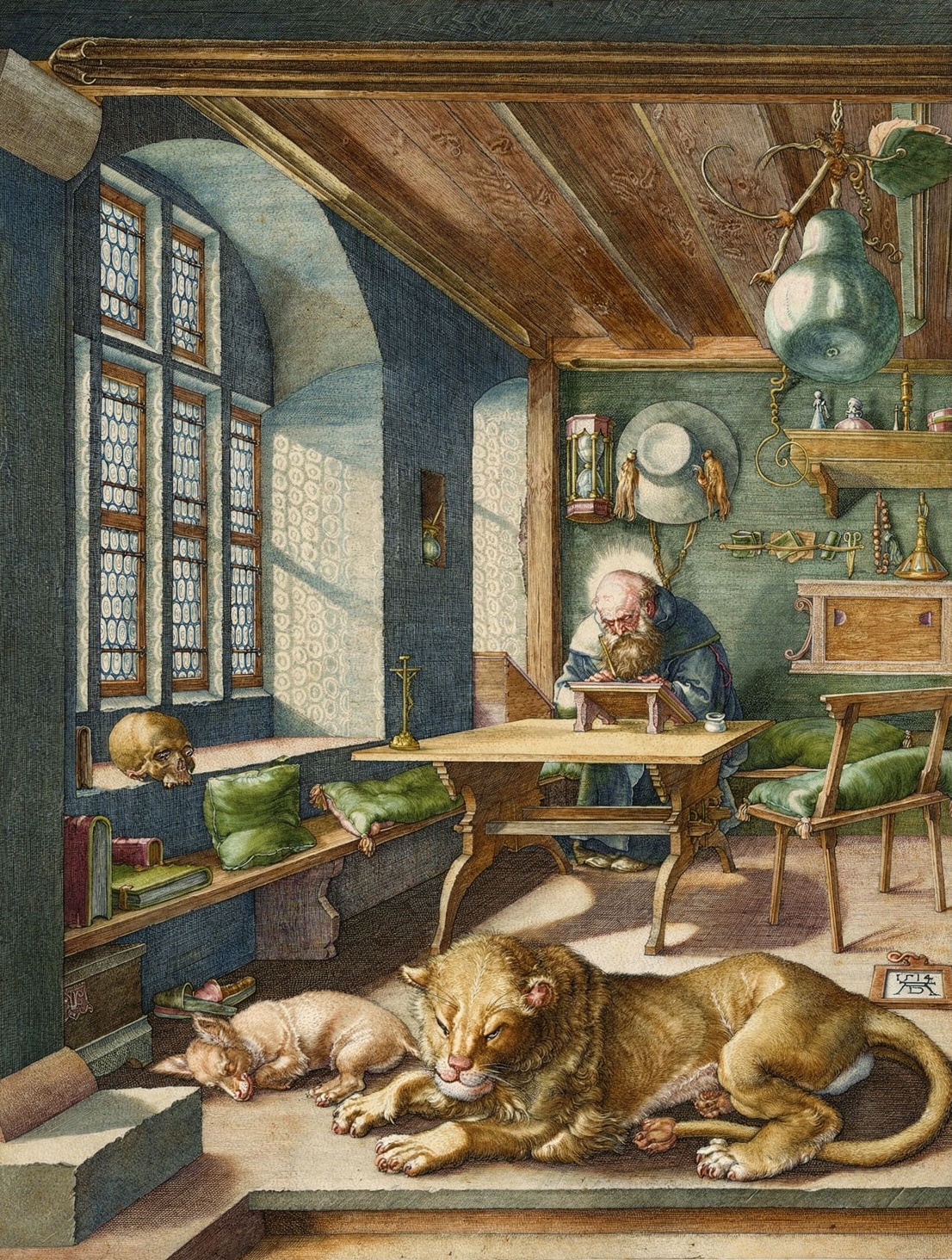
Albrecht Dürer, Saint Jerome in His Study, 1514. Atelier colour edition of the engraving. The Metropolitan Museum of Art, New York.
The calmest of Dürer’s master engravings: Saint Jerome writes in a sunny study in 1514, while a lion and a dog doze on the floor. Every object in the room, from the hourglass to the slippers, is part of the peace.
The perfect picture for a home office or a library.
14. Self-Portrait Leaning on a Stone Sill
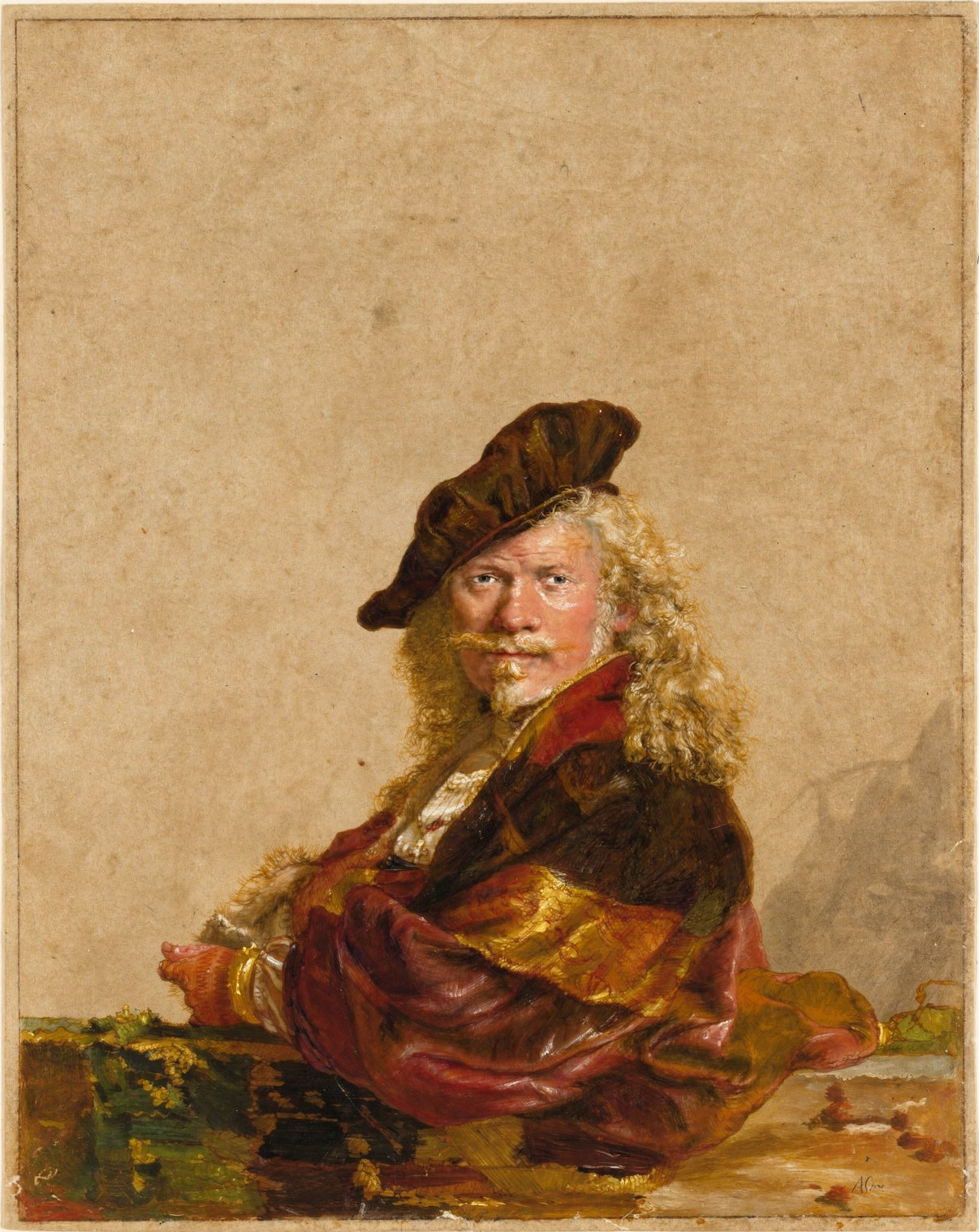
Rembrandt, Self-Portrait Leaning on a Stone Sill, 1639. Atelier colour edition of the etching. The Metropolitan Museum of Art, New York.
In 1639, at thirty-three, Rembrandt etched himself leaning on a stone sill in rich old-fashioned dress, a pose borrowed from Titian and Raphael. He was rich, famous and sure of himself, and it shows.
A confident portrait for a study or a hallway.
15. The Pantheon
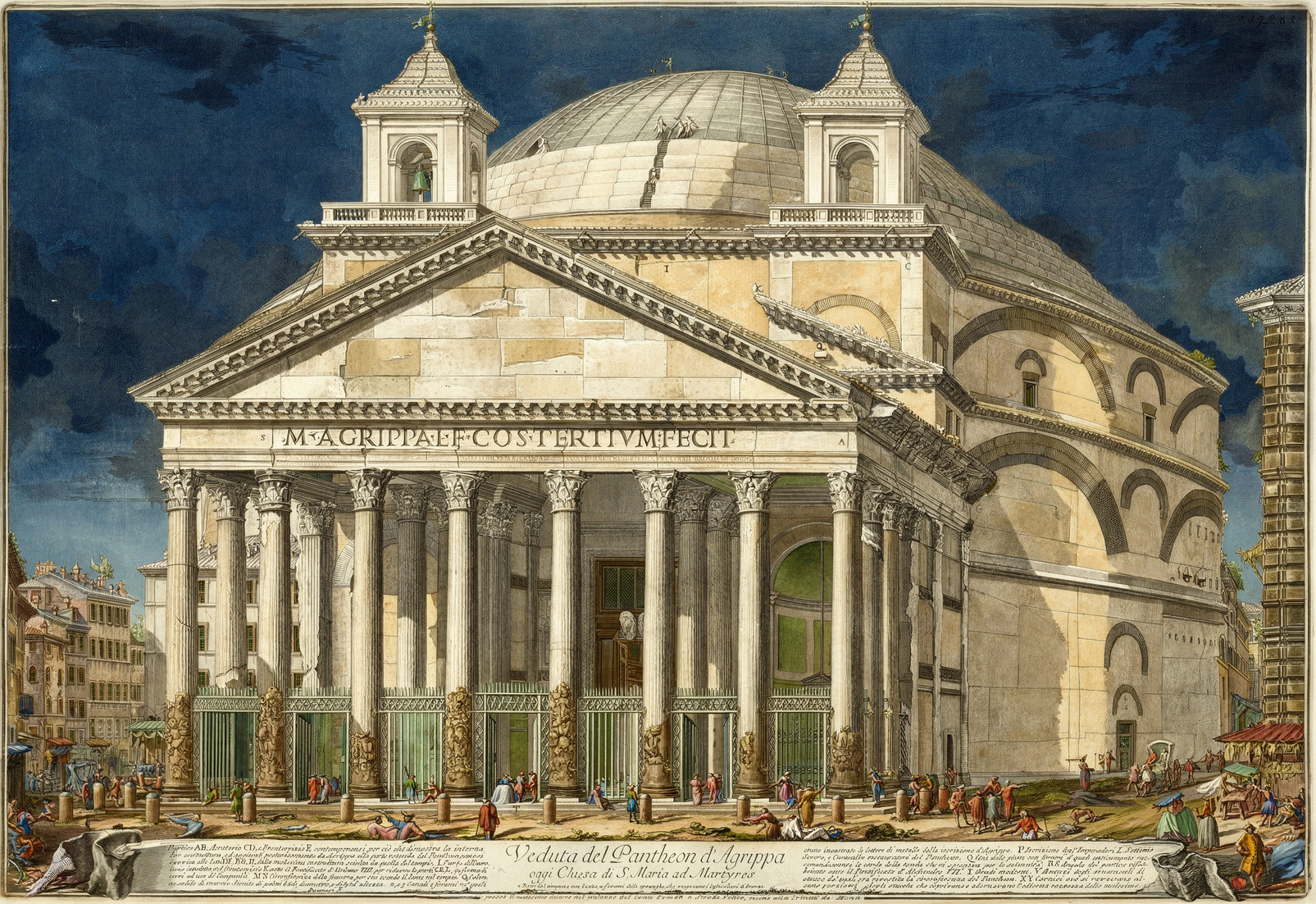
Giovanni Battista Piranesi, The Pantheon, 1761. Atelier colour edition of the etching. Cleveland Museum of Art.
Piranesi’s Views of Rome were the souvenirs of the Grand Tour, and travellers carried them home by the thousand. This Pantheon of 1761 still has the two bell towers that were removed in the 1880s.
A classic architectural print for a hallway, a study or a living room.
16. Imaginary Prisons: The Arched Chamber
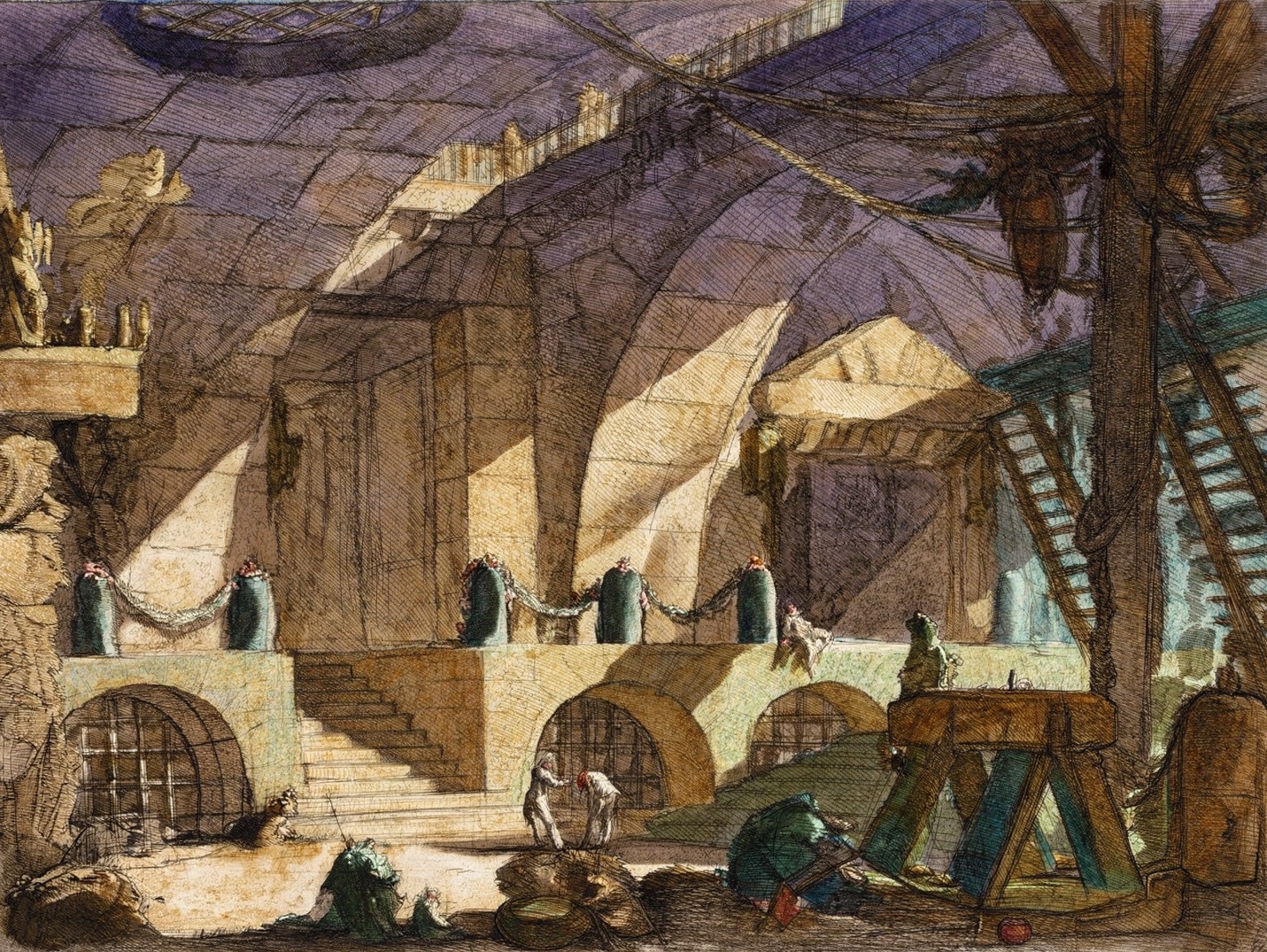
Giovanni Battista Piranesi, Imaginary Prisons: The Arched Chamber, 1745–50. Atelier colour edition of the etching. Cleveland Museum of Art.
Piranesi’s Imaginary Prisons are vast underground worlds of arches, stairways and chains that lead nowhere. They inspired Romantic poets, set designers and, much later, the architects of science fiction.
A dramatic, architectural picture for a study or a stairwell.
17. Goya: Self-Portrait
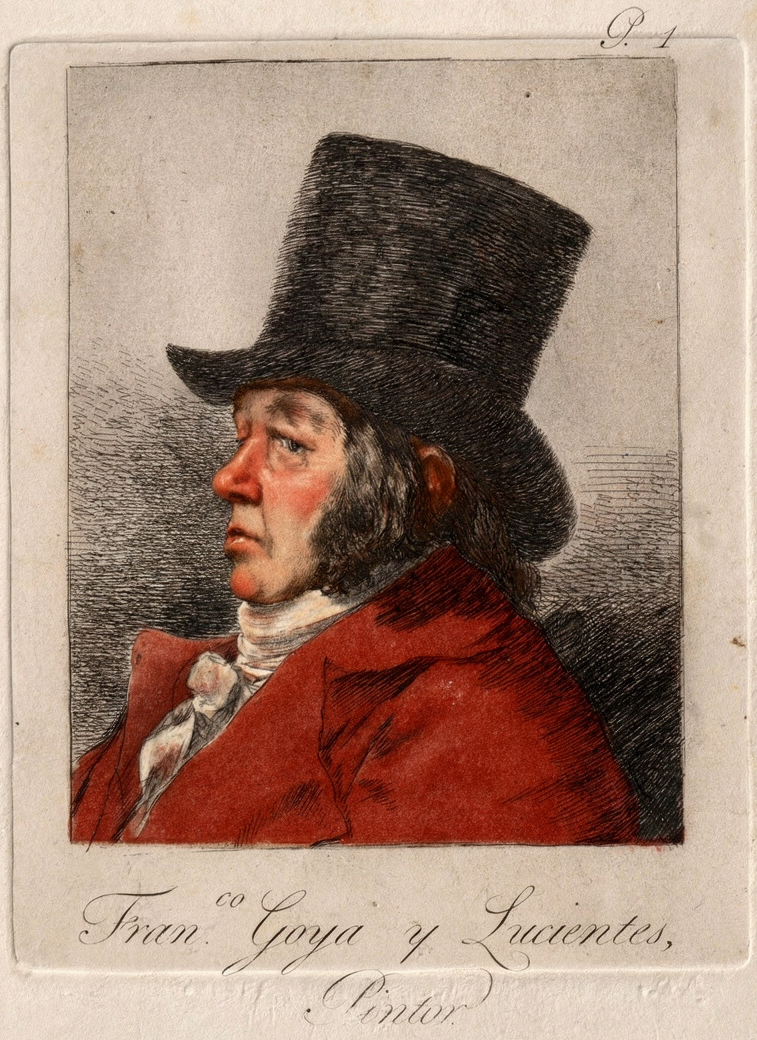
Francisco de Goya, Goya: Self-Portrait, 1799 (printed c. 1855). Atelier colour edition of the etching and aquatint. Cleveland Museum of Art.
Goya opened his Caprichos of 1799, his savage satire of Spanish society, with this self-portrait in a top hat. He looks sideways at us, sceptical and sharp.
A striking portrait for a study or a reading corner.
18. The Night Mare
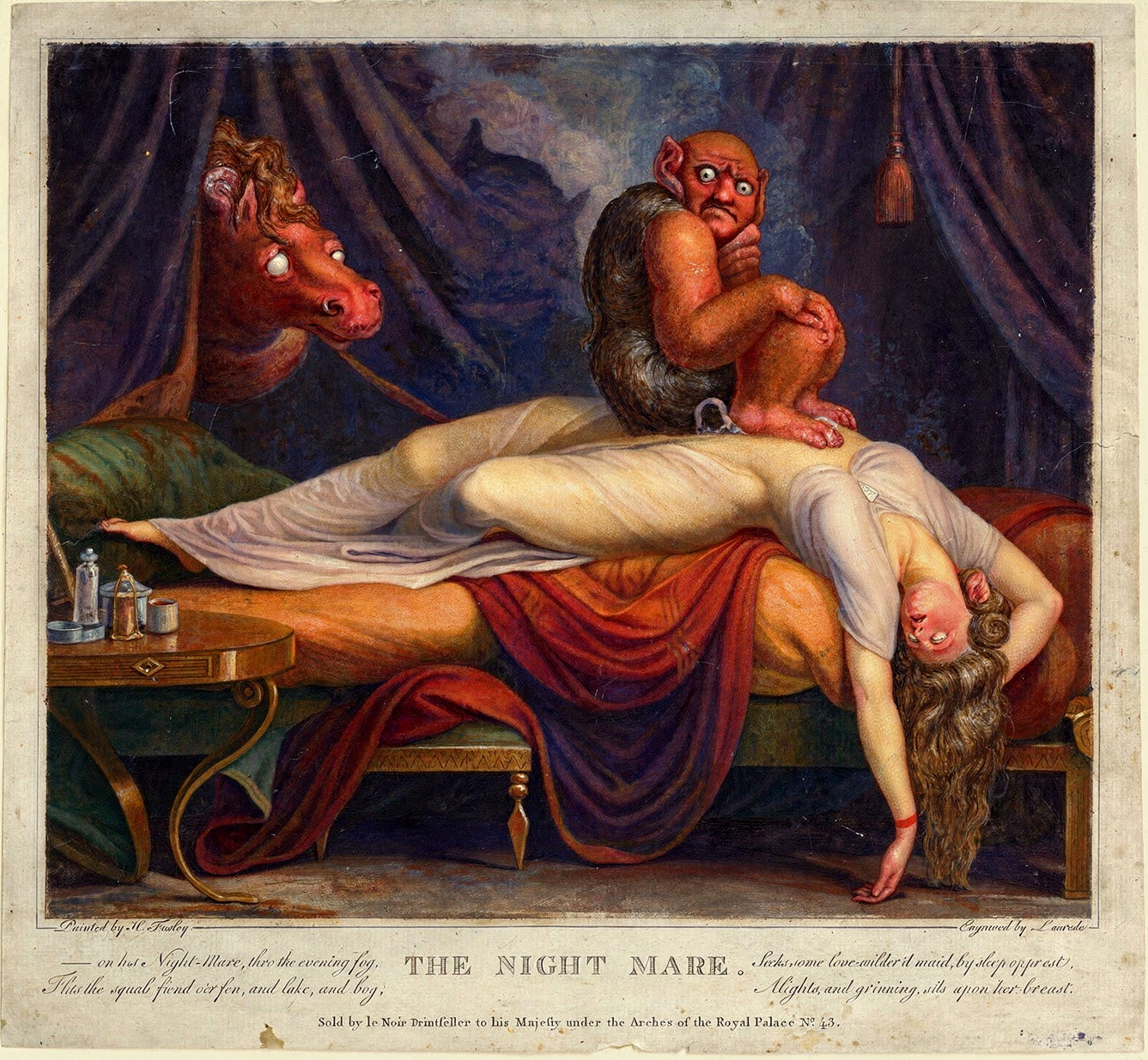
Laurède after Henry Fuseli, The Night Mare, 1782. Atelier colour edition of the stipple engraving. The Metropolitan Museum of Art, New York.
Fuseli’s Nightmare caused a sensation in London in 1782, and engravings of it sold all over Europe. A woman sleeps, a goblin squats on her chest and a wild-eyed horse looks in through the curtains.
A gothic picture for a library, a hallway or a lover of dark tales.
19. Sabrina’s Silvery Flood
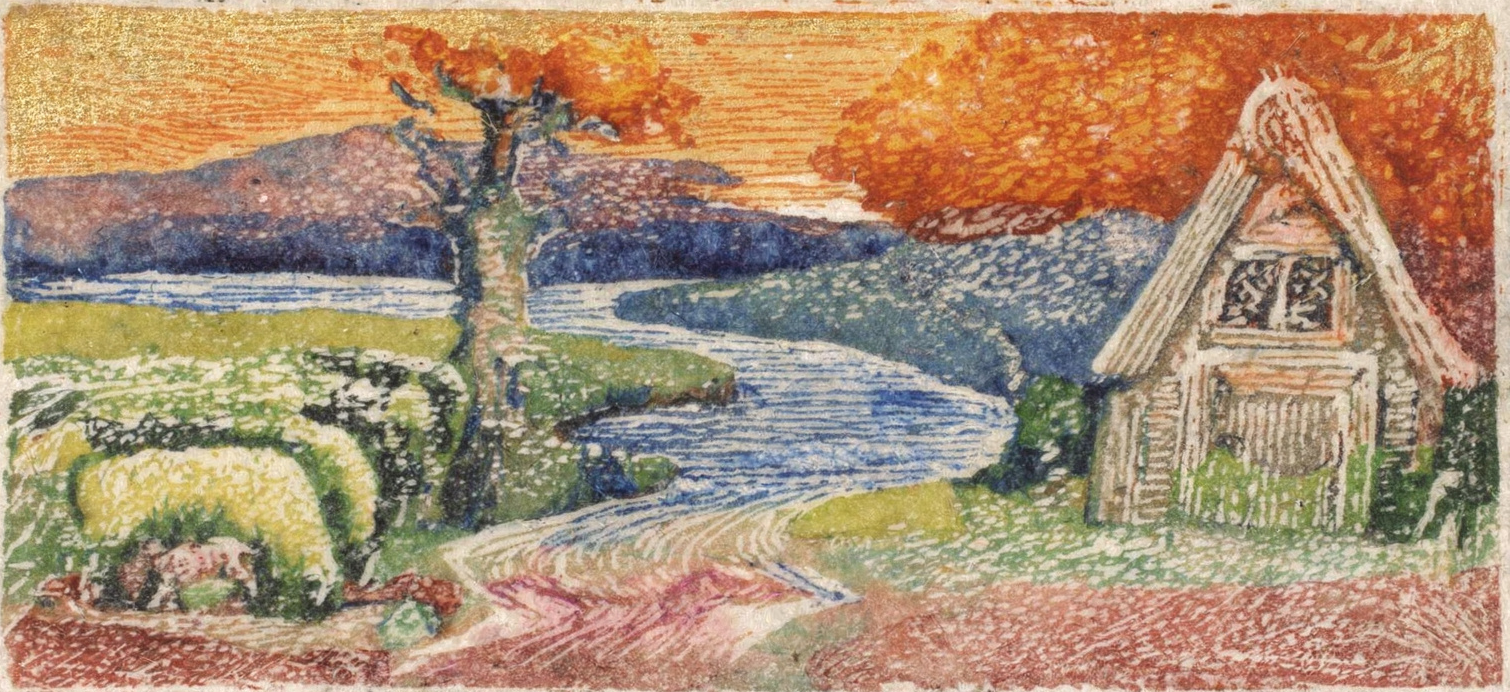
William Blake, Sabrina’s Silvery Flood, 1821. Atelier colour edition of the wood engraving. The Metropolitan Museum of Art, New York.
William Blake made only seventeen wood engravings, all tiny, for a school edition of Virgil’s Pastorals in 1821. The publisher nearly rejected them, but they inspired Samuel Palmer and a whole generation of English landscape painters.
A small, poetic picture for a bedroom or a reading corner.
20. The Fall of Icarus
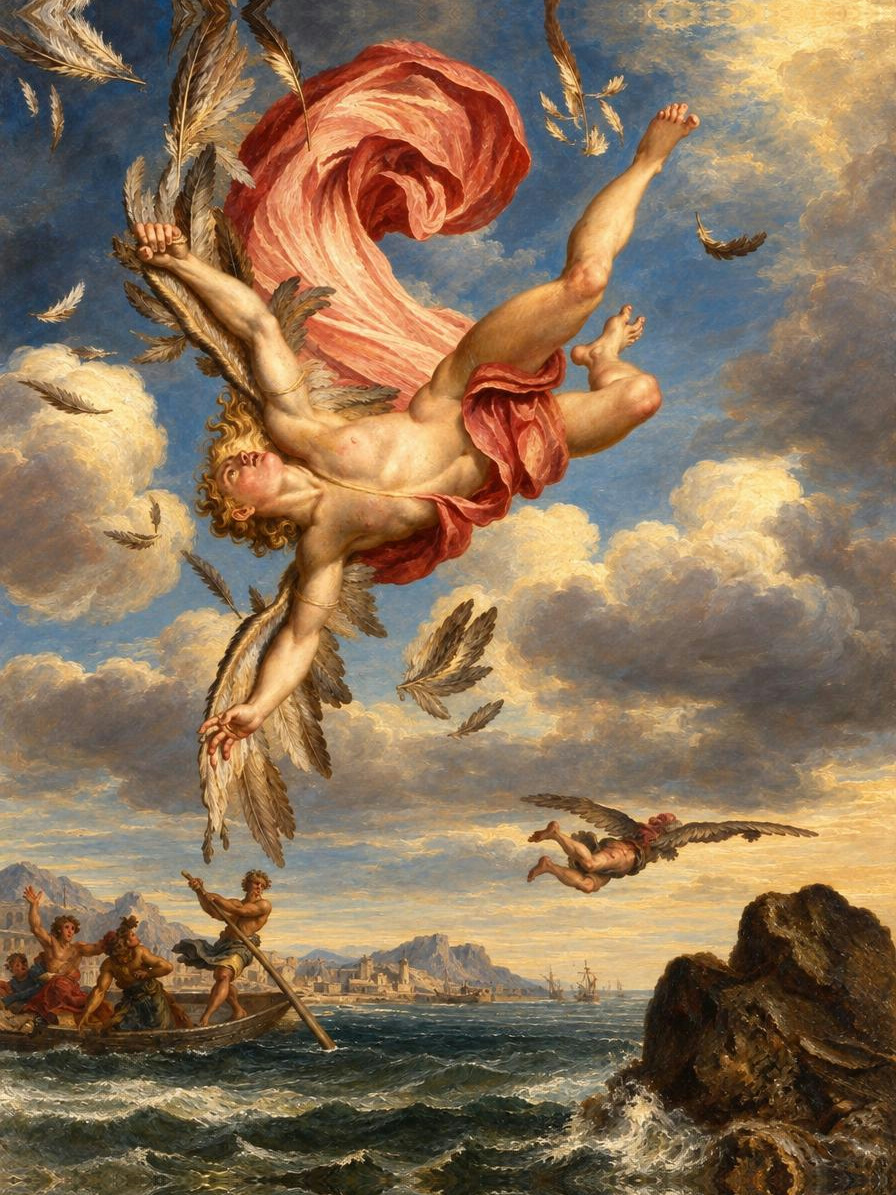
Bernard Picart and other engravers, The Fall of Icarus, 1749. Atelier colour edition of the book engraving. Getty Research Institute.
Bernard Picart and his fellow engravers illustrated the myths of Ovid for a lavish book published in 1749. Here Icarus falls as the sun melts his wings, while his father Daedalus flies on.
A dramatic mythological picture for a study, a stairwell or a child’s room.
Public domain does not mean any copy is a good one. A print is only as good as the scan behind it, which is why Fable works from the museums’ own high-resolution files, checks every picture at full size and prints it whole, never cropped or stretched to fit a frame. If you like the idea of art with a story behind it, browse our guides to famous landscape paintings and Dutch Golden Age paintings.
Questions
What is public domain art?
Public domain art is work whose copyright has expired, so anyone may copy, share and print it. In the EU, the UK and many other countries that happens seventy years after the artist’s death.
Which museums offer public domain images?
The Metropolitan Museum of Art, the Art Institute of Chicago, the Cleveland Museum of Art, the Rijksmuseum, the National Gallery of Art in Washington and the Getty all publish open access images of public domain works.
Is Hilma af Klint in the public domain?
Yes, in most countries. Hilma af Klint died in 1944, so her works entered the public domain in the EU in 2015, seventy years after her death.
What is an atelier colour edition?
It is a Fable edition of a famous black and white print, such as a Dürer engraving, with colour added in our atelier. The caption always names the original print and the museum that holds it, so you know exactly what you are buying.